FW
Military seizure compel Chinese investors to rethink their Myanmar policy
 Chinese investors, involved in funding the garment sector in Myanmar, are planning to relocate to other countries after the military seized the nation 10 months ago. In March, at least 40 Chinese-funded garment factories in Yangon were destroyed on rumors of Beijing supported the military junta. Equipment was smashed and warehouses were set alight, causing millions of dollars in losses. Though the factory owners have demanded compensation several times from local authorities, no progress has made on this move, says San Khun, Chairman, Chinese Textile and Garment Association in Myanmar.
EU, US impose sanctions against junta-related companies
In a write up in the South China Morning post, Loura Zhou writes, many Chinese investors have opened garment factories in Myanmar and most of their products are exported to Europe. However, since the coup, the European Union and the United States have imposed sanctions against senior military leaders and junta-related companies. This is compelling Beijing to rethink its policy on Myanmar.
Since the coup, China has avoided publicly condemning the military takeover but in September it invited the NLD as well as three other of Myanmar’s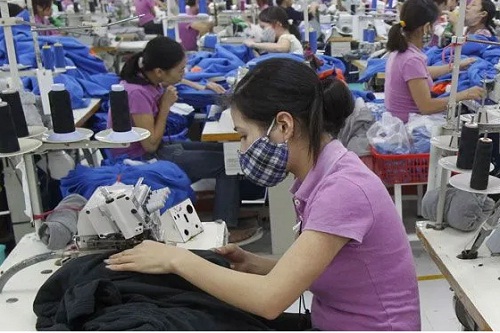 political parties to the Asian Political Party Summit, hosted by a department of the Chinese Communist Party. Both China and the US – who are locked in a bitter geopolitical rivalry in Southeast Asia – have expressed willingness to work closely with the Association of Southeast Asian Nations (ASEAN) to address the Myanmar crisis. The US may also tighten its sanctions on the Myanmar military as part of efforts to win over some ASEAN member states.
Chinese scholars urge for government intervention
Since the coup, Chinese scholars have been urging the Beijing government to intervene in the matter, says Wang Zichang, Professor, Jinan University. However, a fruitless trip to Myanmar in August by China’s special envoy Sun Guoxiang had reignited the debate among scholars as to whether China should now interfere in the situation in Myanmar in some way, in accordance with China’s national interests.
China has long adhered to the principle of non-interference in each other’s internal affairs, adds Wang. However, Myanmar’s stability is directly related to China’s diplomacy efforts with its neighbors and the external environment for China’s peaceful development. Hence, Myanmar leaving ASEAN after being pushed too would pose a greater dilemma for China, he adds.
After leaving ASEAN, Myanmar can only depend on China, politically and szeconomically. However, supporting Myanmar may threaten China’s long-standing support to ASEAN, causing resentment among other ASEAN member states and even drawing intervention from extra-regional powers.
But isolating Myanmar could also undermine its relations with the country and further damage its foreign strategy with its neighbors. A strange predicament to be in indeed for China, sums up Zhou.
US apparel imports up 25 per cent in the last 10 years of 2021
Imports of textiles and apparel by the US increased 25 per cent in the first 10 months of 2021 compared to the first 10 months of 2020 reveal OTEXA data. With a 27 per cent share, China continues to be the largest supplier of textiles and clothing to the US, followed by Vietnam with a 13 per cent share. Apparel constituted the bulk of textile and garment imports made by the US during the 19 months while non-apparel imports accounted for the remainder.
Segment-wise, among the top 10 apparel suppliers to the US, imports from Pakistan, Honduras and Nicaragua shot up by 56 per cent, 46 per cent and 42 per cent year-on-year respectively. But imports from Indonesia registered a growth of only ten per cent compared to the same period of the previous year. In the non-apparel category, among the top ten suppliers, imports from Italy, India, and Turkey soared by 56 per cent, 55 per cent and 44 per cent respectively. The sharp rise in numbers is due to the base effect, as imports were disrupted last year due to the pandemic.
Of the total US textile and apparel imports of $93.51 billion during the period under review, cotton products were worth $40 billion, while manmade fiber products accounted for $48 billion followed by $2 billion of wool products and $1 billion of products from silk and vegetable fibers. In 2020, US textile and apparel imports had decreased sharply, mainly due to pandemic-induced disruption.
Simplify RMG export procedure, urges BGMEA
Faruque Hassan, President, BGMEA, has urged the Commerce Minister Tipu Munshi to address current challenges by simplifying export procedures for the RMG sector. Hassan said, OMICRON variant is creating new challenges for the RMG sector which is slowing recovering from the massive impacts of the COVID-19 pandemic. The government needs to safeguard the industry in these difficult times as it is the mainstay of Bangladesh’s economy, he adds, The government’s support helped the apparel sector survive the first wave of the COVID-19 pandemic and turn around, he adds. Sector leaders demanded supports from the government to address the possible challenges due to the spread of Omicron in major western markets. They also sought commerce minister's intervention saying they are being harassed by NBR.
BSL to augment cotton spinning capacity in Rajasthan
Formerly known as Bhilwara Synthetics, fabric manufacturer BSL plans to augment cotton spinning capacity at its Rajasthan facility with a capital expenditure of Rs 150 crore. The capital expenditure (Capex) will also help boost sales and profitability, says Nivedan Churiwal, Managing Director. The company also aims to generate revenues worth Rs 700 crore in the 2023-24 fiscal. It had posted over Rs 321-crore revenue from operations in 2020-21 fiscal.
BSL has signed an MoU with the Rajasthan government tor fiscal incentives, in the form of interest subsidies, adds Churiwal. The company has suiting, furnishings and yarn spinning verticals. Suiting contributes around 60 per cent of the annual revenue, while furnishing is the most profitable line of business, adds Churiwal. Exports account for around two-thirds of the turnover, and domestic sales contribute the rest. In the first quarter of last financial year, the company rationalized its costs by reducing manpower, adds Churiwal.
Sartirana Textile Show postponed due to pandemic
Due to worsening pandemic situation in Italy, the Sartirana Textile Show 2022 has been postponed. As per a Jozan report, the show was scheduled to take place from January 14 to 23, 2022 in Bergamo. It was to be a concurrent event with Italian Fine Art and Bergamo Arte Fiera.
Sartirana Textile Show is a renowned antique textile fair that takes place every year in Italy. Born in 2004 in Sartirana Lomellina, since 2019, the Sartirana Textile Show has been moved in Turin in the beautiful location of Società Promotrice delle Belle Arti. The show displays a fine selection of rugs and textile from all around the world since 2005. The exhibition is one of the most important trade fair of the antique textile sector. It attracts international dealers, collectors and enthusiasts in the beautiful setting of La Pila.
Every year, in addition to appreciating the Dealers Fair, visitors can enjoy a huge number events and side cultural exhibitions.
India Inc hails deferment of GST on textiles
India Inc has the hailed the GST Council’s decision to defer the proposed GST hike on textiles. The council has deferred the hike on the opposition from state governments and the industry. It had earlier proposed a GST hike on apparel from 5 to 12 per cent.
Bimal Jain, Chairman, IDT Committee, PHDCCI said, deferment will give a much needed impetus and support to the sector. The Confederation of All India Traders (CAIT) has also hailed the decision. It urged the council the decision to increase the GST rate on footwear also. CAIT also urged the FM to constitute a task force to consider the intricacies of the taxation system, simplification and rationalization, increase in tax base and revenue to the government.
The task force may be formed under the chairmanship of the Chairman of the Central Board of Indirect Taxes, which should include representatives of trade beside senior officials, added CAIT.
GST deferment on textiles, a welcome move, says India, Inc
India Inc has the hailed the GST Council’s decision to defer the proposed GST hike on textiles. The council has deferred the hike on the opposition from state governments and the industry. It had earlier proposed a GST hike on apparel from 5 to 12 per cent.
Bimal Jain, Chairman, IDT Committee, PHDCCI said, deferment will give a much needed impetus and support to the sector. The Confederation of All India Traders (CAIT) has also hailed the decision. It urged the council the decision to increase the GST rate on footwear also. CAIT also urged the FM to constitute a task force to consider the intricacies of the taxation system, simplification and rationalization, increase in tax base and revenue to the government.
The task force may be formed under the chairmanship of the Chairman of the Central Board of Indirect Taxes, which should include representatives of trade beside senior officials, added CAIT.
India partners with Nigeria
India will help Nigeria revive its textile and apparel sector.
India is working to boost its technical textile industry and is willing to partner with and support Nigeria in terms of provision of textile machinery, technology, capacity building and training in the entire textile value chain. The partnership, which is not just for Nigeria but for the entire West Africa, is very necessary, especially as the countries move into the implementation stage of the African Continental Free Trade Area Agreement (AfCFTA).India-West Africa trade offers an opportunity to rethink ways in which people do business, trade and investment across countries and continents. India recognises the immense potential of Africa as the home of the world’s largest free trade area by the number of participating countries and the fastest-growing economies in the world. The textile sector in Nigeria is one of the largest private employers, providing employment to over a million Nigerians, and has always been a major player in the manufacturing sector of the economy.
Leoht Africa has partnered with the Indian Chamber of Commerce to boost the retail sector of Nigeria’s textile industry and position it as a leading hub in the Central and West African market. The partnership aims to build a yearly and sustainable international sourcing platform for organisations to trade and secure orders from corporate buyers and resellers.
MIT converts plastic into textiles
Researchers at the Massachusetts Institute of Technology have developed an ingenious solution to turn plastic bags, wraps and other supermarket waste into textiles.
They have developed self-cooling fabrics from polyethylene, commonly used in plastic bags. They estimate that the new fabric may be more sustainable than cotton and other common textiles. The eco-friendly, recycling textile could revolutionize fashion as it resists dirt and can be washed on a cold cycle in just ten minutes. The hope is that sportswear, shoes, army uniforms and perhaps even spacesuits can be formed from fabric created out of plastic bags. The engineers found a way to spin polyethylene into fibers and yarn first made from spaghetti strings and weaved in a way that would allow it to absorb water and sweat. The researchers modeled the yarn by testing the wicking ability over cotton, nylon and polyester by dipping strips in water and measuring the time it took for the liquid to climb up each strip. The plastic yarn wicked away and evaporated the water faster than other common textiles.
Over 380 million tons of plastic are produced each year. Most of the plastic bags are used for approximately 12 minutes and it takes at least 500 years for one to degrade in a landfill.
Mey launches nightwear with viscose
German circular knitter, Mey has launched nightwear with Celliant viscose.
This converts body heat into energy.The collection consists of five designs in two colors, Natural and Deep Taupe. It is the world’s first nightwear that converts body heat to energy with Celliant viscose. Celliant converts the heat emitted by the body into full-spectrum infrared energy and reflects it back to the skin. This supports local circulation and helps improve cellular oxygenation.Celliant viscose features natural, ethically sourced minerals embedded into plant-based fibers and is biodegradable. Celliant viscose provides all the benefits of being a viscose fiber — lightweight, soft, highly breathable, excellent moisture management — as well as the fiber enhancements from Celliant infrared technology. In addition, Celliant is durable and will not wash out, lasting the useful life of the product it powers.
Mey is a global manufacturer of underwear, nightwear and lingerie. Sustainability isn't just a trend for Mey, it is part of its tradition. The added infrared properties of Celliant technology is combined with the soft, lightweight viscose fiber. The bridge between Celliant technology and Mey was formed by the Bavarian viscose specialty fiber manufacturer Kelheim Fibers. Kelheim Fibers’ flexible production technology allows targeted interventions in the viscose fiber process.