FW
Coloreel sells eight-head unit in Italy to Bond Factory
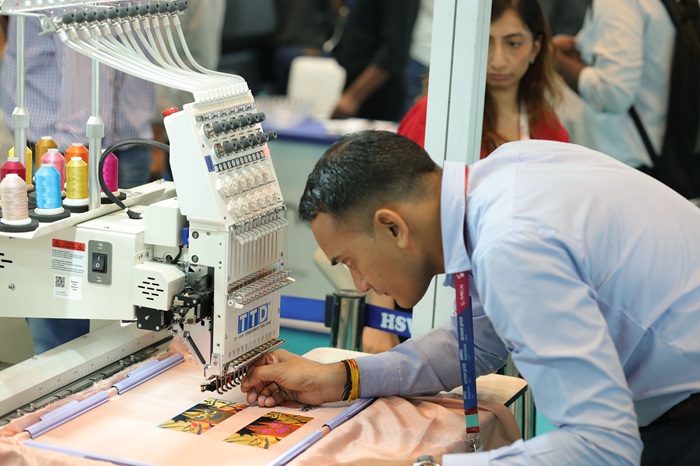
Sweden-based technology company for digital dyeing of textile thread on-demand for embroideries, Coloreel, has sold an eight-head unit in Italy to Bond Factory. A prestigious Italian manufacturer of high-end apparel to the European fashion and textile industry, Bond Factory is also a part of the Dyloan group.
As per an Apparel Resoruces report, Coloreel will install a production line of eight multi-head unit inside the Bond Factory. Sales at the unit will be done in collaboration with Coloreel’s new distributor in Italy, Technoprogress.
Sven Öquist, VP Sales, Coloreel Group AB, says the installation enables Bond Factory to meet the fast-rising demand for Coloreel;s more environment-friendly and creative embroideries. This is also a great start for our Italian distributor Techno progress will help us capture the large Italian market together with them.
Bangladesh value addition on RMG drop with rising cost of raw materials
Bangladesh Bank data reveals, value addition in Bangladesh’s readymade garment products dropped to 55.80 per cent in the July-December 2021-22 due to global increase in raw materials prices. As per a report by New Age Business, value addition in Bangladesh’s apparel products has been declining since fiscal 2019-20. In FY20, the value addition dropped to 56.84 per cent from 64.32 per cent in FY19. Though value addition slightly increased to 59 per cent, in FY21, it again declined in the first half of FY22.
Exporters attribute the drop to the pandemic which disrupted supply chain and increased prices of raw materials. Apparel exports in the first half of FY22 grew 28 per cent while imports of raw materials increased 54.46 per cent in the period. Md Shahidullah Azim, Vice President, BGMEA opines, value addition in apparel products has been declining due to increasing freight cost and business operation cost amid the pandemic. Md Fazlul Hoque, Former President, BKMEA adds, attributes the decline to many factors but hike in raw materials price is the most prominent. Besides, cost of doing business has increased amid the pandemic, Fazlul adds.
Apparel exports from Latin America may rise despite raw material shortages

To ease COVID triggered supply chain woes, fashion brands in the US plan to step up orders to the South this year. This may boost apparel exports from Latin America even as suppliers may face certain raw material shortages. As per News in America report, apparel sales in Latin American countries like Mexico are likely to rise 10 per cent this year as more US buyers engage in near sourcing. This will boost demand for Central American and Columbian garments, says Raul Garcia, Head, Mexico WTC.
Garcia predicts, garment shipments from Mexico may hit $7 billion this year. Most of this growth will be dominated by increasing sales of knitwear, T-shirts, polo shirts, lingerie, underwear and socks, he adds.
Denim exports to surge
This year, denim exports may also increase sharply, says Garcia. This will benefit denim makers in La Laguna industrial hub who manufacture make denims for brands like Levi’s and Wrangler, he adds. However, lack of synthetic yarn and thread may make it difficult for suppliers to meet orders. To mitigate this, the industry plans to negotiate more flexible rules of origin under the United States-Mexico-Canada Agreement (USMCA), a free-trade deal between the US and Canada, adds Garcia.
Suppliers face 15 per cent shortage in fabrics
Latin American suppliers are currently facing a 15 per cent fabric shortage in supplies. To meet requirements, they plan to boost imports from China, India and Pakistan by adjusting the yarn-forward rule, notes Garcia. Central American exporters are already stepping up shipments to the US by 10 per cent, says Juan Sánchez, Owner, Texsun. However, like Mexico, faces raw material shortages. Suppliers in Gautemala are facing yarn shortages as a result of US ban on yarn purchase from China’s Xianjiang Uyghur Autonomous Region, notes Sanchez. Despite this, US brands continue to step up investments in Latin America, says Sanchez. And most investments are being directed to textiles, yarn spinning and apparels. Investments in sportswear, notably custom or logowear are also increasing, adds Sanchez. Rising capacity and sophistication boost supplies
In the past decade, Latin American companies have become more sophisticated and added capacities, says Sanchez. Their response times have reduced to just eight- to 10-weeks of bagging an order compared to 12 to 15 weeks five years ago, he adds further. In 2021, garment shipments from Colombia grew 50 per cent to $900 million informed Lavia Santoro, President, ProColombia, an export lobby speaking at Colombiatex de las Américas textiles fair last month. The two-day event had attracted around 270 companies and generated $6.4 million in potential sourcing contracts.
Brazil also witnessed 17 per cent surge in textile and garment shipments this year as a weak real boosted orders from key buyers in Argentina, the US and Paraguay. This year, garment shipments from Brazil are likely to surge 2 per cent due to COVID related uncertainty, adds Pimentel. However, demand for beachwear and denims may rise during in summer, boosting exports. The situation may become clearer in the next two to three months, he concludes.
Despite uncertainty Bangladesh RMG exporters upbeat with orders on the rise

Despite global tensions, Bangladesh's apparel exporters are upbeat mood as new orders are fuelling expansion of old factories and opening new ones. Since 2021, Bangladesh has set up around 200 new garment factories, say experts. And old factories are expanding capacities and subcontracting orders
More factories seek BGMEA membership
However, exporters fear, the current Russia-Ukraine war may cause a delay in payments and shipments. To offset delays, around 110 garment factories joined the Bangladesh Garment Manufacturers and Exporters Association (BGMEA) in the last two years. Around 72 factories also joined Bangladesh Knitwear Manufacturers and Exporters Association (BKMEA) during this period.
Industrial Police (IP) stats show, around 55 new garment factories were set up in Gazipur industrial belt in the last two months. Most of these IP-listed factories are small-sized and subcontract orders that employ around25-50 workers. Masud Alam, Managing Director, MN Seven Fashions says, they opened a small-sized factory in Gazipur last year to make knits. The plan is to bag some of the orders that have recently shifted to Bangladesh due to US-China trade war.
Safety and compliance makes Bangladesh a preferred manufacturer. With work orders beyond capacity, a few manufacturers are engaging subcontractors to meet supply deadlines. Some are also expanding their machine capacities.
Shahidullah Azim, Vice President, BGMEA says, a few factories have been set up in recent months as global buyers are placing plenty of work orders. Orders diverted from China are also increasing with buyers adopting China-plus strategy. Compliance on safety and environmental standards too make Bangladesh a lucrative destination for apparel production, adds Azim. Exports surge to $31.45 million From July-January 2021-22 Bangladesh received work orders worth $23.98 billion for readymade garments both knit and woven. Exports grew 30.30per cent year-on-year during this period. Since September 2021, Bangladesh’s apparel exports earnings surged above four-billion in February. Growth is attributed to the strong rebound of apparel shipments from pandemic-spawned recession. Bangladesh’s apparel exports surged to $31.45 billion in FY2020-21 as the industry continued to expand production and restore supply chains
Remain connected with buyers and lein banks
The ongoing Russia-Ukraine conflict is a concern for RMG sector as Russia is an emerging market for Bangladesh apparel exports. Meanwhile, Russia faces wide ranging sanctions from countries with ‘banks’ access to SWIFT international payments systems blocked, he adds. In 2020-21, Bangladesh exported garments worth $593 million to Russia. BGMEA has advised exporters to inform the buyers they are currently working with alongiwth overdue payments and details of the concerned banks.
BGMEA has also advised exporters to remain connected with buyers and lein banks and take the required decisions only after discussing with them.
Textile and garment players urged to leverage AfCFTA for product marketing
Textile and garment industry players have been urged to take advantage of the Africa Continental Free Trade Area Agreement (AfCFTA) to market their products to other parts of Africa.
AwurabenaOkrah, CEO, Winglow Clothes and Textile, encouraged industry players to consistently upgrade their skills and churn out innovative products to appeal to a wider range of buyers.
She was addressing a graduation ceremony for 12 trainees in Proficiency and Skills Training in Garment Making at the Textiles and Garment Training Laboratory at the Accra Technical Training College in Kokomlemle, Accra.
The training is a component of the GEA-Mastercard foundation, a Young Africa Works Programme which seeks to equip the Ghanaian youth with employable skills for dignified work.
Okrah said the COVID-19 pandemic had provided an opportunity for stakeholders in the textile industry to explore new skills and opportunities in the industry.
Samuel Dodoo, President. SPINnet Textiles and Garment Cluster, appealed to the Government to resource the Ghana Enterprise Agency to adequately support small and medium enterprises (SMEs) in the textile and garment sector.
He said the SPINnet Textiles and Garment Cluster had over the years supported the growth of the textile industry by training many young people to establish their own businesses.
ITA launches new brand and magazine
Non-profit association, the International Textile Alliance (ITA) is launching a new brand that will enhance the experience for everyone involved
Launching with the reimagined brand and trade show is the new Interwoven magazine. It has the look and feel of a fashion magazine and was created to present textiles in a modern, relevant manner.
The show, magazine and website are now called Interwoven™, which symbolizes ITA’s supportive alliance of textile professionals and represents the merging of ideas through collaboration, connection and innovation.
Twice a year, ITA facilitates an international trade show in High Point that showcases the products of nearly 150 member manufacturers. The bi-annual show, sponsored by Unifi Manufacturing and Crypton, is a wonderful opportunity for buyers to see the best of the industry, from textiles to leather and trimmings, all while making strong and lasting connections. The membership is composed of textile mills, converters, distributors, agents, tanneries and trimming manufacturers that produce decorative coverings for home furnishings and related industries. Interwoven is the only sourcing show of its kind in the western hemisphere. The next show is on May 22-25, 2022.
The new Interwoven magazine will speak to trends in the industry, showcase manufacturers and designers and provide buyers with a valuable resource for inspiration and information. The new Interwoven website will continue to provide these resources online throughout the year.
Diesel launches new NFT platform
Italian fashion brand Diesel is launching D Verse NFT platform to expand its presence in the non-fungible token (NFT) sector. As per a Ledger Insights report, the platform will feature collections that combine physical and digital items and support a digital community on Discord.
The collections will include digital collectibles of runway pieces, limited edition physical garments, sneakers and accessories. The NFTs will potentially be used as wearables in the metaverse, but no partnership with an existing virtual reality platform was mentioned. The company is launching a D:VERSE key, which is a token-like asset that can be exchanged for discounted NFT pre-sales, raffles, prizes, and other NFTs.
The first collection will be based on pieces showcased at this year’s Milan fashion week from the Fall/Winter 2022 collection. In total, there will be four different NFTs that will be sold on the D:VERSE platform on a first come, first serve basis. However, no pricing has been released. In addition, there will be one single edition NFT that will be sold through an auction on Rarible’s platform.
This is not Diesel’s first go at NFTs. The brand launched a collaboration with digital fashion house The Fabricant and NFT Platform Neuno, which specializes in bringing luxury digital wearables to the metaverse.
The interaction of physical and virtual reality is growing in the fashion industry. One aspect that brands need to consider is how NFTs and digital assets in general can provide some utility for consumers instead of just being a static image on a screen.
American Apparel Inc files for bankruptcy
DovCharney, Founder, American Apparel Inc, filed for bankruptcy along with his latest business venture, a vintage clothing store.
As per a BloomsbergQunit report, Charney was forced into bankruptcy court because he owed $30 million to a hedge fund involved with American Apparel, which shut down all of its outlets and became an online retailer after going through two of its own bankruptcies.
While in bankruptcy, Charney will be able to halt any debt-collection efforts while he works out a plan to repay as much as he can.
In the 1990s, Charney built American Apparel into a major retailer known for its made in USA marketing and racy advertising. The Los Angeles-based company became publicly traded in 2007 but within a few years, Charney was forced out as the company began losing money. It filed the first of two bankruptcies in 2015.
At its height, American Apparel had more $600 million in sales from hundreds of stores and employed thousands of people, including at a manufacturing plant in California.
Charney made a number of attempts to take back the company but was never able to get the financial backing he needed to close a deal.
53rd IHGF to offer seamless in-person buying experience to visitors
The 53rd IHGF Fair 2022 will offer visitors a seamless in-person buying experience for those wanting to find new products and suppliers for Home, Lifestyle, Fashion, Textile & Furniture products.
The Asia's biggest show for home, lifestyle, fashion, textiles and furniture products will feature about 2,500 exhibitors presenting their new takes across fourteen product categories in its upcoming edition, scheduled from March 30 to April 3 2022.
. Inspired by a rich heritage and crafted from a variety of raw materials by a skillful workforce base, these products lines never fail to impress. Fit for new times, redefined lifestyles, reinvented households, altered routines and multiple work spaces, the product variations and innovations are in resonance to the emergent world. At the same time, there is plenty for craft connoisseurs, curators and collectors to choose from.
Theme Pavilions, Regional Exclusives, Artisanal Fare, Live Craft Making, Ramp Presentations, Workshops and Seminars will be part of the experience. This edition also focuses on major current themes like, sustainability, young entrepreneurs, women led export establishments and integrated design development outcomes.
US, EU ban export of luxury items to Russia
Leaders in the US and Europe are banning export of luxury goods to Russia, and stripping it of favored trade status as it continues its assault on Ukraine. President Biden and G7 Leaders from Canada, France, Germany, Italy, Japan, and the United Kingdom as well as the European Union have criticized the assault on Ukraine, further isolating Russia from the global financial system.
Biden has signed an executive order to end the export of luxury items to any person located in the Russian Federation. Ursula von der Leyen, President, European Union, The EU also plans to take action to “make sure that the elites, proxies and oligarchs that support President Putin’s war are deprived of their access to luxury goods and assets.
Designers from Giorgio Armani to Demna Gvasalia are protesting against the war. Last week, several international brands and luxury fashion groups, from LVMH and Kering to Prada, Hermès and Moncler, announced they were temporarily pausing their commercial activities and shuttering their stores in Russia as a sign of protest against the country’s invasion of Ukraine.