FW
ITMA ASIA + CITME in Shanghai attracted 1,500 exhibitors, China dominated the event
Organised from November 19-23, 2023, the eighth edition of ITMA ASIA + CITME exhibition in Shanghai attracted 1,500 exhibitors from 23 countries and regions.
Spread over 160,000 sq. mt. at the sprawling National Exhibition and Convention Centre in Shanghai, the six halls at the venue had 18 product sectors of the textile manufacturing value chain being showcased.
Exhibitors from China dominated this year’s edition followed by exhibitors from Germany and Japan. Some of reputed companies participants included: CHTC Group, Groz-Beckert, Itema, Muratec, Oerlikon, Picanol, Rieter, Saurer, Savio, Shima Seiki, Stäubli, Texpro, Truetzschler, Uster and Vandewiele.
Around 23 per cent of the exhibition space was occupied by spinning and man-made fiber production machines, followed by dyeing and finishing machinery which occupies 21 per cent space, knitting occupying 16 per cent space and weaving occupying 14 per cent space.
The organising committee collaborated with over 100 supporting media partners for the event. It conducted numerous, overseas roadshows in Indonesia, India, Pakistan and Bangladesh. This resulted in over 20,000 visitors from nearly 90 countries and regions pre-registering their visit.
Owned by CEMATEX and its Chinese partners, ITMA ASIA + CITME 2022 is organised by Beijing Textile Machinery International Exhibition and co-organised by ITMA Services. The Japan Textile Machinery Association (JTMA) was a special partner of the show.
The next ITMA ASIA + CITME exhibition is scheduled from October 14-18, 2024 at the National Exhibition and Convention Centre in Shanghai.
Strong VDMA Presence: 40 exhibitors showcase innovations at ITMA ASIA + CITMA 2023 in Shanghai
Around 40 VDMA companies showcased their products at the ITMA ASIA + CITMA exhibition held in Shanghai on November 19. They presented a comprehensive range of machines utilized in spinning and manmade fibers, nonwovens, weaving, braiding, knitting and hosiery, finishing and dyeing, and textile processing. This strong representation was part of the broader German presence at the exhibition, which included 60 exhibitors from the country.
The VDMA Textile Machinery Association and VDMA China were notably located in Hall 8 zone B. The inaugural day featured a conference that was addressed by Janperter Horn, Chairman, VDMA Textile Machinery Association. Horn said the event provided an opportunity for association members to engage with customers and partners in person. He emphasized the significance of strengthening relations with China and other countries and forming new partnerships.
Speaking on the German textile industry, Horn highlighted a slight decrease in textile and machinery exports to €1.7 billion between January and August of the current year. Exports to major markets saw a drop in this period, including a reduction in exports to China from €453 million to €440 million, Turkey from €265 million to €205 million, the US from €144 million to €177 million, and to India from €228 million to €170 million.
As per recent VDMA business climate survey among textile machinery companies in China, nearly 75 per cent participants regarded their present business situation as either good (6 per cent) or satisfactory (69 per cent). Looking ahead, about 50 per cent the companies anticipate a market decline in the coming quarter, while 44 per cent expect it to remain stable. Moreover, 63 per cent anticipate retaining their employees in the coming years.
ACF, BCI MoU to boost cotton production in Pakistan
The recent MoU between the APTMA Cotton Foundation (ACF) and Better Cotton Initiative Pakistan (BCI) will boost cotton production in Pakistan, say experts.
The MoU will facilitate more cooperation between the two organisations to foster cotton industry growth in Pakistan. It will strengthen the cotton value chain besides improving production and quality, and enabling market integration and linkages for cotton products,
It will also facilitate a traceability system aligning with international rules and standards. BCI will act as the program partner for the MoU and provide technical support for Better Cotton development in Pakistan. It will organise assessments, and mobilise financial and technical partnerships. BCI will also help APTMA integrate Better Cotton criteria into national cotton production technology and training materials.
Acting as the promoting agency, ACF will prepare training materials, and invite APTMA representatives to participate in BCI’s strategic planning meetings and seminars on Better Cotton. It will also collaborate with BCI to ensure traceability across the supply chain of Better Cotton produced in areas operated by ACF.
Experts foresee export growth amid rupee depreciation
The recent depreciation of the Indian rupee is seen as a potential boon for the country's labor-intensive export sectors, say experts. They believe the devaluation could lead to a 2-19 per cent increase in outward shipments of products such as readymade garments, carpets, and handicrafts. Handicraft exporters, in particular, stand to benefit significantly with a potential 100 per cent gain.
Exporters could see a eight per cent gain if the rupee depreciates approximately 10 per cent, coupled with a reduction in the import content of their goods to 20 per cent. Moreover, the depreciation may be advantages in contract negotiations, as highlighted by Ajay Sahai, Director General of the Federation of Indian Export Organisations.
The global economic slowdown has taken a toll on labor-intensive sectors, with a 21.9 per cent decline in apparel production during the first half of 2023-24. The leather industry also faced growth stagnation and apparel production remained 34 per cent lower than the corresponding period in pre-COVID-19 year of 2019-20. Leather exports declined 22 per cent from their pre-pandemic levels.
Specifically, ready-made garment exports saw a 14.58 per cent year-on-year decline to $7.82 billion during the April-October period. Handicrafts and leather product exports also recorded declines of 11.37 and 11.74 per cent, respectively.
In the April-October period, India's overall merchandise exports decreased 7 per cent to $244.89 billion, while imports fell 8.95 per cent to $391.96 billion.
Surat textile makers see domestic demand surge in festive season
India’s prominent hub for man-made fabric textiles Surat, has experienced a surge in apparel and textile exports driven by ongoing festive seasons and wedding festivities.
Despite a nationwide decline of 0.41 per cent in textile exports and 15 per cent in apparel exports from April to October 2023, textile mills in Surat, including areas like Palsana and Kadodara, continued operations round the clock. The festive season has led to increased demand, particularly for polyester fabric, with a notable rise in printing orders, says Jitu Vakharia, President of the South Gujarat Textile Processors Association (SGTPA).
Despite challenges such as labor shortages due to workers returning home for Diwali, the industry is resilient, showcasing a rebound to pre-pandemic growth levels after the difficulties faced during lockdowns. India's largest man-made fiber wholesale markets on Ring Road also reported heightened demand for various textile products like saris, lehengas, kurtis, gowns, salwar suits and leggings, with traders exporting goods to different parts of the country.
Ashish Gujarati, a key figure in the powerloom sector, notes rising domestic demand for polyester fabric, with the industry weaving 3.5 meters daily to meet this surge. However, despite the success, global exports continue to face challenges due to the ongoing global recession. As per Confederation of Indian Textile Industry (CITI), India's textile and apparel exports saw a decline of 6.67 per cent during April-October 2023 compared to the previous year, with cumulative exports dropping by 26.55 per cent in October 2023 compared to October 2021.
Myanmar to host Textile and Machinery Fair 2023 in December
The Myanmar Textile and Machinery Fair 2023 will take place in Yangon from December 8 to 10, 2023, organized by the Myanmar Garment Manufacturers Association (MGMA). In collaboration with the Chinese Textile and Garment Association in Myanmar, the event aims to enhance cooperation between the textile and garment industries of both countries.
Daw Khine Khine New, Secretary General, MGMA, anticipates the fair will serve as a platform for Myanmar to showcase its fashion market in collaboration with international partners. The exhibition will feature garments, shoes, and bags from 25 Chinese brands, fostering opportunities for local small and medium-sized enterprises to promote their products.
CITI report reinforces India’s textiles export growth, apparel exports shrinkage
The Confederation of India Textile Industry (CITI) latest analysis of the Indian textile and apparel (T&A) sector’s performance in October 2023 has highlighted what experts have been saying about the sector’s export capabilities, mirrored by financial stocks of reputable manufacturers.
October 2023 enabled textile exports to gain 24 per cent over the same month in 2022 while the cumulative exports of T&A grew 10. 44 per cent in October 2023 compared to October 2022. However, the cumulative T&A exports have actually underperformed in the six-month period of April and October 2023 by 6.67 per cent compared to the same period in 2022 and by 15.55 per cent in the same period of 2021. While textile sector’s exports look buoyant, the opposite is true for apparel sector. The analysis shows a depressed industry that is unable to cross the threshold to growth. In October 2023, apparel exports decreased 8.08 per cent.
Mixed overall performance
The last six months have not been kind. This year, between April and October textile exporters saw a cumulative negative growth of 0.41 while apparel sector saw a larger negative growth of 14.58 per cent. Compared to the same six months in 2021, this year export of textiles was negative by 19.55 per cent apparel expots was negative by 8.8 per cent. The silver lining is the T&A sector’s contribution to the nation’s entire export in 2021 was 9.7 per cent which fell 2022 to 7.31 per cent but rose slightly this year to 7.6 per cent. On the other hand, popular Indian raw cotton and waste had the worst export performance with a whopping decline of 78.69 per cent compared to same period in 2022.
The overall state of depressed exports was mirrored in the manufacturing sector. Despite export orders declining, the domestic apparel market was projecting a windfall due to the festive season. However, this windfall didn’t turn out to be as expected. A reputable Coimbatore-based manufacturer attributed several reasons for this decline in manufacturing and exports. First, the Quality Control Order recently introduced by the government, which mandates a Bureau of Indian Standards certification for man-made fibre, including those that are imported, has led to steep decline in exports as textile manufacturers are unable to source these raw materials as per government specifications in the international markets.
Implication for the workforce
The president of Tiruppur Exporters Association, KM Subramaniam is confident the drop in exports is a temporary phase. He feels while most garment exporters have reduced workers’ shifts or done away with overtime as production has gone into a loss, so far workers have not lost jobs and the recent announcement of drawback in duty hikes is expected to revive exports and hopefully have factories running in profitably again.
While this may sound optimistic, there are others who don’t necessarily reciprocate Subramaniam’s optimism. Clothing Manufacturers Association of India (CMAI) Chief Mentor Rahul Mehta says, the domestic market has been slow since mid-March and compared to last year growth is flat. If low production trend continues for another couple of months, he feels job losses are inevitable after the end of the festive season.
The CITI monthly report indicates a mixed performance, whilst some recent reports have presented doom and gloom. Indeed there is not much clarity on how the sector will pan out by the end of this fiscal. If demand revives in Western markets India’s apparel exports can surely look up.
Bangladesh low-wage workers get support from US and EU
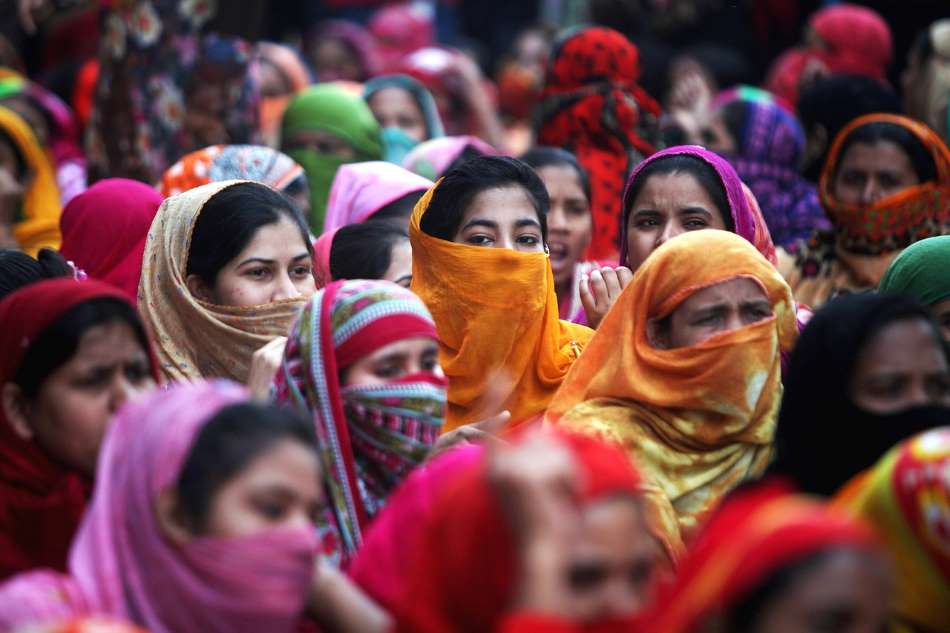
Apparel retailers in the US and Europe , as the primary buyers of Bangladesh- garments have agreed to accept higher prices to help factories offset wage increases along with helping the daily survival of low-income workers, in a humanitarian move. Bangladesh factories that employ low-wage workers --mainly women -- have always been at the core of the garment industry, which employs over four million people who have always borne the brunt of a failing economy.
Many global fashion retailers such as Abercrombie &Fitch, Lulumon, H&M and Gap among others have told the Bangladesh government they were keen for workers' wages to rise as the country’s inflation rate is at an alarming 9 per cent between 2022 and 2023, the highest in over a decade. Looking for peaceful negotiations and calling for the new minimum wage to cover the basic needs of factory workers, many retail companies belonging to the American Apparel and Footwear Association (AAFA,) which represents US brands are now aggressively suggesting a more frequent and timelier minimum wage review.
“Ideally this wage level, which in Bangladesh informs the calculation of all wage levels, would be reviewed annually, not every five years. Ensuring timely reviews and, as needed, increases in these levels, is a critical part of the suite of better buying practices that responsible brands are deploying,” opined Nate Herman, Senior Vice President of Policy of AAFA.
Workers pay hike to undermines factory owners profits
Factory owners are not too happy as this hike-which comes just ahead of general elections in January 2024, would dip into their profits as costs could rise by 5-6 per cent. Wage cost is almost 10-13 per cent of total manufacturing costs which is already a deterrent in a post-Covid export market.
Last few weeks saw clashes between the police and factory workers, as the government’s wage board had announced just $113 increase a month for the workers from the first week of December. However, this did not go down well with impoverished factory workers.
As per the International Labour Organization (ILO), even with this increase, Bangladeshi workers will receive far less than other Asian garment supplier countries such as Vietnam with an average monthly wage of $275, and Cambodia with $250, which is low enough compared to Western counterparts.
Protest levels increase as responsible purchasing practices happen
This kind of protests in Bangladesh was not seen in a decade since the infamous Rana Plaza collapse and the government. There was an apprehension this unrest could shy away Western buyerss to other sourcing destinations. However, BGMEA was ultimately successful in getting minimum wages for workers in Bangladesh increased to Tk 12,500, equivalent to around $113.63, from Tk 8,000 at present. In a letter to the American Apparel & Footwear Association (AAFA), the BGMEA president Faruque Hassan also sought higher prices from retailers and brands such as AEO Inc, Adidas, Amer Exports, Hugo Boss. Under Armour, etc in line with the hike in the wages.
The US and EU are now finally committed to far more responsible purchasing practices to support the wage increases and to implement an annual minimum wage review mechanism so that the lower-middle classes are affected by changing macroeconomic and geo-political conditions. It is not fair that the workers are penalized while there is growth in the general value of the garment industry with RMG exports accounting for 35.1 per cent of Bangladesh’s annual GDP. As McKinsey says garment exports from Bangladesh have jumped from $14.6 billion in 2011 to $33.1 billion but this is not reflecting in the living standards of the lower middle classes.
Yes Men expose Adidas virtual currency stunt, worker rights demand grows
Adidas faces renewed criticism over its treatment of workers in the supply chain, as activist group Yes Men, in collaboration with labor organizations from the Pay Your Workers Coalition, orchestrates a second major hoax within a year. At the Web Summit in Lisbon, activists posing as Adidas representatives announced a virtual currency payment system for workers, creating a fictional "adiVerse" for virtual luxuries.
This follows a previous hoax during Berlin Fashion Week, where a false statement claimed the appointment of a former garment worker as co-CEO and hinted at Adidas signing the legally binding Pay Your Workers - Respect Labour Rights agreement.
The Pay Your Workers campaign targets Adidas for its failure to ensure full payments to workers during the pandemic, citing a 2021 report by Public Eye revealing over $11 million in pandemic-era wage theft owed to garment workers.
The Hulu Garment factory in Cambodia, producing Adidas clothes, has been embroiled in a dispute for more than $1 million in unpaid severance pay since April 2020. Activists criticize Adidas for prioritizing sponsorships, like the FIFA Qatar debacle, over workers' rightful claims in countries such as Cambodia and Indonesia.
Christie Miedema, from Clean Clothes Campaign, accuses Adidas of neglecting workers' rights and failing to guarantee fair wages, particularly for women of color in the supply chain. Despite ongoing calls and protests, Adidas has not signed the Pay Your Workers agreement, leaving workers vulnerable in times of crisis.
The Yes Men's actions align with persistent pressure on Adidas since 2022, with global labor rights organizations urging the company to address issues and prioritize fair compensation for workers.
Gap Inc. demonstrates resilience amid sales challenges in Q3 2023
Gap Inc. showcased its ability to navigate a challenging retail landscape in its Q3 2023 financial results, revealing a 7% decline in net sales compared to the previous year, primarily impacted by the sale of Gap China. Despite this, the company reported market share gains and notable improvements in gross and operating margins, signaling operational and financial discipline under CEO Richard Dickson.
The Q3 report highlighted a diversified brand performance. Old Navy maintained stability with a 1% increase in comparable sales, driven by strength in women's and kids' categories. Conversely, Gap and Banana Republic faced headwinds, experiencing sales declines of 15% and 11%, respectively. Athleta struggled the most, with an 18% drop in net sales and a 19% decline in comparable sales, attributed to challenges in overcoming last year's elevated discount levels.
While online sales decreased by 8%, representing 38% of total net sales, the company reported a gross margin expansion of 41.3%, showcasing resilience in a competitive market. The positive cash flow and increased cash and equivalents by 99% further underscore Gap Inc.'s financial stability.
Looking ahead, the company reaffirms its full-year revenue outlook, balancing progress with a cautious view of the economic climate. With an additional week in Q4 expected to positively impact net sales, Gap Inc. aims to navigate the retail landscape, closing 350 Gap and Banana Republic stores in North America by fiscal year-end.