FW
ITMA Asia + CITME 2023 unveils Groz-Beckert's textile innovations in Shanghai
ITMA Asia + CITME 2023, set to run from November 19 to 23 at the National Exhibition and Convention Centre in Shanghai, will spotlight Groz-Beckert's cutting-edge textile advancements. Positioned in Hall H4 Booth C06, the exhibition will showcase the company's strides in six pivotal product domains: Knitting, Weaving, Felting, Tufting, Carding, and Sewing.
Knitting breakthroughs
Under the banner "Innovation through cooperation," Groz-Beckert will unveil groundbreaking innovations in Circular Knitting, including the LCmax circular knitting machine needle. This technology promises up to 20% energy savings, enhanced machine speed, and optimal handling. The Flat Knitting segment introduces the SAN TT for technical textiles and SAN FY for robust fancy yarns, ensuring heightened process reliability.
Weaving excellence
Weaving highlights include the KnotMaster tying machine and the WarpMasterPlus drawing-in machine, offering efficiency and flexibility. Groz-Beckert's broad portfolio of healds and heald frames will also be on display, emphasizing stability, low weight, and innovative features for modern weaving machines.
Felting Advancements
In the Felting realm, Groz-Beckert presents a groundbreaking barb design for needles, emphasizing durability and reduced wear, alongside the felting needle module for MicroPunch intensive needling technology, pushing the boundaries of needle density.
Tufting precision
Groz-Beckert's Tufting products spotlight the gauge part system, essential for producing tufted floor coverings. Precision in needle and looper modules, reed finger module, and tufting knives ensure seamless interaction for impeccable results.
Carding innovations
In the Carding domain, the exhibition showcases advancements catering to nonwovens and spinning industries. Notable offerings include the world's finest interlocking wire, SiroLock plus types, and maintenance-free cylinder wire, all designed to enhance carding efficiency.
Sewing solutions
The Sewing segment features special application needles from the SAN series, tailored for demanding operations. The SAN 5.2, SAN 6, and SAN 10, equipped with GEBEDUR coating, promise increased stability and reliability across various fabric types.
Sustainability corner
Groz-Beckert emphasizes sustainability, showcasing products and innovations aimed at reducing the company's carbon footprint. A dedicated sustainability theme corner underscores the company's commitment to eco-friendly practices, presenting implemented measures and highlighting the integral role of sustainability in everyday operations.
Boutique living's Caressa Collection: Luxe linens with TENCEL fibers
Boutique Living, a leading brand under Indo Count Industries, introduces the opulent Caressa Collection, marking a significant stride in high-end home textiles. Merging TENCEL botanical fibers with cotton, the collection promises unparalleled softness, comfort, and positive wellness effects, enhancing the fabric of daily life.
Crafted with expertise, the Caressa Collection embraces the natural goodness of TENCEL fibers, extracted from eucalyptus trees, creating bed linens that redefine luxury and contribute to overall well-being. The blend of TENCEL and cotton ensures an unprecedented level of softness, vibrant hues, and traditional comfort, delivering a restful and healthier sleep experience.
KK Lalpuria, CEO & Executive Director of Boutique Living, emphasizes the unique appeal of the collection, stating, "The Caressa Collection is the perfect amalgamation of quality, comfort, and aesthetics, providing an ambiance of luxury and relaxation." Importantly, this offering isn't just about quality; it's about affordability, making sophistication and comfort accessible to all.
Rajiv Merchant, President Domestic Retail at Indo Count Industries, highlights the collection's embodiment of top-tier quality, unparalleled comfort, and captivating aesthetics. The diverse designs, inspired by global sensibilities and the timeless charm of American homes, offer a classic look that transcends trends. The collection includes bed sheet sets with thread counts ranging from 200 to 500 tc, priced affordably from Rs. 2299 onwards, and is available through various retailers and the Boutique Living website.
Avinash Mane, Senior Commercial Director (Textiles) for Lenzing Group, emphasizes the longstanding partnership with Indo Count Industries, underscoring the Caressa Collection's commitment to superior comfort, aesthetics, and sustainability. The collection exemplifies these features, delivering exceptional value and experience to Indian consumers.
After prolonged flat lining, India’s textile stocks fly high

The last few years, abetted by the pandemic-led lockdown and the worldwide economic downturn that followed, India’s textile sector faced sluggish growth. However, things have turned around as the stock markets indicate and investors, impressed with figures posted by sector’s big players, are rushing in to invest. So, what helped the ailing sector to bounce back into health? A mixed bag of reasons has contributed to positive investor leaning.
India’s FTAs are nearing successful completion that will give local textile import duty advantage. Domestic cotton prices gave started falling, lowering cost of production. The US importers have suddenly upped orders for cotton sheets and terry towels, thanks to home textiles receiving a boost as more Americans are working hybrid and investing in upgrading their home interiors. As global retailers push sales hard, their inventory is decreasing, opening up the possibility of larger orders.
Local textile exporters are seeing reasons to believe the second half of year will play out to their advantage. That is perhaps a reason why textile-related stocks such as Raymond, Vardhman Textiles, Arvind, Trident, Gokaldas Exports, Welspun, KPR Mills and Himatsingka Seide have seen a rally of 4 to 12 per cent recently. For example, Fidelity Investments India acquired a 1 per cent stake in KPR Mill in August 2023 that spiked close attention on the Indian textile sector.
Expert recommendations are flying in
The Indian textile and apparel market size was around $165 billion in 2022, and is projected to grow at a 10 per cent CAGR to reach $350 billion by 2030 as stated by FICCI-Wazir Advisors study. Reputable financial investment advisory entities are recommending ‘Buy’ for textile stocks. ICICI Securities and Edelweiss Finance have initiated a ‘Buy’ recommendation for Gokaldas Exports keeping the target price at Rs973 and Rs 933, respectively. Similarly, Axis Direct recommends a ‘Buy’ on Welspun with a target price of Rs 160. As per Motilal Oswal Financial Services’ recently published report, the top 10 textile stocks to invest in are: Welspun India, Trident, Lux Industries, Garware Technical Fibres, Raymond, KPR Mills, Siyaram Silks, Go Fashion India and Nitin Spinners.
Interestingly, featured for the first time in Oswal’s Top 10 is c, a New Age textile stock. The company is primarily in the business of manufacturing different types of bottom wear for women. The products are marketed under the ‘Go Colours’ brand and sold both online, through retail stores. Out of the 10 listed in the report, Coimbatore-based KPR Mills was seen as the most stable of stock and Nitin Spinners as the one with biggest export potential. Oswal also pointed out the retail textile business is the most profitable in India, as it involves no machinery and raw materials and minimal workforce. However, the marketing expenses are higher.
Investment with caution
Given the recent upheavals not only in global textile sector but also within India, investment advisors are asking for caution and for good reason. Market capitalization is a important decision-making factor as companies with large market-capitalized stocks are less volatile to fluctuations than mid or small-capitalized companies. However, there are instances where small-capitalized or mid-capitalized companies delivered better returns compared to large ones. In terms of profits, investors need to ensure a company’s stock profitability history as being more or less consistent keeping in mind that the entire sector globally faced tough times post Covid.
Having appeared from the ashes of gloom, the period ahead seems bright for textile stocks. However, some indicators are based on projection and need to perform for this success run to unfold to its true potential.
Be more sustainable, urges Vietnam customs to garment exporters
General Department of Customs from Vietnam has urged garment exporters to adopt more sustainability in their operations, in line with increasing trends. This will help them tide over current global uncertainties. According to the statistics of the department, Vietnam’s garment exports declined 12.9 per cent to $27.7 billion in the first 10 months of this year while textile exports declined by 10.8 per cent to $3.65 billion.
However, in October, Vietnam’s textile exports increased by 4 per cent to $389 million while garment exports declined by 0.1 per cent.
At the global level too, garment and textile exports declined during the first 10 months of the year owing to a decrease in global aggregate demand driven by geopolitical tensions, global economic recession, rising inflation in major markets such as the US and the EU, and tightened monetary policies forcing consumers to cut spending, point out Dương Thuỳ Linh, Deputy General Secretary, Việt Nam Cotton and Spinning Association (VCOSA).
Vietnam’s garment and textile industry also suffers with growing demand for more sustainability and increased competition from exporters in Bangladesh and Myanmar. This has led to many textile companies narrowing their production scale to 50-80 per cent from the end of last year to the second quarter of this year. Though most producers resumed their full capacity from July this year, their export value is projected to drop by 10 per cent to $40 billion this year
Linh expects Việt Nam’s garment industry to benefit from cheap labor and new-generation free trade agreements (FTAs) signed with major markets. Phạm Văn Việt, Chairman, Việt Thắng Jean Company, affirms, despite low purchasing power, orders in the Vietnam market are gradually recovering to around 80 per cent for the last quarter of this year.
Nguyễn Thị Tuyết Mai, Deputy General Secretary, Việt Nam Textile and Apparel Association, adds, many local producers continue to face difficulties in meeting sustainability standards. However, several fibre producers met international standards such as Global Recycle Standard, Oeko-Tex and BCI, and were switching to using organic cotton, natural fibres and renewable energy in production, Linh adds.
Bangladesh garment industry reopens as normalcy returns post wage strikes
With almost all factories reopening and workers returning to their workplaces, normalcy has started resoring in the Bangladesh garment industry, said Faruque Hassan President, Bangladesh Garment Manufacturers and Exporters Association (BGMEA). Only a few factories in Ashulia continue to remain close though they are expected open soon, Hassan added. The association has been successful in getting minimum wages for workers in Bangladesh increased to Tk 12,500, equivalent to around $113.63, from Tk 8,000 at present.
In a letter to the American Apparel & Footwear Federation (AAFF), Hassan also sought higher prices from retailers and brands such as AEO Inc, Adidas, Amer Exports, Hugo Boss. Under Armour, etc in line with the hike in the wages.
Factories are also upgrading machine, process and production methods to ensure workplace safety, comfort for workers and to reduce fatigue, Hassan added. He believes implementing the new wage structure would prove challenging for many factories given the current economic and financial circumstances. However, the association remains committed to ensure a decent living to garment workers, he reiterated. He called for an adjusted in prices of all goods shipped from December 1, 2023, to cover the increase in wages.
Sri Lanka’s apparel industry calls for FTA with India
The Sri Lankan’s government’s decision to renegotiate a free-trade agreement with India has been appreciated by the domestic apparel industry. The move will give local producers more access to the Indian market to export their products.
As Hasitha Premaratne, Managing Director, Brandix Group points out, Sri Lankan producers can currently export only eight million pieces per year. However, increased access to the growing Indian middle class will enable them to increase their exports to $1 billion in the future, he added.
Premaratne believes, Sri Lanka can benefit from the current India-China political tensions by increasing its sportswear exports to India. The new FTA, proposed in the 2024 Budget will pave the way for this, he adds. Before the pandemic, Sri Lankan apparel exports revenue had touched $6 billion mark. This year, it is expected to recover to around $5 billion.
India’s Ministry of Textiles plans a more flexible PLI scheme
The Union textiles ministry plans tom make the production-linked incentive (PLI) scheme more flexible to attract more investments and encourage greater manufacturing. The plan is to add more product lines under the scheme. Launched two years ago with a budgetary outlay of Rs 10,683 crore, the scheme aims to boost local production of man-made fabric (MMF) garments and technical textiles.
Media reports suggest, the ministry has sought an approval for extending the HSN (harmonised system) codes of MMF to include as many categories as possible. The reason for this extension is the expanding scope of textile and fashion industry and increasing demand for fabrics. The earlier HSN codes were wrongly fixed, leading to confusion between artificial and natural fibers.
However, the present government hopes to widen their applications to invite more investments in the industry. The guidelines of the scheme were first released in December 2021. The government had received 64 applications with commitments worth approximately Rs 6,000 crore. The government has also sought the cabinet’s approval for another iteration of the PLI scheme for the textiles sector, with a focus on the apparels segment. The second edition of the scheme will focus on micro, small and medium enterprises (MSMEs) by lowering their investment limits to Rs 50 crore and Rs 25 crore under Part 1 and Part 2, respectively.
An amount of Rs 4,000 crore from the money unutilised in the first place will be used to fund PLI 2.0, said the official.
USDA expects global cotton output to rise marginally in 2023-24
A report titled, ‘Cotton: World Markets and Trade’ by the US Department of Agriculture (USDA) estimates, global cotton production will rise marginally to 113.5 million bales in 2023-24. The report attributes this increase primarily to higher yields in Afghanistan, Argentina, US and Paraguay. In fact, Argentina recorded the highest yield in 10 years while Afghanistan achieved record-level production.
Contrary to this, global cotton consumption is expected to have decreased by 500,000 bales to 115.3 million bales. Lower usage in key cotton markets including the US, Turkey and Vietnam caused this consumption decline. However, this drop
did not affect the global cotton trade which is expected to remain stable at 43.3 million bales. However, this stability resulted from China’s increased imports balancing out imports by Vietnam and Turkey.
Global cotton end stocks have increased by 1.6 million bales to 81.5 million bales on account of China’s increased government spending, increase in US production and declining exports from India. The season-average farm price for the 2023-24 crop in the US is expected to decline slightly by 3 cents, settling at 77 cents per pound.
Pure London x JATC show 2024: The rise of POP culture in fashion
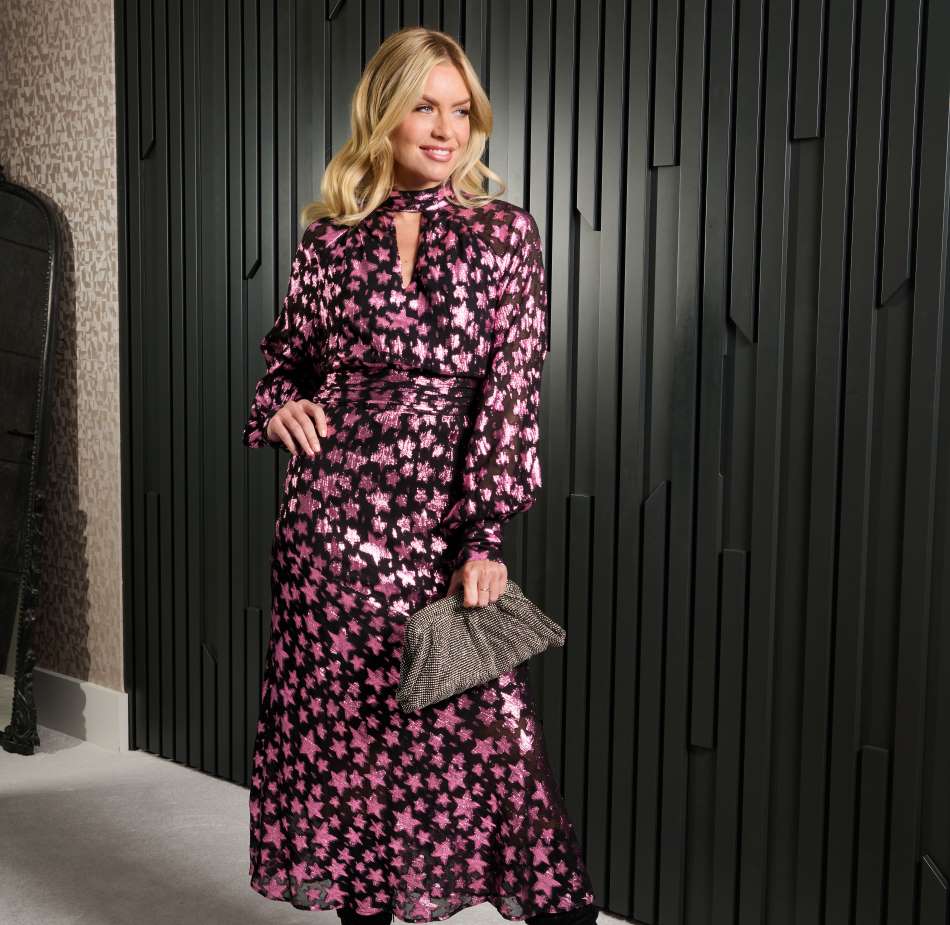
The upcoming Pure London x JATC show, set to dazzle fashion enthusiasts from February 11-13, 2024, promises to be a groundbreaking celebration of diversity and inclusivity. At the heart of the event is the expanded POP destination, sparking a vibrant conversation in the fashion world. This unique showcase embraces gender fluidity and cultural inspiration, presenting the newest and most diverse fashion collections.
The trendsetters redefining fashion: Spotlight on emerging brands
Audrey Hamilton Apparel, an Irish premium fashion brand, is poised to leave a lasting impact this season. Designed by the renowned pop and abstract artist Audrey Hamilton, the collection combines art and fashion, offering a unique and captivating experience. Nearby, The Social Club London introduces inclusive loungewear and accessories with a distinctive 'feelgood' factor. RAINMAKR LONDON impresses with print designs that cater to the Millennial and Gen Z demographic, emphasizing material quality and custom sizing.
Legacy meets innovation: Returning favourites and newcomers
In its second season, POP brings together both returning favourites and exciting newcomers. Nova of London showcases an extensive, fashion-forward collection mixing innovation with the latest trends. Glamorous, a global powerhouse, returns with a collection defined by its fearless approach to breaking fashion rules. Heretic Nine, an independent Shoreditch brand, draws inspiration from global streetwear and subcultures, creating concept-led collections for non-conformists.
Gloria Sandrucci, Pure London Event Director, enthuses, "In only its second season, POP is surpassing all our expectations, attracting an incredible selection of new and energetic brands. The destination is at the cutting-edge of fashion, offering buyers an edit of collections exploring new technologies and innovation in a style inspired by pop culture and street style."
With over 300 curated brands, the Pure London x JATC show is not just a fashion event; it's a cultural phenomenon. As it unfolds at Olympia London, attendees can expect a sensory journey through art, innovation, and the boundless possibilities of fashion.
China’s exports sector brings back Western apparel buyers

China seems to be coming back with a bang as the country’s apparel companies have made a good economic start this year with encouraging recovery. For the first time post-pandemic, demand from apparel retailers based in the US and EU sourcing from Bangladesh is now lesser with far higher sourcing from China. US-based apparel buyers are now scaling back sourcing from Bangladesh in certain segments and re-directing it to China and other South Asian countries. As per a QIMA report, a leading global testing, inspection, certification and compliance company, Bangladesh share fell 10 per cent year-on-year between January and September while China’s went up 14 per cent.
The prosperity index of China’s cotton textile industry is flourishing again and touched 50.5 in August 2023, up 1.5 from in July. Month-on-month growth in August showed, raw material purchasing index was 52.2, up 3.6 over July and the raw material inventory index was 49.6, which is up 0.8 month-on-month with a general production index was 50.1 currently. China’s cotton industry prosperity index is calculated based on numerous indicators from around 500 core cotton textile companies. If the figure is 50 or above it reflects an increase and below that it’s an indication of a dip.
Operating incomes of Chinese companies rise
A recent report by the China-based Zhejiang Huarui Information Consulting Company (CCF) a leading consulting company in chemical fiber and textile industry of 12 major listed apparel companies in China has shown that most have made a positive start this year and are slowly heading towards an economic restart and industry recovery. HLA as the core fast fashion brand under Heilan Group based in Jiangsu Province had the highest operating income in January-September 2023 of around 15.57 billion yuan which was a Y-O-Y- increase of around 13.85 per cent. Other apparel companies such as Semir and Youngor held the second and third highest positions with operating incomes of 8.9 billion yuan and 7.46 billion yuan respectively which was a Y-O-Y decrease of 0.5 per cent and 41.85 per cent.
At the other end of the scale were GRN and Meters/bonwe which ranked last with around 1.07 billion yuan and 837 million yuan respectively which was a Y-o-Y increase of 8.6 per cent and a decrease of 13.5 per cent.
Most of the 12 listed apparel companies in the CCF report have shown good operational development in the first three quarters of this year although the decline in operating income of the 12 companies in Jan-Sep was a bit higher than the first half of the year. Indeed the worst of the pandemic years may just be over, it is still too early for Chinese apparel exporters to be elated in an uncertain economy.
Bangladesh needs to diversify to compete
As Western consumers tighten their purse strings due to inflation and fears of economic downturn, brands and retailers are once again focusing on China as a sourcing and supplier destination due to its well-established manufacturing infrastructure. Bangladesh is simply losing out in this process. The need of the hour for Bangladesh is to branch out into manmade textiles instead of being heavily cotton-oriented.
As per Bangladesh’s Export Promotion Bureau the country’s garment exports in October saw about 14 per cent YoY decline to reach $3.16 billion, the monthly lowest since August 2021 when the segment earned around $2.73 billion. Bangladesh currently holds a 34.7 per cent share in the EU's cotton garment imports, whereas the share for non-cotton garments is 12 per cent. This issue needs to be addressed seriously. Along with readymade textiles, export of footwear, leather, and home textiles, if handled right, could be a turning point for the recovery of Bangladesh’s apparel segment.