FW
The growth of the Digital Textile Print Bureau

Debbie McKeegan discusses how digital textile printing, web to print software and vibrant ecommerce platforms have contributed in the growth of the Digital Textile Print Bureau across most textile applications.
No single shift in the Textile Business Model can have had more impact than the logarithmic growth of the Digital Textile Print Bureau. This market is driven by Millennial demand, where Customisation and Personalisation are paramount, along with the speed and instant customer satisfaction generated by Digital Textile Printing.

Caption: The Silk Bureau Limited is family owned business with more than 30 years’ experience. Founders Doug & Elaine Davies met at Art College and are both talented artists in their own right. Offering custom printed digital fabrics for individual designers, textile design studios and international retailers serving the Fashion and Home Décor industries. Credit: Leila Vibert-Stokes the ‘Greenfields Design a Scarf’ Competition winner & The Silk Bureau Ltd.
Fuelled by three enablers, Digital Textile Printing, Web to Print Software and Vibrant Ecommerce Platforms, the growth of the Digital Bureau crosses most Textile Applications, where it has generated huge potential from start-ups all the way through to mass manufacture. Success stories abound, and so it is difficult to single out any particular sector for mention, and yet, common to all of them, is the availability of sophisticated print machinery, and the upsurge in demand for customisation and personalisation.
None more so than in the DTG (Direct to Garment) sector, where machine prices and speeds cater for all needs. At one end of the market, a newcomer to the industry can set up a decent print shop and ecommerce business for well under £20k.
Entry level machines are popular, with Roland being the latest newcomer to the DTG machine market with the launch of their BT-12, aimed at small start-up businesses with limited budgets.

Caption: Prinfab was started in January 2016 by two brothers. Serving the creative community, they offer a range of fabrics for the Fashion and Décor industry, and have built a state-of-the-art production facility using the latest digital fabric printing technology. Credit: PRINFAB LTD.
At the other end of the market, Hi-Speed DTG machines such as the Atlas, recently launched by Kornit, offers a potential daily production in excess of a 1,000 units of personalised T-Shirts.
The machines on offer come with embedded design and workflow software, making it easy to meet an Ecommerce demand for customisation and personalisation. Installation of the machinery is not complicated, service support is widespread and, as the supplier base for blanks expands, so these businesses are moving from strength to strength.
The DTG Bureau can give 24 hr supply from one to one thousand t-shirts, all unique and individual, catering to and satisfying the huge demand for customisation.
Although the DTG market was a trailblazer, the real explosion in growth is in the production of bespoke fabrics in the Roll to Roll market.
Here, the bureau is not confined to producing prints on blanks, but creates unique fabrics on the roll that can then be used in a myriad of applications from Fashion to Homewares and from Craft to Interior Design.
Roll to Roll Bureaus are springing up in every country as the technology becomes more available and easy to use.
At its simplest level, the Roll to Roll Bureau is often a ‘one man band’ employing only two or three people, and yet, with Digital Textile Printing technology, capable of beating much larger enterprises to the punch when it comes to Service, Delivery and Price.

Caption: Print Unlimited offer a vast range of digitally printed fabrics for fashion, sports and beachwear, the entertainment industry, and Home Décor. Based in Holland they manufacture high quality digital textile prints in the quantity that you need and on the fabric of your choice. Credit: Designer Lucie Loete and PrintUnlimited.
In this entry-level Bureau, all the skills are present through multi-task training from Design to Pre-Press and on to Printing, Inspection and Dispatch. Typically they cater for a broad base of demand.
Up and coming Fashion Designers who need urgent prints of a few metres to complete their collection, Craft Businesses who need swift supply to minimise their stocks and maximise their sales, and Interior Designers who need a few exclusive metres of fabric for that never to be forgotten look.
All of these and more come to the Entry Level Bureau, where there is a wide spread of available technologies and fabric availability. Many of these Bureau’s offer over 50 Standard fabrics and a full range of printing ink-set options from Latex to Dyesub and from Reactive to Pigment.
Again, in the Roll to Roll sector machinery choices are many: Entry level machinery is available from Mimaki, Roland, Epson, Mutoh, HP, Pigment Inc, Fabrijet and D-gen, to name just a small selection, and all supply efficient, fast and high quality production machines, which cater to the speed and variability of demand which is a feature of this sector.
In many cases Bureau’s work with simple workflow software based around Adobe Photoshop for Design, and RIPs (Raster Image Processing Software) supplied by the manufacturer. Yet, however simple the system it gives the entry level printer the ability to manoeuvre images and print quickly and accurately to satisfy the requirements of their clients who need Customisation and Personalisation in a hurry.
But it would be a mistake to think of the Digital Textile Bureau as only a small scale enterprise, for this business model has created leviathans as well, and none exemplifies this more than the American giants Spoonflower and Merch by Amazon.
Spoonflower reputedly processes over 4,000 orders a day of two yards or less, taking designs from their clients and delivering finished product to them within a day or two. Spoonflower’s Roll to Roll business uses a variety of machinery printing with a number of ink-sets, however the offer is always the same, just the quantities are higher.
Similarly at Merch by Amazon, which is basically a DTG Bureau offering, a wide range of products, individual design, and the rapid delivery that Amazon is so renowned for.
So, whether a large Industrial Enterprise, or a more modest Local Print Shop, the message is the same, Customisation, Personalisation and Delivery, are the mantras for the Digital Textile Printing Bureau in the proliferation of Individual Textile Design.
Visit FESPA’s Print Make Wear at the Global Print Expo 2019 to see the latest technology in textile production for fashion, showing both direct to garment and roll-to-roll workflows. The feature will host a live production line but also a catwalk and tours. Register now and use code FESM906 for free entry.
Three-day Textile, Garments Exhibition IGATEX Pakistan Successfully Concludes--Attracts Over 15,000 Quality Trade Visitors, Closing Billions Of Rupees Deals
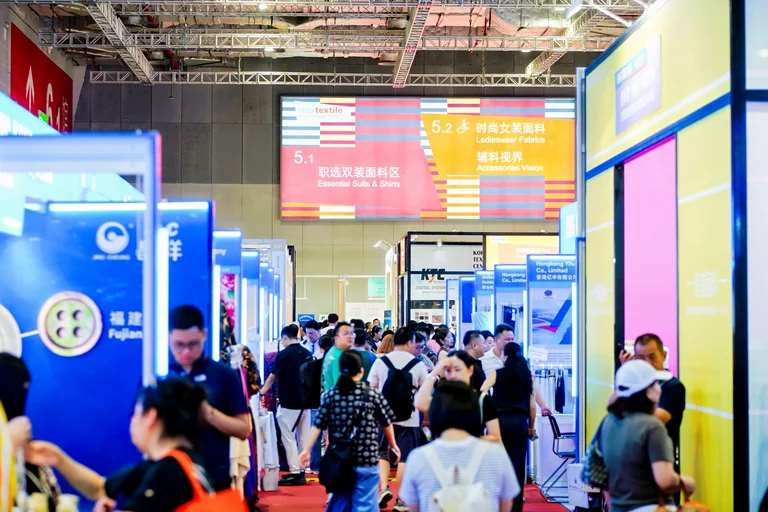
Attracting over 15,000 quality trade visitors and closing billions of rupees deals of the most modern technology and machinery, three-day textile and garments exhibition IGATEX Pakistan successfully ended on Thursday at Expo Centre Karachi.More than 500 companies from 37 countries participated and remained there despite tension between Pakistan and India showing their commitment towards peace and stability
KARACHI (UrduPoint / Pakistan Point News / NNI - 28th February, 2019) Attracting over 15,000 quality trade visitors and closing billions of rupees deals of the most modern technology and machinery, three-day textile and garments exhibition IGATEX Pakistan successfully ended on Thursday at Expo Centre Karachi.More than 500 companies from 37 countries participated and remained there despite tension between Pakistan and India showing their commitment towards peace and stability.More than 116 exhibitors from China and 92 from Italy alone attended this over-crowded event.
Other countries present at IGATEX 2019 were France, Belgium, Austria, Korea, United Kingdom, United States of America, Brazil, Thailand and many more.IGATEX Pakistan is a pioneer exhibition being organized by the FAKT Exhibition since 2002.
It was the 12th edition of this mega event.Sharing details about expo's outcome, CEO FAKT Exhibitions Saleem Khan Tanoli companies exhibited their latest machinery and technology used in spinning, finishing, weaving, dying and garments which attracted large number of visitors.
Majority of visitors showed their interest in European technology.
Deals worth billions of rupees were matured and large number of inquired developed. All exhibitors were very happy and more than 350 foreigners remained present in expo despite current situation which was very positive message, he said.To compete with neighboring and other countries of the world, we need most modern technology.
We have to enhance our exports following vision of present government. Best equipment and technology is necessarily required to produce better products. Textile is like backbone of Pakistan economy.
It has key role in more than 60 percent of exports, he added.Saleem Khan Tanoli said such exhibitions provide a platform to all stakeholders to learn from each other and enhance their businesses.
These events are very fruitful for the national economy as well and will improve our image internationally. Exhibitions also provide temporary and permanent jobs, he concluded.Chairman Nazar & Co. Abbas Mooraj stressed the need to manufacture machinery used in textile sector locally to decrease dependency on other nations. NNI
Success Story: Ring spinning system G 32 – the first choice for mixed yarn production
Rieter’s customer Sharmanji Yarns has been faced by a high demand for their well-known polyester/cotton yarn. To increase their production the company has decided to invest in a ring spinning system G 32. The customer profits from this new investment with higher returns in terms of overall productivity and product quality.Sharmanji Yarns Pvt. Ltd. manufactures and exports yarns made of 100% cotton as well as cotton and polyester blends. The company uses a ring spinning system with 98000 spindles. Before venturing into yarn spinning in 2007, the company had been involved in yarn trading in Ludhiana, Punjab since 1964. The company’s star product is a polyester/cotton yarn, which is well-known in Ludhiana for its outstanding quality. Thanks to its recent investment in a Rieter ring spinning system, the company has managed to increase its capacity to 132000 spindles.

RIETER G-32 Figure. 1: Ring spinning machines G 32.
The Challenge: Increase production of polyester/cotton blends
As a former yarn trader, Sharmanji Yarns is well versed in the quality requirements of yarn customers and the company places high importance on producing yarn of the same high quality as it was distributing as a yarn trader. It was the sharp increase in the demand for polyester/cotton blends that influenced Sharmanji Yarns to add this yarn to its product range. For them, it was crucial that this new investment would provide higher returns in terms of overall productivity and product quality. Further, Sharmanji Yarns wanted to take advantage of lower installation lead time to be able to grasp complete advantage.
The Solution: Ring Spinning Machine G 32
Since 2007, combers and draw frames from Rieter have been meeting the high demands that the company places on yarn quality. Rieter recommended that company management invests in a complete, powerful system, from the blowroom right down to the end-spinning machine. So Sharmanji Yarns became the first company in India to install the new Rieter bale opener UNIfloc A 12, an exceptionally productive machine which processes up to 2 000 kg of raw material per hour. The card C 70, draw frame RSB-D 45 and ring spinning machines G 32 were equipped with the Rieter man-made fiber package (synthetic fiber packages for processing polyester fibers and its blends). The combing preparation system OMEGAlap E 36 with its innovative winding belt technology and the comber E 86 with circular comb Ri-Q-flex were offered for processing cotton.

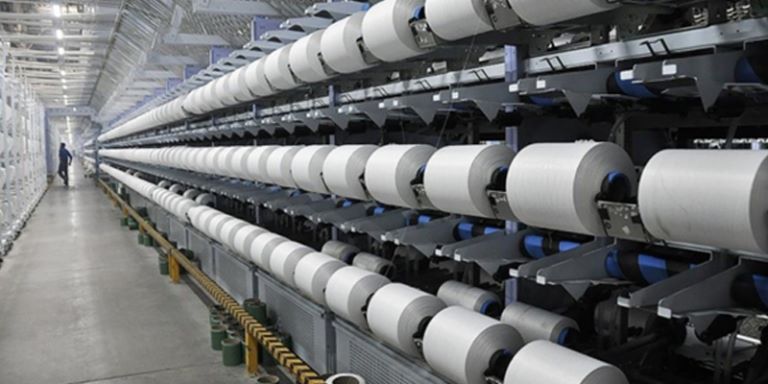
RIETER G-32 ring spinning Figure. 2: Ring spinning machine G 32 – for the production of high-quality yarns produced with high efficiency.
In 2013, the company tested six ring rails on the G 32 to discover for themselves the benefits it would offer in terms of saving energy and reducing yarn conversion costs. The impressive test results led Sharmanji Yarns to use Rieter machines in the realization of its 27648-spindle project.
Rieter’s dedicated project team worked closely with Sharmanji Yarns’ technical team throughout the preparation and installation phases to ensure fast installation and commissioning. After a three-month installation process, the system was ready for operation, delivering yarn which met the customer’s requirements for both quality and quantity.
The Benefits for Sharmanji Yarns:

Ashu Jain Sharmanji Yarns Figure 3: Mr. Ashu Jain, Managing Director of Sharmanji Yarns Pvt Ltd. Sharmanji Yarns is now enjoying the benefits of a Rieter system: higher plant productivity with high yarn quality. The suction tube ECOrized installed on the ring spinning machines G 32 reduces the energy consumption. Together with the energy-saving machines in the blowroom line, the cards, and draw frames allow the company to save around 8% of energy in the UKG values. The entire Rieter system offers higher productivity, so it requires 10% less space. This reduces the company’s indirect costs.
Sharmanji Yarns was hugely impressed by these benefits. For its next expansion, the company has placed an order for a second system project (once again for polyester and cotton yarn production) consisting of 34272 spindles.
The Customer’s Statement
“We have been working with Rieter for a number of years, largely because of Rieter’s innovation. The company is continuously developing its machines and offers us first-class solutions. This enables us to produce high-quality yarn while keeping operation and production costs low. The level of dedication of the company’s After Sales support team is also very impressive. We are very pleased with our decision to work with Rieter.” says Mr. Ashu Jain, Managing Director of Sharmanji Yarns Pvt Ltd.
India’s Textile Machinery Imports In Q2 Surpasses Records

India imports printing machinery, including digital printing, the most from the world and China is the top sourcing market for the commodity.
India’s textile machinery imports have witnessed a skyrocketing growth in the Q2 of this fiscal year. The imports totalled to US$ 1164.99 million with growth of 23.90% over the previous quarter and 3% over CPLY. All the commodities except nonwoven machines have perceived a positive growth in the second quarter of this fiscal. Printing machines, including digital printing machines account for a major portion of 37% from the total textile machinery imports of India in Q2 with an import value of US$ 430.22 million.
For India, China remains the top sourcing market of textile machinery in Q2 too. The imports in the quarter totalled to US$ 368.07 million. In the previous quarter and CPLY too China was the top import destination for India’s textile machinery requirements.
Commodity-wise imports of textile machinery
Printing machinery items were imported the most to India from the world, the commodity perceived a growth of 13.13% over the previous quarter and 14.29 over CPLY. Under this commodity, machine which performs two or more functions of printing have been imported the most to India. Imports totalled to US$ 111.06 million in Q2 with a growth of 37.54% over the previous quarter and 27.16% over CPLY. Inkjet printing machinery has shown an average growth of 20.80% over the previous quarter and 20.09% over CPLY and imports totalled to US$ 20.56 million in Q2 FY 18-19. Offset printing machine other than sheet fed and reed feed have witnessed a substantial growth of 24.29% to US$ 44.40 million in Q2 FY 18-19 over the previous quarter and 78.53% over CPLY. Flexographic printing machinery also have shown an impressive progress in the quarter, the imports totalled to US$ 14.36 million in Q2 FY 18-19 with growth of 26.86% over the previous quarter and 84.58% over CPLY.

India’s weaving loom imports on the rise
Imports of weaving machine (looms) are the second topmost commodity in this segment. The imports of weaving machine in Q2 totalled to US$ 135.58 million with growth of 13.51% over the previous quarter, but over CPLY the commodity has witnessed a fall of 4.41%. Shuttleless weaving machine not exceeding a width of 30 cms was imported the most to India under the weaving machine commodity in Q2. The imports of shuttleless weaving machines totalled to US$ 131.77 million with growth of 13.58% over the previous quarter. But the same commodity perceived a negative growth of 2.17% over CPLY.
Auxiliary machines used with other textile machines have shown an interesting growth in Q2 over the previous year as well as over the CPLY. The commodity’s import value totalled to US$ 91.58 million, making it the third largest commodity to be imported to the country from the world. This was 22.47% higher over the previous quarter and 1.54% over CPLY.
Nonwoven machine is the only commodity that has witnessed a drop in imports in Q2 over the previous quarter and CPLY. The commodity’s imports totalled to US$ 5.97 million in the second quarter, 14.84% and 26.30% lower compared to the previous quarter and CPLY respectively.
Spinning machine imports too pick up in Q2
Spinning, twisting and yarn preparation machine imports have witnessed a rise in the Q2 by 41.85% to US$ 96.12 million over the previous quarter, but while compared to CPLY, the commodity has down by 23.13% and the commodity stakes 8% share from the total imports of India’s textile machinery in Q2. Under this commodity, other textile fibre spinning machine is imported the most to India from the world. The product registered a growth of 565.04% in Q2 totalling to US$ 25.87 million over the previous quarter, while over the CPLY the growth declined by 3% only.
Knitting machine imports show mixed trend Knitting machinery imports has witnessed a seesaw trend in the second quarter of this fiscal. The commodity registered a positive growth of 33.35% over the previous quarters while over the CPLY the same commodity registered a negative of 39.45%. The commodity imports in Q2 totalled to US$ 88.09 million. Under this one, machines used for making embroidery have been the imported the most to India, with import value of US$ 34.17 million in Q2 with a growth of 57.99% over the previous quarter.
Sewing machine imports have gone up by 19.38% over the previous quarter totalling to US$ 77.13 million in Q2 and it perceived a growth of 21.91% over the CPLY. Under this commodity, other sewing machine was largely imported product to India from the world, the imports of the same totalled to US$ 52 million with growth of 21.35% over previous quarter.
Country-wise textile machinery imports to India
China remains the top sourcing destination for India
China remains the top sourcing market for India’s textile machinery. India imported textile machinery worth of US$ 368.07 million in Q2 from China. China managed to perceive a minute positive growth of 1.48% over the previous quarter, while over the CPLY imports from China declined 7.87%.
China accounted for 32% of India’s textile machinery imports in the Q2. Printing machinery including digital printing is the topmost commodity exported from China to India. Textile printing machinery, including digital printing, imports to India from China totalled to US$ 85.62 million in Q2, but while compared to the previous quarter and CPLY the growths have dropped for the commodity by 37.04% and 1.01% respectively.
Imports of knitting machines have done quite well in the second quarter. Imports totalled to US$ 52.47 million with growth of 27.08% over the previous quarter. Auxiliary machine used with other machine and sewing machine too have done well, with import value of US$ 32.55 million and US$ 36.7 million respectively.

Germany is an important supplier to India
Germany has gone one notch up, making itself the second largest sourcing market for India’s textile machinery. Germany’s exports to India totalled to US$ 132.12 million and share of 11% from the total imports of India’s textile machinery. Germany perceived a growth of 45.55% in Q2 over the previous quarter, but has gone down by 18.86% over CPLY. Printing machinery including digital printing exports from Germany to India was recorded to be the highest in the Q2.
The exports of printing machinery totalled to US$ 35.42 million with growth of 66.21 % and 29.89% over the previous quarter and CPLY respectively. With a few digits away is the auxiliary machine used with other machines, which is registered to be the second topmost commodity imported in Q2. The imports of auxiliary machinery totalled to US$ 33.20 million with growth of 28.83% over the previous quarter and 28.33% over CPLY.
Japan loses share to Germany
As Germany has exported textile machinery in larger quantity to India, Japan has lost its ranking to third place. In Q2, Japan stands as the third largest sourcing market for India’s textile machinery. Japan’s exports to India totalled to US$ 118.54 million with growth of only 6.57% in Q2 over the previous quarter, while over the CPLY, Japan’s exports declined by 27.69%. Japan stakes 10% share from the total imports of India’s textile machinery. Weaving machinery (looms) remains the topmost commodity imported from Japan to India. Weaving machinery imports totalled to US$ 52.96 million in Q2 with growth of 53.24% over the previous quarter and 9.72% over CPLY. Printing machinery including digital printing, imports from Japan have gone by 29.74 in Q1 over the previous quarter with a value of US$ 27.12 million, but has dropped by 52.11% over CPLY.

Imports from other destinations
Singapore’s textile machinery exports to India in Q2 have gone up by 5.07% to US$ 84.29 million. Whereas compared over CPLY the country has witnessed a growth of 293.14% and stakes 7% share from the total imports of India’s textile machinery in Q2 FY 18-19. Printing machines including digital printing was exported the most from Singapore with value of US$ 58.17million, but the growth has declined by 5.48% and over the CPLY the country has witnessed a growth of 369.87%. Auxiliary machine exports from Singapore have done quite well in the Indian market. It perceived a growth of 65.71% over the previous quarter with import value of US$ 2.32 million.
The other top sourcing countries for India’s textile machinery are Belgium with 5% share and imports of US$ 60.12 million, Italy with 4% share and imports of US$ 49.49 million, USA with 3% share and imports of US$ 35.62 million, Hong Kong, Vietnam and Thailand with 2% share each and imports of US$ 27.95 million, US$ 24.70 million and US$ 22.64 million, respectively.
From the top ten countries, imports from Italy (the sixth top sourcing destination for India’s textile machinery), recorded a drop of 17.97% in Q2 over the previous quarter.
ITALIAN TEXTILE MACHINERY: FOURTH QUARTER ORDERS DROP
The orders index for textile machinery for the period ranging from October to December 2018, as compiled by ACIMIT, the Association of Italian Textile Machinery Manufacturers, fell compared to the same period for 2017. The index value stood at 101.9 points (basis: 2015 =100).
Orders gathered by Italian machinery builders were thus negative both in Italy and abroad. On the domestic front, the index stood at an absolute value of 148 points, that is, fully 12% less than the same period for October to December 2017. However, foreign markets were even further down at -16%, with the index standing at an absolute value of 98.1 points.
ACIMIT president Alessandro Zucchi commented, “The evolution of the domestic market reflects an overall sense of uncertainty that has accompanied the new national budget legislation, not to mention the comparison with a record fourth quarter for 2017.” Zucchi added that, “On foreign markets, our machinery manufacturers are having to face geopolitical situations that have considerably slowed investments. Turkey, Iran, and even China, all primary markets for our sector, have recorded a drop in demand for textile machinery, for a variety of reasons.”
“Based on preliminary results elaborated by our Association,” concludes ACIMIT’s president, “2018 closed with a downswing both in terms of foreign sales and total production. The overall sentiment for 2019 isn’t very positive either, but the entire sector is putting its trust in ITMA, the primary trade fair for the entire world textile machinery industry, held every four years. This year, the fair will be held in Barcelona from 20 to 26 June. It could very well present an opportunity for a revival of the entire sector.”

Avantex Paris presents innovative services, processes for fashion segment
"Organised from February 11 to 14, 2019 at Le Bourget, Paris The Fairyland for Fashion recorded a new high in number of visitors, with a 2.35 per cent increase over February 2018. A total of 13,929 visitors attended this event."
True to its concept for pioneering technical and technological solutions, the 8th session of Avantex Paris, part of The Fairyland for Fashion, Paris, presented innovative services and processes for every branch of fashion. French companies attracted prime contracts. Start-up Gorfoo, received a lot of requests for a material with the same characteristics as leather but made from hemp. Fashiontech, in association with the 3D printing firm Quatrecarré, filled its stand with applications for materials and clothing. Their printing based on oyster shells caused a sensation. Zero Waste Design’s concept, illustrated by the creative work of designers from all over the world, caught the attention of many fashion labels.
Focus on sustainable systems
There was an interesting collective demonstration at the stand for Sustainable French Savoir-faire, jointly created by CETI / ESMOD / TECHTERA. Recycling was highlighted by the European Centre for Innovative Textiles which displayed new fibres produced by recycling, and the ESMOD school with the outfit by Lorena Mazo-French, which was from a material made from wrappings for savoury biscuits and chocolate bars.
In the Avanprint section, Italian printing firm MS Printing Solutions set up an inkjet printer that operates without water by restricting the quantity of ink used.
Positive response to discussions, debates
Numerous round-table debates and presentations were held over the four days. The Avantex agora stood out with its high-calibre presenters and animated discussions.
The topics focused on environment and environmentally correct practices.
These got a positive reaction from the audience as did the talks on market outlook and the retail sector. Catwalk shows were held by Zero Waste Fashion Designers and by Design & Research in Fashion Technology.
The Fairyland for Fashion, Paris
Organised from February 11 to 14, 2019 at Le Bourget, Paris The Fairyland for Fashion recorded a new high in number of visitors, with a 2.35 per cent increase over February 2018. A total of 13,929 visitors attended this event.
The rise in visitor numbers was seen from top five countries of the American continent -- Brazil, USA, Colombia and Mexico. Asia too demonstrated an overall 14 per cent growth in attendance with India constituting 13 per cent of visitors, South Korea 6 per cent and Israel 4 per cent. The number of Japanese visitors grew by 30 per cent after a decline in visitors after the tragic events of 2016. There was a growth in the number of Chinese buyers as well.
4th Texworld Denim showcases denim brands and independent designers
"The 4th edition of Texworld Denim the trade show for sourcing denim textiles and clothing, part of the Fairland of Fashion, Paris, attracted around 30 exhibitors from major countries in the denim sector including Bangladesh, China, India, Pakistan and Turkey. The show attracted ready-to-wear labels that weavers and clothing manufacturers do not meet elsewhere."
The 4th edition of Texworld Denim the trade show for sourcing denim textiles and clothing, part of the Fairland of Fashion, Paris, attracted around 30 exhibitors from major countries in the denim sector including Bangladesh, China, India, Pakistan and Turkey. The show attracted ready-to-wear labels that weavers and clothing manufacturers do not meet elsewhere.
Meeting demand for sustainable development
The event, in February 2019, concentrated on essentials. It met prime contractors’ demands for sustainable development by featuring seven companies in the Sustainable Development circuit. Chinese firm King Jolly Textiles that works with organic cotton and has several ‘green’ labels made several contacts with European brands. Bangladeshi company NZ Denim also saw considerable interest in its non-denim products from major European ready-to-wear labels.
Supplementary collections on display
In addition to latest trends in techniques or style, brands also displayed supplementary collections such as shirting. Chinese firm Nanhai Deyao Textile Industrial exhibited an imaginative capsule collection blending denim with indigo-dyed knit fabric or the range of printed denim bags with embroidery alongside their 100 per cent denim products. 
The Catwalk show, held on February 14, 2019, helped the trade show establish its identity as a show that also provides the denim collection needed by ready-to-wear brands and independent designers in every fashion collection.
The Fairyland for Fashion, Paris
Organised from February 11 to 14, 2019 at Le Bourget, Paris The Fairyland for Fashion recorded a new high in number of visitors, with a 2.35 per cent increase over February 2018. A total of 13,929 visitors attended this event.
The rise in visitor numbers was seen from top five countries of the American continent -- Brazil, USA, Colombia and Mexico. Asia too demonstrated an overall 14 per cent growth in attendance with India constituting 13 per cent of visitors, South Korea 6 per cent and Israel 4 per cent. The number of Japanese visitors grew by 30 per cent after a decline in visitors after the tragic events of 2016. There was a growth in the number of Chinese buyers as well.
Leatherworld Paris to be bi-annual event
"Leather Concept Design, a Tunisian leather goods workshop attracted large numbers of visitors. The company was included in the new Artisan circuit dedicated to handmade products. For the most part ranges at Leatherworld displayed a profusion of synthetic furs and alternative materials, to suede for example."
From this February, Leatherworld Paris will become a vital twice-yearly event. Held from February 11-14, 2019, in Paris, the event is an integral part of the Fairyland for Fashion trade shows. This year the event attracted 30 exhibitors from six different countries. The international trade fair was dedicated to flexible materials, leather and fur for use in leather goods, for footwear, bags, small accessories, detailing on clothes or outerwear.
It is an event with an international reach for all those involved in the textile industry from producers of fabrics with a leather look to manufacturers of synthetic materials.
The setting of the event designed by the artistic directors was extremely effective and resembled the atmosphere at a village square where people enjoy interacting with each other. 
Leather Concept Design, a Tunisian leather goods workshop attracted large numbers of visitors. The company was included in the new Artisan circuit dedicated to handmade products. For the most part ranges at Leatherworld displayed a profusion of synthetic furs and alternative materials, to suede for example.
Catwalk shows and presentations on the latest developments provided additional information . Presentations on January 12, “Skins and materials: how to respond to end consumers’ new expectations”, focused on alternative materials and emphasised the importance of both the factors of material features and consumer behavior. The catwalk show dedicated to exhibitors’ products opened the programme of events in the catwalk area.
The Fairyland for Fashion, Paris
Organised from February 11 to 14, 2019 at Le Bourget, Paris The Fairyland for Fashion recorded a new high in number of visitors, with a 2.35 per cent increase over February 2018. A total of 13,929 visitors attended this event.
The rise in visitor numbers was seen from top five countries of the American continent -- Brazil, USA, Colombia and Mexico. Asia too demonstrated an overall 14 per cent growth in attendance with India constituting 13 per cent of visitors, South Korea 6 per cent and Israel 4 per cent. The number of Japanese visitors grew by 30 per cent after a decline in visitors after the tragic events of 2016. There was a growth in the number of Chinese buyers as well.
16th Apparel Sourcing, Shawls & Scarves Paris showcased latest services, accessories
"The products offered at Apparel Sourcing Paris suited every budget. This allowed buyers to keep in mind future collections while looking for suppliers. The return of Ethiopia generated a positive response. Desta Garment, Eltex Textile and Velocity Apparel, manufacturers of casual clothing, reflected the range of specialisation in different clothing: from sportswear to denim."
The 16th edition of the Apparel Sourcing and Shawls & Scarves Paris shows, part of The Fairyland for Fashion, Paris, attracted 366 and 26 exhibitors respectively. The success of the show demonstrated their immense importance for clothing production and textile accessories.
Ethiopia emerges a growth centre
The products offered at Apparel Sourcing Paris suited every budget. This allowed buyers to keep in mind future collections while looking for suppliers. The return of Ethiopia generated a positive response. Desta Garment, Eltex Textile and Velocity Apparel, manufacturers of casual clothing, reflected the range of specialisation in different clothing: from sportswear to denim.
Warm reception for Cambodian products
Cambodian products selected from the weavers’ associations especially handwoven silk was very well received. They primarily showcased scarves and shawls and fabrics with ikat patterns. Other regular exhibitors, in Bangladesh, Pakistan and other pavilions, were not overshadowed either. Jordanian exhibitor, Al Samah caused quite a stir with their collection of sophisticated stockings.
The accessories section featured bags, belts, hats and gloves etc. Men’s clothing as well as products with a strong vintage feel were in demand.
The new “Artisan” circuit showcased traditional silks from Cambodian Khmer Artisanry, which lend added value to outfits with their handcrafted quality. Another circuit that was well attended this session was sustainable development. The services powered by Mouvtex, focussing on the services necessary for the smooth running of businesses was organised in all shows.
Logistic services providers, design specialist attend show
Alongside major logistics services providers such as Bolloré Logistics, sourcing and networking such as Mouvtex or textileaddicts.com or QIMA’s certifications, there were further specialist organisations in design and styling with fashion schools (ESMOD et AICP), companies providing training and consulting such as OsmoZ Group or P&C Partners, which concentrates on design consulting and PR.
The catwalk shows and lectures dedicated to new developments in fashion industries, highlighted the talent from Montfermeil. The lecture on the advantages offered by Ethiopia was well attended. The presentation on skills and world heritage left a lasting impression on the audience.
The Fairyland for Fashion, Paris
Organised from February 11 to 14, 2019 at Le Bourget, Paris The Fairyland for Fashion recorded a new high in number of visitors, with a 2.35 per cent increase over February 2018. A total of 13,929 visitors attended this event.
The rise in visitor numbers was seen from top five countries of the American continent -- Brazil, USA, Colombia and Mexico. Asia too demonstrated an overall 14 per cent growth in attendance with India constituting 13 per cent of visitors, South Korea 6 per cent and Israel 4 per cent. The number of Japanese visitors grew by 30 per cent after a decline in visitors after the tragic events of 2016. There was a growth in the number of Chinese buyers as well.
Intertextile Sanghai Apparel Fabrics 2019 to showcase innovative products
"The Spring edition of Intertextile Shanghai Apparel Fabrics will be attended by over 3,000 exhibitors from over 20 countries and regions. The event, to be held from March 12-14, 2019 will span a huge range of textile product categories, from fashion to technical innovation. The event will have comprehensive product zones reflecting the demand for sustainable solutions, functional fabrics, digital printing, accessories and denim. The fair will offer a versatile experience through its seminars that will reflect the latest industry opinions and regulations."
The Spring edition of Intertextile Shanghai Apparel Fabrics will be attended by over 3,000 exhibitors from over 20 countries and regions. The event, to be held from March 12-14, 2019 will span a huge range of textile product categories, from fashion to technical innovation.
The event will have comprehensive product zones reflecting the demand for sustainable solutions, functional fabrics, digital printing, accessories and denim. The fair will offer a versatile experience through its seminars that will reflect the latest industry opinions and regulations.
A must-visit for eco-friendly textile innovations
The All About Sustainability zone featuring Chinese and European exhibitors is a must-see destination for environment-friendly textile products and innovations. The zone will include Foshan Chicley Textile’s sustainable fashion fabrics – a range of organic linen and cotton, Lenzing EcoVero, Modal and Tencel, as well as digital print fabrics.
The zone will also house exhibitors who provide testing and certification services such as Hohenstein Textile Testing and Testex that offers Standard 100, STeP, Eco Passport, Detox to Zero and Leather Standard by Oeko-Tex. These exhibitors will also host a seminar where Hohenstein Textile Testing will explain the amended Oeko-Tex regulations, while Testex will discuss how these new regulations help to build trust with today’s consumers.
Other exhibitors offering testing services include Intertex Testing Services, SGS-CSTC Standards Technical Services and TUV
Rheinland. An ideal place for eco-friendly textile products and sustainable business approaches, this product zone meets the world’s growing demand for green fashion.
Fresh innovations at the Functional Lab
Functional Lab will offer fresh innovations such as functional yarns and fabrics by Nano Mintex Technology and synthetic, natural and functional knit fabrics by Paradise Textiles. Chori will display wearable biometric monitoring fabrics – made with silver fibres.
This comfortable fabric can monitor the wearer’s ECG, heart rate and daily activity logs. Artex Textiles will offer woven fabrics, made of 100 per cent polyester and mixtures with viscose, nylon, cotton, linen and elastane. Changshu Baofeng Special Fiber will bring its flame-resistant MeltArmor collection, as well as its ArcArmor collection, which offers electric and flash fire protection that performs in a variety of climates, with lightweight options.
Another highlight of the fair, the Digital Printing Zone will include onsite demonstrations of direct-to-garment digital inkjet printing solutions from leading exhibitors like MS Printing Solutions and Machine Elements (Fujian) Smart Print Technology.
The Beyond Denim zone will house over 110 domestic and overseas exhibitors from China, Pakistan, Turkey, Vietnam, etc. The Denim International zone will offer garment production and denim wash expertise.
Lastly, the Accessories Vision zone will comprise over 450 domestic and overseas exhibitors from countries including China, Hong Kong, Italy, Korea, Thailand and the UK.