FW
Global garment factories demand fair labor standards
"The expectation was that post Rana Plaza tragedy, that killed at least 1,132 people and injured over 2,500 in Bangladesh, the global garment manufacturing industry had woken up to the social and environmental hazards of fast fashion. However, six years later, little seems to have changed as many workers are still being subjected to dehumanising treatment, poverty wages, and gender-based violence at work."
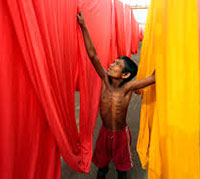 The expectation was that post Rana Plaza tragedy, that killed at least 1,132 people and injured over 2,500 in Bangladesh, the global garment manufacturing industry had woken up to the social and environmental hazards of fast fashion. However, six years later, little seems to have changed as many workers are still being subjected to dehumanising treatment, poverty wages, and gender-based violence at work.
Legal agreement to fix workplace hazards
One of the important outcomes of the Rana Plaza tragedy was the establishment of legal the framework Accord on Fire and Building Safety in Bangladesh. A groundbreaking agreement, Accord codified a legally binding and comprehensive set of standards for fire and building safeguards, and mandated measures for inspection, remediation, and ongoing monitoring of the workplaces that make up the base of multinational supply chains. The agreement held over 200 multinational signatory labels like H&M, Esprit, and American Eagle accountable for the safety conditions of their supplier factories. It has till now renovated hundreds of factories and fixed innumerable workplace hazards ranging from faulty wiring to inadequate emergency exits.
As the International Labor Rights Forum (ILRF) notes, Accord staff has till date conducted 5,274 training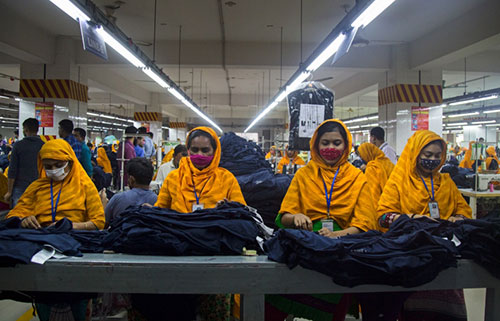 sessions, covering 408 factories, and resolved about 330 complaints through the Accord’s complaint mechanism. It has also created the AFL-CIO Solidarity Center which trains its staff with the aim of encouraging grassroots organising, using safety advocacy as a channel toward worker empowerment.
Transfer of control to highlight limitations
However, now the international body that administered it for the past several years is transferring control of its implementation to a public agency in Bangladesh. In May 2019, international labor groups inked a deal with the Bangladesh Garment Manufacturers and Exporters Association (BGMEA), granting it the entire control of Accord.
As per the agreement signed between the two parties, BGMEA will co-manage the remediation process through the Accord. However, this new development might underscore the limitations inherent in the joint management structure of Accord as the agreement has failed to create a business-friendly political class in Bangladesh. Though the Accord provides workers an opportunity to organise unions, it does not promote unionisation or collective bargaining. The 2018 extension of the Accord has stronger labor-focused provisions, such as protecting the right to refuse dangerous work.
Contrary to the Bangladesh Accord, which focuses on creating safer workplaces, the Indonesian garment industry endeavors to secure its union rights in its factories. Over the past decade, unions and local NGOs in Indonesia have worked with several large footwear brands to implement the Freedom of Association Protocol guaranteeing the right to organise. Covering an industry of about 1.4 million workers, the agreement was launched in 2011, sparked by a fair-labor protest campaign that coincided with the 2008 Beijing Olympics, and like the Bangladesh Accord, it operates as a binding contract for multinational brands like Puma and Nike.
A call to treat laborers with dignity
However, Indonesian employers are reluctant to comply with this agreement as many of them are subcontractors of the main factories that are official suppliers of the signatory brands. Even their influence in the collective-bargaining process is limited as the factory is dominated by a management-friendly union.
These struggles of Indonesian and Bangladeshi workers reveal the limitations of the supply chain in enforcing global labor standards through private agreements. Though for laborers, any legally binding agreement can help, it cannot fully overturn a regime built on global inequality. To ensure fair global labors standards, fashion industry across the world needs to treat its laborers with equality and dignity.
Australia funds Bangladesh program for labour welfare
Australia has partnered the International Labor Organization to improve working conditions, empower women and boost the competitiveness of Bangladesh’s readymade garment industry.
The partnership has been strengthened by the re-commitment of funds for Better Work Bangladesh as part of Australia’s ongoing partnership with ILO. Australia has been supporting BWB since 2016 and today the program reaches 4,85,708 workers in 210 factories who work with 22 international brands.
Australia is committed to fund this program until June 2020 as a demonstration of support for industrial safety, labor law governance and women’s economic empowerment in Bangladesh. Australia’s ongoing support for the Better Work Bangladesh program drives important changes in workplace safety in the garment industry. Better Work has made measurable impacts on the lives of millions of workers and their families. It aims at uniting multiple stakeholders, promoting decent work for all and helping the garment industry in Bangladesh thrive. Australia is an important trading partner of Bangladesh. Bangladesh’s products enjoy duty-free market access to Australia. Two-way export and import linkages are the key elements in the bilateral relationship between Bangladesh and Australia. Garments are the main export items while other products that are performing strong in Australian markets include ceramics, pharmaceuticals and leather goods.
SAC gets new executive director
Amina Razvi is executive director of the Sustainable Apparel Coalition (SAC). She has assumed day-to-day leadership of the coalition and has responsibility for its global operations. Razvi has worked at the SAC since 2015. Prior to her new role, she served as vice president of membership and then as interim executive director. Under Razvi’s previous position, the SAC strategically expanded its global presence and impact, increasing membership from 135 to more than 250, and expanding the Higg index customer base from approximately 1,800 to more than 13,000 global users. Amina’s vision, exceptional accomplishments and leadership capabilities are expected to drive SAC into the future and drive measurable impact reductions. An experienced industry professional, Amina possesses a unique combination of knowledge and vision to scale the work of the SAC and engage with members and stakeholders globally as SAC transforms the apparel, footwear and textile industry through the development and use of the Higg index.
SAC is an association representing the apparel, footwear and textile industry in sustainability. SAC members collaborate to develop the Higg index, a standardized suite of tools to assess environmental and social value chain impacts for the purpose of driving performance improvements and addressing the industry’s greatest sustainability challenges.
Tees made in Andhra Pradesh making waves beyond Indian shores
T-shirts are being made in Andhra Pradesh from organic cotton cultivated by tribals. The project has been taken up by a NGO, Regenerate the Environment Society and Economy through Textiles (Reset). The T-shirts are made with the cotton in garment factories based at Tirupur and Coimbatore. The cotton is raised in 26 villages. In all 18 tons of cotton are collected from the 230 farmers by cultivating it in 250 acres. The regenerative cotton is produced using climate resilient techniques and carbon farming. The entire Reset ecosystem involves farmers, ginners, spinners, knitters, dyers and garment workers. As many as 30,000 of these T-shirts are being worn by 8000 participants at an electronic dance music festival in Belgium, July 19 to 29.
Farmers are persuaded not to use chemical pesticides and herbicides and synthetic fertilisers. The unisex T-shirts are made with carefully chosen fabrics and print dyes that are not harmful to humans and the eco-system. Reset plans to involve more farmers and achieve a target of 62,500 acres and 15,000 farmers in the coming five years. The aim is to create the world’s first regenerative cotton value chain by imbibing the principles of ethical production and calling for conscious consumption, setting in motion a self-sustaining system.
Andhra spinners reduce volumes
Spinning mills in Andhra Pradesh are cutting down their yarn production of. Reason: a decline in exports and rising production costs. China has been a major importer of cotton for several years but during the last two years China has been gradually lowering its imports from India. Domestic demand has also slackened due to stiff competition. So mills have no option other than to reduce production.
There are over 120 spinning mills in the state. Yet another factor is the increase of minimum support price offered to farmers. In an effort to bail out cotton farmers, the support price has been raised by 25 per cent. As a result, millers are forced to buy cotton at a much higher rate. Finally, the delay in the release of power subsidies has forced some millers to shut down. Millers hope the power subsidies are released soon.
Indian yarn is known around the world for its fine quality and is preferred by European and American retailers. The US-China trade war has come in the way of export of Indian yarn and, with the US placing curbs on production in China, domestic spinning mills have started to feel the pinch.
US buyers unwilling to drop China as a sourcing destination
US fashion brands, importers, wholesalers, retailers are cautious about the business outlook, their sourcing prospects and trade policy. They are less optimistic about the five-year outlook for the US fashion industry. The trade war with China has increased their cost of doing business. But US buyers hesitate to shift their sourcing from China, since China does not have a near competitor in terms of the variety of products it can make. Bangladesh is not as attractive as many of its competitors regarding speed to market, flexibility and agility, and risk of compliance. Bangladesh’s strengths are restricted to cotton trousers and cotton shirts. These products have accounted for nearly 60 per cent of total US apparel imports from Bangladesh in the past ten years.
Bangladesh will face tough competition in coming days given its increasing unit value in recent past and price reduction by China. Unit price from Bangladesh grew at the highest rate among all other producing countries during 2018 to May 2019.
At the same time 80 per cent of fashion brands and retailers of the United States having business with Bangladesh have expressed their interest in expanding sourcing from the country in the next two years.
Viet Nam exports garments and textiles worth $18 billion
Vietnam’s garment and textile sector earned $18 billion from exports, an 8.61 per cent year-on-year increase. The figure included $14.02 billion of clothing and $1.02 billion of fabrics, up 8.71 per cent and 29.9 per cent respectively.
According to VITAS, the number of orders in the first half of 2019 was equivalent to 70 per cent of the figure in the same period last year. In particular, consumption of yarn and raw materials faced many difficulties because the main export market China cut import volume. Meanwhile, garment products also experienced a drop in orders.
The US remained the biggest buyer, accounting for 47 per cent of total orders. It was followed by member states of the Comprehensive and Progressive Agreement for Trans-Pacific Partnership (CPTPP) with 17 per cent, the EU at 13 per cent and South Korea with 9 per cent.
Meanwhile the country spent US$11.4 billion to import materials for garment and textile production in the first half of the year, up 5.6 per cent from the same period last year. Cotton imports reached $1.52 billion, fibre $1.23 billion, fabric $6.75 billion and auxiliary materials $1.89 billion.
Portugal textile exports to US up 11 per cent
Portugal’s textiles and apparel exports to the US in 2018 rose 11.25 per cent over 2017. There’s considerable added-value when sourcing in Portugal. Beyond quality and product innovation, manufacturers in the country are also known for flexibility and adaptability—which allows small-batch production, something the industry’s digitally-native brands, in particular, seek in their sourcing strategies. Portugal’s textile industry has exclusive products and is able to offer tradition and industrial knowhow at the textile level, with a capacity for constant renewal and resilience.
There is a strong network of partners in the textile cluster, excelling at innovation and sustainability. This regional network is part of what adds to the country’s flexibility. What’s more, as part of a strategic plan for the textile and apparel sector, Portugal has made pointed commitments in sustainability and digitization to be competitive. The increase of the production scale assisted by digital technologies allows flexibility in the Portuguese textile business model. Flexibility is among Portugal’s key competitive advantages. Besides that, the country is among global leaders of the private label, in what is an essential differentiator in the textile market. Portugal is bringing its competitive offerings to light at a time when sourcing has been upset over changing trade relations, and companies are looking for new places to manufacture product.
Pakistan to host fashion IAF’s World Fashion Convention in November
The next edition of World Fashion Convention will be held in Pakistan, November 12 to 13, 2019. This will attract global apparel industry leaders and is an unique fashion industry event, bringing the topics that matter and the speakers that count under one roof with both the supply and demand side of the fashion industry.
Previous editions were held in Istanbul, Mumbai, Hong Kong, Rio de Janeiro, Porto, Shanghai and Maastricht. This year, Pakistan was chosen as the host because it has a significant textiles and apparel industry and because the potential for further growth is large following an important improvement in the safety situation in the country. The convention draws on an average 300 delegates usually coming from over 20 countries.
The event is organized by the International Apparel Federation (IAF), the only global federation of its kind representing apparel associations from 60 countries, representing over 1,50,000 companies. The IAF convention caters to apparel industry leaders from across the supply chain, from all continents. The convention will show many inspiring examples of a smarter apparel supply chain. Top speakers from across the globe will cover the width of the supply chain, from raw materials to apparel sourcing and from production to retail trends. On top of that, the convention will provide an excellent opportunity to meet the global industry in one location.
US brands join adaptive clothing bandwagon
American children with disabilities have clothing specially made for them.The aim is to make the clothing industry more inclusive of children with disabilities. These clothing have features such as sensory-friendly and wheelchair-friendly options. The product development teams take great care in thoughtfully designing features for ease and functionality.
Asos offers a rainbow tie-dyed waterproof jumpsuit engineered for those who use a wheelchair for mobility. The jumpsuit was designed with input from Chloe Ball-Hopkins, a Paralympian. Target has introduced such apparel to its assortment for toddlers as well as children with disabilities. Zappos has launched a similar line. Kohl’s will debut clothing for disabled children in its three biggest children’s brands.
Adaptive clothing, as it is called, can be very expensive, and Target keeps prices down by leveraging fabric that it has in production as well as making large quantities of clothing. Target also debuted Halloween costumes such as a princess costume that has a wheelchair cover that has a carriage-like appearance. The retailer took in insights from shoppers as well as organizations such as the National Federation of the Blind and Pageant of Hope, which has beauty pageants for children who have disabilities, when it launched its adaptive line.