FW
Turkey textile exports down five per cent
In the first six months of 2019, Turkey’s textile and raw material exports dropped by 5.8 per cent. Textile exports to Italy decreased 7.5 per cent compared to the same period previous year. Exports to Germany were down 3.8 per cent. On the whole, exports to the 28 EU countries fell 9.2 per cent. Italy is Turkey’s largest importer followed by Germany.
From January to June, Turkey’s exports of cotton woven fabrics decreased 11.2 per cent. Yarn was the second most important product group in this period with a share of 18.6 per cent. Yarns from synthetic manmade filament fibers had a share of 42.3 per cent in total yarn exports. Knitted fabric exports fell 1.9 per cent. Export of knitted fabrics containing elastometric and rubber yarn decreased by 8.3 per cent. In the first half of the year, fiber exports rose by 6.8 per cent. Synthetic manmade fibers accounted for 62 per cent of total fiber exports. Export of these fibers increased by 10.8 per cent.
The country’s garment exports decreased one per cent. The sector’s share in Turkey’s total exports is 9.9 per cent. In the first half of the year, the top three countries with the highest exports were Germany, Spain and the UK.
Zara to shift to 100 per cent sustainable fabrics by 2025
Zara plans to make greater efforts to become fully sustainable. This means transitioning to 100 per cent sustainable fabrics by 2025. Around 80 per cent of the energy consumed in Zara’s headquarters, factories and stores will come from renewable sources. Zara is bent on eliminating landfill waste. By 2023, Zara’s wood-pulp-derived viscose will not come from endangered forests.
Zara produces an average of 500 new designs a week and 20,000 designs each year. Zara is pushing into new markets right now, expanding into India and expanding its online presence globally. Among all of Zara’s announcements — from reducing landfill waste to using renewable energy — the switch to lower impact materials and removing hazardous chemicals from the supply chain is the most significant shift, by far.
Fast fashion is a business model built around disposable consumption and limitless growth. The bulk of fashion’s environmental impact happens in the manufacturing phase, in making new textiles and materials that become clothing and shoes. Zara is responding to consumers’ growing concern about sustainability and social issues. Consumers are more informed than ever about what’s going on in the world, and they don’t want to feel like they’re harming the planet when they buy fashion. Sustainability has become a way for a brand to differentiate itself.
India Trend Fair in Japan puts the spotlight on garments, accessories and more
The ongoing India Trend Fair is in Japan from July 24 to 26, 2019 aims to promote India’s businesses in Japan and give them a platform from which to grow their retail network in Japan. The fair focuses on accessories, jewelry, handicrafts, and home ware and around 200 Indian companies are taking part. This includes categories such as denim, finished garments, accessories, footwear, cushions, bed linens, and carpets. Buyers include manufacturers, wholesalers, trading companies, importers, select and specialist shops, department stores, volume and online retailers etc. This is an exclusive business matching event, which gives exporters an opportunity to showcase their products and supply value added products with a special emphasis on products designed to suit Japanese fashion trends and requirements.
The event is hosted by the Japan India Industry Promotion Association, a non-profit that works to promote trade between India and Japan. It collects and analyses information on Japanese and Indian industrial markets.
Japan is a sophisticated market, leaning towards small-lot and short cycle delivery of supply. Consumption is diversified and quality expectations are very high. High quality and expensive Indian garments are gaining popularity in Japan. Customers like selecting garments that have a different character when compared with dresses and kimono worn at such occasions as weddings and parties.
India’s leather exports fall
India’s exports of leather and footwear in the last fiscal year were 0.85 per cent lower than the previous year’s. This is the third year in the last five years when the growth rate of leather and footwear industry has fallen. One reason is falling demand for leather in the apparel and footwear industries of Europe and China. Another reason is the downward trend of using leather made apparels in the fashion industry. Also synthetic footwear has emerged as an alternative to leather products. Due to awareness about global warming and better scope of designs in synthetic products, many countries, including China, have aggressively changed their preferences from leather to synthetic.
However, exports of footwear can still find hope as the demand for footwear, the value-added product of leather, is still prominent. Indian leather industry has many competitive advantages as the country has an abundant source of raw materials.
Leather is among the top ten foreign exchange earners for the country. Around 12.9 per cent of the world’s leather production of hides and skins, and nine per cent of the global footwear production, takes place in India. Twenty per cent of the world’s cattle and buffalo, and 11 per cent of the world’s goat and sheep population, are found in India.
China allows some US imports without duty
Chinese companies can buy US cotton, corn, sorghum and pork without having to pay the 25 per cent retaliatory duty. The move follows the approval of some three million tons of US soybeans for purchase with tariff waivers. There could be a second round of exemptions depending on how the trade talks progress.
Some companies are willing to buy US farm products in line with domestic demand and their purchases are made on their own decisions. Even with tariffs in place, the US sold about 64,000 tons of cotton in May. Were it not for the tariffs, the US could have been in a strong position to cater to the demand.
The US cotton industry enjoyed a 46 per cent share of all imports going into China. But that changed when China issued a 25 per cent tariff on US cotton in retaliation for tariffs placed on Chinese goods by the US. However China is still seen as a key market for US cotton and the US will promote the benefits of its cotton. Chinese mills like US cotton for its quality, its consistency and its low contamination. China is the US’ most efficient market to ship to in the world so it keeps costs down.
Brands making sustainability inherent through AI
"As per the Fashion Transparency Index, launched in 2017, fashion brands are finally waking up to the environmental demands of their consumers. These brands that include noted names such as H&M, Adidas, Reebok and Patagonia are embracing sustainability as an operational and marketing strategy to remove negative impact of their operations on the environment."
 As per the Fashion Transparency Index, launched in 2017, fashion brands are finally waking up to the environmental demands of their consumers. These brands that include noted names such as H&M, Adidas, Reebok and Patagonia are embracing sustainability as an operational and marketing strategy to remove negative impact of their operations on the environment.
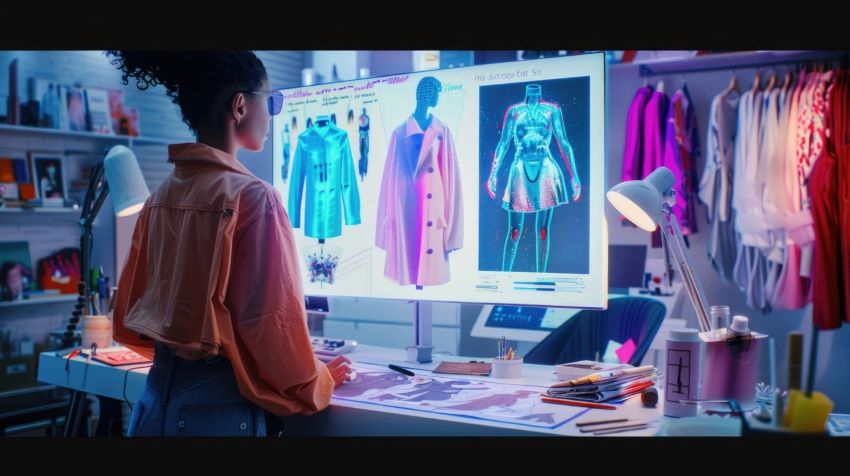
H&M, one of the Fashion Transparency Index leaders, harnesses the power of artificial intelligence (AI) to reduce waste, increase customer-focus and successfully embed sustainability into their operations without compromising on the score a significant victory for sustainability within the ecommerce arena.
Brands like H&M realise when customers shop online, they face many other challenges that include the inability to try these clothes on. So they either have to return a garment if it doesn’t fit them or buy multiple sizes and styles. This not only proves costly for them but also has a significant impact on the environment as the transport of these goods back and forth releases a significant amount of CO2 in the environment.
Brands can therefore significantly reduce this impact on the environment by harnessing the power of AI. Outdoor recreational retailer Moosejaw, for example, has used this approach to cut its returns rate as a result of size sampling by nearly a quarter.
AI increase customer focus, prevents overproduction
Ditching the traditional ‘push’ model, brands are now analysing a wide range of data points such as weather forecasts, social media trends, local demographics and body shapes. This is resulting in increased customer focus, higher sales conversions, fewer markdowns, inventory levels better matched to demand, better management of resources and less waste going to landfill.
The use of AI in this new model enables retailers to better understand their customers’ shopping behaviour and product preference thereby reducing the chance of overproducing inventory and optimising product development, design and sourcing.
Making sustainability inherent to their operations
Unlike their earlier counterparts, newer fashion brands are making sustainability inherent in their operations. For instance, footwear brand TOMS donates a pair of shoes to a disadvantaged child for every pair that it sells. So far, TOMS has given away 86 million pairs. It also offers shoes made from vegan, sustainable materials, such as hemp, organic cotton and recycled polyester. H&M also has its Conscious Exclusive collection, designed to reduce waste and made from sustainable, eco-friendly materials such as pineapple leaves, orange peel and algae.
This spotlight on sustainability in the fashion industry is likely to intensity in the future with brands increasingly waking up to its commercial benefits. Emergence of new data and artificial intelligence also enables these brands to understand their customers exact requirements thereby minimising wastes.
Fabric fair presents the latest
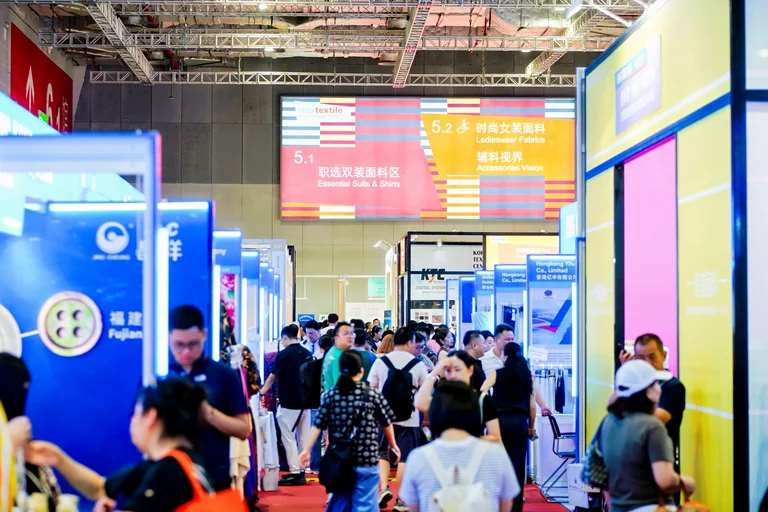
Functional Fabric Fair New York was held from July 22 to 23, 2019. The event hosted 1,866 apparel industry professionals from 22 countries to preview the latest trends and source high performance functional fabrics and accessories from more than 130 regionally diverse and hand-selected textile manufacturers. Attending industry professionals represented market leaders, up-and-coming designers, apparel manufacturing veterans and mass merchandisers such as Alexander Wang, Macy’s, Michael Kors, New Balance and Perry Ellis. More than 130 textile manufacturers, suppliers and service providers presented their latest developments in functional fabrics, membranes plus treatments, laminates, paddings, finishes, and accessories such as yarns, tapes, prints, buttons and zippers. A platform spotlighted textile and accessory innovations. Industry leaders presented 13 complimentary workshops in a series of educational programs on the latest trends, sustainability and technological advances.
Functional Fabric Fair was launched last year by Performance Days. This is a trade-exclusive event showcasing the latest trends in fabric development for the functional textile industry and provides an opportune marketplace in the United States for the sourcing of high performance functional fabrics and accessories. The fair is open to verified designers, product, purchasing or material managers looking to source fabrics and accessories for sportswear, work wear, sportive fashion and athleisure apparel.
Retviews to market Lectra’s solutions worldwide
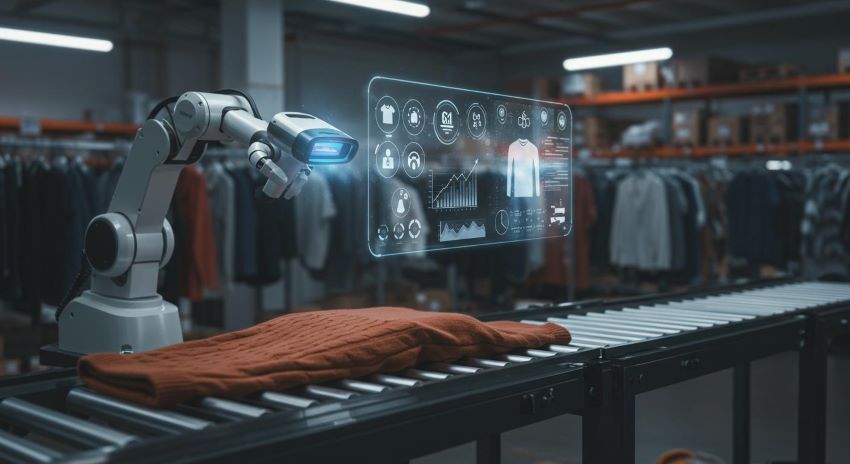
Lectra has acquired Retviews to help its customers to quickly enter the era of Industry 4.0. Thanks to artificial intelligence algorithms, Retviews' enables brands to make the best decisions at every moment throughout the life cycle of a product, in order to optimise their collections. The brand will collaborate with Lectra to develop its technology and market its solution to its fashion customers worldwide.
The transaction involves the acquisition of 70 per cent of Retviews for €8 million today. The acquisition of the remainder of capital and voting rights will take place in three times in July 2020, July 2021 and July 2022for amounts of about 0.9 times 2020 revenues, 0.7 times 2021 revenues and 0.5 times 2022 revenues, respectively. These amounts will come from Lectra's available cash, with no financing from the bank.
India to invest in Kenya’s leather industry
A delegation from Indian leather companies are scouting for opportunities in the Kenyan leather sector. According to the Industrialisation Principal Secretary (PS), Betty Maina, the leather sector in Kenya contributes 0.3 percent to the Gross Domestic Product (GDP) and the partnership with India will try to improve the sector’s output.
The focus of this partnership is to increase leather, textile and apparel and the government feels it can collaborate with India to reduce the trade imbalance which is skewed in favour of India.
The Principal Secretaries (PSs) will soon organise a workshop to propose policies on the revitalisation of manufacturing with leather and footwear being some of the priority areas. The government will also create a market for local leather industry by ensuring that all footwear for the disciplined forces and the police is exclusively bought from local manufacturers.
Global fashion accessories market to grow by 6.5 per cent till 2023
Global fashion accessories market is projected to grow at 6.5 per cent during the forecast period 2018 to 2023. Growing preference for convenience, along with rising popularity of online retail stores, is driving the demand for fashion accessories across the globe. Growing demand for apparel and eyewear products along with growing influence of promotional strategies by e-commerce players especially during festival season is supporting the market growth from last few years.
Additionally, plant-derived products help to reduce dependence on animal based fashion accessory products. This factor is likely to change the fashion accessories market dynamics in upcoming years. Significant rise in influence of social media and fashion blogs that are communicating the benefits of various fashion accessories is likely to influence sales of fashion accessories. Moreover, easy availability and affordability of fashion accessories are influencing the sales of products such as apparel, footwear, handbags, and eyewear. Continuous improvement in distribution strategy by key players especially in distribution structure, available resources, inventory turns, order filling techniques, etc. are expected to drive the market growth during the forecast period.
There is an increasing demand of different fashion accessories such as eyewear, footwear, handbags etc. owing to the rising consumer preference towards high quality and branded fashion accessories across the globe. Major players in fashion accessories market have been acquiring emerging players in the market to expand consumer base who are progressively passionate about adopting latest fashion trends. For example, in 2011, LVMH Moët Hennessy Louis Vuitton acquired Heng Long, a Singapore-based crocodile tanning company. Two years later, in 2013, Chanel bought a lamb hide tannery, France-based tannery Bodin-Joyeux, which had long been responsible for providing the iconic design house with a portion of its leather fashion products.