FW
TCLF European partners issue joint statement to safeguard industries and jobs
The European Social Partners for the Textile, Clothing, Leather, and Footwear (TCLF) have issued a joint statement to guide industries through the current green and digital transition, while facing tough global competition, stressing the need to safeguard the industries and protect jobs in Europe. The statement highlights the need for a dedicated strategy with support at national and EU level to help the TCLF sectors survive the COVID-19 pandemic, while they continue to face tough, and, sometimes unfair, global competition. The social partners of TCLF industries fully support the EU’s ambitions for a green and digital transition of the sectors, but insist on concrete European measures to help the industries transform while the continues to suffer from an unequal global playing field.
The joint statement includes demands like full engagement with social partners in both the recovery and the transition of the industries, support for the EU Pact for Skills for the relevant ecosystem, a revision of the GSP which doesn’t negatively impact the sectors and its workers, support to decarbonise the sectors, careful consideration of the Due Diligence Legislation and quality dialogue with Social Partners ahead of the EU Sustainable Products Initiative and the Consumer Agenda to ensure that all policy gaps are addressed. The joint statement also demands special attention to the forthcoming EU Textiles Strategy which should fully represent the needs of the EU’s entire textiles ecosystem.
Picanol to display new innovations at ITMA ASIA+CITME 2021
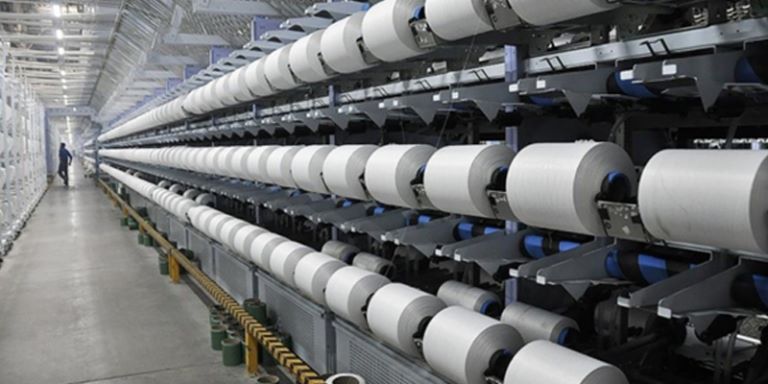
Picanol will display two airjet weaving machines, four rapier weaving machines for flat fabrics, as well as one rapier machine for weaving terry towel at ITMA ASIA+CITME 2021. Furthermore, it will display an additional rapier machine in jacquard execution at the Bonas booth
Picanol will also launch two new rapier machines: the brand new GTMax-i 3.0S will be shown in a 4 color dobby execution, weaving a denim style, whereas the new GTMax-S on display will be an 8 color dobby machine in 380 cm reed width weaving a silk fabric.
The new GTMax-i 3.0S sets the benchmark for competitive and qualitative weaving – and it’s also available in 240 and 250 cm reed width for ultimate stretch fabrics.
Picanol will also be demonstrating an OptiMax-i gripper machine in free flight execution of 540 cm width at the exhibition. This represents a significant innovation breakthrough for specific technical segments.
PVH Corp expands partnerships for NYC Pride 2021
PVH Corp has expanded partnerships for NYC Pride 2021 as a Gold Sponsor for six events throughout the year besides committing to the Human Rights Campaign (HRC) Foundation’s Historically Black Colleges and Universities (HBCU) program. The company is also partnering with PFLAG National on education and awareness opportunities for associates.
As per Fashion Network, the company’s LGBTQIA+ business resource group WERK will involve associates in virtual events, content series and a community giving campaign during Pride month.
PVH will continue its “Let’s Talk” series with a discussion on Pride, the LGBTQIA+ community and the importance of both celebration and education, as well as its Point of View video series and @Home Photo series to highlight how its associates around the world are celebrating Pride
The PVH Foundation is equally sponsoring a giving campaign for the entire month of June that will match all contributions dollar for dollar from North American corporate associates to Human Rights Campaign, PFLAG National, Ali Forney Center and The Canadian Centre for Gender and Sexual Diversity (CCGSD).
Among its brands, Calvin Klein is launching #proudinmycalvins. The campaign, which revisits the defining moments in the queer journey, will rollout throughout the year alongside additional #proudinmycalvins content.
Meanwhile, the Pride 2021 collection features underwear, apparel and accessories in a limited-edition palette from Calvin Klein, which is available on calvinklein.com and offers consumers the opportunity to learn more about each LGBTQIA+ organization as well as donate.
VDMA to organize webtalk on exhibits at ITMA ASIA+CITME 2020
VDMA will organize a webtalk series offering the possibilities to know the latest textile technologies and products to be shown at ITMA ASIA + CITME 2020 virtually.
As per Apparel Resources, the webtalk series will enable Asian textile and nonwoven manufacturers who won’t be able to able to attend the fair due to COVID-19 restrictions. The first webtalk will discuss the products of Mahlo on 1 June which will be themed – “Your Data Highway to the Future.”
According to VDMA, equipped with one of the best scanner ranges in the market and with the experience of more than 75 years, the inventor of weft straightening Mahlo is also leading the way in terms of the data management, making the relevant data available wherever it is needed and this is touted as the overall task of the industry.
The leading Asian textile machinery fair – ITMA ASIA + CITME 2020 – is scheduled to take place in Shanghai from 12 to 16 June 2021. It will hold more webtalks in coming days.
Jean Paul Gaultier to launch new ready-to-wear collection
Jean Paul Gaultier is launching a new ready-to-wear collection which reinterprets his trademark striped sailor tops. The collection will be available online at the end of the week, just in time for the LGBTQ Pride festival season.
US model Bella Hadidwill feature in the collections campaign, sporting the new ‘unisex, inclusive’ collection ‘that exudes sea air’. The collection revives Gaultier's ready-to-wear lines, it added.
Nicola Lecourt Mansion has created a black body mesh, strassed with stripes, while Spanish stylist Palomo Spain designed a floral corset. And German house Ottolinger has reworked the sailor shirt in a tight-fitting jumpsuit with distorted zebra stripes.
The conical bra made famous by Madonna has been reinterpreted by London-based Brazilian punk jewellery designer Alan Crocetti. Frenchman Marvin M'Toumo is in charge of the "shellfish and crustaceans" accessories.
Gaultier will resume his haute couture shows, also with guest stylists, in Paris in July,The first guest designer for Gaultier's couture collection is Japan's Chitose Abe, of the Sacai brand.
The fourth quarter net profit of Page Industries jumped by four-fold to Rs 115.56 crore.
As per Business Standard, the company’s revenue from operations rose by 62.72 per cent to Rs 880.76 crore during the quarter as against Rs 541.28 crore in the corresponding period of the previous fiscal.
PIL's total expenses increased by 44.4 per cent to Rs 733.69 crore in Q4 FY 2020-21 from Rs 508.10 crore in the year-ago period.
However, for the fiscal year, which ended on March 31, 2021, PIL reported a marginal decline in its net profit to Rs 340.58 crore. It has a net profit of Rs 343.22 crore in the previous year.
Its revenue from operations was down to 3.82 per cent to Rs 2,832.96 crore in FY 2020-21. It was Rs 2,945.54 crore in FY 2019-20.
Bengaluru-based Page Industries is the exclusive licensee of American underwear brand Jockey International for manufacture, distribution and marketing in countries such as India, Sri Lanka, Bangladesh, Nepal, UAE, Oman and Qatar. The company is also the exclusive licensee of Speedo International for India.
Accelerating Circularity launches new project in Europe
Accelerating Circularity has launched a new project in Europe. According to Karla Magruder, Founder President, the launch of this project advances the company’s goal of enabling the industry to achieve a scaled, global, circular textile system.”
The founding members of Accelerating Circularity Europe’s Steering Committee represent leaders in global retail, circular supply chain, and textile recycling. They include DuPont Biomaterials, European Outdoor Group, GIZ, Gr3n, Inditex, Lenzing, Recover™, Recyclatex Group, Reverse Resources, Texaid, and Zalando.
The Steering Committee will set the strategy and make decisions for the European project. They will convene a Brand and Retailer Working Group for the development of take back programs and circular product specifications. Select collectors, recyclers, and preprocessors will comprise a Spent Textile Working Group to address challenges in collection, sorting, and feedstock preparation. As in the U.S., The European project will unfold in phases: research and mapping, modeling and linking, then trials and evaluation. The new project will expand upon the work done to date and adapt it to the European context.
Gap raises sales outlook for full year
Retailer Gap has raised its sales outlook for the full year as its namesake brand in North America showed growth in e-commerce sales. As per CNBC reports, the company’s fiscal first-quarter sales surpassed pre-pandemic levels, as shoppers turned to Old Navy and Athleta to refresh their wardrobes for summer.
Eighty percent of the company’s sales are coming from outside of the traditional shopping mall: either online, in strip centers or from street-level locations.
Gap swung to a profit of $166 million, or 43 cents per share, from a loss of $932 million, or $2.51 per share, a year earlier. Excluding one-time charges associated with the sale of Janie & Jack and Intermix, Gap earned 48 cents per share during the quarter. That came in well ahead of an expected 5 cent loss.
Total revenue grew to $3.99 billion from $2.11 billion a year earlier, when the retailer’s stores were shut for a period of time due to the Covid pandemic. That topped a Refinitiv estimate of $3.45 billion.
At Old Navy, comparable sales increased by 35 per cent year over year while at Athletathey rose by 27 per cent from last year Together, these two brands drove 66 per cent of company-wide sales in the latest quarter
At Gap’s namesake brand, global comparable sales grew by 29 per cent from last year.While at Banana Republic they fell by 4 per cent, Online sales grew 82 per cent from two years prior, accounting for 40 per cent of total revenue.
The retailer is now calling for adjusted earnings to be in a range of $1.60 to $1.75 per share this year, with net sales rising in the low- to mid-twenty percent range from 2020. Previously, it was looking for mid- to high-teens percentage sales growth.
China’s garment and accessory exports grow by 20.21% in April’21
The value of China’s garment and accessory exports increased to $11.12 billion in April ’21 from $9.25 billion in March’21 indicating a 20.21 per cent monthly growth says a report by General Administration of Customs, China (GACC), compiled and analyzed by Apparel Resources.
From January-April ’21, China’s garment exports clocked $44.42 billion revenues as against $ 29.26 billion in January-April ’20 noting a 51.70 per cent yearly growth. This signalsthat the buying capacity of Chinese apparel and accessory imports has not reduced in 2021.
Along with the recovery in apparel shipment, China’s textile export too accelerated as it shipped $12.15 billion worth of textile products in April ’21 as compared to just $ 9.67 billion of shipment done in the previous month.
Cumulatively, Chinese textile exports hit $43.95 billion in January-April ’21 period, marking 18 per cent Y-o-Y growth.
Global luxury sales to cross $340 billion in two years: Bain & Co.
As per a new report by Bain & Company, the luxury market could gain 30 per cent probability or exceed $340 billion in sales of high-end items such as apparel, handbags and jewelry in two years.
This is a revision from Bain’s prior forecast of a full recovery by 2022 or 2023, says analyst Forbes. It is being driven by China and the United States’ unexpectedly strong economic rebounds, thanks in large part to swift vaccine distribution.
French luxury giant LVMH Moet Hennessy Louis Vuitton announced in April that it had returned to growth in the first quarter, with $16.75 billion in sales across its more than 70 brands. Fashion and leather goods in particular had an excellent start to the year, generating record revenue of $6.7 billion, or 37 per cent higher than the same period in 2019.
Consumers in China have likewise shown incredible resilience. According to the National Bureau of Statistics, retail sales of consumer goods rose 17.7 per cent in April compared to the same month in 2020, 8.8 per cent compared to April 2019. As strong as this growth sounds, it’s a slight slowdown from February and March, when sales increased 33.8 per cent and 34.2 per cent, respectively, over last year.
Looking ahead, China is set to contribute an additional $6.6 trillion in global consumption between now and the end of the decade, according to Hong Kong investment bank CLSA.