FW
Germany to host cellulose fiber event
Cellulose Fiber Conference will be held in Germany, March 8 to 9, 2023.
The recycling of cellulose has some hurdles. How can technology overcome these obstacles? How can markets achieve a circularity of the material? How can the cellulose fiber industry contribute to the sustainability and circularity of the textile sector?
Globally, around 300 billion period products are discarded every year, resulting in millions of tons of non-biodegradable waste. Since most conventional sanitary pads contain up to 90 per cent plastics, they do not biodegrade for around 600 years.
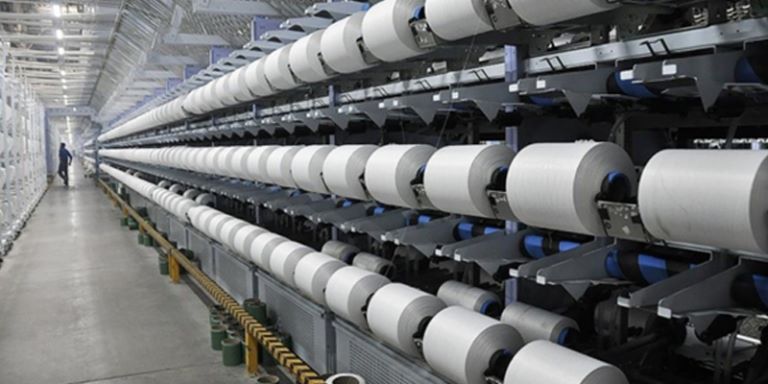
These and other questions represent the lead topics of the conference. With a compound annual growth rate between five per cent and ten per cent, cellulose fibers have been a success story within the textile market over the past decade. Similar growth rates are expected in the following years. This makes cellulosic fibers the fastest growing fiber group in the textile industry and therefore the largest investment sector in the global circular bio-economy.
Cellulose fibers show a steadily expanding range of applications. At the same time, markets are driven by technological developments and political framework conditions, especially bans and restrictions on plastics and increasing sustainability requirements for textiles.
The European Commission has made the thorough transition towards sustainability and circularity for different industries and especially the textile sector a main focus.
Zegna launches knit cashmere
Zegna has launched a line of sustainable cashmere knitted fabrics.
The line is free of frills and decors and is characterised by essential silhouettes, wide trousers, cropped and boxy or slim tops made with exclusive fabrics.
Volumes are new and translated into cropped bomber jackets, elongated coats, anoraks, blousons, polo shirts, cardigans and blazers without lapels, collars and visible buttons.The collection also features granite-effect materials crafted from #UseTheExisting sources by reusing alpaca, cotton-blend corduroy and tactile wool twill.The hues of the collection have also a natural origin. All the colors are of natural origins. They are the colors of earth, like the yellows, or the red of berries. Zegna molds the fiber. Yarns are not bought for what evidently the market offers.
Zegna proceeds by looking for fiber blends even within the same fineness, though of different lengths, that are then molded and mixed to create unique yarns that then become knitted fabrics. Then they are treated the way Zegna once treated woven fabrics. The final result is achieved by using a series of different highly artisanal treatments that transform these knitted fabrics into polar fleeces, needle-punch finished fabrics with leather, padded fabrics, double-faced jacquard Meltons, coated and uncoated bouclè, frisé and 3D jacquards and felts.
US fashion group gets new chairman
Chris Lucas is chairman of the United States Fashion Industry Association (USFIA).
He currently serves as a senior directorat American Eagle Outfitters, supporting AEO’s business and strategy from the regulatory, compliance, and governance perspective. He has a doctorate from the George Washington University Law School and a Bachelor of Arts degree from the University of Virginia. He will utilize his experience in the retail apparel industry, and his success navigating global supply chain, transportation, trade, and manufacturing challenges, to meaningfully advance USFIA's advocacy and leadership.
Chris Lucas takes over as chairman from Anna Walker. She was in that position since July 2020 and under her leadership over the past two and a half years, USFIA confronted the uncertainty of Covid and global disruption. Her leadership and experience in public policy focused USFIA’s advocacy and activities to offer members -- and the fashion industry -- the information needed to successfully navigate the new normal of the past few years.
USFIA provides members with the intelligence, resources, and solutions needed to address the business and challenges of the fashion industry. It is committed to providing global brands and retailers with reliable, business-forward guidance on how to achieve strategic solutions to trade and compliance challenges.
USFIA represents textile and apparel brands, retailers, importers, and wholesalers based in the United States.
Pakistan textile exports down 16 per cent
Pakistan’s textile exports declined 16 per cent in December 2022. Coupled with the decline in value terms, volumetric sales abroad were also reduced.
Textile is Pakistan’s top foreign exchange earner and occupies over a three-fifth share in the country’s total exports.This has been the third month in a row that the country’s textile exports have declined. In October 2022, textile exports declined 15 percent and in November 2022 18 percent. Exports of all categories of textiles including cotton cloth, cotton yarn, knitwear, bedwear, and towels have shrunk sizably. In December 2022, cotton cloth exports dipped by 14 percent compared to December 2021, while over the previous month’s exports they increased by five percent.
Likewise, over the corresponding month of last year, exports of knitwear in December 2022 declined by 19 percent, bedwear fell by 17 percent, towels by 14 percent, readymade garments by seven percent and cotton yarn by 50 percent. In the first half of this fiscal year total textile exports were down by seven percent over the same period of last year’s exports. In December 2022, the economy imported 57 percent less machinery as against December 2021.
Syria builds up export capability
Syria aims at exporting high-quality textile products to foreign markets.
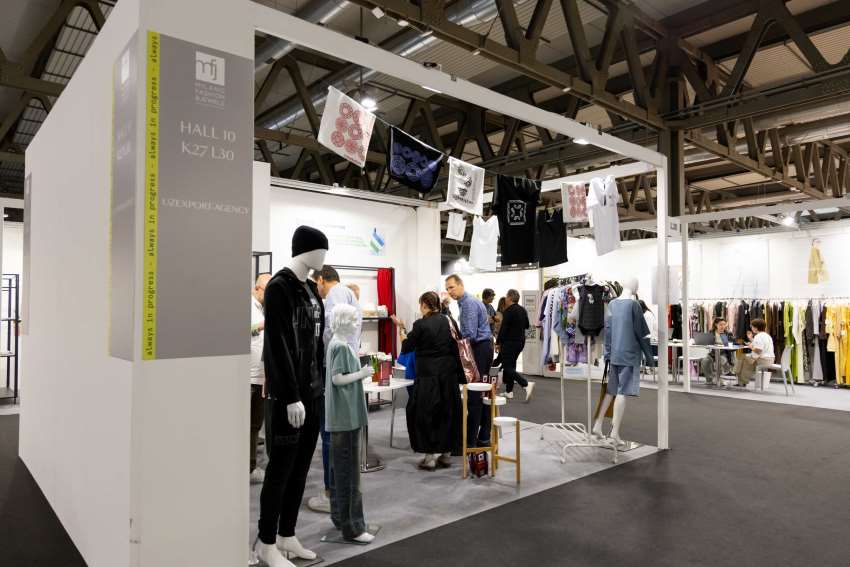
One way of doing this is through textile fairs where businessmen of different Arab nationalities are invited. The fair pavilions are spread over several thousand square meters where clothes for men, children, and women are exhibited.
The main objective is to recover the nation’s exports affected by the war since 2011.The Syrian Textile and Garment Exporters Association was established in 2005 by prime industrialists and exporters. This represents more than 180 major Syrian companies involved in textile and garment production.
The aim is to upgrade Syrian exports and explore new markets, assist manufacturers to improve their marketing competency, facilitate links between international importers and association members, build cooperation with similar regional and international associations, tailor production to suit the requirements of international and regional markets and develop the capability to compete locally, regionally and internationally.
Syria has experienced and skilled workmanship and has a strategic geographical location in the heart of the Middle East. Syria has entered into a new phase of trade and investment cooperation with countries. Syria has export potential in a significant number of agricultural and industrial sectors.
The Syrian textile industry has witnessed a recovery during the last few years.
Terrot develops new technology
Terrot is developing a new needle selection technology. This company makes electronic and mechanic-controlled circular knitting machines.
Terrot’s computer controlled circular knitting machine was developed for knitting electronic-jacquard transfer relief for fashion textiles with three-way technology. This allows various pattern styles on both sides of the fabric, making the machine extremely flexible with regard to different fashion applications and bonds. Usual knitting structures, either one or more colors, are possible. The high-grade knitting structures as double face, jacquard and relief represent the real strength of the machine. Through special transfer technology demanding hole and structure patterns can be realized quickly and without any major effort.
Innovations have a long tradition at Terrot. The company’s goal is to seize current market trends and to realize them as innovative products. Quality, a maximum degree of efficiency and a high cost-performanceratio are always in the foreground at the development and the engineering of its machines. Terrot’s advantage through experience, technical knowhow, expertise and commitment is shown in its everyday performance. Terrot presents high quality, extremely long lasting and user-friendly solutions to the market. So customers are assured of an increase in productivity, development of new markets and thus a guarantee of their own business success.
Pakistan to build garment stitching units, collaborates with B’desh
Pakistan will boost garment exports through setting up 1000 stitching units.
These will utilize surplus yarn and fabric in production of garments and other value added textile products. Each of the units is expected to give employment to 700 workers. All in all these 1000 units will have the potential to provide total employment to around a million people and make for additional exports of $ 210 billion.
Pakistan expects total textile exports to reach $50 billion in the next five years. Pakistan is also enhancing cooperation with Bangladesh in garment manufacturing. Both sides have proposed an exchange of delegations, especially young entrepreneurs, who can learn from each other about modern techniques. Both the sides have agreed to continue with more interactive sessions ahead in the larger interest of the value added garment sectors of the two countries.
Pakistan feels there is a lot to be learnt from Bangladesh in terms of supporting garment manufacturers and exporters by providing facilities like bonded warehouses, duty free imports of raw materials, setting up of dedicated industrial police units to ensure continuity of operations in total peace and tranquility and running multiple training programs for the benefit of workers and employers alike.
New Delhi to host technical textile meet
A conference on technical textiles will be held in New Delhi, February 15, 2023.
The conference will serve as a platform for all the relevant stakeholders to come together with the aim to improve domestic manufacturing. It aims to valorise cross-border trade and technology sharing to add value in the technical textile industry and share information on the new application areas of technical textiles.
The conference will deliberate on exploring new opportunities in the domestic and international textile market, research and innovations in technical textiles, challenges in R&D and the way forward. The aim is to bring leaders in manufacturing together to participate and search for ways to get better in technical textiles. The conference will be a step forward in India’s ultimate goal of becoming a global leader in the field of technical textiles. Steps are already being taken in this direction.
The country is promoting academic institutes and start-ups in technical textiles.The institutes will be both public and private. The guidelines for promoting start-ups in technical textiles are under formulation and are expected to release soon. The aim basically is moving toward increasing India’s market share in the technical textile industry. The areas covered under funding include laboratory equipment and training of lab personnel, specialised training.
India: Ludhiana welcomes trade pact with Australia
Ludhiana is looking forward to the India-Australia Economic Cooperation and Trade Agreement (ECTA).
The textile and garment industry of Ludhiana which is passing through a turbulent phase due to a severe recession feels the micro and small industry especially can grab new export opportunities from ECTA and that this agreement between India and Australia will have a significant positive impact on the extremely labour-intensive textile and apparel industry.
The cotton textiles’ value chain in the country, which has begun to experience a shortage of high-quality cotton as a result of the increased demand, is expected to benefit from allowing the import of duty-free cotton. The agreement with Australia will give various Indian textile products, particularly ready-to-wear clothing and home textiles, zero-duty market access.
The removal of the ten per cent tariff barrier for exporting to Australia as well as the eleven per cent import charge on cotton is expected to increase India’s textile and apparel industry’s competitiveness in the world market.
Ludhiana is known for its hosiery and woolen products worldwide. The products manufactured here are exported and sent to Uttar Pradesh, Jammu and Kashmir, Rajasthan, Madhya Pradesh and Bihar, among others. Ludhiana accounts for over 90 per cent of the total winter wear production in the country. There are around 12,000 units, a majority of them in the micro, small and medium category.
Despite covid resurgence, Chinese exports up three per cent in 2022
China’s apparel and accessory exports increased by three per cent year on year during 2022. This growth took place despite 2022 being a difficult year for China, especially due to a Covid resurgence.
However, massive demand in the global apparel markets in the first half of 2022 kept Chinese factories on their toes and they churned out garments day in and day out to serve their clients. Particularly in December 2022, China clocked $ 14.29 billion as compared to $ 11.59 billion in November 2022.
As far as textile exports are concerned, China shipped $ 147.95 billion worth of yarns, fabrics and other textile products in 2022, noting a marginal increase of two per cent over 2021. China is in the middle of an outward shift of its low-end textile and apparel industry, and this is expected to continue in the future. China's garment industry registered steady expansion in terms of revenue, profits and exports in the first nine months of this year. The industry’s revenue was up two per cent year on year. Profit was up 1.8 per cent over one year ago.Though the exports of garments declined in November 2022 the cumulative export values from January 2022 to November 2022 increased by five per cent year on year.