FW
Textile staples market to be worth $275.48 billion by 2032: Study
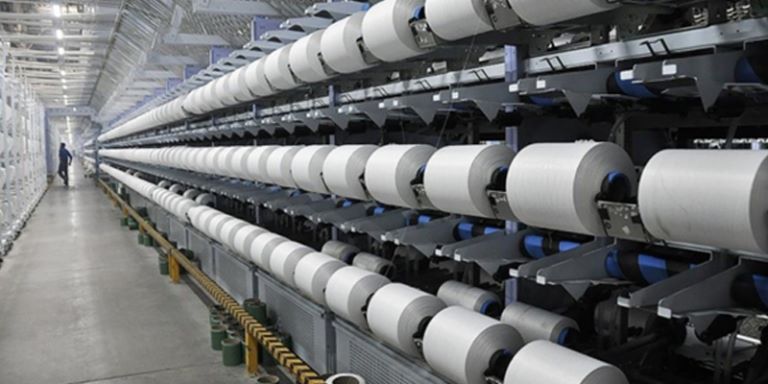
Natural staple fibers are driving this sub-sector within the textile industry as a sea change is being witnessed in terms of fabric preferences. Eco-conscious consumers, especially the millennials and Gen Z, the largest consumer groups worldwide are clear about their eco-friendly choices and the industry is trying to live up to consumer demands. As per a Future Market Insight Report, since 2022, the sub-sector of textile staples is witnessing a promising growth with sales projected to grow at 5.5 per cent. The market at present is pegged at $161.2 billion and is expected to touch $275.48 billion by 2032.
Growth momentum post-Covid
Growth is attributed to widespread consumption of textile staples in several end-use industries such as apparel, general and leisure, sportswear, interior flooring, and others is expected to push the sales during the forecast period. On historical analysis of the worldwide textile staples the report states, it grew at 5 per cent CAGR between 2012 and 2021 but has gained greater momentum since last year. Although natural fiber staples is the growth driver, synthetic textile staples will continue being in the lead during the forecast period up to 2032.
Apparel sector biggest user
In terms of application, 50 per cent of the total sales will continue to be in this sub-sector from apparel manufacturing. Use of textile staples in the apparel manufacturing sector in itself would register a 3.6 per cent growth annually. It is anticipated interior flooring will soon grow to be the second largest contributor in sales of textile staples. Not surprisingly, like most sectors related to end use of fabrics, the Asia Pacific region including Japan will be the single largest production cluster. Additionally, the healthcare sector is turning out to be another market of opportunities.
Some top manufacturers who are globally prominent in their own right include E.I. Du Pont de Nemours and Company, Lenzing AG, International Fibers Group, Invista, Thai Acrylic Fiber Co. Ltd. (Aditya Birla Group), Toray Group, Chori Co., Ltd., W. Barnet GmbH & Co. KG, Cellulose Cotton Wool Corporation of India, Teijin Frontier Company Ltd., Belgian Fibers SA, Grasim Industries, Indorama Ventures Public Company, Reliance Industries, Synthesia AS and the Woolmark Company.
These proactive players are setting up production units in emerging economies to pave way for greater cost efficiencies and profit maximization with such units. Many textile manufacturers are shifting from manufacturing generic products to niche technical textile products as currently it’s a playing field with less competition. The game is about higher volumes of cheap textile staples that can easily cater to the growing demand and also create usage growth in other segments because of its cost efficiencies. Manufacturers in the US are focusing on catering to the healthcare industry with such technical textile staples and setting up manufacturing units in South and South East Asia.
Phenomenal sales since 2022
Natural staple fibers are experiencing a surge in usage with cotton, jute and wool remaining popular preferences. Demand for natural and eco-friendly textiles is anticipated to surge because the consumption of synthetic staple fibers negatively impacts the environment. However, synthetic staple fibers such as viscous rayon continue being extensive among end users. Prominent companies are producing one of the most popular synthetic fibers, polyester, in a sustainable manner. PET bottles and polyester waste is utilized to create recycled polyester staple fiber. Among several other things, recycled polyester is utilized in carpets, pillows, blankets, and high-end cushions.
Reports suggest, India has so far invested $2.5 billion towards setting up facilities to manufacture both, synthetic and natural staple fibers.
Fall in Zegna Q4 revenues
Ermenegildo Zegna’s revenues for the fourth quarter of the year were down 0.5 per cent year on year.
Revenues at constant currency grew eleven per cent and declined 2.9 per cent in fiscal year 2022 and the fourth quarter of 2022 respectively. Excluding the Greater China Region, which was affected by Covid-related restrictions throughout 2022, particularly from mid-March to the end of May and then again in the fourth quarter, revenues were up 42 per cent year on year for fiscal year 2022 and up 24.7 per cent year over year for the fourth quarter of 2022.
Ermenegildo Zegna, based in Italy, owns the brands Zegna and Thom Browne. In spite of the continued global economic and geopolitical challenges of the year, the group is happy with its performance. Despite China continuing to be affected by Covid-related restrictions throughout 2022, the company’s growth for the year showed the soundness and success of its strategy, global reach, and flawless execution, with ongoing success in the Middle East, US, and Europe.
The company is optimistic about China’s reopening since a rebound in business and the industry at large is being seen. Ermenegildo Zegna will operate the Tom Ford fashion business under a long-term license from Estée Lauder.
Class to showcase at Milano Unica
Class will be participating at Milano Unica, Italy, January 31, 2023, to February 2, 2023.
The synergy between Milano Unica and Class is aimed at giving voice to the values of responsible innovation, a fundamental basis for next-generation fashion.
Class- creativity lifestyle and sustainable synergy ( C.L.A.S.S.) will present a smart shop, which is anonline space offering high-tech materials representative of a wide range of categories and applications that can bring the future of fashion to life. The smart shop is dedicated to students, designers and emerging next-generation brands determined to explore and test premium materials that can combine style, innovation and responsibility. Class will present an immersive journey through smart materials and responsible solutions for the contemporary wardrobe, including all the different expressions of ingredients: natural, transformed, innovative and circular materials.This will give visitors of Milano Unica the opportunity to learn about, and touch, innovative, yet conscious, design products in line with the contemporary values of the new generation.
Class , based in Italy, is an eco-hub which since 2007 has been supporting the whole supply chain to trigger change in the system while activating values that speak clearly to contemporary consumers. Milano Unica is a reference trade fair for high-end fabrics and accessories for women’s and men’s wear.
Bangladesh expects duty free US cotton
Bangladesh wants the United States to provide duty-free cotton imports for its readymade garment industry.
The US is the world’s largest cotton exporting country. Globally, Bangladesh is the second biggest readymade garment exporter and imports a good amount of cotton annually from the US. And the US also happens to be the largest export market for garments made in Bangladesh. Annually, Bangladesh needs around nine million bales of cotton for apparel manufacturing. Whereas Bangladesh produces only 1.50 lakh bales of cotton annually, which is only 1.6 per cent of the total demand.
Bangladesh is trying to increase cotton production. But even if cotton production doubles, Bangladesh will have to import an enormous amount of cotton from abroad. So the country feels that if the US were to provide duty-free benefits for cotton imports, its apparel industry will be benefitted greatly.In marketing year 2021-22 Bangladesh's domestic raw cotton consumption was estimated at 8.8 million bales. The textile industry is composed of yarn, fabric, and dyeing-printing-finishing mills and they have about 15 million bales of cotton consumption capacity.
Raw cotton is the second most imported product in Bangladesh. The country imports raw cotton primarily from India, the United States, Benin, Brazil and Spain.
Despite growth in sales, costs sink H&M Q4 profits
H&M's fourth quarter profits were almost wiped out by soaring costs.
But the Swedish company held back from passing on full costs to cash-strapped customers.The world's second biggest fashion chain, which raised some prices, will continue with this pricing strategy even though it will not fully compensate for the higher costs, such as for energy, transport and raw materials. So the group will keep raising prices in some categories to a varying extent in different markets to partially make up for continued high costs.
H&M gradually closed its stores across Russia last year, and decided to exit the market.The retailer’s exit from Russia and the financial impact of a cost-cutting drive announced last year also contributed to the fall in profits. However the company expects sales and profitability to improve in 2023, primarily towards the end of the year.
The group in September 2022 launched a drive to cut costs with savings expected to start showing from the second half of 2023. This included cutting around 1,500 jobs as part of the program.Gross margins were weaker than expected.
H&M’s sales so far in the current quarter are strong - as expected, given the colder weather across Europe. H&M sales increased by six percent during 2022. The external factors that had had a negative effect on purchasing costs are gradually reversing and are expected to become positive for the company’s results in the second half of 2023. Purchasing costs are already lower for the orders being placed now compared with the same time last year. In addition, the second half will also see the positive effect of the cost and efficiency program that is expected to provide significant annual savings.
Bangladesh to host Sustainable Apparel Forum
Sustainable Apparel Forum will be held in Bangladesh, March 15 to 16, 2023.
The event aims at bringing together stakeholders to discuss and exchange ideas on how to advance sustainability within the textile and apparel industry.
It will focus on five key subject areas of the apparel and textile supply chain: circular economy, climate impact and action, renewable energy and green funding, skill development and green job prospects and challenges.
Delegates in attendance will include garment manufacturers, brands and retailers, development partners, foreign missions and embassies in Bangladesh, impact creating organisations, apparel and textile associations, industry leaders, government officials, secretariats and ministers.
There will be roundtable discussions and workshop sessions on circularity, panel discussions, presentations and keynote speeches along with strategic guidelines from officials and industry leaders. There will be a discussion on decarbonisation and what it will take for the industry to achieve the necessary reduction of carbon emissions.
The event is open for interested participants to register and join other stakeholders in discussions and networking sessions on how to accelerate progress to transform the industry.The Sustainable Apparel Coalition, which brings together around half of the apparel industry to enable positive social and environmental impact at scale, has partnered with the Bangladesh Apparel Exchange for this event.
American denim sales fall
Demand for denim is declining in the US market.
Shoppers are opting for more formal attire and non-denim styles instead of more expensive jeans.While macro pressures have not impacted all apparel categories equally, denim has been a category feeling the brunt of a change in consumer spending patterns. US consumers are cutting back on non-essential purchases like clothing as a result of high inflation and an impending recession.
Despite 2021’s high demand, the denim industry is predicted to cool off. Although the market expanded by 12.5 per cent over the previous five years, it is expected to only have 3.8 per cent growth from 2022 to 2027. Consumers prefer more wide legged trouser-like silhouettes. Shoppers are buying more cargo pants and corduroys as they refresh their wardrobes with more non-denim bottoms.
For instance Levi Strauss’ gross margins are expected to come under pressure from higher inventory levels, increased promotions, and a stronger dollar, even as its jeans became more expensive. The company is expected to face a fall in quarterly sales for the first time in six quarters.
At the same time total US imports of denim apparel from the world in the first eleven months of 2022 increased by 17 per cent compared to the same period of 2021.
Levi Strauss margins under pressure
Levi Strauss’ gross margins are expected to come under pressure from higher inventory levels, increased promotions, and a stronger dollar, even as its jeans became more expensive.
The company is expected to face a fall in quarterly sales for the first time in six quarters, as penny-pinched shoppers shift away from pricier jeans to more formal clothing and non-denim styles. The company benefited from the need for people to renew their wardrobe post lockdown, but the strength in terms of the customer needing to go back to denim and replenish will be much lower now.
While macro pressures have not impacted all apparel categories equally, denim has been a category feeling the brunt of a change in consumer spending patterns. The US jeans market is expected to decline slightly in 2023. The market is estimated to grow at a modest 3.8 per cent between 2022 and 2027, after a 12.5 per cent expansion over the last five years. Shoppers are buying more cargo pants and corduroys as they refresh their wardrobes with more non-denim bottoms.
With the United States on the edge of a recession, shoppers, pressured by high inflation, are spending less on discretionary items like clothing, with the denim category, in particular, set for a slowdown following a demand surge in 2021.
Vardhman financial details reveal degrowth
Vardhman Textiles’ total income was Rs2436.92 crores during the period ended December 31, 2022, as compared to Rs 2499.98 crores during the period ended September 30, 2022. Net profit / loss was Rs 102.40 crores for the period ended December 31, 2022, as against net profit / loss of Rs 204.90 crores for the period ended September 30, 2022.EPS was Rs 3.60 for the period ended December 31, 2022, as compared to Rs 7.20 for the period ended September 30, 2022.
Total income was Rs2436.92 crores during the period ended December 31, 2022, as compared to Rs2666.80 crores during the period ended December 31, 2021. Net profit / loss was Rs102.40 crores for the period ended December 31, 2022, as against net profit / loss of Rs428.59 crores for the period ended December 31, 2021.EPS was Rs3.60 for the period ended December 31, 2022, as compared to Rs15.08 for the period ended December 31, 2021. Total income wasRs7768.69 crores during the ninemonth period ended December 31, 2022, as compared to Rs7091.30 crores during the ninemonth period ended December 31, 2021. Net profit / loss wasRs636.42 crores for the ninemonth period ended December 31, 2022, as against net profit / loss of Rs1224.78 crores for the ninemonth period ended December 31, 2021.EPS wasRs22.37 for the nine month period ended December 31, 2022, as compared to Rs43.09 for the nine month period ended December 31, 2021.
United Textiles releases income details
United Textiles’ total income was Rs 4.2195 crores during the period ended December 31, 2022, as compared to Rs 5.2471 crores during the period ended September 30, 2022.
Net profit / loss was Rs 0.0016 crores for the period ended December 31, 2022, as against net profit / loss of Rs 0.0164 crores for the period ended September 30, 2022.EPS was Rs 0.0053 for the period ended December 31, 2022, as compared to Rs 0.0054 for the period ended September 30, 2022.Total income was Rs4.2195 crores during the period ended December 31, 2022, as compared to Rs5.3117 crores during the period ended December 31, 2021.
Total income was Rs9.4666 crores during the ninemonth period ended December 31, 2022, as compared to Rs7.2987 crores during the ninemonth period ended December 31, 2021. Net profit / loss wasRs0.0180 crores for the ninemonth period ended December 31, 2022, as against net profit / loss of Rs0.0246 crores for the nine month period ended December 31, 2021.EPS wasRs0.006 for the nine month period ended December 31, 2022, as compared to Rs0.0082 for the nine month period ended December 31, 2021.