FW
Victoria's Secret finds company on right path despite challenging year
Victoria's Secret, the intimates giant had a challenging year but is on the right path after its first full year as a public company, as per the company press release.
The company's fourth-quarter net profits decreased by 29.7 per cent, but adjusted profits of $2.47 a share beat analysts' expectations. Sales for the three months ended Jan. 28 decreased by 7.1 per cent, but were in line with Wall Street's expectations. For the full year, net profits fell 46 per cent, and sales declined 6.4 per cent.
Despite the challenging economic environment, the company feels is "prudently positioned to begin 2023." However, the first quarter isn't shaping up to be as strong as analysts hoped, with sales projected to decrease by a percentage in the mid-single-digit range, and adjusted profits projected at 30 cents to 60 cents a share, below the 83 cents analysts anticipated.
The CEO said the company's brand repositioning efforts are tracking well, and the company plans to continue building on its core offerings as the leader in the intimates market through a pipeline of bra launches and expanding its international footprint.
Impact of Brazil's growing cotton production on US exports
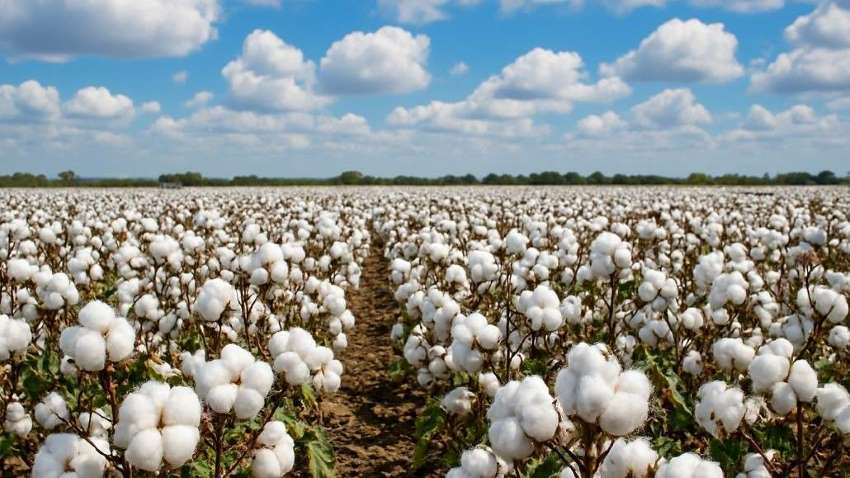
A recent study from the University of Illinois examines the impact of Brazil's increasing cotton production on U.S. cotton exports.
While the U.S. is currently the world's largest cotton exporter, Brazil is quickly catching up due to a large expansion in land area devoted to cotton and a growing focus on trade. The study estimates that U.S. cotton exports to China have decreased by approximately $500 million annually, with Vietnam, Pakistan, and Bangladesh receiving more U.S. cotton exports as a result.
In contrast, Brazil's cotton exports to China have increased by approximately $75 million, and the country has become a major player in the Chinese cotton market.
The study suggests that Brazil's success in the cotton market is due to its suitability for the production of many commodities, its rapidly developing infrastructure, and capacity to sell products globally. Despite the recovery of U.S. cotton exports to China since 2020 when the U.S.-China Phase One trade deal was implemented, Brazil's market share remains high, and it is expected to continue to grow.
Metaverse Fashion Week announces program and designers for second annual event
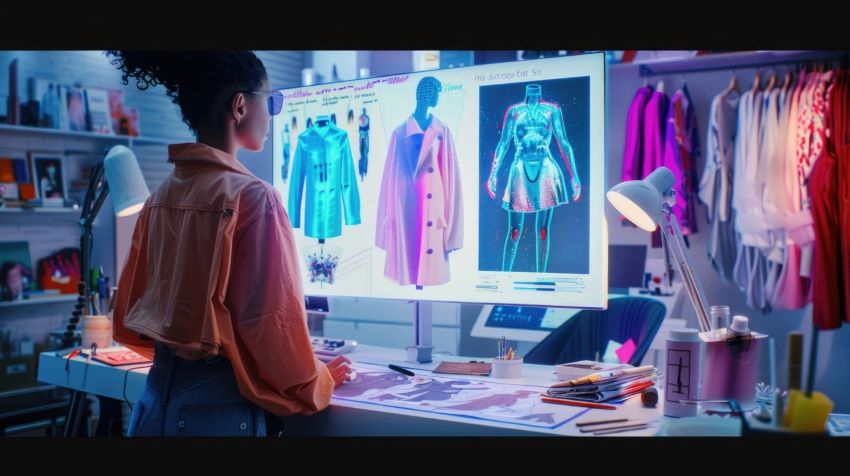
Metaverse Fashion Week (#MVFW23) has announced the program and participants for its second annual event, taking place from March 28 to 31, 2023.
The event will feature designers from the Decentraland community, including Dolce & Gabbana, Tommy Hilfiger, Coach, Adidas, DKNY, Monnier Paris, Dundas, Phygicode Dress, and more.
The focus of the event is to demonstrate the potential of interoperability between open metaverses and push the boundaries of digital fashion. MVFW23 will take place across multiple metaverses, with the Luxury District in Decentraland serving as the heart of digital fashion. Other brands and companies, including Miami Fashion Week, Ben Bridge, Diesel, and Kraken, will also participate in the event, showcasing their Wearables and NFTs.
The event aims to connect emerging digital designers with established traditional fashion institutions, emphasizing the connection between innovation and tradition. The program will feature community designed activations and initiatives, such as Dear Vivienne, an immersive installation inspired by the late fashion icon Vivienne Westwood, and Alo, which will bring yoga and meditation sessions to the metaverse.
Bangladesh and India look to boost bilateral trade in garment and textiles
Bangladesh and India have a huge prospect in enhancing bilateral trade, especially in the ready-made garment and textile sector, according to Faruque Hassan, President of the Bangladesh Garment Manufacturers and Exporters Association (BGMEA).
Hassan says that with a growing middle-class population in India, Bangladesh's RMG exports have a highly potential market, while Bangladesh is also a promising market for Indian cotton, man-made fibres, dyes, chemicals, and other raw materials.
During a meeting with a delegation from the Cotton Textiles Export Promotion Council (TEXPROCIL), both parties agreed that more business interactions between apparel and textile exporters of both countries would help to explore new opportunities and meet mutual needs.
However, Hassan stressed the importance of removing trade barriers and building adequate infrastructure and transport facilities in land ports to accommodate the increased transportation demand.
Hassan expressed his appreciation to the government of Bangladesh for allowing apparel exporters to import yarns from India in partial shipment through various land ports. Previously, RMG exporters could only import yarn through the Benapole land port under the bonded warehouse facility, but they were not allowed partial shipment.
BGMEA and TEXPROCIL agreed to collaborate in paving the way for more business between the two neighboring countries.
Bangladesh to have increased Chinese and Hong Kong investments in textile, clothing sectors
Overseas Chinese Association in Bangladesh (Ocab), believes that Bangladesh will experience increased investment in the textile and clothing sectors due to a favorable business environment.
According to the annual report of the Bangladesh Bank, China invested $465.17 million and Hong Kong invested $179.22 million in the July–June period of FY22, bringing the total Chinese investment to $644.30 million. The USA was the top investor with $661.12 million in investment in FY2022, which was 19.2% of the total foreign direct investment.
One example of such investment is the South China Bleaching and Dyeing Limited, a 100% export-oriented Chinese company that has invested $150 million in the Dhaka Export Processing Zone with an employment of 10,000 workers and employees. As a rapidly growing multinational organization in Bangladesh, South China Limited has earned a solid reputation locally and globally in the textile and clothing sectors over the years.
The mission of the Overseas Chinese Association in Bangladesh is to foster a relationship between the two nations and two cultures. Bangladesh Investment Development Authority (Bida) attributes to the country becoming a hub of investment in the South Asian region and it is expected that Chinese investment in Bangladesh will continue to rise in the coming days.
Hong Kong also has become one of the leading investors in Bangladesh, pouring $1.8 billion to date mainly in the textile and energy sectors, with bilateral trade reaching over $1 billion.
Fragmented lifestyle export market slowdowns Indian economy
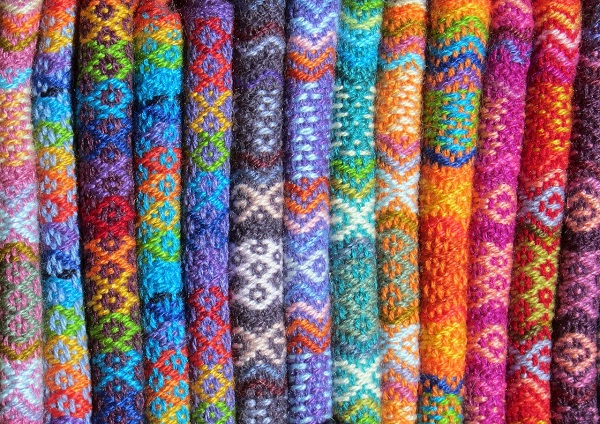
India’s lifestyle industry is up and running with demand for locally made products for international markets reaching customers through online mediums. The changed landscape of Indian apparel industry has seen many small and local businesses enter the segment with specific and sophisticated products targeted both at domestic and global customers, willing to pay a higher price for better quality and trendy designs.
Analysts say, almost all merchandise exports from India are rapidly growing and expected to more than double their current value by 2025. Having hit a record high of $40.38 billion in 2022, merchandise exports from India increased at around 15 per cent year-on-year to $35.26 billion earlier. Export revival, supply chain pipelines and improvement in consumer demand have altogether contributed to general growth.
Need to focus on circular economy for fast fashion exports
However, things may not be smooth in post-Covid markets as apparel exporters fear US and European economic slowdown, rupee depreciation, inflationary pressure and complicated geo-political situations due to the Ukraine war will slide down profit margins.
It is always the fast fashion apparel segment from low-cost manufacturing hubs of South East Asia that keeps the global export market thriving. To have an on-trend product portfolio with an excellent time-strategy system on offline shop shelves and online websites is now vital. Therefore, establishing overall infrastructural and capability ecosystem for a smooth end-to-end supply chain that can support a highly fluctuating and flexible manufacturing and production apparel industry is important.
Online retail websites require an added cost from fashion brands as they need to ensure they integrate partners who can support them with virtual platforms. Partnerships and collaborations in the Indian industry is fast increasing with a focus on high-tech products, versatile garments and accessories portfolio and reliable payment mediums and transport logistics which together create a wholesome customer-friendly brand.
Exports say, fast fashion is sustainable only in a circular economy where you need to give back and Indian brands need to focus on whether they will throw away, recycle or repurpose the garments, However, India is still taking baby steps in sustainable and circular economy, due to the high cost of maintenance to reduce their carbon footprint.
Government policies, R&D investments to propel sales
To tap into the Indian middle class which is a value-for-money segment that prefers quantity over quality, governmental regulations and investments are required on sustainability issues. A long history of inadequate trade infrastructure, low credit access, outdated technologies and trade barriers has made the Indian economy slow. However, new government policies such as the National Infrastructure Pipeline, Gati Shakti Scheme and FTA’s and the focus on increasing investment in R&D will propel the industry forward.
Working towards a vertically integrated set-up will help from Indian brands to cut costs and be more competitive with their price points and product USPs; increase investments on R&D to launch unique products. With the current fragmented supply chain, just about 3-4 per cent of fabric comes from the organized sector and high-tech machinery is not normally used in factories of most local fabric makers.
To compete with fabric manufacturers in Japan and Europe, the Indian garment segment needs to encourage FDI in loom manufacturing to start building capacity and increase to at least 40,000 looms per year over the next decade, from the current 5,000 looms a year. The moot point is, the apparel sector should not be a fragmented one as all processes in the value chain have to be interlinked and businesses leaders need to collaboratively focus and develop the industry with government help to both small and large manufacturers.
Showcasing complete approach to the vibrant ensemble

Benetton’s new creative director Andrea Incontri's latest runway show, held on Feb 25 for the United Colors of Benetton incorporates the concept of infinity to represent the brand's generational history. The linearity of time is transformed into an endless cycle of products, values, and aesthetics, resulting in a continuous flow of apparel and accessories crossing a fully mirrored set. Showcasing complete approach to the vibrant ensemble The show begins with tailoring, including jackets, trousers, and coats in full, tonal colors, as well as houndstooth check or tweed, and ends with workwear, such as overalls, garment-dyed canvas skirts, and jackets with contrasting stitching. The collection features eco-leather, including the vinyl-effect biker jacket, and eco-shearling for plush apparel and accessories, extending beyond the brand's core knitwear.
The colors and prints contrast with the clean, precise cuts, starting with black and white and ending in grey and mirrored silver. Neutral colors serve as the extremes of an endless space of Benetton polychromy, represented in the collection by seven saturated shades: ultramarine blue, primrose yellow, emerald green, hot pink, rosewood red, wisteria, and orange flame.
Rabbit, flower, and the mushroom represent figurative themes
The show's rhythm is marked by symbols, geometric shapes, and patterns whose serial repetition replicates the cycles of nature and industrial production. The organic and spontaneous nature of the former is represented by the show's main figurative themes: the rabbit, the flower, and the mushroom, transformed into stylized designs for jacquard inserts, prints, and patterns.
Accessories such as bags, platforms, Mary Janes, loafers, and combat boots in vinyl or eco-leather, and furry belts, bags, and footwear, complement the apparel. Enamelled costume jewelry reprises the subjects of the prints, adding small, brilliant details.
The show's chromatic metamorphosis drives its evolution, culminating in three-dimensionality suspended as in a frame.
Retail Sales increase in Bermuda despite lackluster response to ‘Buy Bermuda’
Retail sales in Bermuda experience lackluster response despite overall volume increase in November.
According to the November Retail Sales Index, the value of sales increased by 5.6%, or $5.7 million, to $98.1 million. However, much of this increase was due to the 6.1% retail inflation rate.
Although apparel stores saw a 2.2% increase in the value of sales, the volume of sales declined by 1.7% year-over-year in November, with a 33.4% drop compared to pre-pandemic levels in November 2019. Despite retailers' call to "buy Bermuda," sales volume in this sector has remained low.
On the other hand, liquor store sales volume increased by 3.2%, with a sales value increase of 1.2%, and sales of liquor rose by 14.8% compared to November 2019.
India: Tiruppur's knitwear industry shows signs of recovery after pandemic and conflict impact
The knitwear hub of India, Tiruppur, is showing signs of recovery after facing the impact of the Covid-19 pandemic and the Russia-Ukraine conflict. Despite experiencing a negative growth rate of 24 per cent on average for three months in 2022, the industry witnessed a 2 per cent rise in exports in dollar terms and an 11 per cent rise in Rupee terms in January 2023, indicating a possible upward trend.
The pandemic and the war affected European countries, leading to inflation, high prices of essential commodities, and cautious spending, which had a significant impact on the knitwear industry of Tiruppur. Due to these factors, Europeans were found to wear t-shirts for a longer time before purchasing new ones.
However, there is hope as the industry bounced back to positive sentiment in January 2023, and experts expect to see good business in the coming months. Knitwear exports from Tiruppur in USD terms grew 1.5% at USD 413 million in January 2023, while overall knitwear exports from the country grew by 0.9% at USD 751 million in December 2022 compared to USD 744 million in January 2022.
Tiruppur's knitwear industry is predominantly composed of micro, small, and medium enterprises that depend on orders from Europe and the US. While orders have started to come in from these regions, it is not in significant quantities as in the past. Nevertheless, the 1.5 per cent growth recorded in January is a positive sign that the industry hopes to reflect in the coming months.
In 2022-23, all India knitwear exports were at Rs 53,586 crore as against Rs 29,643 crore from Tiruppur district, which has over 6000 units engaged in knitwear, stitching, dyeing, embroidery, and accounts for more than 70 per cent of knitwear exports in India, employing nearly 5 lakh people.
Indian textiles face challenges despite surge in demand for man-made fibers
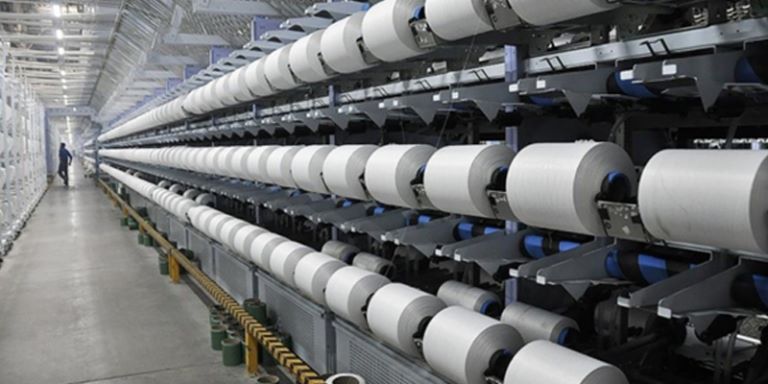
India’s surge in demand for man-made fibers is driven by the rise in demand for technical and medical textiles and the increased cost of raw materials like cotton. As a result, many weavers and spinners are blending man-made fibers to stay cost-competitive. Man-made fibers, such as viscose and polyester, are flexible, durable, and able to endure high-speed machinery, making them critical to the industry.
Ensuring the availability of quality raw materials at competitive prices is crucial for the industry's sustainability and safeguarding. The supply and demand mechanisms for raw materials must be in equilibrium to create a level playing field, enabling fair competition in the market.
With the world's shift away from China, India has an opportunity to establish itself as a leading player in the global textile industry. However, the country needs to address the challenges facing the industry and promote sustainable growth.
Reports suggest that the reintroduction of import duties on viscose is being considered, potentially increasing the import price of the fiber by up to INR 40 (0.5 USD). This could lead to increased imports of yarn and fabric, job losses, and a decline in exports.
However, to support the industry's growth, the Indian government has introduced initiatives such as the Production Linked Incentive scheme for Man-made Textiles, the National Technical Textile Mission, and the Remission of Duties and Taxes on Exported Products Scheme. However, limited supply of viscose fiber and outdated technology in the weaving industry hinder the sector's potential.