FW
European textile trade deficit compresses as production shrinks
The European Union’s textile and apparel trade deficit narrowed by 19.1 per cent Y-o-Y. However, economic analysts caution, the contraction stems from severe trade compression rather than structural recovery. Extra-EU textile and clothing imports fell substantially faster than outbound shipments, reflecting soft consumer demand across major European consumer markets rather than a domestic manufacturing revival.
Domestic industrial output contracts further
While the deficit improvement offers superficial relief to regional balance sheets, domestic production metrics reveal ongoing operational pressure. Textile output dropped by 5.1 per cent, alongside a corresponding decline in apparel manufacturing output. High energy costs, regulatory compliance burdens, and persistent inflation continue to weigh heavily on mill margins and operational utilization rates.
Sector re-aligns supply chains
In response to industrial slowdowns, European manufacturers are reallocating capital toward nearshoring and high-spec technical textiles. We are witnessing a structural transition where European mills must focus on specialized, high-margin functional fabrics rather than competing on volume, noted a senior trade economist at a leading European industrial association. Navigating low consumer sentiment while adhering to stringent sustainability mandates remains the primary operational hurdle for European textile producers through the fiscal year.
European textile ecosystem
Euratex represents the European textile and apparel industry, an industrial ecosystem generating €166 billion in annual turnover across 200,000 enterprises. Operating primarily in high-value, specialized technical textiles and fashion, the sector prioritizes sustainable production technology, aiming to maintain global competitiveness despite persistent domestic cost pressures.
From cotton peaks to polyester pressures, textile supply chains face a reset
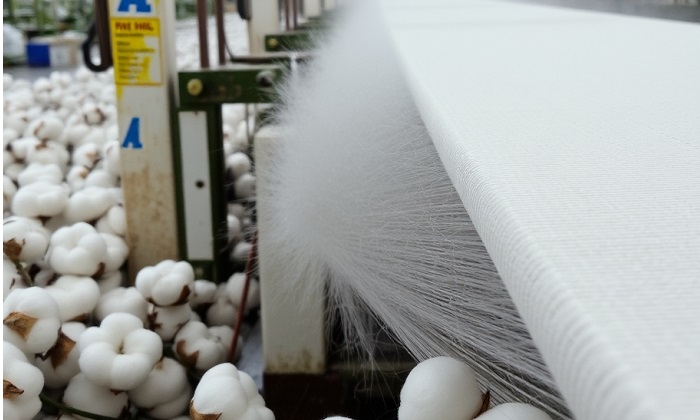
The assumption that textile supply chains can absorb periodic swings in cotton prices has become untenable. During the first seven months of 2026, the global yarn and textile industry experienced a sharp reminder that raw material risk is no longer confined to cotton alone. Simultaneous increases in cotton and synthetic fibre costs have altered sourcing strategies, procurement models and export competitiveness across the world's largest manufacturing hubs.
What emerged was not merely another commodity cycle but a recalibration of how mills, brands and exporters manage risk. Traditional hedging strategies built around switching between cotton and polyester proved far less effective because rising crude oil prices simultaneously pushed up synthetic fibre costs. As a result, textile manufacturers found themselves handling inflationary pressures across both natural and man-made fibres.
A three-phase market cycle
Global cotton prices followed three distinct phases between January and July 2026, Highlighting how quickly market sentiment shifted from oversupply to scarcity before returning to cautious equilibrium.
Table: Global cotton price phases & benchmark overview (Jan-Jul 2026)
|
Time Phase |
Price range ($/lb) |
Market drivers |
Sector impact |
|
Phase 1 (Jan–Feb) |
$0.74 – $0.75 |
Surplus inventory overhang, sluggish mill demand |
Low operating rates, conservative yarn inventory build |
|
Phase 2 (Mar–May) |
$0.85 – $0.93 (Peak) |
Weather shocks (El Niño/monsoon), active restocking |
Rapid yarn price hikes, margin compression for spinners |
|
Phase 3 (Jun–Jul) |
$0.79 – $0.85 |
New crop arrival, USDA output revisions, market stabilization |
Cautious spot buying, strategic blending shift toward synthetics |
The cotton rally coincided with strengthening crude oil prices, raising costs for purified terephthalic acid (PTA) and monoethylene glycol (MEG), the principal feedstocks for polyester production. Consequently, polyester staple fibre and filament yarn prices climbed alongside cotton, eliminating the cost advantage that manufacturers typically rely upon during cotton rallies.
This dual inflation forced textile companies to rethink procurement. Instead of simply shifting fibre mixes, purchasing teams increasingly diversified supplier bases, staggered buying schedules and expanded price-risk management across multiple raw materials.
Countries respond differently
The volatility also exposed differences in national preparedness.
China continued to use its integrated textile market, controlling roughly 70 per cent of global polyester production while maintaining substantial state cotton reserves. Domestic weaving activity strengthened considerably, with cotton yarn imports surging 66.2 per cent year-on-year in April as mills replenished inventories.
India displayed greater resilience through its diversified fibre base. Textile exports reached Rs 3.16 lakh crore in FY26, while exports of man-made yarns and fabrics grew 3.6 per cent. Cotton yarn, fabrics and handloom exports crossed Rs 1.02 lakh crore, supported by continued upstream integration. The government's decision to extend customs duty exemptions on raw cotton imports until October 2026 also helped processors manage cost pressures without disrupting production.
Elsewhere, the US increased acreage for the 2026-27 crop, with exports projected at 12.3 million bales, while Brazil reinforced its leadership as the world's largest cotton exporter with shipments expected to touch 15 million bales. Vietnam continued strengthening its position as a manufacturing hub, raising cotton imports to a record eight million bales to support expanding garment exports and diversified sourcing away from China.
|
Country /region |
Key export performance |
Raw material/Import dynamics |
Primary focus |
|
China |
Retail cotton yarn exports hit $3.06M in May 2026 (+23.2% MoM) |
Cotton yarn imports surged 66.2% YoY to 178kt in April; Blended yarn imports reached 5-yr high (22.4kt) |
Maintaining MMF market dominance, overseas yarn sourcing for weaving |
|
India |
Total textile exports grew 2.1% to Rs 3,16,334.9 Cr; MMF yarn/fabric up 3.6% |
Cotton yarn/fabric exports reached Rs 1,02,399.7 Cr; 11% cotton duty waived till Oct 2026 |
FTA market access, integrated synthetic and natural fiber expansion |
|
Pakistan |
Total exports $17.93B (+0.26%); Yarn exports +12.40% |
Raw cotton imports down 43.26%; Synthetic fiber imports up 7.25% |
Cotton-synthetic blending, export market diversification |
|
United States |
Cotton exports projected at 12.30M bales |
Planted area up 6% to 9.85 million acres |
Fiber export growth, industrial textile investment |
|
Brazil |
Record cotton export forecast of 15.0M bales |
Expanding output to meet global deficit |
Large-scale sustainable farm output, trade expansion |
|
Vietnam |
Garment & footwear exports up 6.2% in H1 2026 |
Record import projection of 8.0M cotton bales; Premier yarn exporter to China (78.5kt in Apr) |
High-capacity yarn spinning and apparel conversion |
Pakistan's cost challenge
Pakistan offers perhaps the clearest example of how commodity volatility can quickly erode manufacturing competitiveness. Although textile exports edged up marginally to $17.93 billion in FY26, growth was uneven. Readymade garment exports rose nearly 4 per cent and cotton yarn exports increased 12.4 per cent, yet cotton fabric exports contracted more than 7.5 per cent. Even more striking was the 43.3 per cent decline in raw cotton imports, reflecting elevated global prices and tighter financing conditions.
At the farm level, producers shifted acreage from cotton towards more profitable crops such as sugarcane, rice and maize. Reduced domestic availability forced mills to increase synthetic fibre imports by over 7 per cent simply to maintain capacity utilisation. Experts argue that conventional fibre blending no longer offers adequate protection when both cotton and polyester prices rise simultaneously. Procurement decisions are therefore becoming more data-driven, incorporating continuous monitoring of commodity prices, freight costs and inventory risks.
The next competitive edge
The second half of 2026 is unlikely to offer significant relief. Cotton consumption is expected to approach a six-year high of nearly 122 million bales while global ending stocks continue to tighten. Freight costs remain uncertain, geopolitical tensions continue to influence trade flows, and sustainability regulations in Europe and North America are adding new compliance costs through traceability requirements.
This changing environment suggests that future competitiveness will depend less on access to inexpensive labour and more on supply chain resilience.
Manufacturers with integrated operations spanning spinning, weaving and processing will enjoy greater flexibility to absorb raw material shocks. Equally important will be sophisticated risk management capabilities that combine diversified sourcing, inventory optimisation, commodity hedging and transparent fibre traceability.
For the global textile industry, 2026 has underscored a fundamental reality: managing volatility is no longer a procurement function alone. It has become a capability that will determine which manufacturing hubs attract global sourcing orders and which are left behind.
Global sourcing reset exposes India’s apparel competitiveness gap

The assumption that global apparel sourcing would naturally shift from China to India is proving increasingly misplaced. Fresh trade data suggests that while brands are actively diversifying their supplier base, they are rewarding execution capability rather than simply moving production to the next-largest manufacturing nation.
The Office of Textiles and Apparel (OTEXA) for January-May 2026 show that US apparel imports declined 9.3 per cent amid weaker consumer demand and persistent inflation. China experienced the sharpest correction, with exports to the US falling 42.75 per cent to $2.80 billion. Yet India did not emerge as the principal beneficiary. Instead, its shipments declined an even steeper 26.37 per cent to $1.80 billion, while Southeast Asian suppliers captured a larger share of new business.
|
Sourcing Region |
Jan–May 2025 Value ($ bn) |
Jan–May 2026 Value ($ bn) |
Year-on-Year Growth (%) |
|
Vietnam |
$6.30 |
$6.39 |
+1.46% |
|
Bangladesh |
$3.53 |
$3.25 |
−8.08% |
|
China |
$4.90 |
$2.80 |
−42.75% |
|
Indonesia |
$1.87 |
$1.97 |
+5.49% |
|
India |
$2.44 |
$1.80 |
−26.37% |
|
Cambodia |
$1.51 |
$1.74 |
+14.90% |
Vietnam remained the largest apparel supplier to the US, increasing shipments to $6.39 billion despite the broader market slowdown. Indonesia increased exports by 5.49 per cent, while Cambodia recorded the strongest growth at 14.9 per cent. Bangladesh, despite an 8.08 per cent decline, continued to outperform India in absolute shipment value. The figures underscore that sourcing diversification is no longer a simple China Plus One exercise. Global retailers are building broader supplier portfolios centred on operational efficiency, production flexibility and supply-chain resilience.
Reliability matters more than price
The data also challenges the long-standing assumption that pricing remains the decisive factor in sourcing decisions. OTEXA's unit-value tracking shows India's average export price at $3.41 per sq. mt. equivalent (SME), only two cents higher than Vietnam's $3.39 per SME. Such a marginal difference is insufficient to explain the significant divergence in export performance.
Instead, procurement priorities have shifted towards manufacturing scale, lead-time consistency, logistics efficiency and compliance readiness.
According to Sanjay Anand, Senior Vice President of Global Sourcing at Retail Trade Insights, international buyers evaluate suppliers on their ability to deliver resilient supply chains rather than merely offering the lowest labour costs. Manufacturers capable of handling synthetic apparel production, executing shorter production cycles and maintaining consistent quality standards are securing larger sourcing commitments. The shift reflects how sourcing strategies have evolved beyond cost competitiveness to encompass end-to-end operational performance.
A structural divide
Monthly export trends further indicate that India's slowdown extends beyond temporary market weakness. Data compiled by Wazir Advisors shows India's apparel exports declined 15 per cent year-on-year in May 2026 to $1.3 billion, leaving cumulative exports down 12 per cent for the year. Vietnam, in contrast, exported $3.2 billion during the same month, recording a 25 per cent increase and lifting year-to-date growth to 13 per cent.
|
Country & Indicator |
May 2026 Export Value |
May YoY Growth |
2026 YTD Export Growth |
|
Vietnam Apparel Exports |
$3.2 bn |
+25.0% |
+13.0% |
|
India Apparel Exports |
$1.3 bn |
−15.0% |
−12.0% |
The difference is not a recent development. India's apparel exports peaked at approximately $16.7 billion in 2022 and have remained largely stagnant since, at a minimal compound annual growth over the past several years. By May 2026, cumulative exports stood at $6.7 billion.
Vietnam, meanwhile, has steadily grown its global market share despite facing the same macroeconomic headwinds, including slowing consumer demand, freight volatility and inflationary pressures. Analysts attribute this sustained performance to years of investment in man-made fibre (MMF) processing, vertically integrated manufacturing facilities, large-scale factories designed for activewear and performance apparel, and an extensive network of free trade agreements that provide preferential market access.
Building the next growth engine
Experts argue that India's challenge is no longer one of raw material availability but of manufacturing alignment with changing global demand. While India remains one of the world's largest cotton producers, international apparel consumption has shifted towards synthetic performance fabrics, technical knits, outerwear and athleisure categories that require different production capabilities.
Several exporters have already begun repositioning themselves. Pearl Global Industries has expanded synthetic garment manufacturing across multiple production locations, enabling it to execute growing international order books despite broader export pressures. Gokaldas Exports has similarly strengthened its presence in specialised knitwear while reporting 13 per cent revenue growth through scale expansion and product diversification.
These examples show that competitive advantage depends on investments in modern manufacturing, diversified fibre capabilities and specialised product categories rather than traditional cotton-based production strengths.
For the broader industry, narrowing the competitiveness gap will require higher investment in MMF processing, more synthetic textile capacity, stronger compliance standards and faster progress on bilateral trade agreements with major Western markets.
As global sourcing strategies continue to evolve, the next phase of export growth will be determined less by cost arbitrage and more by operational agility. The latest trade data suggests that global buyers are rewarding manufacturers capable of delivering speed, flexibility and reliability—areas where Vietnam has established a clear lead and where India must accelerate reforms if it hopes to capture the next wave of global apparel sourcing.
US tariff headwinds cut $1.25 billion from Indian textile exports
Indian textile and apparel exporters recorded a $1.25 billion decline in shipments to the United States during H1, FY26, driven by order reallocations and lingering trade policy uncertainties. Sourcing data indicates, American imports of Indian garments declined by 23.3 per cent Y-o-Y to $4.10 billion, contracting at nearly three times the rate of total US apparel imports.
Consequently, India's share of the US market slipped from 10.4 per cent to 8.6 per cent, as American retailers transferred seasonal orders toward ASEAN suppliers and Bangladesh. Tariff ambiguity during the key order-placement window forced global buyers to hedge risks by diverting long-lead apparel contracts, stated a senior official from the Apparel Export Promotion Council.
Domestic upgrades target diversified growth
To mitigate US market volatility, Indian manufacturers are accelerating supply chain adjustments and entering new geographic markets. The government temporarily lifted import duties on raw cotton and launched a targeted productivity initiative to lower input costs and support mill margins. Additionally, an export promotion strategy focused on 40 priority nations aims to capture growing demand across Europe and East Asia. A case in point is Tiruppur's knitwear cluster, where leading exporters have reallocated 15 per cent of production lines from US basic wear to functional synthetic garments for European buyers, stabilizing overall plant utilization.
India’s textile and garment manufacturing ecosystem accounts for 2 per cent of national GDP and generates over $33.5 billion in annual merchandise exports across yarn, technical fabrics, and apparel. Expanding into synthetic fibers and leveraging new free trade agreements support long-term plans to reach $350 billion in market output by 2030.
Global Fashion Group prioritizes margin quality over volume in H1, FY26
Global Fashion Group (GFG) posted a milestone financial performance for the second quarter of 2026, delivering its first-ever profitable first half at an Adjusted EBITDA level. Net Merchandise Value (NMV) held steady at €263 million - a minor 0.6 per cent decline on a constant-currency basis - while Adjusted EBITDA doubled Y-o-Y to €6.1 million, expanding margins to 3.6 per cent.
Management achieved this expansion by streamlining operational overhead, expanding third-party marketplace services, and prioritizing higher-value transactions. Average order value increased by 5.3 per cent to €68.70, offsetting a 5.6 per cent contraction in overall order volumes and a 5.5 per cent decline in active users to 7.0 million. This achievement in a softer demand environment validates the Group’s focus on stronger unit economics, scaling Marketplace and Platform Services, and embedding AI across our operations, states Christoph Barchewitz, CEO.
Regional divergence and FY2026 guidance
Regional performance reflected uneven macroeconomic conditions across emerging markets. The Australia and New Zealand (ANZ) division demonstrated resilience with a 3.0 per cent NMV increase, supported by targeted engagement campaigns. Conversely, Latin America declined by 0.6 per cent amid elevated household indebtedness, while Southeast Asia contracted 10.3 per cent due to sustained top-line pressures. In response, GFG narrowed its full-year 2026 NMV guidance to between €1,050 million and €1,090 million while raising the lower bound of its Adjusted EBITDA target to €18–25 million. The strategic focus highlights a broader trend across digital fashion retail, where operators prioritize inventory discipline and cash generation over raw customer growth.
Operational profile and market footprint
Founded in 2011 as an e-commerce platform incubator, Global Fashion Group operates online apparel and lifestyle destinations across Australia, New Zealand, Latin America, and Southeast Asia. The retailer drives expansion by expanding its marketplace services, targeting an Adjusted EBITDA range of €18–25 million for full-year 2026.
Global textile suppliers convene in Dhaka to strengthen apparel supply chains
The four-day 13th Bangladesh Yarn, Fabrics and Accessories Show 2026 opened at the International Convention City Bashundhara in Dhaka, alongside the concurrent Bangladesh Texchem Expo. Over 150 international and domestic manufacturers gathered to showcase technical yarns, functional knitwear, and specialized textile chemicals. By facilitating direct commercial negotiations for local RMG exporters, buying houses, and fabric processors, the trade show addresses critical raw material bottlenecks and shortens delivery lead times for global buyer markets. Additionally, a dedicated trade pavilion organized by India's CHEMEXCIL highlights increasing regional integration in sustainable textile chemical processing.
Policy support and value-chain upgrading
Industry executives emphasized, the necessity of policy stability and structural reforms to sustain export momentum amid shifting global sourcing requirements. Government policy support is extremely important for boosting investment and industrial growth in the country, states Mohammad Hatem, President, Bangladesh Knitwear Manufacturers and Exporters Association.
Event organizers noted, direct access to high-grade synthetic yarns, technical fabrics, and specialized garment accessories enables manufacturers to diversify beyond basic apparel into higher-margin product categories. Tipu Sultan Bhuiyan, Managing Director, ASK Trade & Exhibitions, underscored, modern sourcing platforms are essential for apparel exporters working to comply with evolving international environmental standards while maintaining margin competitiveness.
Trade facilitation and industry footprint
Organized by ASK Trade & Exhibitions since 2011, this annual trade platform connects international fabric, yarn, and chemical suppliers with Bangladesh’s $47 billion apparel export sector. Serving garment manufacturers, buying agencies, and retail brands, the organizer aims to expand regional trade networks and maintain robust operational liquidity.
Rising mill demand and shrinking inventories drive up global cotton costs
Global cotton consumption for the MY26-27 is projected to reach 122.9 million bales, according to the latest USDA World Agricultural Supply and Demand Estimates (WASDE) report.
Expanding mill processing across China, India, Vietnam, and Indonesia is pushing raw material demand past global production, which stands at 117.6 million bales. Consequently, global ending stocks are expected to decline to 69.7 million bales, generating a pronounced structural deficit. In the United States, severe weather reduced average yields by 74 pounds per acre, driving season farm price expectations up to 75 cents per pound. Spun yarn producers face immediate margin compression as raw fiber inflation outpaces downstream fabric prices, observes Arindam Das, Senior Textile Analyst, Apex Apparel Insights.
Apparel supply chains shift to blends and inventory hedging
The deficit is forcing apparel manufacturers and retail brands to adjust sourcing operations. In a representative case, Vietnamese textile conglomerate Vinatex responded to rising fiber inputs by expanding synthetic blend ratios and securing forward procurement contracts to stabilize supply. Parallel adjustments are taking hold across Asian manufacturing hubs to protect export order profitability. Concurrently, elevated crude oil prices have raised synthetic feedstock costs, limiting alternative fiber substitution and leaving brand margins vulnerable to raw material price shifts.
Commodity forecasts and market intelligence
Established in 1973, the World Agricultural Outlook Board publishes monthly WASDE reports providing global agricultural supply and demand forecasts. Covering major markets including cotton, grains, and oilseeds, the board expands predictive modeling tools to enhance transparency across multi-billion-dollar global agricultural and textile trade networks.
US tariff headwinds cut $1.25 billion from Indian textile exports
Indian textile and apparel exporters recorded a $1.25 billion decline in shipments to the United States during H1, FY26, driven by order reallocations and lingering trade policy uncertainties. Sourcing data indicates, American imports of Indian garments declined by 23.3 per cent Y-o-Y to $4.10 billion, contracting at nearly three times the rate of total US apparel imports.
Consequently, India's share of the US market slipped from 10.4 per cent to 8.6 per cent, as American retailers transferred seasonal orders toward ASEAN suppliers and Bangladesh. Tariff ambiguity during the key order-placement window forced global buyers to hedge risks by diverting long-lead apparel contracts, stated a senior official from the Apparel Export Promotion Council.
Domestic upgrades target diversified growth
To mitigate US market volatility, Indian manufacturers are accelerating supply chain adjustments and entering new geographic markets. The government temporarily lifted import duties on raw cotton and launched a targeted productivity initiative to lower input costs and support mill margins. Additionally, an export promotion strategy focused on 40 priority nations aims to capture growing demand across Europe and East Asia. A case in point is Tiruppur's knitwear cluster, where leading exporters have reallocated 15 per cent of production lines from US basic wear to functional synthetic garments for European buyers, stabilizing overall plant utilization.
India’s textile and garment manufacturing ecosystem accounts for 2 per cent of national GDP and generates over $33.5 billion in annual merchandise exports across yarn, technical fabrics, and apparel. Expanding into synthetic fibers and leveraging new free trade agreements support long-term plans to reach $350 billion in market output by 2030.
Adopt next-gen textile machinery: India ITME urges Coimbatore mills
The India International Textile Machinery Exhibitions (India ITME) Society has formally launched its campaign for ITME 2026 in Coimbatore, urging South India's manufacturing hub to adopt next-generation textile engineering.
Scheduled for December 4–9 in Greater Noida, the 12th edition of the flagship trade showcase will host over 1,800 exhibitors from 95 countries across 240,000 sq m. With Coimbatore producing nearly 30 per cent of India’s cotton yarn, local spinners and knitwear manufacturers face elevated power tariffs and labor constraints, making capital investment in automated spinning, waterless processing, and high-speed weaving imperative. The 2026 showcase provides domestic textile producers a strategic platform to access global machinery innovations and upgrade operational efficiency, states Ketan Sanghvi, Chairman, India ITME Society.
Strategic policy alignment opens global export opportunities
The outreach aligns with national industrial programs, including PM MITRA mega-textile parks and the National Technical Textiles Mission, which incentivize technological modernization. Integrating Industry 4.0 robotics and energy-efficient equipment enables Tamil Nadu’s textile clusters to reduce operating expenses by 15 per cent to 20 per cent while adhering to international environmental standards. Upgrading to high-throughput, resource-efficient machinery remains essential for regional mills seeking to capture higher-value export orders across Western markets, notes Prabhu Dhamodharan, Convenor, Indian Texpreneurs Federation.
Premier industry body for textile engineering
Established in 1980 in Mumbai, the non-profit India ITME Society promotes textile machinery manufacturing, technology transfers, and foreign direct investment. Serving spinning, weaving, and processing sectors across 95 nations, the organization targets expanded international participation for its 2026 exhibition while building trade corridors for domestic machinery builders.
Fair trade and sustainability to drive India’s $100 billion textile export ambition
Addressing international trade shifts, Piyush Goyal, Commerce and Industry Minister, urged Indian textile exporters to embed ethical trading, circular recycling, and strict quality compliance to strengthen the 'Make in India' brand across high-value markets.
With total textile and apparel exports standing at $35.52 billion, the Ministry aims to scale total shipments toward $100 billion by 2030. Industry leaders emphasize, adopting fair trade norms and zero-liquid-discharge systems is critical as Western buyers enforce tighter environmental, social, and governance (ESG) rules. Exporters must transition from competing on basic labor costs to delivering high-quality, design-led, and certified sustainable garments under our expanding network of free trade agreements, notes Premal Udani, Chairman, Apparel Export Promotion Council.
Infrastructure expansion and market diversification
To offset export headwinds and input price volatility, apparel manufacturers are utilizing state-backed infrastructure projects like the Rs 1,695 crore PM MITRA Park in Telangana to consolidate production chains and cut logistics expenses. Tirupur-based exporter KPR Mill serves as an operational benchmark, having integrated 100 per cent renewable power, zero-discharge water recycling, and certified fair-wage practices across its production lines. Domestic manufacturers expect these audit-ready compliance capabilities to unlock preferential tariff advantages under active trade pacts with the UK, Australia, and the UAE.
A $225-billion integrated manufacturing engine
India's textile sector processes natural and synthetic fibers into yarns, technical fabrics, and ready-made garments for domestic consumers and major export destinations in Europe, North America, and the Middle East. Rooted in traditional handlooms, the $225 billion industry projects reaching $350 billion by 2030 through mega-parks and PLI support.