FW
Startsups emerge as competition for established apparel brands
 Backed by many investors, start-ups are flourishing across India. As a recent funding report by YourStory for the period January-September 2019 reveals, start-ups in India raised $7.67 billion, with over 21 deals crossing the $100 million mark. Prominent amongst these are fashion start-ups that are thriving despite odds. These young firms are attracting the attention of investors, who seek to fund disruptive ideas, passionate founders and the limitless potential the big Indian market offers.
Despite this, many startups are struggling to find their niche as conditions have become tougher and government benefits are restricted to the crème de la crème. While many new names have entered, many others have been forced to shut shop either due to lack of funds or the uncooperative taxation system. Another impediment is the competition that these startups face from established retail brands.
Advantages for startups
Established brands are able to cut their production costs by producing larger quantities. However, start-ups have some distinct advantages as millennials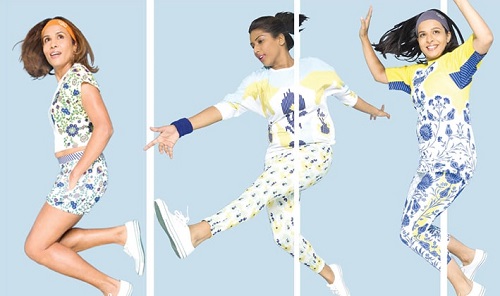 are driven not more by a brand’s response time to a particular style or trend. Start-ups’ design to market timing is much shorter than that of established brands which enables them to adapt to changing trends quickly.
As Suprathik Reddy, Co-founder of Krate and Alpha points out, another benefit for these startups is they cater to a niche sensibility as opposed to a larger market base that brands have to design for. Hence, it is easier for them to source fabrics according to our stipulations and play around with them to suit our smaller audiences.
Also, as opposed to startups, brands have larger operating costs as they operate both online and offline stores. Their marketing costs also tend to be much higher. Start-ups, on the other hand, can use social media channels to market their products as most of their audiences are based out of metropolitans and Tier-1 towns.
Another advantage is the emergence of new business models such as rental, barter, subscription and B2B selling for apparel, apart from concepts that involve sustainability and divergent product categories like sustainable fitness clothing, wellness products or handlooms and handicrafts.
Challenges abound
However, these benefits are often outweighed by cons. As Arijit Mazumdar, CEO and Co-founder of Northmist observes, the criteria listed for start-ups to get funding are quite impossible to meet. They ask for documents that cannot exist for start-ups. Reddy too agrees, another issue plaguing start-ups is the poor implementation of GST. The rules change every other month leading to mass confusion and hurdles for businesses.
As per Statica, Indian apparel industry has remained unaffected largely due to the penetration of internet to even the smallest of towns. With store closures becoming more common in the US, the market in India is slated to grow at 11.6 per cent CAGR from 2020-2023
Surviving competition
However, established brands and start-ups will still have to struggle to remain viable in today’s economy. With the growth of new e-commerce channels and rising costs, start-ups will have to rebuild their brand image from scratch. They will also have to invest in educating their audience at every step about their product, concept and brand value.
Both established brands and starts ups have their own set of advantages and disadvantage, but over the last few years, start-ups have manifested themselves as tough contenders in the race to woo customers.
COVID 19: Strategies fashion retailers can adopt post lockdown
 COVID 19 is likely to plunge many countries across the global into a negative growth. However, the Indian economy is expected to continue on its growth trajectory after the crisis is contained. Even so, rebounding from depression and reinvigorating the supply lines back to normalcy would be extremely difficult as the month-long lockdown has posed many challenges for industries across the country. Worst affected is the fashion retail sector which is losing huge revenues as most shopping avenues including malls have being closed.
COVID 19 has also posed another big challenge for retailers that of changing consumer spending behavior and capacity. Fashion being a perishable commodity, it would now be difficult for retailers to sell their loaded inventories in warehouses. They would have to re-structure their operating models to boost sales.
New strategies for survival
Retailers will also have to devise new strategies to deal with their fixed business costs like rents. One way could be include the force majeure clause in their agreements. This would help them work out a revenue sharing deal with landlords. They can also reduce all overhead expenditure by reassessing their operation costs and plugging cost-intensive leakages. Expansion plans can be shelved till the time till pressure on cash flow eases. A careful and cautious sales projection and a balanced approach will save retailers from both over or under production.
It is also important to take care of their workforce during these times. They should bear the responsibility of non-appealing circumstances such as salary cuts and not to resort to layoffs.
Moreover, a strong and positive communication with all stakeholders including employees, channel partners and vendors will help retailers tide over the current crisis. A close and compassionate connection with employees will prove to be a critical factor for their success in the post-COVID era.
Maintain hygiene standards
The COVID-19 hangover is likely to remain for the entire year. Hence, retailers should follow all measures issued by the government, ministries and other agencies during and after the lockdown. They should ensure compliance of high level sanitization and hygiene practices in their shops and factories. They should also provide safety and PPE kits to employees.
Focus on domestic opportunities Going digital will help amplify business prospects in post-COVID times. They should look for a more homegrown, nationalized opportunities and solutions for growth. On the whole, India should look at providing reliable, safe, and democratic alternatives, and seize newer markets. It should aim at forming stronger bonds with countries across globe and rebuilding its own and world economy together.
Truetzschler's TC 19i card gains popularity in major textile markets
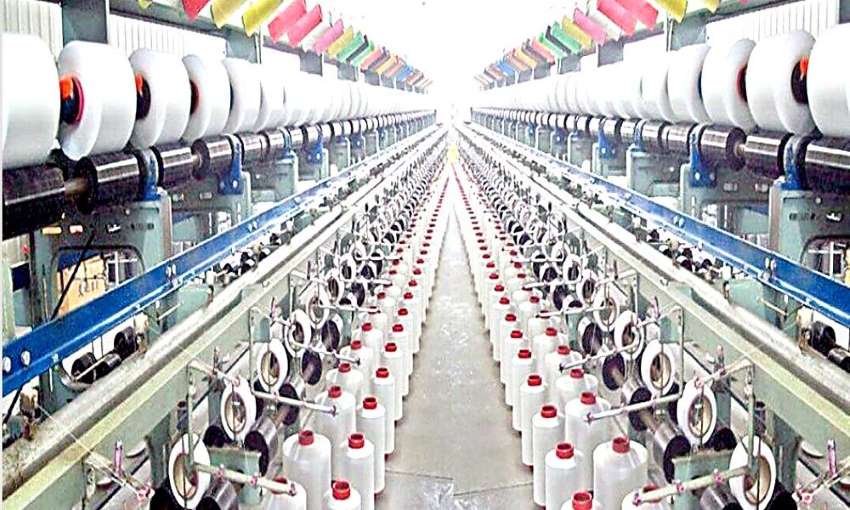
The intelligent Truetzschler card TC 19i has proved to be a hit in customer applications in key textile markets. The card was incorporated by Buddha Textiles to improve its performance of TC 19i. TC 19i achieved up to 40 per cent less yarn imperfections and new potentials for productivity increase for customers. At the same time, TC 19i demonstrated significant raw material savings of up to 2 per cent at a steady yarn quality level. In a production of cotton ring yarn, for example, the TC 19i achieved a reduction of yarn imperfections of minus 35 per cent at a production of 90 kg/h
Badsha Textiles is a leading textile conglomerate and producer of a range of high-quality carded, ring and open-end yarns in state-of-the-art spinning mills. In other key textile markets, such as Turkey, Uzbekistan, and Mexico, the TC 19i demonstrated similar significant advantages in terms of quality, productivity, raw material savings and handling and energy efficiency. It showed up to 40 per cent less yarn imperfections in carded ring yarn, and even more than 50 per cent less yarn imperfections in combed ring yarn and rotor yarn manufacture – and this at high production levels between 75kg/h and 100 kg/h.
Messe Frankfurt plans digital editions of its New York events
Messe Frankfurt has planned to utilize a virtual platform for its New York textile events. With the aim to support the sourcing community through these unprecedented times, the summer edition of Texworld USA, and its co-located events, Apparel Sourcing USA, and Home Textiles Sourcing expo, will be presented across digital platforms, from July 21-23, 2020.
Messe Frankfurt says Texworld USA, Apparel Sourcing USA, and Home Textiles Sourcing expo have served the sourcing community for over a decade, providing unparalleled access to quality, international textile manufacturers, trend forecasting experts and innovative educational sessions. The transition to a virtual event for the summer edition reinforces the fierce commitment to supporting the industry through both good and challenging times. With the returning support of long-standing exhibitors, international and domestic, the July events will open with similar features found on the trade show floor. An online showroom will highlight material innovations, while allowing visitors to chat with representatives about specific requirements, factory options and more.
In addition to the digital exhibit presentation, a comprehensive educational programme will run alongside. Topics will range from sustainability initiatives, environmental and ethical impacts to business tips and sourcing options amidst a pandemic. Comprised of thought leaders and textile experts, these interactive discussions will share insights on how we can collaborate to bring about change individually, locally and globally.
Sri Lanka’s small and medium entities seeks relief
The Small and Medium Garments Exporters Association (SMGEA) has urged the Sri Lankan government to provide them with concessions outlined in a prompt manner to restore the apparel sector and the livelihoods of over 100,000 families dependent on this important industry, which brings in much-needed foreign exchange. The association claims they have not received the relief package agreed on by President Gotabaya Rajapaksa and the Government.
Some members are also struggling to pay the salaries for the month of March as buyers have already suspended payments for goods exported. As the world economy is facing a major blow like no one has ever witnessed, the Sri Lankan export sector is also paying hefty prices in the time of the COVID-19 pandemic. The apparel sector, which accounts for a substantial portion of the country’s export income, has taken a massive blow due to the coronavirus situation, which has brought the entire world to a halt.
Indian government ramps up PPE production
The government has ramped up production capacity of PPE coveralls required by medical personnel treating COVID-19 as cases have increased by more than 1 lakh, with Bengaluru emerging as a major production hub. Nearly 50 per cent of coverall production in the country is from Bengaluru. Other than Bengaluru, PPE coveralls are also being manufactured by approved production units in Tirupur, Chennai and Coimbatore in Tamil Nadu, Ahmedabad and Vadodara in Gujarat, Phagwara and Ludhiana in Punjab, Kusumnagar and Bhiwandi in Maharashtra, Dungarpur in Rajasthan, Kolkata, Delhi, Noida, Gurugram and few other places.
Body coveralls (PPE) have a stringent technical requirement as prescribed by the Ministry of Health & Family Welfare since it is a specialized protective suit meant for high level of protection to health professionals. In the last week of January 2020, the technical standard for the coveralls was prescribed as per WHO class-3 exposure pressure in accordance with ISO 16003 or its equivalent.
The health ministry finalised the technical requirement on March 2, based on the indigenous availability of materials and the technical requirement for a high level of protection of the healthcare professionals who would deal with the COVID-19 cases, in consultation with medical experts in the field.The specification was published on the official website of HLL Lifecare on March 5 2020, inviting manufacturers having adequate capability to participate in the procurement process.
As of now, there are four laboratories in the country which have the Synthetic Blood Penetration Resistance Test facilities as well as necessary approvals for conducting tests and certification for Body Coveralls (PPE) required for COVID-19.
Panda Biotech to build largest hemp decorticator in the US
Dallas-based Panda Biotech has signed a contract with an international equipment manufacturer for construction of the largest hemp decorticator in the US. The 10-tonne/hour decorticator is the first of the two planned for Panda Biotech’s flagship industrial hemp processing facility to be located in Texas. The first decorticator is currently under production.
At full production, the two decorticating lines for processing textile-quality, high-grade fiber, premium hurd and cellulose are expected to generate $30,000,000 per year for Texas agricultural producers. Panda Biotech’s top mechanical engineers, along with key members of the team, conducted a worldwide search to inspect equipment in operation and evaluate manufacturing capabilities to determine the best equipment for its first Hemp Gin facility. The purchase of the decorticating lines was based, in part, on the reputation and calibre of the selected company and the reliability of its equipment that has been proven successful for decades. Panda then worked with the firm’s engineers to “super-size” their existing line of decorticators. Once installed, each line will have a maximum processing throughput of 88,000 tons a year.
Panda expects the manufacturing of the second decorticator to begin upon completion of the first line. This will increase the maximum throughput of the Hemp Gin to 176,000 tons of industrial hemp per year and serve as a redundant backup that will allow the facility to reliably operate on a 24/7 basis.
Luxury brands appoint new ambassadors for China
As China continues to show signs of recovery from the COVID-19 outbreak, luxury brands are starting to act quickly, hoping to move forward their promotional calendars and entice shopping-deprived, freshly-out-of-quarantine customers before the mark-down season hits. As reported by STYLE , after a dormant period during lockdown, these brand are releasing celebrity-driven campaigns with taglines and messages conscious of the current situation.
Lingerie giant Victoria’s Secret named Zhou Dongyu its latest China ambassador. Zhou, best known for her girl-next-door demure, who made her breakthrough starring famous Chinese filmmaker Zhang Yimou’s Under the Hawthorn Tree (2010) and won Best Actress at the 53rd Golden Horse Awards for her role in Soul Mate (2016) has been tapped by luxury brands including Burberry and Boucheron as ambassadors.
BMW is another brand hoping to harness the fan economy of Chinese new-generation celebrities. The brand appointed Jackson Yee, the 19-year-old singer-actor, as the first official ambassador for BMW in China.
Unlike BMW and Victoria’s Secret, luxury e-tailer Wan Li Mu has appointed ive celebrity ambassadors including actors Huang Xiaoming, Zhao Wei, Zheng Kai, Lei Jiayin, and Jia Nailiang. The five ambassadors will be live streaming on Wan Li Mu’s TikTok account from May 1 to May 5, the annual Labour Day “Golden Week”. The five celebrity ambassadors enjoy a strong fan base: a total of 270 million followers on their combined Weibo accounts alone.
London Fashion Week to go digital
For the first time in nearly 40 years, London Fashion Week (LFW) will be digital and will include womenswear, menswear, and gender-neutral fashion labels. Due to the coronavirus outbreak, which has caused the Olympics to be postponed and countless cultural events to be put on hold, LFW will be a virtual event held from June 12 through June 14.
London Fashion Week has been held since 1984 and is historically held for menswear and womenswear designers separately The fashion week is hosted by the British Fashion Council BFC) since 1984 and is held on a quarterly basis, with events for each season and divided by menswear and womenswear. However, this year the fashion week will be gender neutral. A statement published by ELLE, the BFC defines this as allowing womenswear, menswear, and gender free design labels to participate in the same week of fashion events together for the first time.
KOFOTI reprimands Kohl for cancelling orders
The Korea Federation of Textile Industries (KOFOTI) has hit back at retailer Kohl’s decision to cancel orders across the board. KOFOTI has demanded the store chain reconsider its commitments to manufacturers across the globe. While the group appreciates the devastating impact that the pandemic has had on the textile industry, KOFOTI’s states that Kohl’s has a responsibility to its suppliers, and shouldn’t leave them high and dry even as consumer demand plummets. Fabric mills in Korea are facing a tough time with demand thinning. So far, the sector has incurred more than $100 million in damages due to canceled orders or payment term extensions. About 150 Korean fabric mills, accessory mills, vendors and sample rooms have been affected.
The federation suggested Kohl to look at recent incidents where H&M, Primark and Zara, agreeing to pay textile workers after intense media scrutiny. The federation believes the matter with Kohl’s could be resolved amicably and it urged the company not to leverage force majeure clauses in its agreements to get out of making payments.