FW
GSP extension will increase US-Indonesia apparel trade to $500 billion
US’s extension of Indonesia’s Generalized System of Preference (GSP) status from early November 2020, will allow it to push up apparel trade to $500 billion over the next five years. This extension will make 13 per cent of Indonesia’s exports duty-free. In 2019, around 10 per cent of Indonesia’s total $20.1 billion of exports to the US were placed under GSP exemptions.
The US is seeking new ways to cooperate with Indonesia in areas, such as maritime security in the Indo-Pacific region. It is already Indonesia’s second-largest non-oil and gas export partner, with total two-way trade in goods reaching $30 billion in 2019.
The government is also encouraging US companies to invest in Indonesia, especially in areas such as manufacturing, services, pharmaceuticals, and defense. It is preparing a 4,000-hectare industrial park, named the Batang Industrial Park, in Central Java province to accommodate US businesses looking to shift all or part of their operations out of China. US companies are offered special tax incentives in this zone.
Remove ADD on viscose fiber, urges SIMA
Ashwin Chandran, President, Southern India Mills’ Association (SIMA), has urged the Centre to remove anti-dumping duty (ADD) on viscose fiber and make the Man Made Fiber (MMF) segment eligible for the Production Linked Incentive (PLI) scheme. Currently India has a negligible share in 50 items, identified to be eligible for the scheme, in the global market. On the other hand, Bangladesh and Vietnam have 7 per cent and 6.4 per cent shares respectively. Indian textile industry requires almost 6.34 lakh tonne of viscose fiber in FY20 and the fiber available for consumption from local capacities is 4.78 lakh tonne, he said.
M Senthil Kumar, Former Chairman, SIMA says, since viscose fiber attracts anti-dumping duty textile industry imports of viscose yarn are on the rise. Hence, if ADD on fiber is removed for viscose and linen, more spindles will be engaged in production of these yarns and domestic local power loom industry would get the yarn at a lower price, he adds. He therefore, urged the government to remove the ADD at fiber level and treat all fibers equally.
JAAF confident of Sri Lanka’s apparel recovery by next year
Sri Lanka's largest apparel body, the Joint Apparel Association Forum (JAAF) is confident of the country's apparel exports reviving by next year aided by the government's support. As per Tuli Cooray, Secretary General, although COVID-19 wiped out close to $1 billion turnover, resilience had always been the cornerstone for the apparel industry. Hence, the association does not plan to revisit its targets at the moment even it has a very challenging year for the entire world.
Cooray expects the country’s apparel exports to decline 30 percent this year, just over $4 billion. However, he believes, the apparel sector will come out of this crisis stronger than before," he added. According to official figures, Sri Lanka last year earned $5.3 billion from apparel exports, an increase of 5.1 per cent from 2018. Prior to the COVID-19 pandemic, the industry originally expected a 6 per cent increase in exports for 2020.
Mulberry’s H1 revenues decline by 29 per cent
Mulberry announced its half yearly results and in the 26 weeks to September 26, the brand’s revenue declined 29 per cent to £48.9 million as most of its stores had to close for a long period. The company made a pre-tax loss of £2.3 million while after tax loss narrowed down to £2 million from £8.9 million of a year earlier.
Digital sales rose by 68 per cent to £23.4 million and Asia Pacific retail sales increased 28 per cent, “driven by ongoing investment in region”. The group’s net cash was also higher at the end of the period by over £2 million “through rigorous cost and cash control”.
The company’s sales trajectory has been improving, with sales declining by 39 per cent in Q1, and by a lesser 18 per cent in Q2. And while the proportion of digital sales fell from 67 per cent in Q1 to 32 per cent in Q2, that latter figure was still much higher than the 17% of a year earlier. The company also managed to recoup some lost outlet store sales by creating a digital off-price site in April.
The company operates 111 retail and franchise partner stores globally and while a number of these are currently closed due to lockdowns, sales trends seen in Q2 continued into October, with improving stores sales, a strong digital performance and continuing growth in Asia.
“#strongertogether” event to return to Italy in March
To be held from March 20-24, 2021, the “#strongertogether” will return to Fiera Milano Rho, Italy, reports Sourcing Journal. The three-day HOMI Fashion & Jewels Exhibition, an event for bijoux, jewelry and wearable fashion accessories, will open on March 20. The following day, footwear-focused MICAM Milano, leather-centered MIPEL and the women’s haut-à-porter fashion event.
TheOneMilano will kick off, all lasting through March 23. Lineaplle, scheduled for March 23 and 24, will close with a show focused on leathers, fabrics, accessories and components for fashion and design. To be organized by Italian Trade Fairs Co, the events will be held in perfect safety and full compliance with current legislation. The trade center has undergone an organizational upgrading, adopted all the measures required to ensure safety and refined its guidelines for visitor flow management.
During the September event, 25 per cent of the 16,000 visitors came from abroad. The event’s organizers are currently working with Italy’s Ministry of Foreign Affairs and International Cooperation and the Italian Trade Agency to select buyers with even greater precision.
MANTRA develops ozone treatment method to reduce water contamination
Surat-based-Made Textile Research Association (MANTRA) has developed an ozone treatment method that reduces not just the textile processing time but also the generation of wastewater with lower levels of COD (chemical oxygen demand) and TDS (total dissolved solids). Currently, textile wash processes consume substantial amounts of water about 2,500-6,000 liters, which generates large amounts of wastewater with high potential of causing pollution.
The ozone treatment saves 10-15 per cent of the water used besides drastically reduces water contamination caused by the textile mills during the wet dyeing process. Ozone reacts with inorganic and organic substances dissolved in water generating a variety of free radicals. There is no need to use sodium or alkaline agents during the ozone treatment, thereby reducing the chances of water pollution. For this method, ozone gas is generated with the help of electricity, which converts oxygen into ozone.
Munjal Parikh, Senior Scientist, MANTRA says, a lot of dyestuff, chemicals, auxillaries etc are applied in the water baths, creating ecological problems due to water contamination. The ozone treatment is the best answer to solve the pollution issue in the industry.
Unspun teams up with H&M Group brand for custom-fit jeans
Unspun, the technology-driven made-to-order jeans company, has teamed up with Weekday, an H&M Group brand, to produce custom fit made to order jeans with a price tag of around $100, compared to their usual jeans pricing of $40-$80. The collaboration was launched in the brand’s Götgatan store in Stockholm earlier this month, in partnership with event and experience company YR Live and body scanning specialists, TG3D.
Walden Lam,Unspun explained accessible-priced on-demand jeans make sense for several reasons. In commercial terms, eCommerce return rates can be up to 40 per cent for jeans, causing excess inventory and reduced profitability. In 2018, the H&M Group had $4 billion of unsold inventory, prompting industry-wide questions about the environmental (and economic) impact of the mass-production model and resulting deadstock. Thirdly, the Unspun model offers a different way to interact with customers, and a 20-40 per cent uplift on custom products.
Lauren Herbert to be the new CEO of Dicks Sporting Goods
American sports equipment retailer Dicks Sporting Goods has appointed Lauren Hobart as new CEO from February 1, 2021. Herbert will succeed Edward Stack, who has been the company’s CEO since 1984. Stack will continue as executive chairman and chief merchant.
Hobart’s appointment is a result of the company’s transition that has been developed over a long period of time. Hobart had over 14 years experience with PepsiCo before joining Dick's Sporting Goods as senior vice president and senior marketing officer in 2011. She joins a small circle of female CEOs leading large American retail chains, a group which includes the likes of Michelle Gass of Kohl's and Gap's Sonia Syngal.
Dick Sporting also announced its financial results for the third quarter ended October 31, 2020, a period in which the company saw its net income triple to $177 million. Since the start of the COVID-19 pandemic, the group has benefitted from an increase in demand for home sports equipment, as well as for athleisure apparel. This progress helped compensate for a decrease in sales of school sports uniforms. The retailer's quarterly revenues therefore totaled $2.4 billion, up 23% from $2.0 billion in the prior-year period.
Second COVID-19 wave calls for external regulations to fix supply chain issues
 The European fashion industry is again being held at ransom by another wave of COVID-19 that is threatening brands with fresh order cancellations Though less frequent than they were in March, cancellations are coming faster as brand partners are choosing to act early, says Hilmond Hui, Vice President, PFGHL-a Hong Kong based fashion group. And as per a Business of Fashion report, brands cancelled worth billions of dollars during the first wave of the pandemic. Their actions were corroborated by localized outbreaks forcing garment factories to shut operations. As a Centre for Global Workers’ Rights (CGWR) and Workers Rights Consortium report indicates, around 3.5 million garment workers either lost their jobs during the period or had to take pay cuts.
An existential crisis for manufacturers
The second wave threatens to deepen the crisis by further exposing the fragility of the garment supply chains,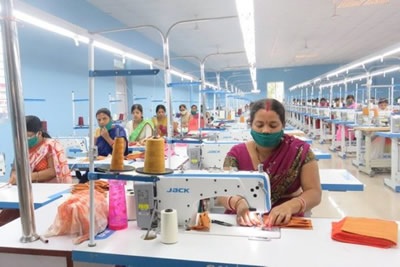 believes Professor Mark Anner, Director, School of Labour and Employment Relations, Penn State University and Director, CGWR. It has turned the industry’s pre-existent triggers into an existential crisis for many manufacturers.
For instance, it has extended suppliers’ payment time from 60 days on an average to 77 days after shipments, indicates CGWR and Worker Rights Consortium research. Manufacturers are forced to wait for as long 120 days to receive payments or have to pay out of their own pockets for the fabrics required to produce orders. This increases the chances of many supplier factories going out of business.
Manufacturers face liquidity crisis
With brands cancelling pre-confirmed orders, the pandemic has aggravated liquidity crisis in the industry, forcing many retailers to go bankrupt. And to avoid being stuck with unsold inventories, brands are placing orders at the last minute leaving suppliers with fewer orders and faster turnaround speeds for less money and uncertain payment terms.
Suppliers are not in a position to negotiate as their prime objective is to pay their workers, point out manufacturers. By October this year, 56 per cent suppliers had produced orders below their production costs, notes a CGWR and Worker Rights Consortium’s survey. Brands that had assured of compensating for finished orders are refusing to commit to large orders. If this situation continues, 57 per cent manufacturers may go bankrupt, the survey predicts.
Hence, brands need to ensure their workers are paid, emphasizes Christie Miedema, Campaign and Outreach Coordinator, Clean Clothes Campaign. Though major fashion companies have committed to protect their workers, many manufacturers are yet to receive payments owned by brands. They believe, only external regulations can help fix the problem.
India’ yarn exports increase mere 1 per cent in October
India’s yarn exports increased a meager 1 per cent to $289 million in October 2020 from the corresponding period last year. Bangladesh was the largest importer of spun yarns with 11 per cent increase in value of imports, followed by China. These two markets accounted for about 35 per cent of total yarn shipment during the month. Export of cotton yarns however, declined to $238 million. Yarns were shipped to 78 countries at an average price of $2.72 a kg. Bangladesh was the top cotton yarn market, followed by China, Peru, Portugal and Vietnam.
Export of 100 per cent man-made fibers reached 7.49 million kg. These mainly included export of 3.23 million kg of polyester yarn, 2.07 million kg of viscose yarn and 1.76 million kg of acrylic yarn. The export of polyester yarn was worth $6.6 million. The US was the largest market followed by Brazil and Turkey. Export of viscose spun yarns reached $6.39 million. These were exported at an average unit price of $3.08 a kg. Bangladesh was the largest importer of viscose yarn, followed by Turkey and Iran.
Blended spun yarns worth $33 million were exported in October, including 10.2 million kg of PC yarns and 2.3 million kg of PV yarns. Peru was the largest importers of PC yarn from India followed by Peru while Turkey was the largest importer of PV yarns from India followed distantly by Brazil. Overall, the export of basic textiles comprising fibers, spun and filament yarns increased by 22 per cent YoY to $575 million. It accounted for about 2.3 per cent of total merchandise exported from India during the month.