FW
Global abaca fiber market to grow at 15.1% CAGR till 2028
The global abaca fiber market is anticipated to grow at 15.1 per cent CAGR from 2021 to 2028 and reach $1.7 billion by the end of forecast period. As per a Textile Value Chain report, market growth will get a boost with growing emphasis on the use of natural fibers as a substitute for hazardous synthetic fibers and metals in various industries. Paper and pulp industry will emerge as dominant application segment over the forecast period. Japan, the US and European countries will emerge main target markets.
In 2020, the pulp and paper product segment accounted for the largest revenue share of $347.3 million owing to rising demand for non-wood fibers as raw materials for specialty paper applications. Asia Pacific dominated in terms of revenue on account of high product demand to manufacture products such as ropes, currency notes, automotive, and food packaging. Over the forecast period, revenue share of the fiber craft product segment is expected to grow 11.8 per cent CAGR.
Reduce tariffs on apparel exports from Bangladesh, urges BGMEA
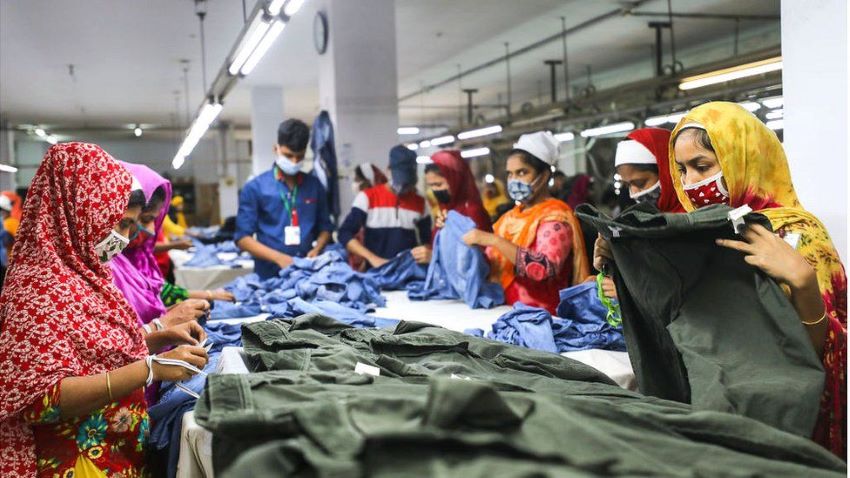
At a roundtable conference organized by Bangladesh Embassy in Washington DC, Bangladesh garment makers urged US buyers to reduce tariffs on apparel exports from the country. Faruque Hassan, President, BGMEA, emphasized on the need for smoother and more sustainable supply chain and sourcing, and requested buyers to minimize multiple auditing of the factories to reduce costs for the factory owners.
BGMEA leaders briefed the US government and relevant stakeholders on the ongoing efforts to improve factory safety and workers' welfare in the readymade garment industry in Bangladesh and urged it to increase imports of Bangladesh RMG items. the US currently imports RMG products worth around $6 billion from Bangladesh. It suspended Bangladesh from GSP in June 2013 following the Rana Plaza collapse in 2013. Bangladesh has been urging the US to restore the Generalized System of Preferences but is yet to get a response on this. Meanwhile, RMG makers have been demanding fair prices and a reduction in tariff costs.
Bangladesh’s RMG export earnings surge by $1.94 million over Vietnam
Bangladesh’s earned $1.94 billion more than Vietnam from its apparel shipments during the first seven months of the current year. Bangladesh mostly exported knit and woven products worth $18.80 billion during the period against the textiles and garments worth $16.86 billion exported by Vietnam.
However, apparel shipments by both countries declined by 7.66 per cent and 7.30 per cent respectively during this seven-month period. By 2021-end, Bangladesh is likely to emerge as the second largest garment exporting country in the world, says Mohiuddin Rubel, Director, BGMEA. It will be replaced by Vietnam, which emerged as the largest supplier earlier this year, shows data by the World Trade Statistical Review 2021.
USGBC hails BGMEA for highest number of green factories in the world
Mahesh Ramanujam, President and CEO, US Green Building Council (USGBC), has hailed Bangladesh Garment Manufacturers and Exporters Association (BGMEA) for its role in making Bangladesh a home to the highest number of green garment factories in the world.
Ramanujam also appreciated the progress made by Bangladesh garment industry in the area of sustainability and its future priorities to continue the momentum.
Currently, Bangladesh has 145 factories certified as LEED (Leadership in Energy and Environmental Design) by the USGBC.
Among them, 42 are LEED platinum-rated and 91 are LEED gold-rated units while 500 more factories are in the process of achieving LEED certification.
Co-founded by Mike Italiano, David Gottfried and Rick Fedrizzi in 1993, USGBC is a private 501(c)3, membership-based non-profit organization that promotes sustainability in building design, construction, and operation. It is best known for its development of the Leadership in Energy and Environmental Design green building rating systems and its annual Greenbuild International Conference and Expo, the world’s largest conference and expo dedicated to green building. USGBC was one of eight national councils that helped found the World Green Building Council. The current president and CEO is Mahesh Ramanujam who acquired this role in January 2017 after co-founder Rick Fedrizzi.
Messe Frankfurt offers exhibitors right to cancel participation
In view of the corona crisis earlier this year, Messe Frankfurt offered exhibitors of Texcare International the right to cancel their participation free of charge until 3 September 2021. As the months passed, the overall outlook became increasingly positive and, by the beginning of August, around 200 companies – including the important and big manufacturers from all parts of the textile-care sector – had registered to exhibit at Texcare International in Frankfurt am Main from 27 November to 1 December 2021. Factors contributing to this included the growing pace of vaccination around the world, the categorization of trade fairs as business events and the officially approved protection and hygiene concept of Messe Frankfurt. Nevertheless, the mood changed shortly before the cancellation deadline as leading companies decided to withdraw from the event because of uncertainties regarding the future development of the pandemic.
Held every four years, Texcare International in Frankfurt am Main brings together suppliers of laundry and dry-cleaning technology with customers from the textile service, laundry and dry-cleaning segments. Until the next edition, Messe Frankfurt can already offer the textile-care sector several events where they can do business in other important economic regions of the world. Thus, Russian experts from the textile-care sector will meet at Texcare Forum Russia in Moscow on 15 September. On 27 September 2021, Messe Frankfurt France is holding Texcare Forum Nantes. Still in this year, Texcare Asia & China Laundry Expo, Asia’s leading textile-care trade fair, will open its doors in Shanghai from 22 to 24 December. At the Clean Show, the biggest trade fair for textile care on the American continent and also organised by Messe Frankfurt, the industry will present its latest innovations and developments in Atlanta from 30 July to 2 August 2022.
Pakistan textile exports grow by 46% in August’21
Pakistan’s textile exports grew by 46 per cent in fiscal year August 2021-22 to as compared to $1.01 billion exports in fiscal year August 2020-21.
The average increase in the exports of textile products for the current fiscal year -- comprising two months recorded as 29 percent to $2.949 billion as compared to the $2.289 billion exports of corresponding period of the last financial year.
According to the latest data available with The News, exports of textile apparel, clothing accessories, knitted and crocheted in the month of August increased by 47 percent to $366.38 million as against the $248.82 million of exports during the same period of the last financial year. Likewise, the exports of textile apparel and clothing accessories showed 41pc growth in August to $285.67 million.
In addition, the exports of clothing, textile articles and rags picked up by 47 percent to $469.67 million in August as compared to $319.29 million of the last fiscal year.
The data also shows that exports of man-made filaments, strip and textile materials surged by 180per cent to $5.53 million during the second month of current fiscal year.
Staple fibers recorded a 63 percent growth to $37.75 million, carpets and textile floor coverings, 15 percent to $5.87 million, knitted or crocheted fabrics, 35 percent to $4.40 million and cotton products 46 percent to $ $297.78 million during August 2021.
Centrestage 2021 features 30 fashion events
Organized by the Hong Kong Trade Development Council (HKTDC) and sponsored by Create Hong Kong (CreateHK) of the Government of the Hong Kong Special Administrative Region, Centrestage 2021 features 30 fashion events. Hong Kong designers at the event will present their 2022 Spring/Summer collections at the event.
For the first time, the show is open to public visitors for the entire duration. Visitors have a unique opportunity to check out the latest designs from leading local and overseas fashion brands, with most of the participating brands offering retail sales along with special offers.
The sixth edition of Centrestage adopts "Chapter Infinity" as its central theme. The event features three thematic zones: Allure - representing craftsmanship, refinement and elegance; Iconic - displaying avant-garde designs; and Metro- showcasing contemporary, minimalistic expressions of urban life. This year's event hosts more than 200 fashion brands from 24 countries and regions. Multiple brands and industry organizations from outside Hong Kong have sent local representatives to participate in the event, including the Taiwan Textile Federation, Macau Productivity and Technology Transfer Center, Italian fashion promotion organisationEnteModa Italia (EMI) and new joiners the Department of International Trade Promotion, Ministry of Commerce of the Royal Thai Government, and the Chamber of Entrepreneurs of Amalty from Kazakhstan.
In addition, fashion buyers such as Club 21, D-mop, Harvey Nichols, I.T, Lane Crawford and online fashion store Farfetch are joining the event. Over the three days, more than 700 video business meetings will be arranged to match exhibitors with major overseas buyers such as 3NY from the United States, Germany's Encode Fashion, Korea's Wonderplace and Vietnam's Runway.
Brompton launches AW21 collection of bags
Bike manufacturer Brompton has launched a autumn collection of bags in the iconic Made with Liberty Fabric Jonathan print, capturing the infectious spirit of London with function and style.
The bags design is an ode to London, the city both brands are synonymous with. The print, Jonathan, references the creative process with a monochrome geometric pattern inspired by pencil shavings found on the design studio floor, and features across four of Brompton’s most popular bag silhouettes, the Tote, Basket, Backpack and Zip Pouch.
Specially selected from Liberty Fabric’s 50,000-piece archive, all material used is printed inItaly on Polyester fabric, with a highly water-resistant coating, perfectly built to meet thedemands of a Brompton’s day-to-day use in the city. Every bag is a weatherproof workhorsethat take the weight when the bike is folded and rolling or heading through the streets at apace.
The AW21 Brompton Made with Liberty Fabric Jonathan collection is available from today at www.brompton.com,Brompton Junction stores and selected Brompton accredited retailers.
Bangladesh misses out on the $10 billion Gulf market
Despite good diplomatic relations with Gulf countries, Bangladesh is missing out on the $10 billion unexplored apparel market owing to a lack of initiatives on parts of the government and the private sector.
According to the International Trade Centre data, in 2020, the UAE sourced about $4.40 billion worth of apparel items from global markets, Saudi Arabia $3.01 billion, Kuwait $1.13 billion, Qatar $660 million, Oman $608 million and Bahrain $274 million.
Bangladesh now exports only $367.49 million worth of goods to this region, as per Export Promotion Bureau (EPB) data. But, the country can supply about 5 per cent of the annual demand of the UAE, around 4 per cent of Saudi Arabia’s and less than 1 per cent of the rest.
Faruque Hassan, President, Bangladesh Garment Manufacturers and Exporters Association (BGMEA) says, Bangladeshi apparel exporters have a big opportunity in the Gulf and Middle East markets that have remained untapped for a long time owing to a lack of initiatives. Exporters are planning to explore those markets in association with the commerce ministry and the foreign affairs ministry, he adds
.ShahidullahAzim, Vice-President, BGEMEA, adds, if the government takes initiatives, exporters can increase its export share to $6 billion annually. For this, the government needs to hold a single country or region-based expo to export potential and make bridges among customers and manufacturers, adds AshikurRahmanTuhin, Managing Director, TAD Group
Autumn Fair records millions of pounds of business
UK’s leading home, gift and fashion trade show, Autumn Fair co-located with Moda recorded millions of pounds worth of business during the last four days at the
Retailers from across the UK, including Harrods, Anthropologie, Dunelm, Walt Disney Company, B&Q, Oliver Bonas, Fenwick, Boohoo, Blue Diamond Garden Centres, Bloom & Wild, British Garden Centres, Daylesford Organic, Fortnum & Mason, Graham & Green, Tesco, Hobbycraft, La Redoute, Lakeland, Next, Paperchase, Pets at Home, and Sainsbury’s, attended the first major retail trade show held since lockdown in March 2020.
The four key show destinations: Home, Gift, Fashion and Design & Source focused on creativity, innovation, inspiration, and inventiveness. Feedback from exhibitors centred on the amount of pent-up demand for face-to-face trading. Brands including Little Bird Told Me, Hippychick, Asmodee, Inside Out Toys, Keel Toys, My Doris, Jess & Lou, Isles & Stars, The Travelling Craft Room, Fountasia, Lesser & Pavey, Richard Lang & Son/Lang’s, Sass & Belle, Kikkerland and Lesser & Pavey, had their busiest shows ever, opened lots of new accounts, and seen a fantastic range of buyers.