FW
BCI experiences historic uptake in 2018
Better Cotton Initiative (BCI) experienced a historic uptake in 2018 as 93 retailers and brands sourced more than one million metric tonnes of Better Cotton. The uptake increased by 45 per cent over the previous year. Retailers’ and brands’ sourcing of Better Cotton accounted for 4 per cent of global cotton consumption. By integrating Better Cotton into their sustainable sourcing strategies and increasing sourcing commitments year-on-year, BCI’s Retailer and Brand Members are driving demand for more sustainable cotton production worldwide.
Better Cotton uptake increased 45 per cent on the previous year, and at the end of 2018, retailer and brand member sourcing of Better Cotton accounted for 4 per cent of global cotton consumption.
BCI’s demand-driven funding model means retailers and brand sourcing of Better Cotton directly translates into increased investment in training for cotton farmers on more sustainable practices. For example, in the 2017-18 cotton season, BCI Retailer and Brand Members, public donors and IDH (the Sustainable Trade Initiative) contributed more than €6.4 million, enabling more than 1 million farmers across China, India, Mozambique, Pakistan, Tajikistan, Turkey and Senegal to receive support and training.
Sustainability initiatives by brands only way to reduce carbon footprint
"A new report by the Waste and Resources Action Programme (WRAP) reveals, around £140-million worth of clothing is discarded every year in the UK. The fashion industry works on a ‘take-make-dispose’ model with new, cheaply-made and cheaply-sold items introduced every season. The total carbon footprint of clothing in the UK has increased since 2012."
 A new report by the Waste and Resources Action Programme (WRAP) reveals, around £140-million worth of clothing is discarded every year in the UK. The fashion industry works on a ‘take-make-dispose’ model with new, cheaply-made and cheaply-sold items introduced every season. The total carbon footprint of clothing in the UK has increased since 2012. According to WRAP, which launched its Sustainable Action Plan in 2016, the main culprit for these environmental impact is the extraction of new resources for clothing – around 9 million tons of CO2e every year comes from fiber production from agriculture or polymer extrusion (for synthetic fabrics).
Therefore, there is an urgent need to secure new sources of materials and find new markets for used clothing. Fiber to fiber recycling offers a potential solution – but one that has not been properly investigated. The report suggests, new processes and entrants onto the market should be monitored for future investment.
Little information on recycling processes hinders growth
The report points out cotton and polyester are the most potential for fiber to fiber recycling. These are most commonly used materials in clothing and household textiles. Increasing demand for cotton also brings positivity into the recycled fiber market.
However, the industry needs to overcome significant barriers to increase its uptake of recycled fibers. The first of these includes the lack of information about new recycling processes for fibers. Moreover, collection and sorting of post-consumer textiles need to improve. Costs for this can be potentially funded through an extended producer responsibility (EPR) regime for textiles, which would see producers invest in fiber to fiber recycling. In order to make post-consumer fiber an attractive and financially viable prospect for processors, demand from brands and retailers also needs to be stimulated, along with a more positive perception of recycled materials from consumers.
EAC highlights retailer’s sustainability initiatives
The clothing industry is currently facing increased scrutiny, with an ongoing inquiry from UK Parliament’s Environmental Audit Committee (EAC) looking at the initiatives of leading fashion retailers to improve the environmental impact of their clothing.
The interim report from the EAC highlighted retailers most and least engaged with improving their sustainability record. Brands like Primark, Tesco, ASOS and Marks & Spenser have all signed up to the SCAP 2020 targets. These brands are using sustainable cotton and offering take back schemes for their products. However, many retailers like JD Sports, TK Maxx, Amazon UK, Boohoo have shamed the industry by voluntarily opting out of these targets.
Prada’s annual revenue increase for the first time in four years
Annual revenues for Italian luxury group Prada increased for the first time in four years, although sales growth slowed in the second half of 2018. Full-year sales of the group increased 6 per cent at constant exchange rates to €3.142 billion compared to a 9.4 increase in the first six months. Earnings before interest and taxes (EBIT) declined 10 percent to €323.8 million. Analysts had expected revenues of €3.17 billion revenues and an EBIT of €377 million, according to Refinitiv data.
The Milan-based but Hong-Kong listed company, jointly run by Miuccia Prada and Patrizio Bertelli, plans to revive its sales.
Zalando closes private clothing and shoe brands
Zalando is closing many of its private clothing and shoes brands in order to woo more established brands to a lineup that already includes the likes of Nike, Adidas and Hugo Boss. Europe’s biggest online fashion platform has cut more than a third of 18 in-house labels for everything from coats to children’s wear, and the remaining ones are under review.
Zalando plans to boost the annual worth of its shipped merchandise to $23 billion within five years. While in-house brands will remain a sizable part of its business, Zalando will focus on them in shoes and some basic apparel. Almost a decade ago, Zalando noticed customers were leaving its website because they couldn’t find certain goods. The retailer responded by hiring designers, who churned out as many as 20,000 pieces per year, and making its own apparel at factories in Asia, Portugal and Turkey.
Italian luxe brand Emilio Pucci spreads retail in Asia
Emilio Pucci is a luxury Italian fashion brand specializing in women’s ready-to-wear and accessories. With a singular heritage steeped in Italian values and aristocracy, its unique positioning is founded on unprecedented freedom of movement, an unmistakable color palette and a wealth of inimitable prints inspired by the brand’s archives. Emilio Pucci designs are instantly recognizable and embody a playful femininity. The designs, which strike a balance between Italian exuberance and simple shapes, celebrate color and a way of life that breaks with convention.
The brand has opened a store in Hong Kong. The new store showcases luxury fashion collections that range from ready-to-wear apparels and leather goods to exquisite signature silk accessories. There is also an impressive display of handbags, shoes and beachwear. The golden-colored pillars and racks convey an idea of the Renaissance. The green plants adorning the store give a Mediterranean garden feel. Another highlight of the store is the Cappellini-made unique Riva droite armchair. Besides, the store is also embellished by beautiful Capri blue carpet and travertine marble.
The HK reinforces Emilio Pucci’s efforts to expand its presence in Asia, where it already operates in Kuala Lumpur, Bangkok and Seoul, among other locations in south east Asia.
Arvind Envisol mulls water treatment plant in Bangladesh
Arvind Envisol plans to execute water treatment projects in Bangladesh, whose economy depends heavily on the heavily polluting textile and clothing industry. Arvind Envisol, the waste water treatment arm of the textile conglomerate Arvind, expects to accelerate growth in India by launching its components business Kaigo. It expects this unit to contribute 25 per cent to its overall revenue in the next three years and establish the company’s presence in the consumer sector by supplying directly to original equipment manufacturers and end users. The company has emerged as one of the major focus areas within the Arvind group ever since a demerger last year split the parent into four listed companies.
Arvind Envisol is looking for collaborations across India, Africa, Bangladesh and China for driving growth and is in the final stages of signing a joint venture agreement with a Chinese textile company. Envisol is active in water and wastewater treatment and municipal solid waste management.
Arvind has an annual production capacity of more than 100 million meters in denim, 132 million meters in woven fabric, 10,000 tons of knit fabric and 48,000 meters of voile. The group has built a strong portfolio of brands that straddles consumer segments across the income pyramid.
Ethical fashion gains ground with growing awareness on socio-environmental issues
"Young consumers today are concerned about social and environmental causes that are defining issues of our times. They support their beliefs by favoring brands aligned to their values. Studies indicate nine out of 10 GenZ consumers feel companies have a responsibility to address environmental and social issues. However, this concern about environmental and social issues is not restricted to younger consumers alone. Around two-thirds consumers worldwide would switch, avoid, or boycott brands that do not agree with their stance on controversial issues."
Young consumers today are concerned about social and environmental causes that are defining issues of our times. They support their beliefs by favoring brands aligned to their values. Studies indicate nine out of 10 GenZ consumers feel companies have a responsibility to address environmental and social issues. However, this concern about environmental and social issues is not restricted to younger consumers alone. Around two-thirds consumers worldwide would switch, avoid, or boycott brands that do not agree with their stance on controversial issues.
Trend towards making principled purchases
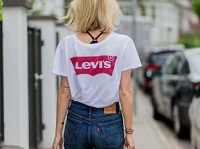 Over the past three years, one third consumers worldwide have incorporated principled views and values in their purchasing decisions. Fashion companies are becoming alert to injustice in society. Brands and retailers, including Levi’s and Nike have taken a clear stance on social issues in recent months. Nike supporting Colin Kaepernick, the face of the NFL’s “anthem protests,” and Levi’s fronting a campaign against gun violence. Gucci has also supported that cause, supporting a student-led march calling for more gun control.
Some fashion players have attached collections and ranges to specific causes. For example, H&M launched a Pride collection in 2018 in support of the LGBTQ+ community, and Balenciaga collaborated with World Food Programme, donning its slogan, “Saving Lives, Changing Lives”.
Increase in B-certified corporations
There are growing number of B-Corporations, which are certified to have considered the impact of their decisions on people, society, and the planet (exhibit). Companies including Ben & Jerry’s, Danone, and Patagonia are B-certified. In the fashion, apparel, and beauty sector, the number of B-corps rose to nearly 200 by April 2018, compared with just seven in 2010.
Notably, environmentally and socially focused companies are considered by younger cohorts as better prospects for employers, and they would be more loyal to companies that are aligned with those values.
Identifying ‘real’ from ‘fake’
However, not all causes that fashion brands advocate are universally popular, and these can come with significant risks. The NFL “anthem protest” was a divisive issue in the United States, creating a mixture of applause and backlash for Nike. Still, it created earned media exposure worth more than $163 million, within just days of the campaign launch. Besides potential controversy from supporting divisive causes, brands may also risk being perceived as hypocritical if they do not carefully ensure consistency in their messages and actions.
Another reason brand alignment with causes can backfire is that discerning consumers can easily spot the difference between gimmicks and a genuine purpose that aligns with the values of the organization. Companies can expect consumers to closely examine the level of continuity across campaigns and the nature of their strategic and operational decisions, as well as their tone.
More consumers to increase commitment levels
While consumers in Western markets currently tend to dominate the movement towards environmental and social conscience this is likely to change. In future, a rising number of consumers in other markets will increase their levels of commitment.
Despite many associated risks, some large brands willingly court controversies to express beliefs, particularly luxury players, which attract younger consumer groups. And while expression of controversial views may deter some, loyalty rewarded by remaining customers matters more.
Zara to launch first denim capsule collection
Zara plans to offer its first capsule collection of customisable denim apparel via pop-ups later this month. The pop-ups start on March 27 in three Zara locations in Europe: Vittorio Emanuele, Milan; Kalverstraat, Amsterdam, and Plaza Cataluña, Barcelona. Customers who shop Zara’s online stores in Spain, the U.K., the Netherlands and Italy will also have access to the customisation features. Customised product from a store can be delivered immediately, while those ordered online will be sent to the buyer via Zara’s usual delivery times.
The service Zara is testing allows consumers to have embroidered one word–up to 11 characters–onto any of nine different denim products in the capsule. The apparel options include jeans, denim skirts, jackets and shorts. Customers will also be able to choose a range of fonts and six different embroidery thread colors.
Under Armour lauded for labor rights
Under Armour has secured a stamp of approval from Fair Labor Association (FLA). The US-based sports apparel maker’s social compliance program includes strong policies for monitoring and fixing problems affecting workers in the supply chain. This includes a commitment at the board and executive level to protect workers and improve conditions, regular training on workplace standards, clear channels through which workers can report grievances and a comprehensive monitoring program that involves meeting with unions.
FLA is a labor group which monitors labor practices covering factory workers around the globe. As a part of accreditation process, Under Armour published a list of apparel and footwear factories in nearly 30 countries where about 90 per cent of its products are made, including places such as China, Indonesia, Jordan, Mexico, Vietnam and the United States. Other factories are located in Brazil, Egypt, El Salvador, Haiti and Malaysia. Under Armour has been working on improving operations, including supply chain initiatives that are expected to help boost 2019’s gross margins. The company’s accelerated innovation agenda, disciplined go-to-market process and powerful consumer-centric approach gives it increasingly greater confidence in its ability to deliver for Under Armour athletes, customers and shareholders. The company has guided gross margin to an improvement of 60 to 80 basis points from 2018’s adjusted gross margin.
Australian buyers unwilling to pay right price for Bangladesh RMG
Australian brands pay pitiful prices for the garments they source from Bangladesh. They have resisted paying a better price and so raising the wages of the multitudes who paradoxically, make world-class wear for those who can afford to pay more. Readymade garment workers making clothes that are sold across Australia are trapped in a cycle of poverty, no matter how hard they work. Women in Bangladesh and Vietnam making clothes for the Australian fashion industry go hungry because the wages are as low as 51 cents an hour. Paying better prices for readymade garment products can enable workers to have a better life.
Practices by Australian companies are contributing to driving wages down. They undertake fierce price negotiation, often jump between contracts instead of working with factories over the long term, squeeze lead times for orders and operate with a separation between their ethical and standards staff and their buying teams, who negotiate directly with factories.
On an average, just four per cent of the price of a piece of clothing sold in Australia goes towards workers wages. If brands absorb the cost of paying living wages, it would amount to less than one per cent of the garment price.