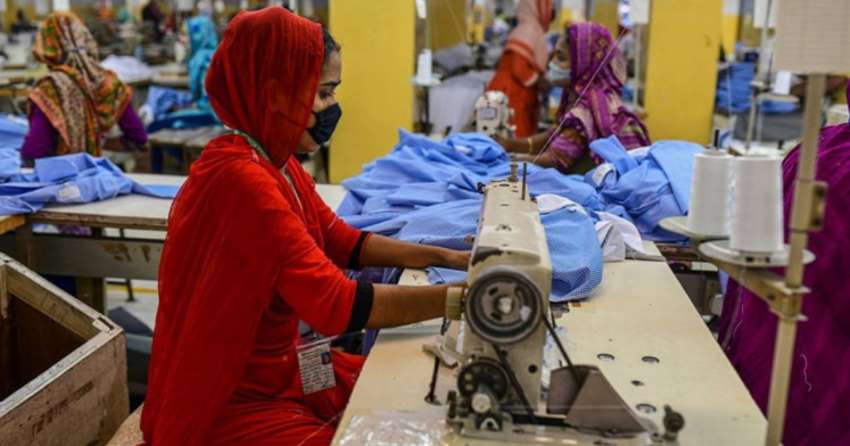
Australian brands pay pitiful prices for the garments they source from Bangladesh. They have resisted paying a better price and so raising the wages of the multitudes who paradoxically, make world-class wear for those who can afford to pay more. Readymade garment workers making clothes that are sold across Australia are trapped in a cycle of poverty, no matter how hard they work. Women in Bangladesh and Vietnam making clothes for the Australian fashion industry go hungry because the wages are as low as 51 cents an hour. Paying better prices for readymade garment products can enable workers to have a better life.
Practices by Australian companies are contributing to driving wages down. They undertake fierce price negotiation, often jump between contracts instead of working with factories over the long term, squeeze lead times for orders and operate with a separation between their ethical and standards staff and their buying teams, who negotiate directly with factories.
On an average, just four per cent of the price of a piece of clothing sold in Australia goes towards workers wages. If brands absorb the cost of paying living wages, it would amount to less than one per cent of the garment price.
- 1
- 2
- 3
- 4
- 5
- 6
- 7
- 8
- 9
- 10
ICRA sees apparel export recovery in FY27 as margin pressure eases, FTAs gain tr…
India’s apparel export sector is moving out of a year defined by tariff-led disruption and into one shaped by market... Read more
From Price to Purpose: India’s textile leaders chart a sustainable future at CMA…
The Indian textile industry is standing at a historic crossroads. For decades, the sector has been fueled by its reputation... Read more
Industrial automation and AI take center stage at Garment Technology Expo (GTE) …
The conclusion of the 39th Garment Technology Expo (GTE 2026) in Greater Noida has signalled a decisive shift in South... Read more
The End of Geographic Masking: Shein and peers reclaim Made in China as a strate…
The era of the corporate ghost is ending. For years, the world’s most aggressive retail disruptors operated under ambiguity, relocating... Read more
$120 Crude, Zero Margin: How India’s textile hubs are paying the price
For India’s textile clusters, the current West Asia crisis is no longer a distant geopolitical headline. In Surat’s polyester corridors... Read more
Luxury under pressure as stagflation and geopolitics redefine the winners’ circl…
The 2025 earnings for Europe’s listed luxury majors have delivered a verdict that has far more implications than the prevailing... Read more
Luxury resale goes global, sneakers, handbags, archival fashion redrawing border…
The luxury resale market in 2026 is no longer a monolithic global block. According to the RB Insights January 2026... Read more
China out but can India deliver? The realities of the global sourcing shift
With the US imposing a flat 15 per cent tariff on Chinese imports under Section 122 as of February 2026,... Read more
Luxury in Retreat: Why the aspirational consumer is gone for good
The global luxury industry is confronting an unprecedented situation. The active consumer base, which peaked at 400 million in 2022,... Read more
The Invisible Bleed: How a single chemical is slowing India’s apparel machine
The global fashion industry has spent the better part of the past two years obsessing over visible disruptions viz. volatile... Read more