


FW
Liberty Fairs features enduring denim designs
Liberty Fairs was held in the US on January 20 to 22, 2020. It presented fall/winter collections that take denim seriously. Enduring designs, winterized constructions and garments that allow men to show their individual style—from raw denim that ages over time to crystal-embellished jeans—offered buyers a variety of options.
While the industry is full of denim brands providing a barrage of marketing around their sustainability capsule collections, at Liberty Fairs brands chose to focus on enduring design and long-term solutions. And during a time in men’s wear that celebrates fashion statements and individuality, denim brands delivered with embellished pieces. Momotaro Jeans featured its new pieces, including its bestselling raw denim that was updated with an embroidered accent on the back of the jeans. Its logo—two horizontal stripes—is displayed in bright blue on the jeans’ back pocket. Naked & Famous proudly displayed its variety of heavyweight denim, which it considers its specialty. Its standout piece included a 22-oz. sanforized dark-wash denim with extreme texturing throughout. Though a lifestyle brand, Scotch & Soda also branched into heavyweight denim with a matching denim jacket and jeans set. Available in a faded black wash, the set is made from rigid denim and featured western-inspired details.
Indian suppliers underpaid by buyers
Buyers in the US and Europe are not paying enough for clothing made in India. From 1994 to 2017, the real dollar price paid by American buyers declined 62.81 per cent. The real dollar price of blouses made of synthetic fabric exported to the European Union fell by 31.93 per cent from 2010 to 2017, and the real dollar price paid by buyers for cotton T-shirts slid by 41.4 per cent. At the same time, speed to market has accelerated. From 2012 to 2017, average lead times—that is, the time given to suppliers to source fabric and other inputs and make and ship an order—fell eleven per cent from 87.39 days to 77.67 days. Yet buyers took longer to pay suppliers after orders shipped, stretching the time from 47 to 54 days.
Buyers often change order specifications or sometimes after the start of a production cycle. Workers in India, too, are feeling the pinch. Production targets have moved from daily goals to hourly targets. Verbal abuse and sexual harassment have likewise intensified. Workers are yelled at by their supervisors for not fulfilling production targets. Female workers are sexually harassed and the subject of physical abuse at work. Below-subsistence wages remain a concern.
Favouarable responses for the changes at Jacket Required
Leading streetwear and sustainable menswear show Jacket Required received positive and upbeat feedback during this week’s show with the new curated layout working well for exhibitors and buyers alike. Response to the show’s move to its new Saatchi Gallery home and increased focus on sustainability, premium and tailoring sectors was equally well-received. A steady volume of orders was taken, with visitors in attendance including End Clothing, Asos, Article, John Lewis, Urban Outfitters, The Project Store, Filati, Stuarts, Fenwick, Natterjacks, Sefton, Anthropology and Harvey Nichols.
Showroom A, dedicated to a host of sustainable brands including Dashel, Conscious Step, Komodo, United Change Makers, Thalassophy, Revolution and Raeburn, maintained a buzzy atmosphere throughout the two-day show. Christopher Raeburn said: “We’re a really proud British brand. We’ve been going now for 11 years and we’ve found that there’s so much more conversation around what we’re doing around responsible design; the idea of remaking, recycling and reducing. We’re so proud that Jacket Required has been so supportive in what we’re doing, it’s a really natural alignment. We’re really pleased and proud with the space that we have here, and we’ve already met some really good people this morning, so, so far, so good. For us [exhibiting at Jacket Required] is a bit of a no-brainer. It’s an opportunity to meet directly with all of the amazing British stores and press that we have around the country and build the momentum really.”
Jacket Required will be making its debut in SW3 from the 22nd - 23rd July 2020, offering showroom spaces for Sustainable, Contemporary, Streetwear and Tailoring sectors.
Fashion innovations present investment opportunities
Innovations emerging in the fashion industry present unprecedented investment opportunities. But to bring the necessary solutions to scale, all players -- fashion brands, supply chain partners, investors, and others -- need to step up to accelerate innovation. Sustainability is at the top of the fashion industry’s agenda as leaders recognise the urgent need to move toward responsible practices under growing consumer and regulatory pressures. A step change requires disruptive innovation in the form of new materials, processes, technologies, and business models. Only a fraction of all available capital has been invested in fashion and textile technology, leaving many innovators stuck in a financing gap that hinders their ability to develop and scale their innovations. In fashion, nearly half of the financing opportunity lies at the beginning and the end of the value chain, where raw materials and end-of-use solutions have the highest impact potential.
The fashion industry has historically engaged in a cost-driven race to the bottom, giving little attention to radical new technologies. However, a perfect storm of innovation and opportunity is now forming, and investors as well as companies that can capitalise on sustainability and impact-driven innovation can transform the industry. Disruptive solutions that can offer major leaps forward toward circularity exist today, and the opportunities to invest and scale them within the industry are vast.
VF Corp’s Q3 revenue up five per cent
VF Corporation’s revenue is up five per cent in the third quarter. The company, based in the US, owns the brand: Vans, Timberland and North Face. VF Corp, which spun off its denim business as a separate company named Kontoor Brands in May, is exploring strategic alternatives for its occupational work business. Excluding the performance of the occupational work business, the company’s quarterly revenue increased six per cent. Revenues in VF Corp’s active segment were up eight per cent, led by a 12 per cent increase at the Vans brand, while the company’s outdoor segment posted a three per cent rise, including an eight per cent increase at The North Face.
The group’s international revenues increased eight per cent in the quarter, with China, in particular, posting strong growth of 30 per cent, while Europe saw a four per cent rise. Quarterly direct-to-consumer sales increased seven per cent led by a 16 per cent increase in VF Corp’s digital channel. Net income for the quarter was up slightly from the same period in the previous year, while diluted earnings per share increased 11 per cent. Year to date, VF’s net income for the period was up three per cent while diluted earnings per share also rose three per cent.
MEIS withdrawal troubles Indian textile makers
The four per cent incentive given under the Merchandise Export Incentive Scheme on made-ups and garments has been withdrawn. This has put India’s textile industry in a fix. Exporters of cotton made-ups are already facing a tough situation financially due to the non-implementation of the Rebate of State and Central Taxes and Levies (RoSCTL) scheme. Nine months after it was first announced, the scheme to refund taxes and boost exports of made-ups and garments is yet to be operational. Exporters are already facing serious working capital problems affecting their day-to-day operations.
While negotiating with importers, Indian textile companies have factored in the four per cent MEIS incentive and RoSCTL scheme which together account for 8.2 per cent of export prices. Export orders have to be executed in the next nine months. With the removal of MEIS benefits, exports at the prices agreed upon will become uneconomical and exporters have to bear huge losses and start defaulting on their bank loans. Many exporters have also paid advance tax on their receivables, which has further aggravated the problem.
Indian exporters are already working against tough competition from Bangladesh, Sri Lanka, Vietnam and Pakistan. High import duties have been levied by the US, EU and China on shipments from India.
Tee shirt event Imressions Expo held in the US
Impressions Expo was held in the US from January 17 to 19, 2020. Impressions holds an unique place on the fashion trade show calendar. This is where representatives of brands and apparel companies go to see what is new in the basics market and check out the latest in machines that print graphic images on tees. This is an event where companies exhibit their new approaches to the production of T-shirts and other basics. Everything from blank apparel and textiles to digital printers, embroidery machines, screen printers and screen printing supplies were on display. About 15,000 people attended the show, which included 11,000 qualified buyers who were confirmed as representing companies with proven track records in producing and distributing T-shirts. For the first time in its history, the trade show also produced a giant party.
Impressions unveiled a rebranding effort at the show. The new name comes from the trade show’s magazine, which is also called Impressions. The show has aligned with its publication to create a single platform to serve its communities as opposed to presenting an array of individual shows, magazines and digital offerings. It was all about celebrating the industry and the impact these businesses have on millions of people’s lives every day.
Asos’ revenue up 20 per cent
Over a four month period, Asos’ revenue was up 20 per cent. Total orders were up 20 per cent supported by robust operational performance at all its distribution centers. The period also saw strong customer momentum with visits up 23 per cent year on year and an increase in active customers during the four months. Operations both in its domestic UK market and abroad rose in healthy double-digits. It was an improvement on the firm’s latest full year when group revenues rose only 12 per cent. But after a few stumbles in recent periods, the company’s focus through the four months was on restoring consistent operational execution and rebuilding customer momentum. And it seems to have achieved this aim. Its UK retail sales rose 18 per cent while EU retail sales were up 21 per cent. In the US, the company managed a 23 per cent increase and in the rest of the world, retail sales rose 23 per cent. That all added up to a 22 per cent increase in overall international retail sales. But the gross margin dropped 170 basis points reflecting US duty and investment in customer acquisition as planned.
The four months saw improvements in product choice and stock availability, presentation and social media engagement and optimising customer acquisition and reactivation.
Consumer trends impacting the textile industry in 2020-21
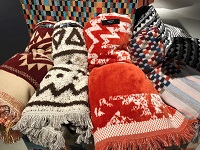 Influenced by current global political turmoil, climate crisis, trade tensions and a general instability, in the 2020-21 seasons, the global textile market will henceforth focus on home and apparel textiles. Designers are redefining materials and their applications in the modern designs. They are using materials as resources for example, Netherland-based Eric Klarenbeek and Maartje Drs are converting algae into bioplastic for 3D printing.
Digital clothing is helping companies test the market before buying their fabrics. These companies are creating digital avatars to help consumers discover new brands and purchase modes. Consumers are shopping through games, social media and on influencer-curated sites and pages.
Serving consumers’ emotional needs
Looking at their garments in a different way, manufacturers are focusing on imperfections, redefining their consumer’s behavior towards fashion. Consumers are carving out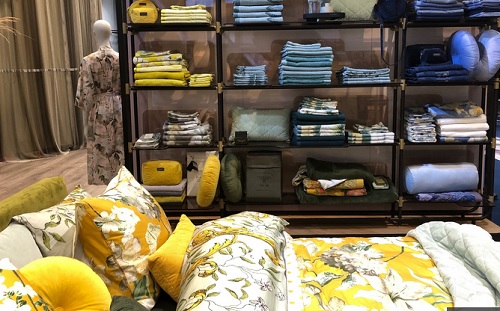 spaces and practices that inspire wellness. They are buying products that serve their emotional needs. As festival culture has gained attention, restaurants are creating immersive experiences that are offering diners an escape from everything else around them. For instance, B&Binge has tapped into binge-watchers’ desire to dive into the programs they’re watching by recreating sets that, in effect, allow viewers to watch their favorite shows from ‘inside’ their favorite shows.
Climate-oriented initiatives to reduce carbon footprint
In a similar vein, consumers are making concerted efforts to lessen their carbon footprints. To cater to this, brands are offering climate-oriented initiatives. Finland-based Arctic Blue Resort, offers an discount in bill for guests who are going green, like watching their water consumption, food choices or use of electricity.
Answering consumers’ need for emotional satisfaction, the craft movement focuses on creativity and adding beauty back into the world. It is influencing home textile trends like Maximum Glam, which draws on collaged textiles, juxtaposed patterns, beading and embroidering to create a modern ‘more is more’ look. Henceforth, handwritten patterns, lines that aren’t completely solid, colors that come together, and textiles applied on top of one another, will be a key look.
Understanding a brand’s heritage
Consumers are drawing on their homes as a cocoon of comfort, and heritage as a reflection of better days. They now wish to understand the history and ethos behind the company and product. Therefore, brands are engaging in storytelling by using textiles made with homemade elements, channel heritage paintings and patterns, like vintage florals, and call on Roman antique styling or floor and wall coverings from ancient structures.
Nike, Gucci, Adidas improve their rankings on the Brand Finance Global 500
Latest edition of the Brand Finance report indicates, Nike, Gucci, and Adidas have improved their positions on the Brand Finance Global 500 2020 rankings. Nike climbed up to the fortieth position. It is the first fashion company on the list, with a brand value of 35 billion dollars. Gucci rose to position 99 with a brand value of 17.6 billion dollars. Adidas remained third in the apparel sector despite dropping 5 places down, it now positions as 104 in the ranking.
Among other brands featuring on the list H&M declined by 25 places to the 135th position while Burberry climbed 12 positions to the 421st position. Uniqlo improved its ranking by climbing up 5 positions now ranks as 143. On a global scale, Amazon became the first brand to exceed $200 billion and for the third consecutive year retained the title of the most valuable brand in the world. The high-tech Google and Apple completed the podium by being ranked on the second and third position.











