


FW
Primark revenues up 11 per cent
For the 2019 fiscal year, Primark’s revenues were up 11.7 per cent. Operating profit was up eight per cent. Like for like sales were down two per cent on a global scale. The low-cost retailer has 138 stores in Europe in eight countries excluding the ones in the UK and the Republic of Ireland, who together alone account for 226 stores. Primark has highlighted its strong trading in the UK, Spain, France, Italy and the US.
Out of Primark’s overall 373 stores, nine are in the US. Four more are planned for the near future. Primark first entered the US in 2015, introducing its products to a myriad Americans, thirsty for its everyday low price model, a system different from the majority of other US retailers who operate with extensive discounting, promotions and coupons. The Irish retailer continues to pursue the American dream at a slow pace. The US market is the biggest market in terms of fashion sales and one of the most complex alongside the high competition.
The evolution of Primark can be debatable in terms of its stagnation and slow growth for a company that only operates with physical stores amid an era driven by digitalization and e-commerce.
Three-day Yarn Expo returns to China from March 11
Yarn Expo will be held in China, March 11 to 13, 2020. This creates a collaborative global networking place to share ideas, experience, expertise and resources. A diverse range of unique functional yarns will be exhibited to meet the specific sourcing needs of buyers. Among the comprehensive range of products on offer at Yarn Expo Spring, functional yarns represent a direct and constant market demand in spite of changing fashion trends.
With the advancement of technology, functional yarns have been developed and used in textile production to enhance the functionality and performance of sportswear, outdoor wear and even everyday clothing. From thermo regulating, moisture absorbing and flame resistant properties to antibacterial, antistatic and more, these innovative features offered by functional yarns add value to textile products. By integrating functionality directly into the yarns, textile products become highly durable, which increases their sustainability as well.
Yarn Expo saw over 28,000 buyers from 87 countries and regions last spring. This year, there will be new exhibitors from Belarus who are attracted to join for the first time to showcase their quality acrylic fibers, nylon yarns, polyester fibers, industrial yarns and more. The fair will have visitors from Turkey, India, Belgium and other European countries.
Uzbekistan to reduce state monopoly in Cotton trading
Uzbekistan will gradually reduce state’s role in cotton trading, opening up opportunities for private companies in Central Asia’s most populous nation and one of the world’s top cotton producers. The government has traditionally bought all cotton and wheat from farmers, directing them how much to grow every season and taking care of exports.
But the practice needed to be phased out in order to encourage private investment, a major policy shift for the nation of 33 million. Uzbekistan is the world’s 10th-largest cotton exporter. However, the former Soviet republic plans to gradually cease raw cotton exports in favor of domestic textile production.
London Textile Fair records 470 exhibitors
Held from January 15-16, 2019, The London Textile Fair recorded 470 exhibitors from the United Kingdom, Japan and the rest of Europe. The London-based textile trade show, held in the Business Design Center compound in Islington welcomed 4,500 visitors. Sustainability was one of the central points of the fair which dedicated a special space to sustainable fashion companies and a series of talks and meetings to discuss this issue.
TLTF provides manufacturers and their agents the opportunity to showcase their products to the most influential British buyers and designers. The show is one of the top industry events within the UK with an increasing international appeal. It attracts designers, buyers and product developers who come not only to maintain existing relationships but work also to source and develop new and exciting products. The trade show, which first took place in 2008, will hold its next edition on July 14-15, 2020.
Santoni launches new process K-Fabric
Santoni has launched an innovative project called K-Fabric. This process transforms circular knitted mesh into linear fabric, giving high-quality and economic benefits. The possibility of transforming circular knitted mesh into linear fabric makes the K-Fabric revolution process the new manufacturing paradigm par excellence, in order to answer the rising production demand of the luxury sector, the changes in the supply chain model and the search for new materials. Thanks to the optimization of the supply chain – from the idea to production, passing through the prototype and the sample – the K-Fabric revolution process meets the modern fashion market’s demand of customized and fast production cycles. Using seamless production flexibility, it basically makes possible the creation of new potentially revolutionary items. Besides giving the opportunity to reach superfine gauges, this process can provide a natural bi-stretch effect without adding elastic yarns and easily allows the knitting of jacquard patterns of any dimension, complexity and placement. Moreover, the K-Fabric process allows with ease the mixture of fibers and a fast and sustainable production of small quantities.
Santoni is a world leader in the production and distribution of circular knitting machines. Santoni’s X-Machine is a four-feed knitting machine which uses sock knitting processes and concepts to produce seamless shoe uppers.
Global imports of artificial staple fibers rise
Global imports of artificial staple fibers rose 1.94 per cent in 2018. Total imports moved up 4.01 per cent in 2018 over previous year and is expected to rise 2.93 per cent by 2021. Italy, Honduras, Czech Republic, China and Bulgaria are the key importers of artificial staple fibers across the globe and together comprise 54.62 per cent of total imports. They are followed by Belgium, Spain, South Africa and Portugal. From 2013 to 2018, the most notable rate of growth in terms of imports was attained by the Czech Republic, Italy and Bulgaria. Global exports of artificial staple fibers increased by 18.49 per cent in 2018.
Total exports increased 13.19 per cent in 2018 over previous year and are expected to grow at 8.85 per cent in 2021. China, Germany, Austria, France and Italy are the key exporters of artificial staple fibers across the globe and together comprise 80.18 per cent of total exports. These are followed by Spain, Turkey, the US and Japan.
The global trade value of artificial staple fibers has shown a sharp growth in recent years. Total trade moved up by 8.85 per cent in 2018 over the previous year.
Iran garment output up 20 per cent
Iran’s garment output rose 20 per cent from March to December 2019. After the ban imposed on imports of clothing, domestic units are taking all endeavors to boost the quality and quantity of their products. Domestic units supply nearly 80 per cent of the requirement for clothing inside the country. Improving and boosting domestic production has been one of the major strategies that Iran has been following in the past two years. Providing the required working capital for production units and offering them facilities is one of the major measures being pursued to support such units.
The contracts and agreements signed with domestic producers have resulted in a reduction of foreign currency expenditure. Nine expert desks have been established for the promotion of domestic production in various areas including automotives, motorcycles, petrochemicals, and telecommunications, as well as copper and steel industries, and by the end of the current year seven more such desks will be held.
There is a big opportunity for existing textile and apparel plants to expand and for new entrants to set up shop. In addition the Iranian currency’s depreciation has provided an additional boon by cutting imports and smuggling, which are the nagging problem of the industry. Smuggled clothing costs Iran and its apparel producers heavily in lost revenues.
Burberry Q3 revenue up one per cent
For the third quarter Burberry’s revenue was up one per cent. Sales were up three per cent. Growth was led by full-price sales, and while this was partially offset by lower levels of markdown inventory being available for the clearance sale and continued disruption in Hong Kong, that full-price focus meant the company still came out ahead. The size of the dent Hong Kong’s woes are making in luxury revenues could be seen from the fact that Asia Pacific sales only grew by a low-single-digit percentage even though Mainland China was up in the mid-teens. Hong Kong’s sales halved — a giant sales fall in what should be one of luxury’s most important markets.
EMEIA grew by a high-single-digit percentage, supported by tourist spend, which particularly benefited Continental Europe. And the Americas region was stable as the US grew by a low-single-digit percentage, although the figures were partially offset by a weaker Canada performance. Burberry also continued to see growth in apparel while accessories benefited from a fuller leather goods offering.
The company now expects the full fiscal year’s revenue to grow by a low-single-digit percentage. And the adjusted operating margin is expected to remain broadly stable, despite the impact of the disruption in Hong Kong.
Nike to record over $10,000 sales by 2020 end
Sportswear brand Nike, which is growing at double-digit rates in the Old Continent, expects to exceed $10,000 million annually in sales and end 2020 with record turnover in the country. For the first time, Nike exceeded Adidas in footwear sales in the Germany market. Between June and November, the brand’s sales increased 14 per cent in Europe, Africa, and the Middle East (EMEA) markets, and almost all of its product categories, from sportswear to other brands such as Jordan witnessed “double-digit growth.
The growth rate in this market is also higher than that of Nike on a global scale, since, at the end of the first six months of its fiscal year, which goes from June to May, its revenue rose 9 per cent, to $21 billion. On the other hand, net profit in Europe stood at €1.1 billion, 18 per cent more than in the same period of the previous year.
Nike’s strength in Europe contrasts with the downward trend of Adidas, whose revenue has declined in this market over the past two years. In the absence of knowing the economic results of 2019, Nike managed to stop the draining in sales in Europe and ended the first nine months with revenues of 4,668 million euros.
Catalysing major shifts to help fashion companies reduce GHG emissions
"Though many countries added climate crisis to the top of their agenda in 2019, many were not serious about the urgency of this issue. On November 4, 2019, US President Donald withdrew from the Paris Agreement by notifying the United Nations of its intention to leave. Cosigned by the US and 194 other countries in December 2015, the Paris Agreement aims to keep global surface temperatures to below 2°C above pre-Industrial Revolution levels and limit their increase to 1.5°C. According to a UN Environment report published in November 2017, the industry is on its way to achieve these targets. Trump’s decision to withdraw from the Paris Agreement at such time comes as a big blow to industry."
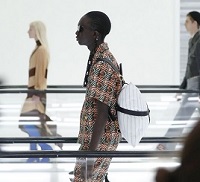 Though many countries added climate crisis to the top of their agenda in 2019, many were not serious about the urgency of this issue. On November 4, 2019, US President Donald withdrew from the Paris Agreement by notifying the United Nations of its intention to leave. Cosigned by the US and 194 other countries in December 2015, the Paris Agreement aims to keep global surface temperatures to below 2°C above pre-Industrial Revolution levels and limit their increase to 1.5°C. According to a UN Environment report published in November 2017, the industry is on its way to achieve these targets. Trump’s decision to withdraw from the Paris Agreement at such time comes as a big blow to industry.
Only two brands meeting emission targets
An October 2019 report by Stand.earth reveals only two major brands -- Levi’s and American Eagle Outfitters -- are taking enough measures to meet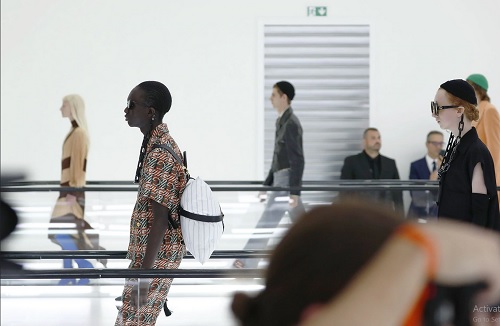 the targets set by the Paris Climate Change Agreement. These two brands are putting the world on the pathway to 1.5°C or less of warming. Meanwhile, 14 other brands, including Burberry, H&M and Kering (owner of Gucci, Alexander McQueen and more) are on target to achieving 2°C.
Signed by over 40 brands — including Burberry, Stella McCartney and Adidas — the UN Fashion Industry Charter for Climate Action in December 2018 targets GHG emissions reduction by 30 per cent. However, this target falls short of the recommendations put forward by the Intergovernmental Panel on Climate Change (IPCC) in a 2018 report.
Reorganising supply chains to go carbon neutral
Now, over 150 brands have signed up to Autumn 2019’s G7 Fashion Pact which aims to achieve zero GHG by 2050 in order to keep global warming below 1.5°C until 2100. However, the agreement does not set a roadmap to achieve these targets.
In September 2019, Gucci and its parent company Kering announced its intention to go carbon neutral by reducing its emissions before offsetting the rest. However, since 90 per cent of these emissions are generated from the brand’s supply chain, these targets need to address the production part first. It is therefore, the responsibility of the world’s leading fashion companies to help catalyse major shifts across the globe.











