


FW
Gap closes 40 stores globally while restructuring business
As part of its restructuring process Gap closed 40 stores across the world. The US retailer plans to close a total of 230 stores over the next two years.
The closings come as part of Gap’s restructuring plan, which includes withdrawing Old Navy from China this year and focusing on its North America market to boost sales. The apparel retailer is focused on aggressively addressing the operational issues that are hindering the performance of its brands. The company’s management structure will be slimmed down in order to speed up decision making as well as a refreshed senior compensation plan, based around performance and accountability. Meanwhile Gap and Arvind have embarked on a water-saving project. This is at Arvind’s denim manufacturing facility in Ahmedabad. The project will save eight million liters of fresh water a day or 2.5 billion liters of freshwater on an annual basis. The first mill in India to manufacture denim, this will now operate entirely with reclaimed water using Membrane Bio Reactor technology, which will treat domestic wastewater drawn from the surrounding community and avoid the use of chemicals in the process. A newly constructed pipeline will draw wastewater from the local municipal line. In the face of local water scarcity challenges, the facility will also reduce business risk for Arvind, Gap and other brands that source from the facility.
Pakistan’ fashion sector gaining ground
Pakistan’s fashion industry has come a long way, and it is only expected to flourish in the coming years. The fashion industry, though quite small, has kept growing over the years. There are award programs such as the Lux Style Awards and Hum Awards, fashion shows like the PFDC Fashion Walk held by the Pakistan Fashion and Design Council, and model-hunt shows like Veet Miss Super Model, among other things.
An important addition to Pakistan’s fashion industry besides clothes, jewelry ad makeup is fragrances. Ayesha Ziya is known for her luxury perfume brand. Television host and anchor Waseem Badami also has a perfume collection, as does retired cricket player Wasim Akram as well as the late musician turned religious scholar Junaid Jamshed.
The country’s fashion industry got international attention and is viewed as a promising market. Being able to design outfits in a range of categories is a skill among the country’s fashion designers. The Annus Abrar studio is known for its luxury pret, festive and bridal collections. Modeling is an important aspect of the fashion industry. Model Aneesa Sharif has a clothing brand named Niya. Models use their star status to raise awareness regarding different social causes.
Global apparel industry facing numerous challenges
Challenges confront the global apparel industry in 2020. Polarisation of manufacturers is continuing, with top class of large, well equipped manufacturers growing their market share at the expense of smaller suppliers. Domestic production in the US and in Europe is growing, but its market share is still very small. All of these trends are expected to continue in 2020.
The supply chain needs to accelerate the transformation to a more demand driven model. That’s a prerequisite for improving the bottom line. The challenge is for buyers and manufacturers and their suppliers to build responsive, flexible and sustainable value chains that are able to deliver the right product in the right amount at the right time. This requires collaboration which in turn requires from buyers to look beyond cost, to be prepared to share part of the investment burden by forfeiting short term lower buyer prices for long term gains and to engage suppliers as strategic partners. It also requires an acceleration of implementation of the ample technology available to move the industry into the digital age.
Another challenge is to reduce the environmental impact of clothing. Once improvements are made they must be communicated in the right way to consumers.
USMCA offers stability in key markets
The National Cotton Council (NCC) applauded President Trump’s signing of the Congressionally-approved U.S.-Mexico-Canada Agreement (USMCA).
NCC Chairman Mike Tate said this trade agreement will provide a boost in trade certainty for U.S. cotton and cotton textile products in the North American market. He noted that Mexico is the second largest export market for U.S. cotton textile/apparel products and Canada is the fourth largest for these goods. Mexico also is a top market for U.S. raw cotton.
The Alabama cotton producer said the USMCA, which updates and modifies the North American Free Trade Agreement, includes a textile chapter that offers significant improvements for domestic textile manufacturers and workers. Among those provisions are: a stronger rule of origin for certain regional textile products; strong customs enforcement language; and ensuring that a significant amount that the Department of Homeland Security spends annually on clothing and textiles is on domestically-produced products.
Collection Premiere Moscow – source of information and inspiration
At the 34th edition of CPM – COLLECTION PREMIÈRE MOSCOW from 24-27 February 2020, around 1,300 brands from 30 countries will be showcasing their autumn/winter 2020/21 collections on the exhibition grounds of Moscow’s Expocentre. An average of 20,000 buyers from Russia and the Eurasian Economic Union use CPM as a valuable source of information and inspiration for doing business and placing orders. “Due to the currently stagnating disposable income of its consumers, the Russian market is regarded as challenging – yet still lucrative. Its core appeal is still the prevailing mindset that fashion is a strong statement of people’s desire to convey a positive image in their working, leisure and social lives. At the 34th edition of CPM, professional buyers will be presented with a wide offer tailored specifically to them, without any decreases in space or exhibitor numbers: CPM stands for Collection, Premiere, Moscow – and a whole lot more!” - Thomas Stenzel, Managing Director of OOO Messe Düsseldorf Moscow.
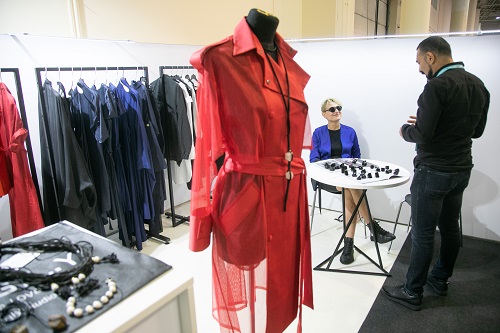
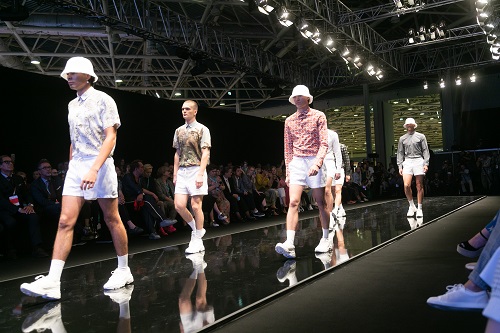
At the beginning of the new decade, the biggest Eastern European ordering platform for the fashion industry, organised by Messe Düsseldorf Moscow in partnership with IGEDO Company and Messe Düsseldorf, is all about renewal and change. With its various segments and areas, CPM covers the entire fashion spectrum and presents collections from ladies’, men’s and kidswear brands alongside lingerie, beach, sports and yogawear, shoes, accessories and fabrics. “My team and I are proud to once again be attracting many international participants to CPM. The response from the companies shows that the Russian market is still vital to their turnovers. Our regular exhibitors and the many new additions are well prepared for taking part in the fair and looking forward to a successful ordering season and the opportunity to make new contacts.” - Christian Kasch, Project Director of CPM International.”
Highlights of the Show
• Change and renewal at the focus
• Large number of international exhibitors with growth rates of up to 10 percent
• New: ‘Labels to Watch’ in cooperation with TextilWirtschaft magazine
• RFRF: Additional presentations, panels and seminars on relevant industry topicsq
• ‘CPM Body & Beach’ with approx. 135 international brands and separate line-up
• ‘CPM Shop & Retail Solutions’ with leading suppliers
• Interactive trend zone, media partnerships, new catwalk shows
Trump administration cracks down on imported counterfeits
The National Council of Textile Organizations (NCTO), representing the full spectrum of U.S. textiles from fiber through finished sewn products, issued a statement on the Trump administration’s announced action plan to increase enforcement and penalties against counterfeit goods sold online and imported to the U.S.
“This is a very important and long overdue move on the part of the administration to increase enforcement activity and penalties against counterfeit goods sold online and imported into the United States,” said NCTO President and CEO Kim Glas. “We commend the administration for making a commitment to bolster efforts to crack down on counterfeits, particularly in the textile and apparel sector, which has been hit hard by fake imported products for decades.”
Nearly two million shipments of goods are exported to the United States duty free each day-- often from countries with poor labor, human rights and environmental track records—under a provision known as Section 321 de minimis. This provision allows goods valued below an $800 threshold to enter the U.S. duty free when imported directly to an individual on a single day.
“This massive increase in de minimis shipment trade poses significant security risks and threats to public health and safety, while incentivizing customs fraud and creating a loophole to our entire tariff structure,” Glas said. “Our concerns regarding the de minimis loophole are exacerbated by the belief that the domestic textile industry and other U.S. manufacturing interests are directly and negatively impacted, particularly since e-commerce sites like Amazon and others are using de minimis as a duty-free portal into the U.S. for products under $800.”
Furthermore, CBP’s own annual report on intellectual property seizures, including large volumes of counterfeits, revealed that U.S. authorities made seizures totaling $1.4 billion in fiscal 2018.
Chinese products accounted for 46% of all IPR seizures. Apparel and accessories were the top counterfeit products seized by U.S. authorities, accounting for 18% of all seizures in FY 2018.
“We think this is an important step forward by the administration to deepen the analysis on de minimis products--- that are often not thoroughly examined and undercut our domestic manufacturing industries,” Glas said. “We don’t know what the products are, where they are coming from, whether they meet U.S. safety requirements, who is making them or the country of origin. We believe it is long past time for the administration to address the issue of de minimis shipments and counterfeiting head on.”
Salvatore Ferragamo S.p.A. releases FY 2019 Group Preliminary Consolidated Revenue Figures
Salvatore Ferragamo S.p.A. is the parent Company of the Salvatore Ferragamo Group, one of the world's leaders in the luxury industry and whose origins date back to 1927. The Group is active in the creation, production and sale of shoes, leather goods, apparel, silk products and other accessories, along with women's and men's fragrances. The Group's product offer also includes eyewear and watches, manufactured by licensees.
The Salvatore Ferragamo Group released the Group’s Preliminary Consolidated Revenues for Fiscal Year 2019.
As of 31 December 2019 the Salvatore Ferragamo Group reported Total Revenues of 1,377 million Euros up by 2.3% at current exchange rates (+1.3% at constant exchange rates) vs. the 1,347 million Euros recorded in FY 2018. Revenues in 4Q 2019 registered a 2.1% increase at current exchange rates and remained stable (-0.1%) at constant exchange rates.
Among the product categories, at constant exchange rates, footwear was up 3.0%, handbags and leather accessories 2.8%, while fragrances were down 7.9%, vs. FY 2018.
Revolutionising the experience of shopping
"The current retail ecosystem, that ensures doorstep delivery of all customer choices, has turned the tables for the e-commerce sector significantly. It has made shopping a virtual experience for millennials with mobile becoming the most preferred mode. Online movie sites, OTT solutions, social media platforms, aggressive influencer marketing campaigns, and vernacular content seeding has increased the use of online platforms for ordering products and services."
 The current retail ecosystem, that ensures doorstep delivery of all customer choices, has turned the tables for the e-commerce sector significantly. It has made shopping a virtual experience for millennials with mobile becoming the most preferred mode. Online movie sites, OTT solutions, social media platforms, aggressive influencer marketing campaigns, and vernacular content seeding has increased the use of online platforms for ordering products and services. Some of key online trends that will rule in the coming year include:
Customisation: Customisation helps brands entice customers to shop for their products. Brands are innovating their products by leveraging their consumer’s feedback in designing, features, usability, etc. A similar level of spontaneity can be seen from grocery shopping to checking travel plans to buying insurance products online.
Convenience of shopping: Convenience has become an important factor for users in choosing brands and products. Shorter delivery times, delivery slot options, flexible payment options, choice of shipment locations, easy returns, seamless servicing, swifter ways of query resolution, live-assistance, etc are impacting consumer’s purchasing behavior. In turn, this is creating opportunities for entrepreneurs to create a market for newer products purely based on consumers’ needs. ‘
Social commerce drives purchases: Inspirational blogs, celebrity engagement posts, live videos, and fashion information are driving people to buy products online with recommendations and suggestions from their friends. Consumers are spending more time on tiny little screens to watch the live premier of product tutorials by a well-known celebrity on social media, ‘DIY’ videos on OTT platforms and share their personal shopping experience on online network groups. This is affecting the supply chain, marketing, distribution, product innovation cycle hence, revolutionising the entire customer shopping experience.
Smart mirrors serve as changing rooms: Serving as virtual changing rooms, smart mirrors will enable customers to try new outfits without actually putting them on but will also be able to share their virtual image on social media to take suggestions from friends before buying a product.
Apart from these, there will be massive changes in the traditional retail industry. Shopping stores will function like websites and websites will function more like stores. Robot shopping assistants like Spod, Budgee, etc will aid in management of supply chain, check product stock, find pricing errors and lookout for misplaced products. If an in-store customer has any question beyond a shopping assistant, the consumer can start video conferencing with a human assistant further deepening the human-machine partnership.
Alongwith these, the invasive trends of AI, VR and augmented reality coupled with a high-tech 5G network infrastructure will revolutionise shopping experience for Indian consumers.
KARL MAYER (CHINA) completes 25 years of its journey
 KARL MAYER (CHINA), the subsidiary of the renowned KARL MAYER Group celebrated its 25th anniversary. The company-wide event was held in Changzhou. The entire workforce and management representatives from Germany, Hong Kong and Japan – including CEO Arno Gärtner – all took part in the festivities.
Way back when it all began, there was a vision: a belief that China would one day become the world’s most important market, Arno Gärtner recalled when reminiscing about the early days. Building on this belief, WUJIN Textile Machinery Co Ltd was founded in 1995 as a joint venture with a Chinese partner. Just four years later, KARL MAYER acquired all of the shares in the joint venture. Together with NIPPON MAYER, the manufacturer set up KARL MAYER Textile Machinery Ltd as its own entity in Changzhou, and in 2005 formed KARL MAYER (CHINA) Ltd. A phase of continual expansion followed.
In 2011, the production of knitting machines was expanded to include the manufacture of warp preparation equipment and in the following year,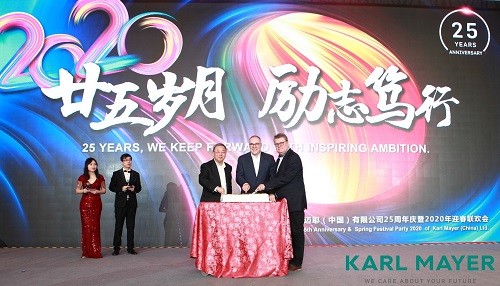 production was expanded again. The latest milestone in the company’s history was the establishment of KM.ON CHINA – a subsidiary of KARL MAYER’s software start-up KM.ON.
“There is no doubt that KARL MAYER’s success over the last 15 years is largely down to KARL MAYER (CHINA),” said Arno Gärtner at the anniversary celebrations.
In order to operate at an even closer proximity to customers in the main Chinese market, the significance of the subsidiary in Changzhou will continue to grow. Over the past 10 years, an enormous capacity for textile production has been established in China. At the moment, however, China’s geopolitical situation has led to slow growth. “As the market leader, we want to be the first to recognise market developments and respond with more innovative solutions offering maximum customer benefit based on buyers’ requirements”, said Arno Gärtner.
Fig. (from left to right, foreground): Yang Zengxing, General Manager of KARL MAYER (CHINA) as well as Arno Gärtner, CEO, and Roland Kohn, member of the extended KARL MAYER management team cut the birthday cake
India spends on upgrading leather
India is upgrading the leather sector. Over 494 proposals for modernisation, technology upgradation and capacity expansion in leather and leather products manufacturing units have been received. Out of this, 166 proposals have already been approved involving total investments of Rs 285.67 crores. Another 83 proposals involving a total investment of Rs137.02 crores are under final scrutiny and expected to be placed before the competent authority for approval very soon.
Upgradation projects for 11 common effluent treatment plants in Tamil Nadu have already been approved involving a combined total project cost of Rs 506.47 crores. The execution of these sanctioned projects is in full swing during the current fiscal. A new greenfield mega cluster is coming up in Andhra Pradesh in an area of 537 acres. A brownfield project is coming up in Kolkata spread over an area of 108.07 acres. Approval has been given for a new cluster in Maharashtra.
In order to enhance production levels, infrastructure in the existing leather, leather products and footwear clusters will be upgraded. There is a proposal to create new clusters with plug-and-play model of factories in order to attract domestic and foreign investments, considering the huge cost of land for setting up new projects.











