


FW
India: Tiruppur exporters coping with high costs, labor shortage, falling orders
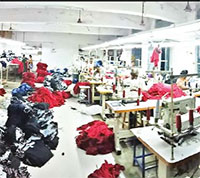 Accounting for almost 46 per cent of India’s garment exports, Tiruppur knitwear hub has been under acute stress since for the last few years due to the twin blows of demonetisation and GST.
Cheaper products, duty-free access attract buyers to competing countries
The multi-crore industry in the cluster is on the verge of a breakdown and the only savior seems to be remedial measures that the government plans to announce to save the city’s knitwear sector from all the external and internal challenges that it faces. Tamil Nadu exporters say India is losing out to Bangladesh, Sri Lanka, Cambodia even Ethiopia as these nations offer free access to key markets like the EU and US. Moreover, their products are cheaper and they offer cost-effective labor and free access to key markets. Buyers also do not have to pay an additional 10 percent duty on imports from these countries as is the case with India.
Another factor troubling Indian exporters is the government’s decision to withdraw the 4 per cent merchandise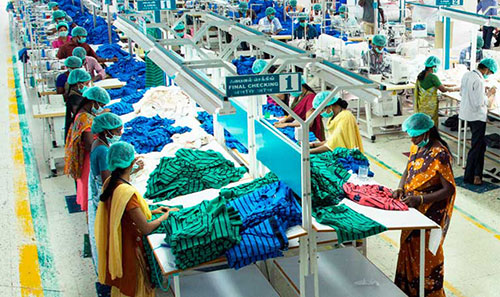 exports from India scheme (MEIS) incentive retrospectively from March 2019. They feel, this will result in massive losses, running into several multi millions.
Slump in orders leads to production scale down
A slump in orders has forced several manufacturers to scale down operations. For instance, orders for leading exporter Santex Inc’s India unit declined by almost half though they have grown exponentially in their Sri Lankan unit. Orders from Sri Lanka, Myanmar, Cambodia and Vietnam have increased as buyers prefer these countries for their low-cost products.
As Raja M Shanmugham, President of the Tiruppur Exporters’ Association (TEA) point out, despite being the largest producer of cotton and having a huge workforce, India is losing out to Bangladesh in the apparel sector. The situation is likely to worsen, as an FTA between EU and Vietnam operationalised a fortnight ago, would compel Tiruppur manufacturers to compete with Vietnam as well.
MEIS withdrawal to result in Rs 1,000 crore loss
Dealing another blow to Tiruppur manufacturers, the Indian government recently decided to withdraw the MEIS scheme granted to exporters. This is likely to result in a loss of around Rs 1,000 crore for these exporters who survive on thin margins.
These manufacturers are also plagued by a few other problems like their high production costs and labor shortages. Their production costs are almost 15-20 per cent more than those of Bangladesh manufacturers. Also, labor wages have doubled over the last few years. As a result, Indian exporters have been able to clock in just $17 billion in the past five years, while Bangladesh has clocked in around $38 billion exports in the same period.
Coronavirus epidemic likely to dampen global cotton consumption
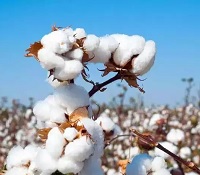 Having stabilised during most of February, international cotton prices collapsed during the end of the month and beginning of March as fears over the spread of Coronavirus (COVID-19) amplified during this period. The Cotlook A Index began the month on a modestly weak note as China markets returned from the Lunar New Year holiday with a steep downward turn. Though this index reached a high point of 78.30 US cents per lb, a renewed caution in the later part of the month further dampened spirits with several international events being postponed. This also affected business activities during the month as spinners did not commit themselves to large volume sales or purchases.
Despite many factories in China reopening, downstream sector remained sluggish impacting spinners’ orders and raising concerns over the potential of serious disruption to supply chains if the government failed to contain the virus in the next month or so.
Decline in prices boosts sales
However, a considerable decline in cotton prices during the last portion of February tempted buyers back to the market with a steep rise in demand from a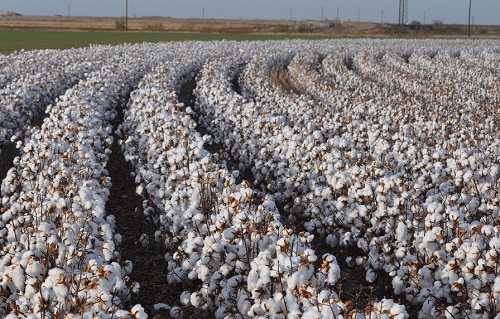 broad range of countries. Two consecutive weekly marketing-year high sales figures in the first half of the month also improved the pace of shipments.
Increase in government-inspired sales
On February 14, the ‘Phase One’ bilateral trade agreement came into force, a month after its ratification in Washington. The deal commits China to a substantial increase in purchases of US agricultural commodities, including cotton. Though the deal resulted in moderate new sales to China, it also led to a cancellation in few of the existing contracts. The deal is also likely to result in government-inspired purchases of US cotton being made by or on behalf of the country’s State Reserve.
In February, Cotlook published its tentative initial estimates of global production and consumption for the season ahead, in this case 2020/21. The starting point for its US production figure was the outlook for acreage as put forward by the National Cotton Council’s Planting Intentions survey. Its average yield and abandonment are anticipated in most states, meaning Cotlook’s second-largest crop of the last decade was worth more than 4.4 million tonne.
Coronavirus to impact consumption and production
Taking the above figures into account, Cotlook forecasts world production in 2020/21 to be just over 26 million tons, only marginally above the figure for the current season. Assessing the consumption outlook has been made more challenging this year by uncertainty regarding the duration of the Coronavirus outbreak and its impact on commercial and industrial activity not only in China but also in the rest of the world. For now, Chinese consumption can be estimated to recover to 8.3 million ton on the assumption that the disruption witnessed this season will have abated by the middle of this year.
Outside China, consumption will expand modestly in the Indian subcontinent and in certain Far Eastern countries. Global consumption in 2020/21 is likely to rise to 25.9 million ton. However, this optimism may prove misplaced if the worst fears regarding the economic impact of a global epidemic are realised.
Vietnam exports to the US up 34 per cent
In the first nine months of 2019, Vietnam’s exports to the US jumped by 34.8 per cent year on year. The United States is Vietnam’s largest export market. Overall, Vietnam-US trade will likely to continue to increase. However, Vietnam will need to be more careful particularly for industries such as steel, footwear and agricultural products exports to the US that have been growing. If it does not, the United States is likely to impose countervailing duties on products that it deems to harm its domestic industries. Vietnam however, will have to be even more careful to deal with origin fraud and transshipment as this has been the source of US tariffs on Vietnam in the past. The tariffs were imposed to prevent steel products that originated from China attempting to bypass anti-dumping rules. Vietnam subsequently issued new regulations related to the origin of exported and imported goods. Most recently, Vietnam addressed transshipment and origin fraud. The move was in line to satisfy US rules of origin requirements and address the trade surplus.
The US recently slimmed down its list of developing and least developed countries, thus removing Vietnam from receiving preferential trade benefits. The move, however, was not directed specifically at Vietnam but included several other countries.
India’s textile imports rising faster than exports
Textile exports from many Indian states have reduced in the last five years. From New Delhi, textile exports halved from FY15 to FY19. Punjab and Andhra Pradesh saw a contraction of 20 per cent and 16 per cent respectively. Overall exports from the textile sector rose 2.2 per cent while overall textile imports shot up 13.1 per cent between FY15 and FY19. India’s top five textile export destinations are the US, Bangladesh, China, Pakistan, the UK, while the top five import destinations are China, the US, Australia, Bangladesh, and Taiwan. However, to curtail imports of textiles and to boost domestic production, India has doubled the basic customs duty from ten per cent to 20 per cent on 383 apparel HS lines.
The textile industry is a labor-intensive industry. So its growth plays a vital role in job creation. The textile industry is also one of the industries that have a major participation from the informal sector as well. Hence a fall in the industry causes a loss of jobs from the informal sector that is hardly measured.
India will help top textile companies achieve sufficient size and scale to cater to worldwide demand. The aim is to create a few global champions especially in the areas of manmade fiber, technical textiles, apparel, fabrics and made-ups because of the substantial value addition in these sectors.
Stella McCartney’s profits dip
Higher costs wiped out profits for Stella McCartney in 2018. Corporate reorganisation costs mounted but the large new flagship store on Old Bond Street also added to the company’s outgoings. Overall, expenses rose and sales were virtually flat during the period – they rose by a tiny 0.2 per cent after having risen two per cent during 2017.
The company’s strategy is to expand its worldwide retail portfolio with new stores and concessions, particularly in Asia. In fact, the company is heavily focused on international sales in general and doesn’t seem to be worried about Brexit. At the moment less than five per cent of its global revenue happens in its UK shops. That also means only a small proportion of its sales are dependent on cross-border movement of goods to Britain. Further, the majority of foreign revenue recorded by the company relates to royalties, which benefit from UK international tax treaties that are unlikely to be affected by Brexit.
Stella McCartney is one of the UK’s leading designers, who’s also the flag-waver for all-things cruelty-free and sustainable. Stella McCartney has gone into a partnership with LVMH. The aim is to accelerate the development of the Stella McCartney brand globally.
Fabric scraps are a money spinner for Bangladesh
Fabric scraps can earn Bangladesh a huge income every year. The total volume of leftovers discarded by the apparel industry is about 4,00,000 tons each year. In many areas dense with garment factories, discarded fabrics are collected by local miscreants and exported in bulk to counties like India and China. The buyers then recycle the materials to make yarn, particularly for denim products.
Polyester Staple Fiber (PSF), made from recycled plastics, is rapidly becoming the world's first choice in manufactured fibers. PSF is a synthetic fiber comprising solely polyester and can be made from both virgin and recycled polyethylene terephthalate chips. PSF is widely used in the textile, automation and furniture industries for products such as rugs, fibrefill, and non-woven fabrics.
Bangladesh PSF imports increased 13 per cent from 2014 to 2018. The country’s textile chemical market is growing eight per cent a year. Bangladesh’s apparel sector is being hit by Coronavirus (COVID-19) related supply chain disorders, with prices for raw materials soaring. Bangladesh’s apparel sector is the country’s top foreign currency earner. Production in many factories is being hampered by the lack of raw materials. Due to the short supply, prices of different raw materials have increased by between 30 and 40 per cent.
EU extends Pakistan’s GSP for next two years
The European Union has decided to retain the GSP Plus status for Pakistan for another two years. Pakistan’s exports to the EU have grown 65 per cent since the grant of GSP Plus in 2014 to 2019. But the country could not take full advantage of the GSP Plus benefit, primarily due to the lack of a solid marketing plan to improve its exports. The value-added textile sector has been the main driver of the economy for the last 50 years in terms of foreign currency earnings and job creation. A zero-rating of sales tax is expected to help the sector fully exploit the GSP Plus facility.
There is a need to enhance product lines of the country’s exports. As of now the garment sector in Pakistan has a limited product line for the export market since the appropriate fabrics are in short supply. Since foreign buyers demand new garments based on G3, G4 and technical fabric materials, there is a need to offer more diversified products to take the benefit of GSP Plus. Another key challenge is the 17 per cent sales tax on exporters. About 45 per cent to 60 per cent of almost every exporter’s cash liquidity is blocked due to this taxation, a major hurdle in export growth.
Bangladesh RMG trade volume with the US doubles
Bangladesh has emerged as the third largest readymade garment supplier to the United States after China and Vietnam. The country produces garment products that appeal to US consumers.
Trade volume between the two countries has doubled in 10 years. Garment products account for 95 per cent of Bangladesh’s total exports to the US market while US imposes a 15.62 per cent duty on garment imports. Despite sharing an uneven relationship due to labor issues, termination of Generalised System of Preference (GSP) benefits with the US, Bangladesh’s access to the US market continued to increase over time. The US is Bangladesh’s single largest export destination while as a least developed country 97 per cent of the goods originating from Bangladesh enjoy duty-free benefits in the US markets. However, US entrepreneurs are concerned about custom proceeding delays, difficulties in capital and profit repatriation as well as lack of transparency in issuing various trade related licenses.
Alongside the enhancement of product quality, improvement of workplace safety after the 2013 Rana Plaza setback helped Bangladesh regain the confidence of US importers. And tariffs have been no impediment in the country’s ability to access the US market.
Coronavirus, store closures to dampen US home textiles imports in 2019
 In 2019, the US imported almost 50.46 per cent of home textiles and made ups from China. On the other hand, India share constituted only 22.45 per cent of made-ups to the US, although US has a share of around 50 per cent of its home textiles exports from India.
In total, the US imported home textiles and made ups worth $14,424.37 million in 2019. This was around 1.52 per cent more than those imported in 2018. In 2018, US imports had increased by 7.31 per cent over 2017. US textile and apparel import growth could remain stagnant in 2020 too due to the varied impact of the Coronavirus (COVID-19) and numerous store closures.
India emerges top supplier of cotton sheets Some of the main items that the US imported included cotton terry towels, other cotton manufactures (which includes among others table and kitchen linens, bedspread, curtains, upholstery, etc), cotton sheets, cotton bedspreads and quilts, MMF floor coverings, other MMF furnishings, wool floor coverings. While India was the top supplier of cotton sheets, terry towels and wool floor coverings, China was lead supplier of other products.
India was the top supplier of cotton sheets to the US followed by China and Pakistan. However, India’s exports declined by almost 2 per cent to $691.01 million. The second largest supplier of cotton sheets, China also suffered a setback due to the US-China trade war as its exports of cotton sheets declined by 11.57 per cent to $269.13 million. On the other hand, exports from Pakistan grew by 10.21 per cent.
Cotton bedspreads and quilts import decline
US import of cotton bedspreads and quilts declined 2.89 per cent to $959.26 million. China emerged top supplier exporting goods worth $557.34 million registering a growth of 14.68 per cent. India’s exports grew 10.68 per cent $160.05 million in 2019, slightly higher growth than 10.59 per cent registered in 2018. Imports from Pakistan, $152.92 million, fell marginally by 1.62 per cent in 2019. US cotton terry towel imports in 2019 were $1616.345 million, 1.16 per cent lower than in 2018. India exported terry towels worth US$ 636.71 million, a small growth of 0.32 per cent. India accounts for majority share with 39.39 per cent of total US imports of cotton terry towels.
China’s exports declined 5.58 per cent to $383.77 million while Pakistan’s saw a growth of 2.28 per cent to $340.04 million. US imports from Turkey were up 7.45 per cent, from Colombia 12.36 per cent, from Salvador 17.8 per cent and Jordan 67.91 per cent. Other cotton furnishings and home textiles imports into the US stood at $2892.55 million in 2019, a fall of 3.6 per cent compared to 2018.
Indian emerges top supplier of wool floor coverings
Import of wool floor coverings declined 13.76 per cent in 2019 to $654.32 million. India was the top supplier of wool floor coverings in the US, accounting for 57.86 per cent share in total US imports.
China’s exports declined 27.86 per cent to $55.94 million. Pakistan’s exports stood at $ 43.38 million, a marginal growth of 0.49 per cent. MMF floor covering imports into the US amounted to $1749 million, a fall of 4.43 per cent compared to 2018. In 2019, Turkey overtook China to become the top supplier in the US market. Imports from Turkey at $648.61 million increased 18.37 per cent in 2019.
China’s exports at $ 89.89 were 32.16 per cent lower than in 2018. India maintained its position as the third largest supplier with exports of $187.87 million, 9.75 per cent higher than in 2019. Among emerging sourcing destinations are Mexico, Korea and Vietnam.
Import of MMF home furnishings increase by 12.22 per cent
Other MMF home furnishings is the most important item in the US home textiles import basket, accounting for 35 per cent share of total home textiles and mad-ups. US imports of MMF furnishings increased by 12.22 per cent in 2019 to $5153.20 million. China is the dominant supplier with a share of 83.23 per cent of total US imports.
Covid-19 threat results in postponement of fairs
In view of the intensifying spread of Covid-19 across the globe and the precautionary travel restrictions put in place by the Indian government, Messe Frankfurt India together with Gifts & Accessories, the Exhibition Division of Netlink Solutions have decided to postpone four co-located fairs – Paperworld India, Corporate Gifts Show, Interior Lifestyle India and Interior Lifestyle India presented by Ambiente India, slated for March 2020. Having received definitive industry feedback in support of this decision, the co-located fairs will now take place from January, 21-23 2021 at the Bombay Exhibition Centre in Mumbai.
Given the escalating situation with regard to the spread of Covid-19, the Indian government has taken strong steps on visa restrictions of foreign nationals. With a large international contingent from China, France, Germany, Japan, Korea, UAE, Taiwan and Thailand slated to participate at the upcoming co-located fairs in March, the ongoing consultations with the industry demanded a new analysis of the situation, close to the opening dates of the fair.
As per the travel advisory issued by the Union Health Ministry, precautionary travel restrictions have tightened entry conditions, making it impossible for large parts of the international exhibitors and visitors to participate and attend the fairs for regular business. Messe Frankfurt’s decision of postponement of the fairs has, therefore, received a swift, unanimous and definitive support from exhibitors as well as industry associations supporting Paperworld India, Corporate Gifts Show, Interior Lifestyle India and Interior Lifestyle India presented by Ambiente India.
“The current situation represents a major challenge for the MICE industry over the world. We have been in constant dialogue with industry players and keeping the interests of our valued exhibitors foremost, we felt it was imperative to take this decision at this point in time.” says Raj Manek, Executive Director and Board Member, Messe Frankfurt Asia Holdings. “We remain committed to delivering high-quality platforms for networking, and look forward to delivering a great show next year.” added Minesh Modi, Director, Netlink Solutions.











