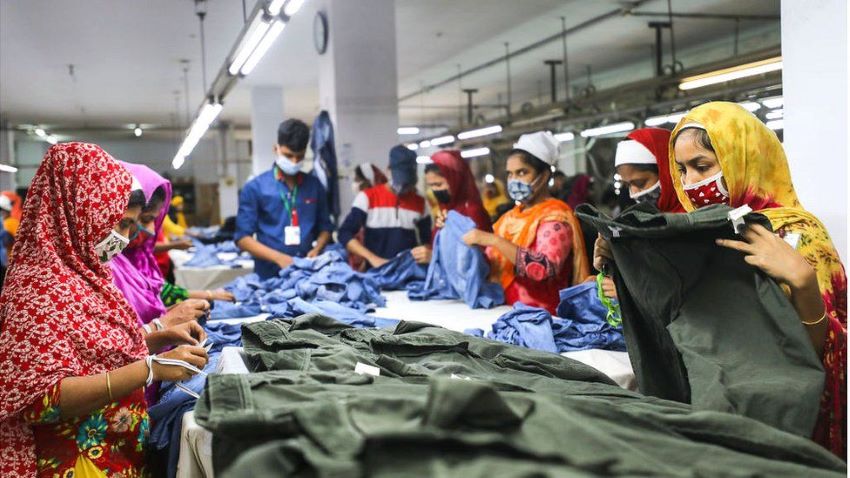
Bangladesh has emerged as the third largest readymade garment supplier to the United States after China and Vietnam. The country produces garment products that appeal to US consumers.
Trade volume between the two countries has doubled in 10 years. Garment products account for 95 per cent of Bangladesh’s total exports to the US market while US imposes a 15.62 per cent duty on garment imports. Despite sharing an uneven relationship due to labor issues, termination of Generalised System of Preference (GSP) benefits with the US, Bangladesh’s access to the US market continued to increase over time. The US is Bangladesh’s single largest export destination while as a least developed country 97 per cent of the goods originating from Bangladesh enjoy duty-free benefits in the US markets. However, US entrepreneurs are concerned about custom proceeding delays, difficulties in capital and profit repatriation as well as lack of transparency in issuing various trade related licenses.
Alongside the enhancement of product quality, improvement of workplace safety after the 2013 Rana Plaza setback helped Bangladesh regain the confidence of US importers. And tariffs have been no impediment in the country’s ability to access the US market.

- 1
- 2
- 3
- 4
- 5
- 6
- 7
- 8
- 9
- 10
UK fashion sourcing shifts south as Bangladesh overtakes China
The UK’s apparel sourcing has seen a realignment in recent years, as retailers increasingly diversify production away from traditional East... Read more
Why European consumers are spending more but buying less fashion
For much of the last two decades, the European fashion industry operated under the assumption that rising consumer wealth would... Read more
Why US apparel prices defied inflation while product quality improved
As inflation reshapes nearly every aspect of American household spending, one consumer category continues to stand apart. Housing costs have... Read more
The Resale Revolution: Vinted’s marketplace model reshapes European retail
The French fashion market has reached a turning point. In a development that highlights the growing influence of circular commerce,... Read more
France declares war on ultra-fast fashion with new green law, will reshape globa…
France has become the first major economy to legislate specifically against the ultra-fast fashion business model, a watershed moment for... Read more
France declares war on ultra-fast fashion with new green law, will reshape globa…
France has become the first major economy to legislate specifically against the ultra-fast fashion business model, a watershed moment for... Read more
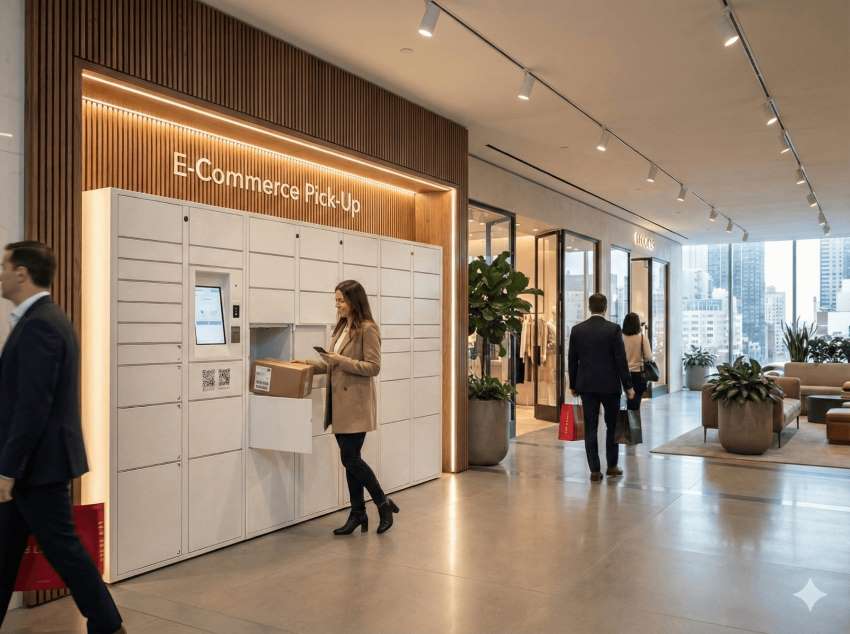
Click-and-Collect: Why retailers are turning pickup counters into sales machines
Modern retail has changed the role of the physical store. Once viewed primarily as a point of sale or inventory... Read more
Why fashion e-commerce returns persist despite smarter sizing technology
For over a decade, the fashion sector has invested heavily in virtual fitting rooms, AI-powered size recommendations, and 3D body... Read more
A Quest for Essence: Unveiling the 2027 A/W Trends at Intertextile Shanghai Appa…
As the global textile industry looks toward the upcoming season, the Intertextile Shanghai Apparel Fabrics – Autumn Edition stands ready... Read more
Beyond globalization, local consumer behavior rewriting fashion retail strategy
The traditional blueprint for global fashion expansion is being rewritten. For decades, apparel companies assumed globalization would gradually create a... Read more