


FW
British, European brands request US to adjust 25% tariffs on luxury goods
British and European luxury brands — hoping to duck out of the crossfire of the Airbus-Boeing trade fight — are requesting he Trump administration to adjust the 25 percent tariffs set on many luxury goods imported to the US
Washington raised the import tariff on certain high-end goods from Europe to 25 percent, hitting cashmere knitwear, merino wool and Savile Row suits hard and in retaliation for subsidies paid to manufacture the Airbus fleet of planes. The move was sanctioned by the World Trade Organization and the US has the right to review and tweak the tariffs, which could go as high as 100 percent, every 180 days.
The EU, which has accused the U.S. of aiding Airbus competitor Boeing, might also retaliate with tariffs of its own on U.S. made goods.
Beth Hughes, Vice President-Trade and Customs Policy, American Apparel & Footwear Association, said this dispute has already caused a negative impact on the industry. This retaliation only hurts those American workers by raising costs, costs which are passed on to U.S. consumers in the form of higher prices, which, in turn, lowers sales.
China reduces tariffs from Bangladesh imports
The Chinese government reduced tariffs on products imported from Bangladesh under its Preferential Tariff Program—a move that dates back to items imported from July 1. Now, nearly all Bangladeshi products (97 percent) will see reduced duties moving forward, up from 60 percent prior to the news.
According to China Briefing, a publication produced by professional services firm Dezan Shira and Associates, China will now give duty-free export benefits to an additional 5,161 products from Bangladesh, bringing the number of exempted products to 8,256. That total includes items that are admissible under the Asia Pacific Trade Agreement (APTA).
Exporters in Bangladesh have enjoyed the bulk of these duty-free benefits since 2010, the publication said, with items like jute, plastics, raw hide, skins, frozen fish and crabs, live eels, sesame seeds and cotton waste products being the most popular imports to China. But despite the duty benefits that the country has enjoyed over the past decade, China Briefing reported that exports haven’t shown substantial growth.
Export Promotion Bureau data shows that during the 2014-2015 fiscal year, total exports to China amounted to $791 million. By 2019, that number had only increased to $831 million. By May, looking back at the fiscal year that began in July 2019, exports amounted to $557 million.
However, there’s one area that is trending positively: ready-made garments. Due to loopholes created by a clash between APTA and China’s Preferential Tariff Agreement, the incentives offered by each agreement aren’t synchronized. Those issues actually present an area of opportunity for Bangladeshi exporters looking to bring clothing to the Chinese market.
The Seam, QDMP develop the Trust Protocol
The Seam, a leading provider of food and agriculture software solutions and Qualified Data Management Partner (QDMP) with Field to Market, has developed the Trust Protocol. The platform includes a mass-balance chain of custody model and a bale registration and verification process that digitally links cotton production to the sustainability profile of the producer. Over the past 35 years, U.S. cotton has made significant improvements in growing cotton responsibly.
Brands and retailers can join the US Cotton Trust Protocol, a new system for responsibly grown cotton that will provide annual data for six areas of sustainability in line with the U.N. Sustainability Goals. This year-over-year data, available for the first time, will allow brands and retailers to better measure progress towards meeting sustainability commitments.
The Trust Protocol underpins and verifies sustainability progress through sophisticated data collection and independent third-party verification. By working with Field to Market: The Alliance for Sustainable Agriculture and Control Union Certifications North America, the Trust Protocol enables brands and retailers to better track the cotton entering their supply chain. Brands who become members of the Trust Protocol will have access to aggregate year-over-year data on water use, greenhouse gas emissions, energy use, soil carbon and land use efficiency.
The Trust Protocol is a complement to existing sustainability programs and is designed from the ground up to fit the unique cotton mass-growing environment of the United States.
Sales at Korea department stores fall by 14.2%
According to the Ministry of Trade, Industry and Energy, the sales of Lotte, Shinsegae and Hyundai department stores in the first half of the year fell by 14.2 percent compared to last year.
Galleria Department Store, which has comparatively more international high-end fashion labels at its branches than its competitors, was the only franchise that showed a sales increase between January and June, recording 4 percent.
Lotte recorded a 16 percent sales drop, followed by Hyundai and Shinsegae with a respective 10 percent and 7 percent.
Galleria only operates five outlets around the country and it has been focusing on attracting the "superrich" in different regions.
In September last year, it opened a separate facility outside its Daejeon department store for VIP customers only called ‘Maison Galleria.; The store invited selected customers and exclusively introduced them to its latest luxury items.
Shinsegae also collaborated with Louis Vuitton to promote the men's fall and winter collection, for the first time, at a pop-up store in it Gangnam branch July 31. The branch previously opened temporary boques for Prada in January, Chanel in June and Bottega Veneta last month.
Global cotton consumption declines by 15%: USDA
Current USDA estimates show global cotton consumption in 2020-21 down is likely to decline by 15 per cent. The 2020-21 world production forecast remains unchanged, and COVID-19’s negative impact on cotton demand was too late in the season to shift planting decisions away from cotton for most major producing countries. This has pushed the stocks-to-use ratio back up into the 90 per cent range.
The US department of agriculture (USDA) Outlook in February of 2020 projected that 2020-21 would be similar to 2019-20, with modest consumption growth and a modest decline in world stocks. Then COVID-19 spurred record downward adjustments to global cotton demand.
Looking ahead, with government support programs in the two largest producing countries—China and India—shielding producers somewhat from price volatility, lower prices will have limited impact on global production.
Millennials reinforce sustainability values during COVID-19: Survey
According to the Deloitte Global Millennial Survey 2020 found that younger generations including both Millennials and Gen Z have had values, including sustainability, reinforced during the pandemic. While half of the millennial and Gen Z respondents said they believe it is too late to repair the damage caused by climate change during the company’s initial survey taken late 2019 and early 2020, a pulse survey conducted later in 2020 found a more hopeful response due to the pandemic’s environmental impact.
A pulse survey found that almost 30 percent of Gen Z and a quarter of younger millennials have lost jobs or have been put on temporary, unpaid leave due to COVID-19. This demographic has also experienced a change in work including working fewer hours or longer hours without a raise in pay. Only a third of millennials and 38 percent of Gen Z respondents said their employment or income status had been unaffected by the pandemic.
Overall, the report found a pessimistic view from respondents as it pertained to personal financial prospects. More than half of respondents expected their finances to stagnate or worsen over the next year before the pandemic, an increase from previous surveys. Further, almost half of Gen Z and 44 percent of Millennials told Deloitte they felt stressed all or most of the time during the initial survey, but the pulse survey saw anxiety levels fall eight points for both generations. According to the authors of the report, this decline in stress levels suggests resiliency and indicates a positive side effect of the pandemic.
Vietnam surpasses Bangladesh in RMG exports: WTO
Vietnam surpassed Bangladesh in exporting readymade garments (RMG) during the first five months of the current calendar year, industry insiders said. Bangladesh, however, remained the second largest apparel exporter after China in the last calendar year of 2019, according to World Trade Organization (WTO). Vietnam exported apparel worth US$10.50 billion in January to May of 2020 while Bangladesh's RMG exports during the same period stood at US$ 9.68 billion, according to data compiled from different sources.
Apparel exports from both the countries, however, declined during the period due to the coronavirus outbreak.
In 2019, Bangladesh exported $33.63 billion with a share of 6.83 per cent of the world market followed by Vietnam with $30.56 billion or 6.21 per cent of the global market.
China remained the top apparel exporter to the world. China fetched $151.58 billion, 30.81 per cent of the global market last year. During the January to May last India fetched US$4.68 billion followed by Cambodia with US$3.28 billion, Pakistan US$2.12 billion and Sri Lanka US$1.61 billion, data showed. In January, Bangladesh exported apparel worth $3.03 billion while it earned US$ 2.78 billion and $2.25 billion in February and March 2020 respectively. But in April, Bangladesh apparel exports fell to only $374.64 million and in May it stood at $1.23 billion, data showed.
On the other hand, Vietnam's RMG exports were $2.47 billion in January, $2.22 billion in February and $2.33 billion in March. In April, Vietnam fetched $1.60 billion while $1.86 billion in May last, according to data.
Industry insiders said that the issue needed to be taken into account that Vietnam factories didn't have to close factories like Bangladesh for a month. As Vietnam is Bangladesh's main competitor for the second position, they said with FTA in EU market Vietnam will be in a very good position.
COVID-19 spurs new fashion innovations as brands launch anti-viral clothes
 The ongoing pandemic has led to many innovations in the apparel industry as brands have introduced new clothes and accessories that supposedly stop viruses. Diesel launched a new range of antiviral fabrics that disables over 99 per cent of viral activity within two hours of contact. Similarly, London-based Apposta launched a fabric for dress shirts’ that claims to reduce the speed of contaminations, transmissions by destroying bacteria and viruses on contact.
Fashion companies believe antiviral clothing is the next big innovation in the industry. As consumers have reduced apparel spending by almost 30 per cent this year, retailers are using every trick in the trade to lure them back to stores. McKinsey and Business of Fashion’s ‘State of Fashion Coronavirus Update’ says antiviral clothing is one of the many ways retailers are trying to woo shoppers back. Diesel is using Swedish firm Polygiene’s fabric treatment to stop viral activity in fabrics while Swiss firm HeiQ uses Silver to destroy viruses.
Complications due to regional regulatory discrepancies
Mats Georgson, Chief Marketing Officer, Polygiene points out, the term anti-viral fabric has been made more complicated by regional differences in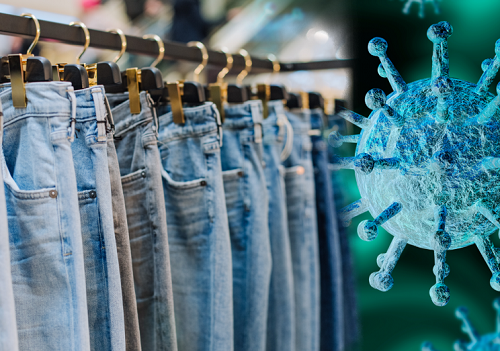 regulation. Europe has separate standards for fabrics labeled antibacterial or antiviral, while US labels only medical products as antiviral fabrics. Other fabrics are labeled antimicrobial, which means though they pass antibacterial tests, they do not necessarily kill viruses.
Labeling a fabric as antimicrobial can bring legal problems for brands. Hence, brands need to be careful before making any such claims, says Susan Scafidi, Founder and Director, Fashion Law Institute, Fordham University's School of Law. US government agencies like the Federal Trade Commission and Environmental Protection Agency are looking out for more such questionable antimicrobial claims.
Treatments induce behavior changes, control waste
Sarah Ahmed, Chief Executive Officer, DL1961 and Warp + Warp believes, fabric treatments can induce long-term behavioral changes amongst consumers and make clothes more clean and appealing. As of October 1, the brand plans to treat all its new products with an antiviral chemical softener from HeiQ. Georgson says, antiviral treatments can also help control water waste by convincing consumers not to wash their clothes as frequently, much in the same way antibacterial treatments have for activewear.
Diesel has also invested in the Polygiene treatment. Massimo Piombini, CEO says, the brand has an exclusive licensing deal on denim in combination with an anti-odour chemical, to make customers’ lives easy during a complicated time. However, as Lucy Shea, CEO, Futerra opines, fashion brands offering antimicrobial treatments should not use this as the next fashion craze but be careful while creating clothing items using this technology. For keeping their consumers healthy, they can use other simpler design innovations, like T-shirts with built-in masks.
Post COVID-19, textile, apparel industry can help build other sectors of economy
 Countries trying to get back on their feet post COVID-19 need to remember that the textile and apparel industry can help them build a base for other technologically demanding industries. It can create new employment opportunities during the pandemic as the share of employment across total manufacturing workforce is significant; particularly in the Islamic Development Bank (IsDB) member countries.
The 57 member countries of IsDB represent the purchasing power of almost one quarter of the world’s population. These countries have GDP growth rates of up to 8 per cent per year which further enhances their potential to increase their market share in global economy.
Investing in sustainable fibers for tangible benefits
Investing in the textile and apparel market can help IsDB countries yield tangible economic benefits. These countries can invest in sustainable and recycled fibers that are poised to replace resource-intensive raw materials at an increasing pace. They can also invest in technical, smart textiles that can be used in several industries such as automotive, construction and medical equipment.
The future of textile and apparel industry is likely to be shaped by emerging transformative technologies like data applications, artificial intelligence (AI), machine learning, and 3D printing. Additionally, blockchain technology will help create transparency and traceability across supply chain.
Another major change expected to occur post COVID-19 is the industry’s shift to nearshoring. This will ensure that factories are closer to their final markets. Leading firms will collaborate with first-tier suppliers to meet demand and reduce lead times. The structure of future textile and apparel market will be determined by a country’s location, and its ability to provide cost-effective production, competitive skills, quality products and efficient lead times.
Collaborations to drive success
To restart economies, countries will have to strengthen and broaden processing capabilities, develop sustainable textiles and apparels and build the country’s image as the ultimate destination for textiles and apparel industry. To make these changes, it is advisable for the textile and apparel sector to collaborate with industry associations within and across countries. Joint projects with universities can strengthen knowledge exchange and drive innovations. Partnerships with brands and knitting houses or weaving mills will help the industry foster more vertical integration for companies.
IsDB has set clear goals to catalyze private and public investment and drive competitiveness of key industries linked to the global market. The bank is building a platform for member countries that would bring together a range of stakeholders to increase trade and investment relations; co-finance arrangements with the public and private sectors; multilateral development banks and other international organizations; and boost private-sector engagement in development interventions.
To overcome the hurdles created by COVID-19, the industry will have to form new collaborations and adopt a value-based approach. Countries and firms that quickly adapt to the changing scenario will succeed in the long term.
Global garment industry to grow 8.8 per cent CAGR from 2021-27
An Allied Market Research report says, global readymade garment industry is expected to reach $1,268.3 billion by 2027, growing at a CAGR of 8.8 percent from 2021 to 2027. The market will be driven by a rise in sports and fitness awareness and dynamic fashion trends and its influence over consumers. However, negative impact on the ecosystem is likely to hamper the market. On the contrary, rapid growth of online retail platforms and introduction of innovative apparel designs will create lucrative opportunities for players in future.
The report suggests, inner clothing segment is expected to manifest the highest CAGR of 10.0 per cent during the forecast period, owing to a rise in affinity of women toward various nightwear and shapewear, growing trend of night time fashion, and influence of celebrities over purchase of innerwear. By sales channel, the e-commerce segment is expected to portray the highest CAGR of 9.5 per cent during the forecast period, due to ease of accessibility and enhanced convenience offered by the online platform and emergence of advanced technology.
By region, market across Asia-Pacific is expected to register the highest CAGR of 10.1 per cent during the forecast period, owing to stable economic conditions coupled with increase in disposable income, consumer preference for a healthy lifestyle, and consistent rise in adventure tourism and outings. On the other hand, the global readymade garments market across North America is expected to register a CAGR of 7.9 per cent during the study period.











