


FW
Better policies can create stronger, sustainable fashion future for MSMEs
 Sustainability is making steady inroads in the Indian fashion industry with many micro, small and medium enterprises (MSMEs) partnering big fashion brands to launch collections made from ethical materials. However, these MSMEs still lag behind their global counterparts in adopting sustainability due to lack of technologies and materials to introduce responsible collections. Also, MSMEs struggle with inadequate infrastructural facilities including water, power, and lack of skilled workforce; limited up-to-date information; and unwillingness towards making a better, safer, and relatively-expensive choice. Hence, they are compelled to bypass sustainability aspects in their manufacturing.
Gradual shift to sustainable fashion
The shift from fast fashion to slow fashion is currently at a nascent stage. However, as consumers’ shift to sustainable fashion, more businesses and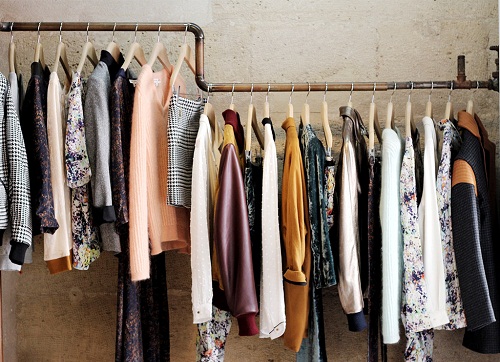 ecopreneurs are launching environment-friendly collections. Fashion marketers are also introducing sustainable marketing trends by creating awareness-building and educational campaigns on social media platforms. They are expanding their narrative beyond PR guidelines to unveil details about clothes’ manufacturing process. This has emphasized the importance of transparency in the industry besides boosting ethical fashion practices.
Recently, a famous international brand was lauded for its new collection made entirely from recycled wool and organic cotton, along with other fibers. Another brand was appreciated for making its list of certifications, first-tier suppliers, and fabrics. Many upcoming brands are also engaged in light-hearted conversations with their audiences through brand campaigns. They are creating awareness about sustainable fashion through traditional, digital and social media campaigns.
Introducing sustainability in fashion curriculum
Despite sustainability becoming a buzzword in the last few years, the fashion industry still has a long way to go in terms of becoming completely sustainable. It needs to introduce sustainability to New Age entrepreneurs during their learning stages. It also needs to attract new students by offering incentives like access to mentoring, funding, other services.
The industry also needs to collaborate with new entrepreneurs and encourage them to create sustainable fashion. They need to be enticed with better policies, lucrative business environments, and better pricing to help create safer, stronger and sustainable future of fashion.
Vietnam textile and garment exports to decline by 14%
As per statistics by the Ministry of Industry and Trade, Vietnam’s textile and garment exports are predicted to decline by 14-15 per cent year-on-year to $ 30-31 billion in 2020.
During the first 10 months of this year, the textile industry’s export turnover declined by 9.3 per cent to an estimated $24.76 billion compared to the same period last year.
Addressing a recent working session to seek solutions to difficulties facing the industry amid the health crisis, Prime Minister Nguyen XuanPhuc suggested the sector strengthen application of digital technologies and make effective use of FTAs.
The ministry said textile enterprises need to take measures, as well as adjust their production activities and business forms to suit the fluctuations of the market due to the severe impacts posed by the COVID-19 pandemic.
Attention should also paid to exploiting the domestic market and forming production chains meeting regulations of origin stated in free trade agreements that Vietnam signed with partners, it noted.
The Government leader also emphasized the need to develop modern and environmentally friendly industrial parks serving the textile and garment industry, and application of circular economy.
UK scientists launch project to reduce environmental impact of textiles
Scientists at the University of York and the Royal College of Art have launched a project to reduce the environmental impact of the textile industry in the UK.
The new £5.4 million project involves researchers at York, alongside the Universities of Leeds, Manchester, Cranfield, Cambridge, and University College London. These researchers will use household waste, crop residues and used textiles to develop new products that can be produced in the UK.
The project is based on a technology developed by a team at the University of York’s Department of Biology, which uses enzymes to deconstruct materials containing cellulose, such as natural and semi-synthetic fibres, crop residues, and solid waste products.
The enzymes help breakdown these materials into simple sugars, which can then be converted back into new cellulose by bacteria. This new cellulose is used to spin fibres that can be woven to produce high quality textiles to supply the UK’s fashion and clothing sector.
The research will form part of the Royal College of Art’s Textile Circularity Centre (TCC), funded by the UK Research and Innovation (UKRI). The Centre supports better social, economic and environmental outcomes through an interdisciplinary consortium of partners from academia, industry, NGOs, and the public sector.
Shima Seiki has launched its own yarn sourcing web service known as the ‘yarnbank’ yarn sourcing web service.
Yarnbank is the world’s first online web service for searching and viewing the latest yarns, developed with cooperation from yarn companies from around the world. Registered users have free access to the yarnbank archive of yarn information and digital yarn data. Users can also download yarn data for free, for use in fabric simulation and virtual sampling on SDS-ONE APEX4 design system as well as APEXFiz subscription-based design software likewise announced last month. Users can thereby avoid the need to scan yarn on their own. By using yarn that is available for actual production, users can further rest assured that their simulations created using yarnbank are not merely realistic images but accurate representations using yarn that can actually be purchased and used in production. Such clear communication is possible with yarnbank by bringing together each player in the supply chain—spinner, knit manufacturer and apparel company—and connecting them digitally to eliminate trial-and-error sample making that is the legacy of obsolete analog fashion production.
With its design system and software, SHIMA SEIKI has traditionally promoted design simulation and virtual sampling as an essential part of its “Total Fashion System” concept wherein virtual samples replace physical samples in an effort to reduce time, cost and materials wasted in the sample making phase, further realizing overall efficiency and reduced waste for a sustainable manufacturing supply chain. Now, with the launch of yarnbank, virtual sampling on SHIMA SEIKI design software provides even more effective digital transformation (DX) for the fashion industry.
Iran’s clothing exports to increase by 30%
As per Iran’s Textile and Apparel Production and Export Union, the country’s clothing exports are expected to increase by 30 per cent during the eight months ending November 30. These exports totaled $35 million in the five months to August 21.
Businesspeople from neighboring countries like Iraq, Afghanistan and Central Asian countriespurchase Iranian clothes in rial and transport them to their countries either legally or illegally, which form of export does not benefit local producers.
Hence, strict supervision needs to be exercised at free trade zones and border markets to safeguard domestic producers’ interests, said MajidNami, an official of the union.
Garment production has registered a 70 per cent growth since the beginning of the current year to November. 20 compared with the corresponding period of last year.
The ban on import of foreign clothing brands, closure of borders due to the outbreak of coronavirus and decline in smuggling contributed to this success, he added.
APTPMA hails Textile Policy 2020-25
All Pakistan Textile Processing Mills Association, (APTPMA) has hailed the textile policy 2020-25 as being textile-friendly, investment-friendly, and export-oriented. The association opines that the policy will help domestic and export industry byreducing production costs.
The policy proposes to provide electricity at 7.5 cents instead of 9 cent for the textile sector, followed by RLNG at $6.5 per mmbtu and domestic produced gas at Rs786 per mmbtu. It aims to reduce the input cost of textile and clothing sector and make it competitive with the regional players.
The proposed package carries special duty-drawback rates, rationalisation of duty on textile value chain and subsidy on long-term loans and development subsidies. The focus of the policy is to enhance the productivity and competitiveness of the textile sectors.
The APTPMA office-bearers said that prior to its final approval by the cabinet it must be ensured that incentives/relief being announced in the policy should cover all indirect and direct exporters and we assures the government that implementation of the textile policy in letter and spirit will ensure the doubling of textile exports from $ 13 billion to $ 26 billion in next five years.
Luxury sales to decline 23 per cent in 2020: Bain & Allagamm
As per a report by Leatherbiz, luxury industry analysts at Bain and Altagamm estimate the industry to decline by 23 per cent to €217 billion in 2020 as compared to 2019. This will represent the first decline for this sector since 2009. As per analysts, 2020 has changed the way consumers live and shop and the things they value. There has been a profound decline in tourism with most tourists remaining at home. This has changed not just their mode of luxury shopping but also the reasons behind it.
Online shopping for luxury goods has soared, doubling its share of the market to 23 per cent in 2020 from 12 per cent in 2019. The analysts expect luxury shopping to recover by 2022 or 2023. They estimate market to recover 50 per cent of the profit that brands have lost in 2020. However, revenues are likely still to be below 2019 levels.
Bain and Altagamma expect recovery to gather pace over the next three years, with the market returning to 2019 levels by the end of 2022 or early 2023.
Kenya signs post Brexit deal with UK
With barely a month to the December 31, 2020 end of its transition from the European customs union, Kenya has signed a post Brexit deal with Britain to allows it access the British market on duty and quota-free basis. The new Kenya-UK trade deal is expected to be used as a model or manuscript for future negotiations between the UK and other continental sovereigns. The deal gives Kenya’s EAC partners a five-year period to join the pact while keeping similar terms. Kenya also safeguards its own markets from a disproportional impact of the tap such as the dumping of UK goods domestically.
Moreover, the deal includes the gradual reopening of the country to UK goods over the course of 25 years but with a cap of an 82.6 per cent on the size of market open to the trade. A seven-year moratorium to opening up trade further insulates Kenya’s nascent industries including agriculture and manufacturing.
The deal is expected to see Kenya grow its volume in value of trade with the UK. Kenya is also negotiating with the US to reach a new Free Trade Agreement (FTA). The nature of the deal couldn’t however been further from the pact reached with the UK as concerns continue to be drawn from various quarters.
For instance, Mukhisa Kituyi, Secretary to the United Nations Conference of Trade and Development (UNCTAD), has warned Kenya against walking into a trap as the US seeks terms favoring its own industries over local ones. Kituyi has questioned the premise of the deal arguing Kenya already fails to take full advantage of its existing free market to the US under the Africa Growth and Opportunity Act (Agoa).
Years since the implementation of the pact, Kenya still has apparel as its biggest export to the US in spite of having the eligibility of exporting nearly 1,000 products under Agoa.
Angelo Bague, Levi’s teams up for vintage collection
Angelo Bague, Founder, Awake and former Brand Director, Supreme has teamed up with Levi’s to launch a limited-edition collection centered around Levi’s Authorized Vintage lineup. The collection includes classic garments like Levi’s Trucker Type III Trucker jackets and 501 jeans, upcycled with ’90s design influences.
As per a Sourcing Journal, this collection, Baque has created a collage of patchwork stripes, polka dots, animal prints and other patterns to add vibrant colors to the vintage garments. Each patch of shirt fabric has been stitched onto the denim using black thread which creates a perfect homemade effect.
The campaign launched to advertise this collection has been photographed by Quil Lemons. The campaign narrates the untold story of Black families and has been shot in Philadelphia. It reflects Levi’s latest sentiments in support of Black and minority communities.
Pakistan’s knitwear, RMG exports grow in the first four months of FY 2020-21
Pakistan’s knitwear exports grew by 12.30 per cent during the first four months of current financial year as compared to the corresponding period last year, states data Pakistan Bureau of Statistics. As per the data, Pakistan exported knitwear worth $1.183 billion from July-October 2020-21 compared to $1.053 billion during same period last year.
The country’s readymade garments exports grew 4.6 per cent during the period from July-October, 2020-21. Its exports of bedwear during the first four months of this financial year grew 95 per cent to 166,268 metric tons valued at $818.129 million of same period last year. Meanwhile, the country earned $195.662 million by exporting other textile material as compared to exports worth $126.810 million in same period of last year, it added.
The data revealed that exports of other textile material grew by 54.30 per cent during the last four months of current financial year as against the exports of the same period last year. However, exports of raw cotton, cotton yarn and cotton carded remained on down track during first four months of current financial year as compared the same period of last year.











