


FW
Regenerative agriculture to benefit fashion and textile industry: Report
The fashion and textile industry will benefit from transiting to regenerative agriculture, says a new report from Textile Exchange. The report points to the rising interest in regenerative agriculture amongst brands. The no one-size fits all approach is gaining momentum in the industry as brands are analyzing the growing opportunity to engage meaningfully, says the report.
Titled ‘Regenerative Agriculture Landscape Analsis, the report is sponsored by Kering, J Crew Group and CottonConnect, it aims to give fashion and textile industries a framework and toolkit to credibly understand, implement and describe the benefits of work in the space. The report’s initial ‘Matrix of Regenerative Programs and Engagement Pathway’ equips brands to ask the correct questions to identify and support initiatives that align with their values. It also addresses an important gap seen in the discussion–the need to acknowledge the indigenous and Native roots of this concept and to include racial and social justice as critical components of any system termed regenerative.
Textile Exchange calls on brands to invest in inclusive and credible regenerative agriculture projects to boost the resilience of the industry within the planetary boundaries. Brands should also ensure that the direct stewards of the land, including Indigenous people, communities of color and farmers or their chosen representatives, have an active decision-making role in any regenerative project from the start, adds the report.
Maharashtra textile policy 2018-23 to benefit government, weavers
The state Textile Policy 2018-23 will bring about a revolution in the sector by benefitting both the government and the weavers, says Aslam Sheikh, Textile Minister, Maharashtra. He aims to understand the issues faced by weavers in the state and address them in the new textile policy to be framed by in the next one year.
The visited the powerlooms in Bhiwandi, Malegaon, Solapur and Ichalkaranji to discuss the issues faced by weavers and address the same in the next policy. A leading state in India, Maharashtra has thousands of textile and apparel factories. The state government aims to drive the textile sector with new Textile Policy 2018-2023.
Announced in February 15, 2018, the policy aims to create over 10 lakh jobs in the five years and double the farmers’ income by the year 2023. It also aims to attract investment worth Rs. 36,000 crore.
Apparel export revenues surge by 24 % in 2021
Buoyed by strong orders and revival of global retail industry, India’s apparel export revenues surged 24 per cent in 2021 over 2020. Export evenues increased to $15.21 billion during calendar year 2021 as compared to $12.27 billion in 2020. Revenues shrunk 24.50 per cent due to the pandemic in 2020 that wreaked havoc in the global apparel industry. Compared to 2019, export revenues declined by 6.43 per cent in 2021. The US emerged as top apparel export destination for India during 2021 with shipments totaling $4.78 billion worth of garments, noting 44.93 per cent Y-o-Y growth.
Apparel exports to the US surpassed the figures clocked during pre-pandemic year 2019 when US imported garments worth $4.34 billion. Not just 2019, India’s export to the US in 2021 remained the best export performance of last one decade, signaling a strong rebound in its top export destination after a devastating pandemic.
Exports to third top export destination UK increased 16.68 per cent to $1.31 billion in 2021, while the shipment values dropped by 17.44 per cent as compared to 2019.
India’s cotton stocks decline by 0.43 per cent
Cotton stocks in the country declined -0.43 per cent at 36870 on profit booking after removal of import duty on cotton was sought by the industry in Budget 2022-23. In recent sessions, cotton prices had surged amid the low cotton yield this season due to excessive rains and the pink bollworm attack that resulted in the crop selling at over 60 per cent higher than the minimum support price (MSP). As per the Cotton Corporation of India (CCI), unseasonal rains in September last year followed by pink bollworm attack affected the crop’s quality and yield.
In the current season, cotton acreage in Gujarat increased to 22.53 lakh hectares in the Kharif season 2021-22 as against 22.78 lakh hectares in the previous season. Atul Ganatra, President, CAI, believes, higher demand and lower output could bring down stockpiles at the end of the current season to 4.5 million bales from 7.5 million bales a year ago.
Currently, the market has witnessed a drop in open interest by -2.05 per cent to settle at 6536 while prices down -160 rupees, now cotton is getting support at 36630 and below same could see a test of 36390 levels, and resistance is now likely to be seen at 37040, a move above could see prices testing 37210.
India: Birla Cellulose targets net zero emissions by 2035
Pulp and fiber business of Grasim Industries, Birla Cellulose aims to reduce its net carbon emissions to zero across all its operations by 2035. As per a Textile Value Chain report, the company also aims to reduce its greenhouse gas (GHG) emissions intensity to half by 2030 from the baseline of 2019. Birla Cellulose’s commitment to carbon neutrality and GHG reductions includes scope 1, scope 2, scope 3 emissions, and the carbon sequestration in managed forests and are derived using science-based methods. Birla Cellulose’s net-zero announcement aligns with the United Nations Sustainable Development Goals (SDGs) 7 & 13 on climate change and affordable and clean energy.
HK Agarwal, Managing Director Grasim Industries and Business Director, Birla Cellulose says, climate target is at the core of their business strategy that aims to address climate change-related risks and adapt to changing consumer preferences for more sustainable, nature-based, and low emission products. The company aims to increase use of renewable energy in its processes, invest in innovative low emission technologies, target net positive carbon sequestration in its managed forests, and focus on circular fashion.
Currently, around 40 per cent of the energy for global operations of Birla Cellulose comes from renewable sources. In addition to this, in an assessment carried by E&Y in 2019, the carbon sequestered in its directly managed forests exceeded the entire scope 1 and scope 2 emissions from global sites during the year. Birla Cellulose leads the industry in sustainability practices such as sustainable forestry (ranked #1 in Canopy Hot Button Ranking 2021) and has set the industry benchmark for the lowest water intensity for viscose and lyocell production.
Union Budget 2022-23 will have a positive impact on Indian textile sector, says industry

The fourth Union Budget presented by Finance Minister Nirmala Sitaraman yesterday has been hailed as progressive and people-friendly by many leaders including Prime Minister Narendra Modi. In particular, the budget provides a huge fillip to the domestic textile industry. While it raises import duties for certain fabrics that can be produced domestically, it exempts custom duties on import of embellishment, trimming, fasteners, buttons, zipper, lining material, specified leather, and packaging boxes needed by bonafide exporters of handicrafts, textiles and leather garments, leather footwear and other goods.
Budget allocation to attract fresh investments in textiles
A capital allocation of Rs 133.83 crore has made for the Textile Cluster Development Scheme. The budget also increases allocation for research and capacity building in textiles by 73.4 per cent to about Rs 478.83 crore in 2022-23, as compared to revised budget allocation of Rs 276.10 crore in 2021-22. The recently announced Production Linked Incentive (PLI) scheme and PM Mega Integrated Textile Region and Apparel (PM MITRA) scheme were allocated Rs 15 crore each for 2022-23. This will boost fresh investment of Rs19,000 crore in the textiles sector over the next five years, besides creating over 7.5 lakh additional job opportunities in this sector, believes the FM.
Another Rs 105 crore has been allocated for 2022-23 towards Raw Material Supply Scheme. This will not only generate employment but also boost production in the medium to long term through multiplier-effects, Sitaramanan highlighted.
Budget to wipe out CCI’s losses
The budget has been praised by many leaders across the textile and apparel industry. Ravi Sam, Chairman, Southern India Mills Association (SIMA), opines the budget will help India become a superpower in coming decades. Addressing structural issues on taxation and raw materials enhances the overall competitiveness of textile industry, he feels. Sam also approves the allocation of Rs 17,683 crore to the Cotton Corporation of India (CCI) for procuring cotton for the years 2021-22 and 2022-23 under the Minimum Support Price. He opines, this will wipe out the corporation’s losses incurred for procurement of over two crore bales of cotton during the last two years that had greatly benefited the farmers to sustain the area under cotton. However, he urges the government to exempt ELS cotton and sustainable cotton from 11 per cent import duty as such specialty cotton is not produced in the country. He also urged the Government to allow duty free import of cotton to the actual users with some quantitative restrictions for the off season, as the country is likely to face shortage of cotton to the tune of 40 lakhs bales.
Tax exemption to enhance fabrics market
MA Ramaswamy, Chairman, PDEXCIL, appreciates the exemption offered on certain fabrics, embellishments and accessories. This will help the fabric and the made-up sector. The PLI scheme for textiles will also help boost employment, he adds. Appreciating the initiating of ‘Ease of Doing Business 2.0’ with industry stakeholders, Prabhu Damodaran, Convenor, Indian Texprenuers Federation says, the move will help the federation improve its ranking. The extension of tax incentive period for new manufacturing units by a year will motivate industries regarding new Capex, he adds. He also hailed the government’s move to prioritize the use of technology for cotton crop assessment. This will help the industry get good market place intelligence.
The Clothing Manufacturers Association of India (CMAI) too hails the removal of import duty on accessories, embellishments, trimmings, buttons, etc, a long-time demand of the industry. CMAI believes this would particularly help apparel exports to be more competitive. The Associations has welcomed the budget as a growth-oriented with several measures that encourages capital expenditure and other growth-related activities. Extension of the ECLG Scheme for MSMEs by a year will help the apparel industry, since many units are still struggling to overcome the adverse effects of the pandemic. However, it is unfortunate that the enhanced outlay for the scheme is restricted only for the hospitality industry – as the retail industry was as badly impacted in the pandemic. Even under the current wave, retail continues to be impacted with lockdowns, partial closures, limited working hours, etc, CMAI said in a press release.
EU’s clothing imports crawl as pandemic holds back growth

The pandemic that erupted in 2020 brought entire businesses across the world to a standstill. The crisis affected the apparel sector most due to its discretionary nature. The clothing industry survived on rising demand for PPE and other health and well-being related clothing in these times of crises. As per an Apparel Resources report, the world’s largest importer of apparel and textiles, the European Union experienced serious growth turbulence during the year. As per WTO estimates, on an average, the EU accounts for nearly 21 per cent of the world’s apparel and textile imports value.
Eurostat data shows, overall European apparel import declined 13.30 per cent from 2019 to 2020 due to the pandemic. The EU imported 23.70 billion units of clothing in 2020, a meager growth of 0.8 per cent from previous year. From 2016-2019, the EU market grew at an average annual rate of 4.7 per cent. It is slowly recovering its growth pace though recurrent COVID-19 outbreaks are holding it back.
China’s import share declines in 5 years
Currently, EU imports clothing from both within the Union and outside. Imports from within the Union account for 50.80 per cent while from outside its 49.20 per cent. Clothing imports from EU are mainly sourced from Asian countries such as China, Bangladesh and Turkey. These three account for 27.3 per cent of all apparel imports into the EU. China dominated EU’s apparel imports with 12.2 per cent value in 2020; followed by Bangladesh 9.5 per cent; Turkey 5.5 per cent.
From 2016-2020, China’s import share declined 6.6 per cent and is expected to drop further in coming years due to an acute labor shortage, and an ongoing trade war with the US. The newly introduced environmental legislations following China’s signing of the Paris Agreement on Climate Change, is also likely to impact exports.
Accounting for 72.9 per cent of total apparel import market in EU, Germany, France, Spain, Italy, the Netherlands and Poland are top six apparel importers in the EU. Germany topped with an import value of €30.2 billion in 2020 followed by France, Spain, Italy, the Netherlands and Poland. Poland’s imports are growing at a rapid rate of 13.3 per cent every year, making it the sixth largest importer of apparel in the EU.
Pants top import as prices vary across member-states
Prices of apparels imports by EU member states varied considerably across the Union. The highest prices were paid by Scandinavia while the lowest were paid by South-East Europe. Eurostat figures show, prices of Latvia’s imports increased 36 per cent compared to overall import prices of the EU. Pants were the largest apparel product category imported in 2020. The EU imported €28.60 billion worth of pants or trousers during the year; followed by shirts and blouses, coats and jackets, knitwear and dresses and skirts which together accounted for 78.30 per cent of all apparel imports to the EU.
In the last five years, the import value of dresses and skirts grew on an average 5.20 per cent each year while imports in the other top five categories grew on an average 1.70 per cent each year. Imports of sportswear category grew 2.80 per cent while imports in the shirts and blouses, denims, suits and ensembles categories declined.
Improved facilities and products can help India tap $10 bn global textile market
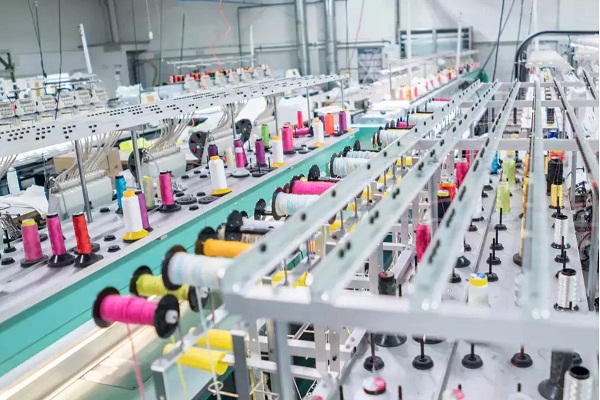
India’s textile industry has been significantly impacted by the COVID crisis. The pandemic has caused an acute labor shortage with rising cotton prices adding to its woes. Smaller nations like Vietnam and Bangladesh are overtaking India in the textile segment even though India’s textile exports surged 41 per cent from April-December 2021. Hence, the sector needs to gain in competitiveness to deal with emerging new challengers.
A report by the Confederation of Indian Industry (CII) and global management consulting firm Kearney in October last year had urged textile leaders in India to aim for exports worth $65 billion during the next five years. The country can especially benefit from the growing ‘China Plus One’ sentiment amongst global companies looking to diversify sourcing and manufacturing from China. KK Lalpuria, Executive Director & CEO, Indo Count Industries believes, India has a clear opportunity to benefit from diversifying of sourcing by global textile brands and retailers. Even if India is able to gain 1 per cent share from this shift, it would open a $10-billion market.
Currently, India produces $140 billion worth of textiles and apparels and exports around $40 billion. Over the next five years, the government plans to increase India’s textile exports to $100 billion from $34 billion (2019-20), saysthe commerce ministry.
Polices can help achieve targets
Achieving this export target needs proper framework, long term policies and better planning by Indian entrepreneurs, says Lalpuria. Brands and retailers looking to de-risk operations need to ensure smooth functioning of supply chains. They also need to boost supply chain efficiency to increase value addition in raw cotton or yarn exports.
Neelesh Hundekari, Partner, Kearney adds, growing China Plus One Sentiment amongst global brands and retailers gives India with an opportunity to boost apparel exports to $16 billion. Exporters can target $4-billion in revenues by boosting fabric exports.
Exporters can also boost man-made fibers and yarns shipments by $3 billion besides targeting a $4-billion increase in home textiles exports. They can aim for a $2 billion jump in technical textiles exports as demand is increasing. Signing new FTAs can also help exporters leverage the current growth opportunity.
Digitization, sustainability can offset machinery import costs
One major impediment in growing textile exports is the high import duty on textile machinery. To import textile machinery, India needs to pay 27 per cent duty plus an 18 per cent GST. This leads to 45 per cent additional increase in capex, adds Hundekari. Digitization, design capabilities as well as sustainability and traceability can help India boost textile exports, says Rahat Wahi, Partner, Deloitte India. Companies need to be transparent in raw material sourcing and production. They need to maintain the quality, sustainability and timeliness of exports, he adds.
Exporters are demanding a more broad-based Production-Linked Incentive (PLI) Scheme in textiles. They are also urging for a reduction in working capital pressures, implementation of new schemes and building scale for the sector. To compete with competitors like Bangladesh and Vietnam, India also needs to create new manufacturing facilities and boost product quality, adds Wahi.
UNIDO, Nudie Jeans collaborate on pilot recycling project in Tunisia
United Nations Industrial Development Organization (UNIDO) and Swedish denim brand Nudie Jeans have since 2020 collaborated on a pilot project in Tunisia, under the European Union (EU)-funded SwitchMed program. The project demonstrates viability of sourcing and reintroducing recycled textile fibers from second-quality products to fabricate new jeans. Till date, the pilot project has recycled 6,530 pairs of second quality jeans into 16,000 new pairs of jeans with a composition of 20 per cent of recycled cotton.
Together with Nudie Jeans’ local suppliers, the collaboration demonstrates the business case for high-value recycling of second quality jeans in the Tunisian textile and clothing value chain. According to a textile waste mapping study from UNIDO, Tunisia’s textile and clothing industry generate over 31,000 tons of pre-consumer textile waste each year, out of which over half is either 100 per cent cotton waste or ‘cotton rich waste.’ A second phase of the collaboration will pilot the recycling of post-industrial textile waste like cutting scraps.
NTU launches first ever ‘Pakistan Textile Portal’
The National Textile University (NTU) recently launched the ‘Pakistan Textile Portal’ to facilitate the sector’s growth. As per Business Recorder, the portal was inaugurated in Faisalabad Chamber of Commerce & Industry (FCCI), in a simple ceremony, Atif Munir Sheikh, President, FCCI underlined the importance of the textile sector in the national economy and said that Faisalabad is the iconic representation of the textile sector.
He urged industrialists and businessmen related to the textile sector to switch from traditional textile to technical textile and in this connection NTU could also extend its services. Hafsa Jamsheed added, registration on the portal is totally free and will help the SME sector to showcase their products by uploading detailed information about their quality brands with their capacity of manufacturing. She urged the government to hold awareness sessions to popularize this portal and convince exporters to avail this free facility.
She said other related organizations could also be encouraged to arrange awareness sessions while its scope would be expanded gradually up to Pakistan and then throughout the world. She urged for the translation of information provided on this portal into multiple languages to ensure its acceptability in different regions and countries. She said that this portal could also be utilized for B2B and B2C negotiations and transactions.











