


FW
Bangladesh hopes GSP + privileges will continue despite LDC graduation
Despite graduating from LDC category, Bangladesh hopes to get the GSP+ privilege.
TapanKantiGhosh, Commerce Secretary said, Germany will continue to give GSP+ privilege to Bangladesh as it moves out of the LDC status in 2026.Ghosh was addressing a ‘Corporate Due Diligence Obligations for the Prevention of Human Rights Violations in Supply Chain’ in Dhaka by the Bangladesh Employers’ Federation (BEF) and Metropolitan Chamber of Commerce and Industry (MCCI).
The German Act will not be directly applicable to Bangladesh, it would become a factor to address when its components were incorporated in the GSP+ incentive, he added.
Germany recently enacted an act on corporate due diligence obligations in supply chains even if the act will come into effect in 2023.
WTO revises outlook for world trade volume in 2022
The World Trade Organization (WTO) has revised its outlook for world trade volume in goods to 3 per cent in 2022 from the previous projection of 4.7 per cent in October. The outlook is marked by uncertainties caused by the Russia-Ukraine war and COVID-led economic downturn, says Ngozi Okonjo-Iweala, Director General, WTO. A strong consumer demand led to world trade volume growing by 9.8 per cent last year. However, this year, the double whammy of the pandemic and the war has once again lowered growth expectations, he adds.
Lockdowns in China are once again disrupting seaborne trade leading to shortages of manufacturing inputs and higher inflation, he adds. Given this volatile situation, WTO economists estimate merchandise trade volume in 2022 will either sink to 0.5 per cent or grow to 5.5 per cent.
As per a Women’s Wear Daily report, global trade value increased 26 per cent to $22.4 trillion in 2022, with China’s trade value growing 30 per cent to $3.36 trillion, followed by the US with 23 per cent growth to $1.75 trillion and Germany with an 18 per cent gain to $1.63 trillion. The value of apparel exports increased by 21 per cent to $550 billion in 2021, adds Coleman Nee, Senior WTO economist. The overall value of apparel trade was above the 2019 pre-COVID-19 crisis levels. China registered a 24 per cent increase to $176 billion, he adds.
Similarly, exports of Bangladesh and Vietnam surged by around 24 per cent and 11 per cent, respectively with their shipments values exceeding $30 billion each. Other apparel exporters whose exports surged last year included Turkey whose exports surged by 22 per cent to $18.7 billion; Cambodia, whose exports increased 8 per cent to $8 billion; India which reported a 24 per cent surge in exports to $16.1 billion and Indonesia whose exports increased 23 per cent to $9.3 billion. The exports of Sri Lanka, Egypt, Jordan, Mexico, Canada, El Salvador, Nicaragua, Guatemala and Peru, also grew by double digits.
In contrast, apparel exporters that posted double-digit contractions in 2021 included sanctions-hit Myanmar (Burma), and the United Kingdom.
TEA wants additional 20% loan support for MSMEs
The Tiruppur Exporters' Association (TEA) has urged an additional 20 per cent loan support for the labor intensive MSME driven garment industries under the Emergency Credit Line Guarantee Scheme (ECLGS). This loan support will help MSMEs that make up majority of RMG industry and are currently facing liquidity crisis, owning to a surge in inputs costs, says Raja Shanmugam, President. The ongoing economic crisis in Sri Lanka can boost India’s textile exports if the government resolves current problems facing the industry, adds Shanmugham.
The surge in cotton and yarn prices places the Indian textile industry in a disadvantageous position. A level playing field by lifting the import duty on cotton enables it to double turnover from the Tiruppur industry by 2024.
Vietnam textile and garment exports total $8.84 billion in Q1 FY22
Vietnam’s textile and garment exports increased 22.5 per cent in Q1 FY22 to $8.84 billion. As per reports, many garment and textile companies in Vietnam were impacted by labor shortages during the pandemic which disrupted production and business activities in the country. Around 1,719 employees of Hoa Tho Textile and Garment JSC tested positive last month, says Tran Tuong Anh, Deputy Director-General. The company encountered many difficulties in arranging production plans, compelling it to reschedule delivery times, rearrange production plans and prioritize urgent orders, he adds.
The company also had to arrange different workplaces and canteen for the infected employees, he adds. 8-3 Textile Co also struggled with labour shortages during the COVID outbreak. The company had to rotate workers’ shift to ensure continuation in production and business activities.
Aligro JSC had to ensure its companies social and welfare interests to make them feel secure, adds Hoang Van Linh, Chairman, Hao Tho Textile and Garment JSC directed its infected workers to immediately stop work. It also provided them finance and meals post their return to factories. From a Zero COVID policy, Vietnam has changed its strategy to a safe and flexible adaption and effective control of the pandemic. The textile and garment industry has received orders till end of the year and is expected to earn $43 billion in exports this year.
Morocco Industry Ministry adds fabrics to new conformity list
Morocco’s Ministry of Industry and Trade had added fabrics to the list of imported products required to comply with quality and safety regulations in the Verification of Conformity Program introduced in 2020. Depending on the type, the products will be verified either at the country of export, before shipment or at their destination, on arrival of the cargo. The regulation is already in force but importers of clothing fabrics can still bring goods into the country without a Certificate of Conformity (CoC) until May 7, 2022.
The new rules say, clothing fabrics need to comply with the technical regulation standards (NM 09.0.000:2018) of Morocco and obtain a CoC before entering the Moroccan market. The certificate must be presented upon the goods’ arrival and is required before the goods can clear customs. Products that do not conform with conformity assessment may be subject to a second analysis at the request of the importer. However, the ministry will grant this measure only if it consists of two samples taken from which the test results are done. Moreover, if at least one of the two results proves to be non-compliant, the goods will not be authorized to access the market.
Government selects 61 companies as beneficiaries of PLI scheme
UP Singh, Textile Secretary informs, the Union government has selected 61 of the 67 applications with an investment potential of over Rs 19,000 crore under the production linked incentive (PLI) scheme for textiles. The selected companies are expected to make investments worth over Rs 19,077 crore in coming years and the projected turnover would Rs 184,917 crore, adds Singh.
The government had approved the PLI Scheme for textiles products – MMF Apparel, MMF Fabrics and Products of Technical Textiles in December last year. The scheme aimed to enhance India’s manufacturing capabilities and exports with an approved financial outlay of Rs 10,683 crore over a five-year period. Approved in September, the scheme aims to expand the MMFs and technical textiles segments’ value chain to help India regain its dominant status in global textiles trade. The textile ministry has been accepting online applications for textiles on from January 01, 2022.
Haryana government tapping state textile leaders for investments in Ethiopia
Anant P Pandey, Secretary, Foreign Corporation Department, Haryana says, the department will soon consult textile leaders in the state regarding the feasibility of trade and investment with Ethiopia. Consultations will outline the cooperation in trade and investment between Haryana and Ethiopia.
The department will organize meetings with industry representatives to know their opinion on the issue. Recently, it signed the Framework of Collaboration (FFC) agreement with the Ethiopia Investment Commission (EIC). The agreement aims to bolster trade and investment between Haryana and the Democratic Republic of Ethiopia, says Pandey.
The Foreign Cooperation Department at Gurugram and Chandigarh organized a two-day meeting to facilitate an interaction between the seven-member Ethiopian delegation led by Daniel Teressa, Deputy Commissioner, EIC with the business representatives of Haryana in the textile and garment sector.
Bangladesh regains position as top apparel sourcing destination for the US

Outshining rivals like China and Vietnam, Bangladesh regained its lost position as the top apparel sourcing destination for the United States in 2021. OTEXA statistics show, Bangladesh exported 2.6 billion sq. mt. (SME) equivalents of apparels to the US in 2021. Export volumes surged 29.35 per cent to 2.60 billion SME during the year. As per a Textile Today report, Bangladesh emerged the third biggest apparel sourcing destination for the US after China and Vietnam.
Entrepreneurs’ resilience pushes up performance
Shovon Islam, Chairman, Standing Committee on Press and Publicity, BGMEA’s says, Bangladesh has done an exceptional job in the US apparel market. Despite COVID and supply chain disruptions, textile and apparel industry entrepreneurs and workers showed tremendous reliance, helping it to grow in the US market. Despite shipment timings from Bangladesh to the US being one of the highest, it could offset pandemic challenges and recover in real time, explains Islam, who is also the Managing Director of the Sparrow Group. The RMG industry helped maintain health standards of workers and employees, he adds
Competitors record marginal export growth
Meanwhile other Asian apparel manufacturing countries suffered from extensive lockdowns and took longer to recover, he adds. For instance, China’s exports to the US grew only 0.45 per cent during the year as apparel sourcing brands and retailers looked to cut dependence on China. Pakistan emerged as most competitively priced garment supplier to the US in 2021. Per unit price of Pakistan’s garments exported to the US was $2.48.
Exports of other major apparel suppliers like Cambodia, Indonesia, India and Vietnam also surged past pre-pandemic levels. Mexico’s apparel exports grew 4.42 per cent from its pre- COVID pandemic level o 826m SME.
China leads export recovery
China leads apparel exports recovery to the US. Its exports surged around 25 per cent to 33.14 billion SME in 2021 from 26.50 billion SME in 2019. Meanwhile Bangladesh’s exports grew 55.26 per cent, Indonesian exports by 21 per cent and India apparel exports surged by 58.73 per cent in 2021 from 2019.
India slashes import duty on cotton as rising prices affects textile production
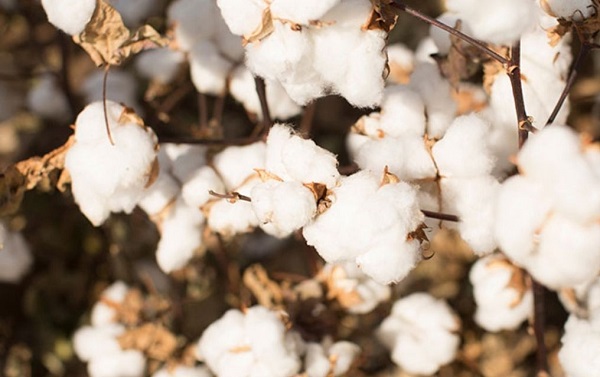
Ongoing political crisis in Europe, Sri Lanka and Pakistan, rising energy and other prices in Russia and other EU countries, and ripple effects from the COVID-19 pandemic, are having a deeper impact on the Indian textile industry, says Seshadri Ramkumar, Professor, Texas Tech University, US. The textile industry in India was in a bind due to rising cotton prices and taking heed the Indian government has slashed import duty on cotton for a specific period effective from April 14 to September 30, 2022. The news was welcome by the industry as they feel the domestic cotton market will now have to offer competitive prices for cotton.
High cotton prices causes 20% drop in production
In past one year, cotton prices had gone up almost 80 per cent which had badly affected the textile industry’s margins. Most firms were finding it tough to pass on the surge in raw material costs to their consumers. Most of India’s cotton cultivation is dependent on monsoon, which is mostly erratic. Gujarat is the country’s largest producer of cotton, with Maharashtra, Punjab, Haryana, Rajasthan, Madhya Pradesh, Andhra Pradesh, Karnataka, Tamil Nadu, and Odisha being the other producers. As per Cotton Association of India, price of ICS-105 variety of cotton in Gujarat was up almost 70 per cent from previous year. As for other varieties, the rise was nearly 80 per cent. The Ministry of Agriculture has estimated that cotton production will dip by over 3 per cent in the 2021-22 crop year.
The rise in cotton prices created havoc in Indian textiles sector with production declining and work in mills reducing each day. The political crisis in Sri Lanka has led to the diversion of many apparel orders to Tiruppur. However, the high cotton price in India complicated the situation, said Velmurugan Shanmugam, General Manager, Jayalakshmi Textiles.
Mills demand slash in import duty
With weavers unwilling to pay higher prices for cotton yarn, production in many Indian mills dropped by 20 per cent resulting in loses, Shanmugam explains. The present situation is worse than 2011 when cotton prices were steeper, he adds further. In fact, the past 15 months witnessed companies failing to meet advance order commitments, which is reflecting on their cash flow. Moreover, the garment industry is ruled by MSMEs which are incapable of bearing the burden of high input costs. To help MSMEs cope with liquidity problems, exporters reached out to the Finance Minister, seeking a hike in individual loan limit by up to 20 per cent under the Emergency Credit Line Guarantee Scheme (ECLGS). Textile mills had been urging the government to slash 11 per cent import duty on cotton to help create a level playing field with competing countries like Bangladesh, Vietnam, and Indonesia.
Efficient management, government support required
Rise in prices, and political crisis in some parts of the world has been affecting Indian millers and apparel makers. With reduced crop size in the US and other markets, global cotton prices have been up from 85 cents per pound during the previous season to 120 cents/pound during the cotton season of 2021-22.
Consumers are also concerned about the rising energy cost due to probable embargo on Russian gas and oil by EU countries. They are witnessing the ripple effects of the pandemic in Sri Lanka whose economy has collapsed due to mismanagement for over a decade and heavy foreign debts. Political crisis in Pakistan and Europe due to Russian invasion of Ukraine is further adding to the industry’s woes.
To navigate through this situation, the global textile sector needs to maintain their stock carefully, urge for adequate government support, manage workflow efficient and monitor global situation carefully, Sheshadri sums up.
US consumer prices surge by 8.5% in March
Consumer prices in the United States increased by 8.5 per cent in March compared to a year ago, according to the monthly report by the Bureau of Labor Statistics.
Compared to February, prices increased by 1.2 per cent in March on top of a 0.8 per cent rise in February.
Footwear prices grew by 6.6 per cent in March, year over year, according to data from the Footwear Distributors and Retailers of America (FDRA). This marks the third-fastest year over year increase in about 33 years, trailing behind February’s 7 per cnet increase and May’s 7.1 per cent increase.
The prices of men’s footwear surged by 5.1 per cent while women’s footwear increased by 5.8 per cent and kids’ footwear prices boosted by 11 per cent The rise in prices could be attributed to a variety of factors, especially heavy tariffs on consumer goods like footwear.
High tariffs and epic freight costs are now tripping up consumers with record high footwear prices, says Steve Lamar, President and CEO, AAFA. Apparel prices grew by 16.3 per cent year-on-year in March, making in the standout category for online inflation.











