FW
Colombia to host Kingpins
Kingpins will be held in Colombia, January 24, 2023. This is a global denim supply chain show and the aim is to explore new business opportunities in South America.
A panel-style conversation will be organized with several denim suppliers discussing Kingpins’ role as a trade show and networking platform. The panel will feature an in-depth conversation about Kingpins’ ethos and its efforts to foster a more responsible denim industry, and how Latin America can be part of this mission.
Attendees of the event will be able to explore installations of several Kingpins initiatives, including Kingpins Trend, Most Sustainable Product, One Denim, and Taste of Kingpins Shop, as well as the Circle Book#3.
The show will also feature live music, as well as videos from recent Kingpins shows in Amsterdam and New York. It’s been a long-held dream of Kingpins to expand its reach to Latin America. The hope is that the event will foster connection with South American denim lovers and jeans suppliers who share Kingpins’ values.
Kingpins’s goal is to connect the global denim community and inspire everyone to continually pioneer best practices for people and the planet and build a responsible denim future that is as sustainable as it is successful.
India’s apparel exports rose in December 22, US continued to have largest share: Wazir Advisors’ Report
The latest Wazir Advisors’ latest ‘Apparel Trade in Key Global Markets and India’, reveals in November 2022, the US imported apparel worth $6.3billion which is 15 per cent lower than apparel imported in November 2021. The report also shows, in December 2022, the US’ monthly apparel store sales were estimated at $29.1 billion, which is 20 per cent more than in December 2021. In 2022, sales were 9 per cent higher than in 2021.
Apparel trade in the US, UK and Europe
On a year-to-date basis, US’ apparel imports are 26 per cent higher than in 2021. China’s share in the US market has reduced by 8 per cent since 2019, whereas Vietnam and Bangladesh’s shares have risen by 2 per cent and 3 per cent respectively.
EU apparel imports in October 2022 were 14 per cent higher compared to October 2021. The growth can be attributed to higher price inflation and low base value. In the EU market, China’s share has increased by 1 per cent whereas Bangladesh’s share has increased by 4 per cent since 2019.
The UK apparel imports in October 2022 were approximately 19 per cent higher than in October 2021. On year-to-date basis, the UK’s apparel imports in 2022 were 21 per cent higher than in 2021. Since 2019, China, Bangladesh and Turkey have increased their market shares by 6 per cent, 4 per cent and 3 per cent respectively in the UK.
In September 2022, Japan’s apparel imports stood at $2.7 billion, 8 per cent higher than in September 2021. On year-to-date basis, imports in 2022 were 5 per cent higher than in 2021. Japan’s apparel imports from, Bangladesh’s and Cambodia’s increased 1 per cent each, whereas that of China declined 1 percent compared to 2019.
The overall trend reflects imports from China slowly declining. The main reason is the continually growing anti-China sentiments and the ban on Xianjiang-sourced cotton by the West. Additionally, China’s production costs are no longer the cheapest, paving way for Bangladesh, Vietnam and Cambodia. With much more focus on trends and a planned effort on investments to modernize production, Bangladesh continues to register growth.
Retail sales updates in key markets
In December 2022, the US’ monthly apparel store sales were estimated at $29.1 billion, which is 20 per cent more than in December 2021. In 2022, sales were 9 per cent higher than in 2021. December 2022, the US’ monthly home furnishing store sales were estimated at $6.8 billion, 10 per cent more than same month in 2021. In 2022, sales were 3 per cent higher than in 2021. In the third quarter of 2022, online sales of clothing and accessories registered a growth of 9 per cent over the second quarter of 2021 but it was marginally lower than the sales in the second quarter of 2022.
In November 2022, UK’s monthly apparel store sales were £4.1 billion, which is 3 per cent higher than in November 2021. On year-to-date basis, sales were 21per cent higher than in 2021, mainly on account of low base value. In the third quarter of 2022, online sales of clothing registered negative growth of 6 per cent over the third quarter of 2021 and it was also lower than sales in the second quarter of 2022. The study shows retail in the UK is underperforming compared to the US.
India’s apparel export updates
In December 2022, India’s apparel exports were estimated at approximately $1.5 billion, 23 per cent higher than in December 2021. In 2022, exports were 12 per cent higher than in 2021. In India’s apparel export basket, US’ share has increased 8 per cent whereas the UAE’s and the UK’s share has declined by 3 per cent and 1 per cent, respectively since 2019. The largest chunk of Indian apparel export continues to be towards the US and Europe, combining to make up 49 per cent.
Asian markets throw lifeline for Bangladesh’s RMG exporters

The effect of two-year long pandemic, followed by Russian-Ukraine war and how Western countries are slipping into recession and tightening their purse strings on non-essential items such as clothing. Whilst Bangladesh went all out during the pandemic to maintain uninterrupted supply to the West by not shutting operations, in the end the valiant effort didn’t quite pay off as orders started drying up, leaving the country’s readymade garment exporters high and dry.
Bangladesh’s single largest market US registered a dismal 1.11 per cent growth and the EU showed a 16.61 per cent growth in the first six months of the fiscal year 2022-23. When every penny counted, Bangladesh also saw growth drying up in its exports to Russia with its economy taking a beating. Exporters fetched $180.64 million in the first half of FY23, which was $341.21 million during the same period a year ago, a decline of 47.06 per cent.
Owing to the war, Bangladesh has been missing out on the promising market where shipments nearly touched $1 billion just before the conflict erupted in February. Things turned worse when in early March 2022, due to US sanctions on Russia, SWIFT exited the latter. Payments from buyers in Russia to Bangladesh’s exporters became difficult as both parties were caught unawares. It was a dire situation as industry insiders realised that the traditional Western markets were not only saturated with Bangladesh-produced readymade garments but also a significant increase in demand was quite unlikely.
Asia rescues its own
Based on feasibility studies and reports, Bangladesh’s exporters realised their own region would be their sector’s savior. Whilst the going with the West was good, Asian countries were termed as non-traditional markets for Bangladesh as Vietnam and Cambodia enjoyed better tariff rates from their sister countries. In an interview with a Dhaka-based publication, the president of Bangladesh Garment Manufacturers and Exporters Association (BGMEA) Faruque Hassan said, “We are studying the Asian markets very seriously as part of our roadmap. This is not a normal time for the garment business as consumers in Bangladesh's traditional export markets such as the US, Canada, the UK and the European Union are going through a tough time owing to higher consumer prices driven by the global energy shortage and supply disruptions. So, we are trying to ship more goods to Asia and other emerging markets like those in Latin America, Africa and Australia.”
Exports to non-traditional markets save the day
During this tough time, Asia and other non-traditional markets have kept Bangladesh’s RMG exports afloat with good yields, and as Asia grows richer, Bangladesh feels assured it will experience growth the West can no longer afford to give. Year-on-year, exports to Japan yielded a growth of 42.54 per cent at a value of $754.72 million between July and December 2022. Turkey had started drying up since 2017 when it imposed 11 per cent tariff on garments exported from Bangladesh but rebounded between July and December 2022 with 83.70 per cent growth valued at $117.43 million.
Exports to India surged around 50 per cent to $548.87 million and it climbed 35.66 per cent to $255.49 million to South Korea and 97.52 per cent to $164.85 million in Malaysia, Saudi Arabia was up 41.62 per cent to $104.31 million and exports to the United Arab Emirates by 22.28 per cent to $155.35 million. The shipment advanced was 15.27 per cent to $127.24 million in China, which itself is the largest apparel supplier in the world.
With Asia Pacific region predicted to account for 40 per cent of global men’s and women’s wear, Bangladesh has set its sights in the right direction.
India’s garments industry seek favorable tax incentives in Union Budget 2023-24

Garment manufacturing is the single largest sector and backbone of India’s MSME with a whopping 95 per cent contribution. Stakeholders are hopeful the Finance Minister will announce some incentives for the apparel sector in the upcoming Union Budget. Indeed, the government’s Production Linked Incentive (PLI) scheme is a landmark legislation to springboard manufacturing in key sectors and make it globally competitive. Textile is deservedly part of the PLI scheme. It may enable textiles woven and manufactured in India to be competitively sold to global brands.
The wishlist
The sector requests to raise interest subvention to a 5 per cent, as it stands at 3 per cent currently. The impact of the recession has hit garment manufacturing that led to many factories lying idle, and the government needs to provide wage subsidy to sustain lives of these factory workers for at least a year.
Meanwhile, Tirupur Exporters Association (TEA) submitted a pre-budget memorandum to the FM and has raised the issue of increasing the interest benefit under the Interest Equalization Scheme to 5 per cent across the board to help the knitwear hub and others recover from the recession generated by the current political crisis in Ukraine.
The RBI has increased the Repo Rate which is reflected in the Banks Packing Credit also and as of now, 3 per cent interest subsidy is given on Pre- and Post-Shipment Rupee Export Credit to MSMEs and 2 per cent interest subsidy for Non-MSMEs and Merchant Exporters up to March 31, 2024.
Revival of the knitwear manufacturing in India is important as it has a significant number of female employees who are sole breadwinners in their families. Additionally, an amnesty scheme for defaulting exporters featured in the wishlist in the hope this would help these exporters make a comeback. The sector has also urged the Technology Upgradation Funds Scheme to not only provide incentives for digitalizing manufacturing processes but also help in funding research in quest of man-made fibers that don’t require the exploitation of natural resources. The Indian government has already placed Rs 10,683 crores for the Production Linked Incentive scheme and its focus areas include man-made fiber, garments and technical textiles.
Meanwhile, Akhil Jain, Executive Director, Madame says, PLI for the garments industry should be announced soon in which MSMEs are also able to participate. He also states, “Consumer spending on fashion apparel falls under the ‘discretionary spending’ category. GST at 12 per cent on fashion apparel is causing high costs for end-consumers. Due to inflationary pressures, the discretionary spending of consumers is going down. GST on all apparel should be fixed at a standard rate of 5 per cent to give a much-needed fillip to the fashion retail industry.” He goes on to add, “Most of the inputs, services and capital goods required by the retail industry attract a higher rate of GST (mostly 18 per cent), while the output rate of GST is lower. This results in an unutilised input tax credit of GST causing blockage of working capital and increased cost of operations. The government should amend the formula for calculating refunds under the inverted duty structure category in order to allow unrestricted refunds of unutilised GST on services as well as on capital goods.”
If India is to meet its $ 100 billion export target by 2030, it is imperative for the government to extend every feasible support to the textile and apparel sector as it is the most significant part of India’s ambitious growth through MSMEs.
Texworld Paris in February
Texworld Evolution Paris will be held February 6 to 8, 2023. The textile show will host some 750 companies, which represent 70 per cent of the pre-pandemic participants’ level of February 2019.
Texworld Paris will bring together fabric manufacturers including experts in knitwear, embroidery, jacquard and cotton, among others. There will be around 450 exhibitors from 14 countries, including nearly 250 Chinese companies. Indian embroiderers and weavers will also have a strong presence with more than 50 companies. With nearly 110 manufacturers, Turkish exhibitors will demonstrate to buyers how they can represent an alternative to Asian sourcing. Among the major sourcing countries present on this occasion, Asian specialized weavers, embroiderers, and garment makers will be back and, in particular, Chinese exhibitors.
Almost 200 exhibitors will come from China with proposals of textile articles for fashion brands. They will participate alongside other major sourcing countries like, for instance, India, Pakistan, Bangladesh, Hong Kong, Turkey, Taiwan, Sri Lanka and Mongolia. Also noteworthy will be the presence of 50 Korean companies, as well as Taiwan, which will present nearly 15 companies.
Hand embroidery, knitting and organic silk manufacturers from India, Thailand and Taiwan will also participate. From raw material to finished product, the denim section will host 25 exhibitors from countries including China, India, Turkey, Pakistan and Bangladesh.
India: Spinners profitability moderates
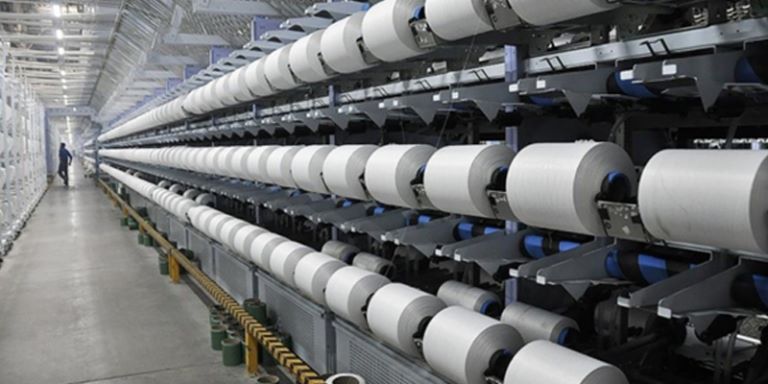
Indian cotton spinners’ profitability as well as revenues are expected to have moderated sequentially in the third quarter. So says Icra.
Contribution levels for the spinners in fiscal year 2023 were hit by steeper increase in cotton prices with all-time high levels reported in May 2022. Besides, the demand was impacted by the resistance from downstream companies to such high prices, uncompetitive Indian yarn prices in the international market and a slowdown in demand from developed nations amid recessionary concerns.
Icra expects volumes as well as contribution levels to improve from the fourth quarter onwards on the back of some recovery in demand and lower cotton prices with new arrivals.While cotton yarn prices moderated by 25 per cent to 30 per cent in the past four months from the peak levels reported in May 2022, with demand coming down and tapering of cotton fiber prices, these continue to be about ten per cent to 20 per cent higher than the past five-year average.
A continued correction in yarn prices is expected in the coming months, with a gradual softening of commodity prices and intermittent demand disruptions across the textile value chain.On the export front, after registering all-time highs in fiscal year 2022, Indian cotton yarn exports have been declining sharply since April 2022.
Global socks market grows at 6 per cent
The global socks market is growing at six per cent a year.
An increase in the number of working individuals, along with the rising adoption of the formal business environment, signifies one of the key factors anticipated to create ample growth opportunities for the market.
Asia Pacific is expected to grow at the fastest compound annual growth rate. This is attributed to the growing population in developing economies including China and India.The wool material segment is expected to register the second fastest compound annual growth rate as the fabric used for wool socks is lighter, extra porous, more durable, and more sustainable than its counterparts.The no-show style segment is expected to register the fastest compound annual growth rate. These types of socks are available in different materials and colours, provide excellent breathability, and are said to be an ideal option for both hot and cold weather.
At one time socks were not well presented in market. They were available only in nylon/cotton with no options of colors, designs, style etc. Also their use was limited to merely as an accessory. Not many users as well as makers of socks considered the comfort factor of socks and realized that they need to fit well. Now socks are presented on the bases of hygiene and wellness, fitness and comfort, fashion and style. Now brands put emphasis on foot hygiene.
Nigeria revamps cotton chain
Nigeria is revamping the cotton value chain. The golden age of cotton and textile was truncated after Nigeria discovered oil, which led to the closure of the popular Kaduna textile and other textile factories across the country.
Subsequently due to interventions in the cotton and textile value chain production increased from 80,000 metric tons to 133,000 metric tons. The number of factories in operation rose from seven to 23. The value of Nigeria’s cotton lint exports reached $64 million as of November 2022. An executive order mandating the military to patronise local textiles in producing their uniforms has also been a contributing factor to the growth of the cotton and textile sector.
Some 24 states are currently producing cotton in Nigeria with Katsina taking the lead. Nigeria has developed two varieties of transgenic cotton. These are aimed at addressing the issues of low yields, high production costs and insect attacks on cotton farms. Advanced technological tools like genetic engineering in crop production generate yields at economically viable scales for Nigerian farmers. Nigeria commercialized its first genetically modified crop, Bt cotton, in 2018, aimed at revitalizing its comatose textile industry and boosting economic development.
Since Bt cotton can resist the devastating bollworm and tolerate sucking insects, it helps farmers reduce their use of pesticides, thus minimizing environmental impacts and lowering production costs.
Guess improves margins with Centric
Guess has used Centric software to help reduce markdowns and increase stock availability through advanced analytics.
Centric, a Silicon Valley-based solutions provider, helped Guess transfer inventory online when brick-and-mortar shopping was disrupted by lockdowns.Guess achieved improved results almost immediately.
Pre-Covid operating margin was five percent at the end of fiscal year 2020 but had leapt to 12 percent by fiscal 2021. There was an increase of 250 basis points due to lower promotional activities alone. Operating in about 30 countries in Europe with four 8,000-SKU collections each year, and approximately 1,000 directly operated stores worldwide, the company could no longer rely on its outdated system of using Excel spreadsheets to plan merchandising and buying.
A spreadsheet-based program was no longer powerful enough to handle the sheer amount of complexity and information. So the decision was taken to go for planning software from Centric. Excess inventory has plagued many companies of late due to a lack of sales and over-ordering in an attempt to battle ongoing global supplychain delays. The new software kept inventory under control and improved operating margins by responding more quickly to marketplace disruptions, moving premium product lines onshore and reducing overstock and discounting.
Athleisure takes off in a big way, grows at 8% CAGR
The global athleisure market is growing at eight per cent a year.
Athleisure clothing includes casual pants, bomber jackets, polo shirts, crewneck sweaters, and others. Athleisure appeals to several broad trends, such as the global shift toward consumers wearing more casual attire, the desire for comfortable clothing, and the increase in athletic activity among health-conscious consumers who need performance clothing for these activities.
There has been an increase in the desire for highly comfortable clothing with sports features when engaging in any activity. Wide pockets and elastic knot elements have become crucial products for carrying bulky mobile phones, purses, and other daily necessities. In addition, the athleisure market is witnessing traction with continuously changing fashion trends.
The online distribution segment witnessed a 16 per cent surge in year to year growth in 2021 and this trend is projected to continue in the coming years. The opportunity for online distribution will be appealing as a part of business expansion. With a dominant market share, the online distribution channel will likely increase. The segment’s growth can be attributed to consumers buying more apparel through online distribution channels. A further factor boosting demand in the athleisure market is the expansion of online e-commerce platforms.