FW
India: Surat's textile industry faces severe crisis, job losses loom
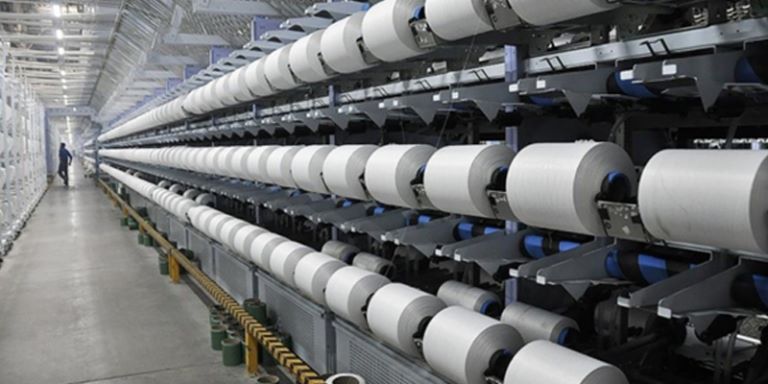
Surat, the second-largest textile manufacturing hub in India, is currently grappling with a severe financial crisis that has dealt a heavy blow to its production capacity. As a result, many factory owners have been compelled to cut back work hours, operating only four or five days per week. Renowned for its diverse array of fabrics and garments, such as silk, cotton, and synthetic textiles, Surat boasts an annual turnover estimated at ₹80,000 crore and employs approximately two million laborers, a significant portion of whom are migrants hailing from various states across India.
The ramifications of this crisis extend far beyond the textile industry itself, reverberating throughout the local economy and jeopardizing the livelihoods of those dependent on it. If textile mills are forced to shutter their operations, it will undoubtedly result in substantial job losses and a marked decline in living standards for numerous families. Moreover, textile traders find themselves in a difficult predicament as they struggle to secure buyers for their products.
Previously, the demand for daily production stood at a staggering 4.5 crore meters of cloth. However, due to an excess inventory of unsold stock, this figure has plummeted to 2.5 crore meters, resulting in a reduction of one crore meters per day.
Several factors have contributed to the current crisis, with one significant element being the influx of cheaper textile imports from China. The availability of these lower-cost alternatives has presented a formidable challenge for local manufacturers, making it increasingly difficult for them to compete. Furthermore, the rising costs of raw materials have further exacerbated the situation, increasing the overall cost of production.
As the Surat textile industry grapples with this deep-seated financial crisis, it remains crucial for stakeholders to explore viable solutions to mitigate the impact on both the industry and the local economy. Effective measures and strategic interventions will be essential in reviving the sector, ensuring sustainable growth, and safeguarding the livelihoods of those dependent on this vital industry.
Burberry's Chinese reopening, wealthy customer base drive success
Luxury retailer Burberry is set to announce its full-year financial results, with expectations of strong profits and sales for the year ending in March.
Despite concerns over consumer demand and cost pressures affecting household budgets, Burberry has been shielded by its wealthy customer base and the reopening of the Chinese economy.
While the brand faced a decline in sales in mainland China due to lockdown restrictions, it experienced strong demand in Europe, the Middle East, and Africa.
The return of shoppers in Asia is expected to boost revenues in the final quarter.
Burberry's core customers are seen as having ample protection from inflationary pressures. The company is anticipated to report increased group revenues and operating profit compared to the previous year.
Burberry's success has led to a rise in its share price, attracting investors seeking profitable opportunities.
Intimate apparel market set to grow at 8.1% CAGR, driven by iincreasing demand for fashionable, comfortable lingerie
The global intimate apparel market is expected to grow at a CAGR of 8.1% during the forecast period from 2023 to 2030. The market was valued at $81 billion in 2019 and is projected to reach $99.2 billion by 2027, according to Reliable Research report. The increasing demand for fashionable and comfortable lingerie, rising awareness about the health and hygiene benefits of intimate apparel, and growing e-commerce sales are the key factors driving market growth.
The market is highly competitive, with numerous global and regional players competing on factors such as product quality, design, innovation, pricing, distribution, and marketing strategies.
Companies in the industry must navigate a complex regulatory framework and adapt to changing market conditions to succeed. Technological advancements, such as seamless technology and 3D printing, have resulted in improved design and functionality, while e-commerce platforms have made intimate apparel more accessible to consumers, enabling companies to reach a broader demographic. However, the market is also impacted by cultural shifts and societal norms, which are subject to change.
The report also highlights the need for sustainable and eco-friendly apparel in the industry, alongside recommendations for improving supply chain efficiency and strengthening brand value.
Surge in US imports of technical textiles, Mexico takes the lead
US witnessed a significant surge in the import of textile products and articles for technical uses in March 2023. The imports reached a volume of 6.6K tons, representing a remarkable 22% increase compared to the previous month, according to recent data. However, despite this surge, overall imports of technical textiles experienced a slight shrinkage during the same period.
In terms of value, the import of technical textiles reached an estimated $89 million in March 2023, as reported by IndexBox. Although imports showed a relatively flat trend pattern during the review period, the surge in volume indicates a positive market outlook for technical textiles in the United States.
The largest supplier of technical textiles to the United States in March 2023 was Mexico, accounting for an impressive 62% share of total imports. Mexico's imports of technical textiles exceeded those of China, the second-largest supplier, by a factor of six. India ranked third in terms of total imports, with a 5.3% share. Notably, the average monthly growth rate of volume from Mexico showed a slight decline of -1.5% from March 2022 to March 2023.
When considering the value of imports, Mexico also emerged as the largest supplier, constituting 32% of total imports. Canada held the second position with a 16% share, followed by Germany at 9.7%. Despite modest growth rates, Mexico remained a dominant player in terms of both volume and value, reflecting its strong presence in the U.S. technical textiles market.
Analyzing the types of technical textiles imported, textile products and articles for technical uses specified in note 7 to this chapter dominated the market, constituting 84% of total imports in March 2023. This category surpassed the second-largest type, textiles used for transmission or conveyor belts (521 tons), by more than tenfold. Textile hosepiping and similar textile tubing ranked third with a 7.1% share.
Import prices for technical textiles in March 2023 were reported at $13,479 per ton (CIF, US), representing a 2.8% increase from the previous month. Over the course of the previous twelve months, prices had grown at an average monthly rate of 1.1%. Notably, the most pronounced increase occurred in December 2022, with a 13% month-on-month growth that led to a peak import price of $13,975 per ton.
However, from January 2023 to March 2023, the average import prices failed to regain momentum.
Government investment, growing popularity driving Chinese sports industry projected to grow at 15-20%
The Chinese sports industry is expected to grow by 15-21% in 2023, according to a report by Goldman Sachs. The report cites a number of factors for this growth, including the increasing popularity of sports among Chinese consumers, the government's investment in sports infrastructure, and the growing influence of Chinese sports stars.
The report found that the Chinese sports industry is now worth $450 billion and is expected to reach $800 billion by 2025. The number of sports fans in China is also expected to grow from 300 million in 2019 to 450 million by 2025.
The government has been investing heavily in the sports industry in recent years. In 2019, the government announced plans to build 100,000 new sports facilities by 2025. The government has also been promoting the development of e-sports, which is expected to become a major source of revenue for the sports industry in the coming years. Chinese sports stars are also becoming increasingly popular.
The growth of the Chinese sports industry presents a number of opportunities for luxury brands. Luxury brands can partner with Chinese sports stars to promote their products and services. They can also invest in sports marketing and advertising campaigns to reach Chinese consumers.
The growth of the Chinese sports industry is a positive development for the global sports industry. China is now the world's second-largest economy and has a population of over 1.4 billion people. The growth of the Chinese sports industry will help to promote sports participation and fitness among Chinese consumers and will also help to grow the global sports market.
Bangladesh's apparel exports to major markets decline, grow to non-traditional markets
Bangladesh's apparel exports to its major markets, the United States and Germany, have been declining for the past three months. This is due to a decrease in clothing consumption in western countries as a result of high inflation.
The United States was the largest export destination for Bangladeshi readymade garments in the first 10 months of the current financial year 2022-23, followed by Germany. However, exports to these markets declined by 7.13% and 7.33% respectively, according to data from the Export Promotion Bureau.
In contrast, Bangladesh's apparel exports to non-traditional markets increased by 30.80% in the first 10 months of FY23. The top non-traditional markets for Bangladesh's apparel exports are Japan, Australia, India, South Korea, United Arab Emirates, China, and Brazil.
The decline in apparel exports to major markets is a cause for concern for Bangladesh's economy, as the garment industry is a major source of foreign exchange earnings.
Exports to the United States declined by $533.78 million to $6.95 billion in the first 10 months of FY23, exports to Germany declined by $437.85 million to $5.53 billion in the first 10 months of FY23. Whereas, exports to the European Union, UK increased by 8.58% to $19.20 billion and by 10.88% to $4.19 respectively in the first 10 months of FY23. Banladesh’s exports to non-traditional markets increased by 30.80% to $7 billion in the first 10 months of FY23.
The decline in apparel exports to major markets is a challenge for Bangladesh's economy, but the BGMEA is taking steps to increase exports to non-traditional markets particularly in India, Japan, and South Korea. The association is also working to diversify the types of garments that Bangladesh exports, in order to make the industry more resilient to changes in the global market.
Brands urged to sign Pakistan Accord for worker safety
Apparel companies commemorate the ten-year anniversary of the Rana Plaza factory collapse by reflecting on the progress made in ensuring the safety of garment workers in Bangladesh.
Over the years, the Accord has brought significant improvements to 1,600 factories and safeguarded the lives of 2 million workers in Bangladesh. However, there is still work to be done as numerous factories await safety improvements and ongoing inspections are necessary to prevent regression into unsafe practices.
As the Accord is set to expire in October 2023, there is a call for a new agreement that will extend the program for at least another decade. This successor agreement should retain the key elements that have contributed to the success of the Accord, including international legal enforceability for brands, transparent monitoring of factory remediation progress, equal representation of companies and unions in governance structures, and the presence of civil society witnesses.
Despite the progress made, there are still brands that have not signed the Accord and failed to prioritize worker safety in their supply chains. Clean Clothes Campaign, Remake, and Eko recently launched a petition targeting these brands, urging them to sign the Accord. The petition has garnered over 63,000 signatures and continues to gain support.
A recent factory incident in Pakistan, where labels of Auchan, Hampton by Hilton, and Dunnes Homes were found, further highlights the urgency of implementing the Accord's program in Pakistan.
While 55 leading brands have already signed the Pakistan Accord, there are notable brands that have committed to ensuring safe factories in Bangladesh but have not extended their commitment to Pakistan. Brands like Boohoo, The Very Group, Lidl, Missguided, Esprit, Kid ASA, Matalan, Target Australia, Fruit of the Loom, and New Look have suppliers in Pakistan but have yet to sign the Pakistan Accord.
National Garment Worker Federation in Bangladesh has urged brands to sign the International Accord.
China emerges as global powerhouse in fashion and technology, says Hugo Boss CEO
China is rapidly emerging as a global powerhouse in the fashion and technology industries, according to Daniel Grieder, the CEO of Hugo Boss.
In an interview with Xinhua, Grieder expressed admiration for China's ability to set trends that eventually make their way to Europe. He highlighted the Chinese consumers' insatiable appetite for novelty and their demand for not only high-quality products but also exceptional consumption experiences.
Grieder commended the tech-savvy nature of the Chinese population, noting their eagerness to embrace newness both in physical stores and online platforms. Hugo Boss has found success in China, prompting the company to announce plans for expansion. With a current presence of over 200 points of sale across 65 cities, the renowned fashion brand aims to capitalize on China's growing consumption power by opening more stores and introducing new sub-brands.
The first quarter of this year saw a remarkable 25 percent increase in Hugo Boss's currency-adjusted group sales, reaching a staggering approximately 1 billion U.S. dollars.
Encouraged by China's robust consumer demand, the company has set an ambitious target of achieving a 10 percent sales increase. Grieder attributed this remarkable success to the country's dynamic consumer landscape and expressed confidence in the positive momentum the company is experiencing in the Chinese market.
Better Cotton advocates for updated guidelines on environmental marketing claims
Better Cotton, the world's largest cotton sustainability initiative, has provided feedback to the United States Federal Trade Commission (FTC) regarding its Guides for the Use of Environmental Marketing Claims (Green Guides).
The FTC, a bipartisan federal agency focused on protecting American consumers, introduced the Green Guides in 1992 to ensure that companies' claims about product sustainability are accurate and supported by evidence. The Guides are periodically updated to align with contemporary standards.
The Green Guides offer comprehensive guidelines applicable to all environmental marketing claims, including insights into how consumers interpret specific claims, methods to substantiate those claims, and ways for marketers to qualify their assertions to prevent consumer deception.
Better Cotton has participated in this ongoing review process to ensure that the FTC's guidelines acknowledge the agricultural aspect of cotton production and recognize progress at the field level. Notably, one of the key components of the Better Cotton Standard System (BCSS) is its Claims Framework, which assists eligible members in effectively communicating their commitment to Better Cotton in a transparent and credible manner.
Better Cotton supports the FTC's endeavor to establish a common framework, outlined in the revised Guides, that enables US companies to communicate their sustainability efforts in a credible, verifiable, and accurate way. This framework fosters a fair competitive environment for businesses and empowers them to set and communicate ambitious sustainability goals to an increasingly eco-conscious consumer base.
However, Better Cotton suggests that the FTC enhance the existing guidance by including examples of substantiation using various methods, rather than limiting substantiation to a single standardized methodology. The organization argues against establishing one standard methodology, such as lifecycle analysis (LCA) or product environmental footprints (PEF), for substantiating claims. It asserts that no universally applicable methodology covers all relevant impact categories for every product type.
Moreover, the implementation of a single methodology like LCA poses challenges when applied to an agricultural context. If the revised Guides adopt this approach, it would effectively prevent some of the most trusted and widely used sustainability schemes and their labels from providing environmental marketing claims for their members.
Japan markets encourage high-quality RMG exports from Bangladesh

Japan is emerging a strong market for Bangladesh readymade garments (RMG) industry with a healthy growth of over 42 per cent to cross the billion-dollar mark in the first nine months of 2022. And this trend is continuing in 2023 as well. Although the US and Europe are the largest export destination as most apparels with the ‘Made in Bangladesh’ tag, due to their easier terms and conditions, the Japanese market is now far more accessible than in earlier. In FY22, Bangladesh RMG sector had contributed around 9.25 per cent to the country’s GDP and with around y 4,000 factories employing around four million workers, the RMG sector has always played a critical role in the country's economy.
Stringent Japanese quality control hampers import
Bangladesh, exported RMG worth $1.2 billion in the first three-quarters of 2022, up from $84,964 million during the same period of 2021 when the pandemic was still not over. If handled well, Japan holds a lot of promise in post-pandemic years when people cannot afford to spend as much as they did earlier. As per a CCF group report Japan's textile and apparel import has grown in March 2023, as it imported 232kt of textiles and garments, up 0.1 per cent year on year and 41 per cent month on month. Imports from China alone were a massive 125kt, up 1.9 per cent year-on-year and 64.4 per cent month-on-month proving that Japan's textile and garment import growth has rapidly picked up in the post-pandemic days.
However, exporting to Japan is not easy for small countries like Bangladesh as their quality control is exceptionally high and products not reaching the mark are rejected. Many Japanese retailers have a third-party expert to double-check individual pieces of garments from shipment as sample products before accepting the goods. Japanese retailers are definitely not going to lower their standards to help Bangladeshi companies so the ball is in Bangladesh’s RMG segment to achieve a higher a level of efficiency and quality and incur low wastage by-product rejection to penetrate the Japanese markets
Meanwhile, Bangladesh has worked on making its RMG industry more high-tech as the country’s economy depends on that. Many factories are now environmentally friendly and offer world-class manufacturing processes, to compete with China which currently has a 53 per cent stake in the Japanese market.
Trade shows to promote exports
Just like the US and other countries, Japan too is reducing its dependency on China in sourcing RMG products due to the alleged low quality of products, human rights issues and territorial conflicts involving China, and other reasons. However, Bangladesh has still not managed to get into the most favored import nation status for Japan, in spite of all its efforts. Meanwhile, Bangladesh and Japan hope to sign a Free Trade Agreement (FTA), which would give the apparel industry much-needed boost and a stronger footing.
The apex group of apparel manufacturers BGMEA (Bangladesh Garments Manufacturers' Export Association) is taking steps to increase their footprint in Japan. From events to showcase their RMG’s strength to importers to trade delegates the Association is taking numerous steps to boost business. The need of the hour is to get duty-free access for all textile and clothing products to Japan and other countries, to make the sector economically viable and achieve diversification and better quality in both export markets and domestic product lines. Indeed Bangladesh is now on a mission to increase its global RMG trade to be on better terra-firma this fiscal year.