FW
Apparel imports continues to slag in Western markets, India’s exports suffer: Wazir Report
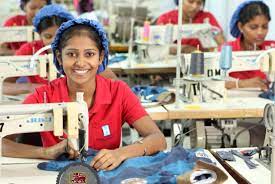
Wazir Advisors September 2023 report spanning June and July 2023 reveal not much has changed since August in terms of Western import of apparels and India’s exports. Comparing the stats in August and the soon-to-be-published report, shows no newsworthy changes but more affirmation that apparel imports are currently low in Western markets and a stagnation in Japan, having experienced a rise only in June – the stagnation started in July and continued into August 2023. Indian exports continue to lose ground, which may lead to speculation about 2024 being the year of a big comeback.
Indian apparel exporters continue underperforming
The report shows, the total value of Indian apparel export in 2022 was at $15 billion and between January and August 2023 only $10.2 billion has been achieved. In August 2023, India’s apparel exports were estimated at $1.1 billion, 22 per cent lower than in August 2022. On a year-to-date basis, that reads 14 per cent lower than exports achieved in 2022 but an improvement of 1 per cent based on August 2023 stats.
Overall, some interesting picture emerges. In 2022, India’s export to the US was at 35 per cent but between January and July this year, it stands at 33 per cent only. It is by the end of the year, it will be known if India managed to retain, gain or lose US orders. UK, UAE and France remain the same and Germany has dropped by 1 per cent in the months January to July 2023 compared to the entire year of 2022 and there is a possibility of recovery during upcoming winter festivities.
Readymade garment imports remain depressed in the West
In July 2023, US apparel imports were $7.7 billion, which is 17 per cent lower than July 2022. On year-to-date (YTD) basis, imports were 21 per cent lower than in 2022. It seems, Bangladesh was gaining China’s market share in the US but it too lost 3 per cent since 2021. The EU’s apparel imports in June 2023 were $7 billion which is 10 per cent lower than June 2022. On YTD basis, the imports were 4 per cent lower than in 2022 but there may be a spike during the upcoming festive season to shorten the deficit. The UK’s apparel imports in July 2023 were $1.5 billion, 21 per cent lower than in July 2022. On YTD basis, the imports were 15 per cent lower than in 2022. In July 2023, Japan’s apparel imports were $1.9 billion, similar to that in July 2022. On YTD basis also, the imports have not changed.
Domestic retail faring better than imports in UK, US
In the UK, Q2 2023 saw online sales of clothing registering a growth of 10 per cent over Q2 2022. In the same period, it was a different story in the US as it witnessed a negligible 1 per cent growth in Q2 2023 over Q2 2022. In July 2023, UK’s monthly apparel store sales were £3.7 billion which is 3 per cent higher than in July 2022. On YTD basis, sales were 9 per cent higher than in 2022. In the UK, e-commerce continues to grow more than purchases in physical retail outlets as a key factor being higher fuel costs hindering commuting.
In August 2023, US monthly apparel store sales were estimated at $19.2 billion, 8 per cent more than in August 2022. On YTD basis, sales in 2023 are 5 per cent higher than in 2022. In the US, surprisingly defying global trends, sales of home furnishing are dropping steadily. August 2023’s home furnishing store sales were estimated at $4.6 billion which is 16 per cent lower than in August 2022. On YTD basis, sales are 3 per cent lower than in 2022.
Prashant Mohota elected Indian Spinners Association President
In a significant development during the Annual General Meeting on September 22, 2023, Prashant Mohota, the Managing Director of Gimatex Industries Ltd., has assumed the Presidency of the Indian Spinners Association. Gimatex Industries, renowned for its integrated textile plants in Hinganghat near Nagpur and Ahmedabad, boasting 225,000 spindles, sees Mohota's election as a testament to his industry leadership.
Furthermore, Prakash Maheshwari, the Chief Executive of Corporate Affairs at RSWM Ltd., has been elected Vice President. RSWM Ltd., a major player in the sector, operates a substantial 578,126 spindles for synthetic blended and cotton/melange yarn production, alongside impressive Denim Fabric and synthetic/cotton knitted fabric output.
In an additional development, M.L. Jhunjhunwala, former President of RSWM Ltd., has been appointed as the Executive Director. The Indian Spinners Association's role in uniting spinning mills focused on man-made and synthetic fibers under one umbrella signifies its dedication to fostering growth and collaboration within the industry.
Coloreel inks $2M deal with Asian manufacturer
Coloreel celebrates a major achievement with a $2 million deal alongside a leading Asian manufacturer, supplying renowned global brands. This marks a pivotal moment for Coloreel and its groundbreaking embroidery innovation. The Swedish company's technology revolutionizes thread dyeing, offering an endless color spectrum in real-time while boosting production efficiency through digital automation and slashing water usage by 97%.
This partnership underscores Coloreel's ability to address the surging demand for sustainable solutions in the manufacturing and brand sectors worldwide. Initial deliveries of the digital thread-dyeing units are scheduled for October, with the bulk arriving in 2024.
Torbjörn Bäck, Coloreel's CEO, exclaims, "We're thrilled about this partnership and eager to collaborate, showcasing our patented technology's role in enhancing fashion's sustainability while fueling design creativity."
FASHION WORLD TOKYO
Japan's largest international fashion trade show with 1,150 exhibitors from all over the world!
Highlights of the 2023 October show:
Showcase the latest sustainable products/materials, apparel, bags, shoes, accessories, fabrics/materials/textile accessories, fashion digital technologies, and eyewear.
Welcome 27,000 buyers from all over the world to source brands, the fabrics and materials, and order fashion sourcing/OEM/ODM services and more.
Dates: October 10 (Tue) – 12 (Thur), 2023 Venue: Tokyo Big Sight, JAPAN
FASHION WORLD TOKYO is the business platform for companies from all over the world to showcase the latest fashion trends and innovations. The October show will gather SS collections and welcome 27,000 buyers from all over the world to source brands, the fabrics and materials, and order fashion sourcing/OEM/ODM services and more.
If you are interested in the latest fashion trends and innovations, or if you are looking to source fashion products, FASHION WORLD TOKYO is the must-attend event for you.
Global Sportswear Brands Failing Cambodian Garment Workers, Report Finds
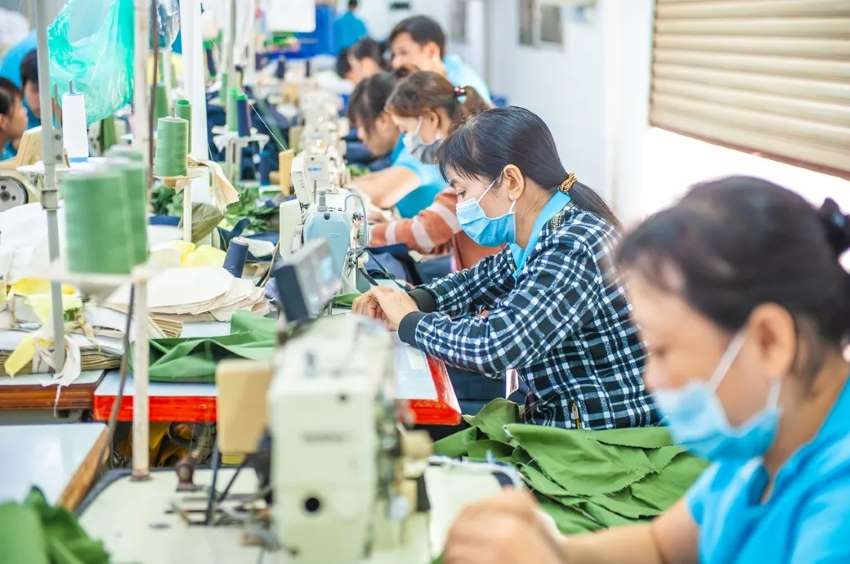
A new report has found that global sportswear brands are failing Cambodian garment workers, who are living in poverty despite working long hours.
The report, titled "Stitched under Strain: Long term wage loss across the Cambodian garment industry," was released by global women's rights organization ActionAid and Cambodian labor rights organization the Center for Alliance of Labor and Human Rights (CENTRAL).
The report found that workers, including at factories that produce for major brands Nike and Adidas, have experienced systemic wage loss alongside a massive reduction in working hours since the pandemic.
As a result, workers are unable to meet their basic needs, with 85 percent of surveyed workers reporting that their salary is insufficient to support them until the end of the month, and almost 50% of surveyed workers are going to work without eating enough.
The report calls on international brands to ensure Cambodian garment workers in their supply chain are earning a fair wage that keeps them out of poverty.
"No one making clothes for the world's most popular brands should be living in working poverty," said Khun Tharo, Program Manager at CENTRAL.
Pontetorto to unveil next-gen sports fabric Super Tecnostretch at Performance Days and Ispo Munich
Pontetorto is ready to present to all sports customers the brand new Super Tecnostretch line, the fabric designed to take comfort and elasticity to a higher level than the previous range of Tecnostretch proposals.
Super Tecnostretch features an even more compact structure, thus greater resistance to pilling and abrasion, excellent elasticity in all four directions for optimal comfort, and excellent thermal insulation and high breathability. It is also lightweight and compact, making it a perfect travel companion.
Suitable for every environment and in every occasion, such as outdoor or travelwear up to athleisure, Super Tecnostretch is perfect as a second layer and in some cases also as a base layer.
Pontetorto general manager Marco Toccafondi says, "The idea was born to meet the needs of a market increasingly competitive for performance technology, which leads us to push research in the direction of total comfort and elasticity.
Super Tecnostretch is the result of an in-depth study we have been carrying out for months and represents the natural evolution of the Tecnostretch range that has been so successful in recent seasons."
Lenzing Group to Increase Production of Responsible Viscose Fibers in Asia-Pacific
Italian luxury porcelain brand Ginori 1735 has announced a partnership with the Camera Nazionale della Moda Italiana (CNMI) for the CNMI Sustainable Fashion Awards 2023, to be held on September 24 in Milan at the conclusion of fashion week.
Ginori 1735 will embellish the tables at the gala dinner with the black and scarlet settings of the Catene (Chains) and Labirinto (Labyrinth) services, designed by Gio Ponti, who was artistic director at the company from 1923 to 1933.
The partnership was driven by the strong sense of sustainability that is a fundamental part of Ginori 1735's identity. The company is working to significantly reduce energy consumption in the production process, to recycle waste porcelain and to strongly limit the amount of heavy metals in decorations that may come into contact with food.
"We are proud to be at the side of CNMI on the occasion of The Sustainable Fashion Awards 2023 in order to promote the values of social, environmental, and economic responsibility while enhancing the greatest Italian savoir-faire in craft and art," said Ginori 1735 CEO Giancarlo Giammetti.
The CNMI Sustainable Fashion Awards recognize individuals and companies that are demonstrating a strong commitment to sustainability in the fashion industry. The awards are presented in six categories: Brand of the Year, Innovative Material of the Year, Emerging Talent of the Year, Social Impact of the Year, Circular Economy of the Year, and Lifetime Achievement Award.
Ginori 1735's partnership with CNMI is a testament to the company's commitment to sustainability and its support for the fashion industry's efforts to reduce its environmental impact.
Ginori 1735 Partners with CNMI for Sustainable Fashion Awards
Italian luxury porcelain brand Ginori 1735 has announced a partnership with the Camera Nazionale della Moda Italiana (CNMI) for the CNMI Sustainable Fashion Awards 2023, to be held on September 24 in Milan at the conclusion of fashion week.
Ginori 1735 will embellish the tables at the gala dinner with the black and scarlet settings of the Catene (Chains) and Labirinto (Labyrinth) services, designed by Gio Ponti, who was artistic director at the company from 1923 to 1933.
The partnership was driven by the strong sense of sustainability that is a fundamental part of Ginori 1735's identity. The company is working to significantly reduce energy consumption in the production process, to recycle waste porcelain and to strongly limit the amount of heavy metals in decorations that may come into contact with food.
"We are proud to be at the side of CNMI on the occasion of The Sustainable Fashion Awards 2023 in order to promote the values of social, environmental, and economic responsibility while enhancing the greatest Italian savoir-faire in craft and art," said Ginori 1735 CEO Alain Prost.
The CNMI Sustainable Fashion Awards recognize individuals and companies that are demonstrating a strong commitment to sustainability in the fashion industry. The awards are presented in six categories: Brand of the Year, Innovative Material of the Year, Emerging Talent of the Year, Social Impact of the Year, Circular Economy of the Year, and Lifetime Achievement Award.
Ginori 1735's partnership with CNMI is a testament to the company's commitment to sustainability and its support for the fashion industry's efforts to reduce its environmental impact.
Bangladesh Denim Expo: November 8–9, 2023
Bangladesh Denim Expo taking place on November 8–9 at the International Convention City Bashundhara (ICCB).
A Catalyst for Change and Progress
The Bangladesh Denim Expo is a remarkable initiative founded by Mostafiz Uddin, driven by a passion for denim and a commitment to social responsibility. The expo showcases Bangladesh's burgeoning potential in the denim industry, a sector where the country has earned a reputation for producing high-quality denim and jeans at competitive prices.
Beyond its commercial appeal, the Bangladesh Denim Expo serves as a platform for like-minded denim enthusiasts from around the world to unite and envision a new future for the industry. Mr. Uddin embodies this spirit of collaboration and innovation, actively participating in design and laundry, and even establishing his own brand, blueXonly, which is popular in Europe.
Mr. Uddin's journey began in 1999 with a buying office and culminated in the creation of the Denim Expert factory, a Bangladesh-Netherlands joint venture that adheres to European standards in construction, worker rights, and health and safety. His current focus is on the Bangladesh Denim Expo, which he envisions as a catalyst for transforming the global perception of Bangladesh's denim industry.
Buyers and brands benefit from a more stable workforce that produces superior products, while increased investment in education ensures the sustainability of essential skills.
The Bangladesh Denim Expo stands as a safeguard against the recurrence of devastating events such as the Rana Plaza factory collapse in 2013. By raising industry standards and promoting ethical practices, the expo helps to create a more equitable and sustainable future for all.
UK Clothing Imports Decline in July 2023
The United Kingdom observed a notable decrease in clothing imports in July 2023, with a year-on-year decline of 25.36%, totaling £1.245 billion. Additionally, textile fabric imports experienced a 12.17% drop, amounting to £476 million. In the same month, there was a decline in fiber imports, which fell to £34 million, despite maintaining a relatively stable month-on-month trend.
Looking at the first half of 2023, clothing imports in the UK totaled £7.838 billion.
The decline in clothing imports is likely due to a number of factors, including the rising cost of living, which is putting pressure on household budgets. Additionally, the war in Ukraine has disrupted supply chains and led to higher prices for raw materials.
It is unclear whether the decline in clothing imports will continue in the coming months. However, the trend suggests that UK consumers are becoming more cautious about their spending.