FW
Global fast-fashion chains growing aggressively
"Fast-fashion chains, over the past decade, have grabbed huge market share in the apparel sector and grew aggressively, opening hundreds of stores. The companies boast of short production and distribution lead times which allows them to respond to market changes in a matter of just a few weeks. They are largely immune to the problems of the larger specialty apparel industry. However, lately they’ve started to encounter certain roadblocks including increasing competition, changing consumer shopping habits and more intense competition from online players like Amazon and ASOS."
 The arrival of fast-fashion brands such as H&M, Zara and Forever 21 has disrupted the specialty apparel sector as these fast-fashion players not only imitate runway fashions at affordable prices, but also beat other retailers in the market to the latest styles.
Making fashion affordable
Fast-fashion chains, over the past decade, have grabbed huge market share in the apparel sector and grew aggressively, opening hundreds of stores. The companies boast of short production and distribution lead times which allows them to respond to market changes in a matter of just a few weeks. They are largely immune to the problems of the larger specialty apparel industry. However, lately they’ve started to encounter certain roadblocks including increasing competition, changing consumer shopping habits and more intense competition from online players like Amazon and ASOS.
Come what may there are certain things in this world that never change ditto for the consumers’ appetite for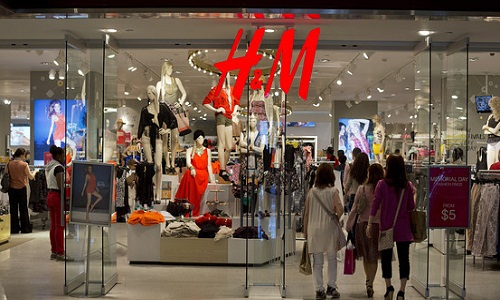 discounted fashion apparel. These discounts allow people to buy high fashion at affordable prices. However there’s an increasing competition in the fast-fashion industry, including pressure on existing US chains because it’s become a huge international business.
Increasing competition
As consumer appetite has been sustained and actually grown, more and more players are coming into this space, which then obviously creates more competition for existing players and can sometimes affect revenue, expansion, profit margins and things like that. Online retailers have opened up a lot of options for consumers that didn’t exist before.
Two factors are affecting fast fashion. These include: decline in demand many of these brands experienced aggressive growth for years and a slowdown is natural. At least two of the three big ones—Forever 21 and H&M—were due for a slowdown anyways. They were kind of reaching capacity in the marketplace. But that’s not to say that they couldn’t find new markets to exploit and get market share… But the two were at the forefront of growth early.”
The second factor is the “encroachment of e-commerce and the rise of the off-price guys. Also, some fast-fashion concepts have been slow to get into online sales and are now paying the price and trying to catch up.
Big players report mixed results
Swedish powerhouse H&M reported a dip in total sales by 4.0 per cent on a global basis in 2017. Sales in the US fell by 6.0 per cent. The retailer would close 170 stores while opening 390 new stores globally, and is dealing with $4.3 billion in unsold inventory. In the first half of 2018, H&M opened 10 net new stores in the United States.
Los Angeles-based Forever 21 is rethinking the size of its stores and looking at downsizing locations. Their average store is 38,000 sq. ft. and the largest is around 162,000 sq. ft., according to the retailer’s website. Forever 21 is rolling out its 21Red concept that’s going into power and community centers. These stores are in the 10,000- to 12,000 sq.ft. range.
Inditex said strong sales and investment in technology for its online and physical stores boosted net profit in the past fiscal 7.0 per cent. The brand’s net profit for the 12 months ending January 31, 2018, rose to $4.11 billion. It posted a 5.0 per cent increase in same-store sales globally for the quarter ending Aprils 30, 2018. Meanwhile, Spanish clothing retailer Zara, revealed same-store sales growth for all regions in which it operates was positive, but didn’t disclose specific figures.
Uniqlo spreads over southeast Asia
Casual clothing retailer Uniqlo plans to double its number of stores in Southeast Asia and Oceania to about 400 by 2022.
The emphasis is on standalone suburban stores meant to extend the brand's reach beyond shopping malls.
The Japanese retailer aims to triple revenue generated in the region in the year ending August 2022. That would mark a faster rate of growth than for Uniqlo overall, which expects revenue to double over the same period.
Standalone suburban locations were key to the chain’s growth in Japan. The brand has two stores in Thailand. More are planned for other southeast Asian markets. The next promising countries are the Philippines and Malaysia.
Besides Thailand, Uniqlo’s presence in the Asean region covers Australia, Indonesia, Malaysia, Singapore and the Philippines.
Uniqlo brand positions itself as LifeWear, as opposed to fast fashion, emphasizing functionality and lifestyle.
Middle- and high-income southeast Asian consumers are set to drive Uniqlo’s overall growth. Uniqlo plans to open stores in new markets, including Vietnam. It wants to have stores in all countries in the region, especially Vietnam, Laos and Myanmar.
The company is also looking to expand online sales in Asia and beyond.
For Uniqlo, the Indian market has the potential to become the next China -- Uniqlo's biggest market outside of Japan.
Trade war set to continue
China and the US are levying tariffs on each other’s goods.The US has imposed duties on Chinese product categories like textiles, semiconductors, chemicals, plastics, motorbikes and electric scooters. China has imposed tariffs on US goods like fuel, steel products, autos and medical equipment.
The latest American tariffs have spurred US importers to place additional orders to be shipped and delivered ahead. That has already contributed to higher ocean and air freight rates, and elevated warehousing costs in America. Overall, the entire supply chain is expected to incur additional costs.
If the trade war continues, prices for products across many industries will increase.
The US has threatened to impose duties on over 500 billion dollars worth of Chinese goods exported annually to the US unless China agrees to sweeping changes in its intellectual property practices, industrial subsidy programs and tariff structure.
China has denied American allegations that it systematically forces the unfair transfer of US technology and insists it adheres to World Trade Organization rules.
The markets should expect bilateral tit-for-tat trade actions to continue for the foreseeable future as both the US and China have managed to convince themselves that they wouldn't lose out in this trade war too much.
Indonesian association urges govt to reduce rate of import growth
According to Indonesia Filament Fiber and Yarn Producers Association (APSyFi), not a single policy has been issued to reduce the rate of import growth in the country. The association has urged the President of the nation to reduce the rate of imports as many imported mafias have entered the bureaucracy making policies pro-imported compared to locally made goods.
Previously, APSyFI had officially proposed to revise the Regulation of the Minister of Trade 64 of 2017, because permits were given to traders to import raw materials, whereas previously import permits were only granted to producers who needed raw materials for export purposes.
APSyFi also highlighted that the Bonded Logistics Center (PLB) should be used for imported goods only to facilitate the access of industries that need imported raw materials.
For this reason, APSyFi also proposed that the PLB should be used only for cotton and not for other fibers, threads and fabrics.
Australians’ clothing throwaway at its extreme
In Australia, the fast fashion sector has grown by 19.5 per cent over five years.
Almost a quarter of Australians throw away an item of clothing after wearing it just once. They don't always see it as something that is a valuable product to keep in their wardrobe.
A booming part of the industry, including in Australia, is fast fashion, where catwalk designs are quickly turned into apparel sold at low or ultra-low prices and easily accessible via online sites.
The longevity of clothing has declined over the years. Some products only last two or three washes because people are turning over products in their own home more quickly.
The rock bottom prices for consumers contrast with the high cost paid by the environment. Tons of cheap clothes are churned out every year in developing countries, using copious amounts of energy and resources and polluting waterways near factories with toxic chemicals.
The materials used are often synthetic and non-biodegradable, meaning even washing can be hazardous, with some textiles shedding plastic micro-fibers that make their way to water catchments and oceans in consumer countries like Australia.
Globally, clothing production doubled from 2000-2014, with the number of garments bought each year by consumers soaring by 60 per cent.
Recovery in sight for Indian textile industry
The textile sector in India is showing signs of recovery.The stressed advance ratio of the textile sub-sector has improved in March 2018 from the levels of September 2017.
The sector was heavily hit by demonetization, GST, rupee appreciation and high domestic cotton prices.
Support in the form of the Rs 1300-crore ($US 185.41 million) Samarth scheme for skilling and the Rs. 6000-crore($US 855.86 million) package for apparel and made-ups, along with various incentives, is expected to create a strong turnaround in the textile and clothing sector and put the industry back on the growth path.
What the industry now needs is policy support for stopping excess imports and refund of all duties and taxes on exports across the value chain. In the financial year 2018, imports of textiles and apparel were 16 per cent higher than the previous year’s value. All categories across the value chain have seen a drastic rise in imports.
Moreover, embedded duties, which are in the range of four per cent to six per cent across the value chain, are not getting refunded. This is one of the key factors for the decline in exports, apart from blockage of funds due to delay in GST refunds and rupee appreciation.
Philippines hopes for FTA with US
The textile and the garment industry in the Philippines is hoping the free trade deal with the United States will revive its struggling businesses.
The fact that the US is now focusing on bilateral free trade agreements instead of multilateral deals has made the Philippines optimistic.
The US is one of the Philippines’ oldest allies. At one time the Philippines used to be one of the biggest exporters of garments to the US. The industry used to be very competitive in its exports and was even considered a sunrise industry during the 90s.
Export performance, however, dropped since the abolition of textile quotas by the World Trade Organization in 2005. As a result, garment and textile enterprises in the Philippines which relied on quotas underwent difficulties leading to closure of factories and downsizing.
Garments might be eventually included under the US Generalized System of Preferences (GSP), a trade arrangement that allows market access for numerous Philippine exports. This will have to come after the inclusion of footwear in the US GSP.
However wrapping up an FTA might take years. In the meantime, textile and garment companies have been granted incentives such as an income tax holiday on preferred kinds of businesses that help reach inclusive growth.
Swiss Textile Machinery to hold press conference during ITMA Asia
Swiss Textile Machinery Association will hold a press conference during ITMA Asia & CITME 2018 in Shanghai. The conference will be held on October 16, 2018. Around 15 member companies of the association will present their latest technologies and solutions the conference.
ITMA ASIA + CITME 2018 is owned by CEMATEX and its Chinese partners – the Sub-Council of Textile Industry, CCPIT (CCPIT-Tex), China Textile Machinery Association (CTMA) and China Exhibition Centre Group Corporation (CIEC). It is organised by Beijing Textile Machinery International Exhibition Co Ltd and co-organised by ITMA Services. The Japan Textile Machinery Association (JTMA) is a special partner of the show.
The exhibition will feature around 1,700 local and international textile machinery manufacturers from 28 countries who will showcase the latest machinery, as well as products that boost automation and energy-saving features.
Pak industry to capitalise on declining Chinese textile exports to US
Federation of Pakistan Chambers of Commerce & Industry (FPCCI) will sign a trade economic cooperation agreement with the Greater New York Chamber of Commerce (GNYCC) in September 2018 to capitalise on declining Chinese textile exports to US.
As per official figures, Chinese textile and apparel exports to US are declining while Pakistan’s textile exports surged by 4.0 percent and apparels exports surged by 7.0 percent in May 2018. The US is one of the largest trading partners of Pakistan. However, the export base of Pakistan is narrow with heavy reliance on textiles and apparels for export earnings. China, Mexico, India, Vietnam, Indonesia, and Bangladesh are the main trading competitors of Pakistan in terms of its exports to the US.
In terms of textile and apparel exports, Pakistan continued to remain at seventh position last fiscal having 2.57 percent share in US’s overall imports to these products.
Ethiopia seeks Vietnamese cooperation
Ethiopia and Vietnam are cooperating in various fields. Among these are culture, economics, trade, science-technology and investment. However, the economic relationship remains modest.
The two countries first established diplomatic relations in 1976.
Ethiopia is a country situated in the Horn of Africa with a population of nearly 100 million. Agriculture remains a major part of the Ethiopian economy, accounting for 46 per cent of its GDP. Ethiopia is known for coffee, cotton, fruits, pepper, sugarcane and timber. The country also has Africa’s largest livestock population and the world’s tenth largest, providing meat, milk and leather for the processing industry.
Considered as a model for economic development in Africa, Ethiopia is the fastest-growing economy in the region, with its income per capita increasing by four times during the 2009-2017 period. It is seeking to privatise the banking, insurance and telecommunications sectors.
Vietnam’s export turnover has increased 21.2 per cent year-on-year.
Commitments for international integration have been implemented, helping reduce import-export taxes. A favorable business environment had aided export activities.
The country’s garment export turnover accounts for four per cent of the world’s total turnover. Total import-export turnover in the first seven months of this year rose by 12.7 per cent from the same period last year.