FW
Malaysia hopes to sign RCEP soon
Malaysia is looking to sign the proposed Regional Comprehensive Economic Partnership (RCEP) by this year. The percentage of goods that will not be charged a new tariff — whether it’s 80 or 70 per cent of goods traded, for example — is still being deliberated by the participating countries. Some want more and some are less open to greater trade liberalization.
The RCEP is a proposed free trade agreement among the ten Asean member countries and six countries that the regional grouping has existing FTAs with — namely Australia, China, India, Japan, South Korea and New Zealand. The RCEP is expected to be ratified by this year but stumbling blocks — such as India’s reluctance to open its markets to Chinese products — remain. Also, the treaty is viewed as a China-led response to the defunct Trans-Pacific Partnership brought forward by the US previously.
A combination of 16 countries negotiating on the RCEP would cover some one-third of the global GDP and almost half of the world’s population. The pact aims at encompassing trade in goods and services, investments, intellectual property and dispute resolution, among others. Interest in the deal heightened throughout the region after the emergence of economic nationalism in the US and its trade war with China.
Inditex yearly profits up two per cent
Inditex has had a two per cent rise in full-year profit. Inditex, the owner of Zara, is the world’s biggest clothing retailer. Unlike many in the troubled apparel sector, Inditex, based in Spain, has been able to avoid heavy discounting thanks to its tightly controlled inventory and its ability to get looks on sale in a few weeks allowing it to respond to fast-changing trends.
Online sales grew 27 per cent in 2018. Inditex estimated total like-for-like sales growth of between four to six per cent for the financial year. Sales in shops and online at constant exchange rates rose seven per cent in the first weeks of the new financial year. Total dividend for the financial year would be an increase of 17 per cent.
The company launched Zara online in 106 new markets in November and benefited from favorable comparisons to unseasonably cold weather last year. The company operates with a special kind of business model. Every division commits initially to a small quantity for fashion merchandise and then replenishes it in response to customer demands and preferences. This merchandising strategy enables stores to feature new and different products very quickly.
Government awards KG Fabriks for sustainability
KG Fabriks has bagged the first prize for ‘Water Conservation’ at the National Water Awards 2018. The company received the award from the Ministry of Water Resources, River Development & Ganga Rejuvenation, India. The company also signed an agreement with South India Textile Research Association (SITRA) for production of denim fabric with a new green reduction process and a dyeing process that will completely eliminate the hazardous reducing agents and the alkali used during indigo-dyeing.
KG Fabriks makes denim fabric and consumes just 6 litres of water to make a metre of denim as compared to others which use 60 litres per metre of denim. The company is connected 24/7 online to the water quality monitoring centre, Government of Tamil Nadu and is a zero solid and zero liquid discharge plant situated at the SIPCOT Industrial Complex in Perundurai.
Hanes Brands appoints new chairman
Ronald L Nelson is the new chairman at Hanes Brands. Nelson has served in the board director since 2008 and as lead director since 2015. He has served on all three of the board’s committees in his tenure, including as chairman of the audit committee. He has significant public company board experience and knowledge of the chairman’s role, including formerly serving as chairman of the board and chief executive officer of Avis Budget Group.
Hanes Brands is a socially responsible leading marketer of everyday basic apparel under some of the world’s strongest apparel brands in the Americas, Europe, Australia and the Asia-Pacific including Hanes, Champion, Bonds, Maidenform, DIM, Bali, Playtex, Bras N Things, Nur Die/Nur Der, Alternative, L’eggs, JMS/Just My Size, Lovable, Wonderbra, Berlei, and Gear for Sports.
Nelson succeeds Richard A. Noll, who is not seeking re-election to the board and is retiring as chairman, concluding a smooth and seamless leadership transition at the company. Noll served as chief executive officer of the company from 2006 to 2016, as chairman of the board from 2009 to 2016, as executive chairman of the board from 2016 to 2017, and as non-executive chairman of the board since 2018.
Brexit enthuses Indian business
While Japanese companies such as Honda and Nissan are retreating from the UK, Indian businesses are planning to exploit opportunities arising out of Brexit. They hope to benefit even if the British pound sinks as this could help mitigate some of the risks. Indian M&A has tend to increase when British assets become cheaper to buy. India has a huge market and the economy is not export-based. It is more of a domestic market so there is an opportunity for Indian companies to start exporting. Besides, Indians are used to the tariff regime and the uncertainty and chaos. There could be opportunities for Indian companies in manufacturing in the UK and for cross-border M&As if similar businesses need capital.
Brexit is only impacting a limited number of Indian businesses operating and investing in the UK. Beyond those manufacturing companies that rely on just-in-time supply chains and who trade between the UK and the EU, the vast majority of Indian companies located in the UK are for UK-specific reasons. These include having a presence in and access to the fifth largest market in the world - a market where Indian companies can access the upstream strengths of the UK in engineering, electronics, and increasingly in big data, AI, and the internet of things.
Adidas sales up five per cent
Adidas fourth-quarter sales rose by a currency-adjusted five per cent. Adidas saw strong growth in sports inspired styles and in training and running in the quarter, but a steep decline in soccer, where it benefited a year earlier from sales of team jerseys in the run-up to the World Cup. Adidas expects currency-neutral sales growth to slow to between five per cent and eight per cent in 2019 from eight per cent in 2018. Supply issues are accounting for a one per cent to two per cent fall as it struggles to meet strong demand for mid-priced apparel. Shares in the German sportswear brand, up 22 per cent in the last year, were indicated down 2.5 per cent in early trade.
Adidas had doubled the size of its business in North America in the last three years. Adidas produces 457 pieces of apparel a year, sourcing most of them from Cambodia, China and Vietnam. The brand expects to reach an operating profit margin of between 11.3 per cent and 11.5 per cent in 2019, up from 10.8 per cent in 2018, with the return of the Reebok brand to profit helping it hit a target originally set for 2020 a year early.
ITMA 2019 Exhibitor Preview: XORELLA
SCHWÄBISCH HALL, Germany — March 11, 2019 — XORELLA has been a leading-edge manufacturer of equipment for conditioning and heat setting of textiles ever since the company was founded more than 50 years ago. The machines are renowned for their technology, operating efficiency and reliability.
For customers around the world Xorella is the preferred partner for standard conditioning and heat-setting machines as well as for equipment for integration in fully automatic material handling and packing systems.
Xorella has listened to customers’ input and reengineered the controller and its software. Latest generation hardware is used and software as well as visualization have been redesigned with a clear concept in mind: Easy operation even by less experienced staff in the mills.
There is a clear structure on all screens and the use of text was minimized. At the right side actual hazards are displayed with pictograms.
A new interface was created to assist customers in trouble shooting. Actual and historical data is saved and can be sent to our Service Department for analysis and support.
Paving the way for Big Data is the most important feature of the new Xorella controller. It fully relies on its OPC UA interface for connection to external systems. Customers have the possibility to display the visualization on their own system completely by accessing the variables provided by the OPC UA.
This considerably facilitates integration into superordinate systems. Therefore it is possible to link the Xorella controller with process visualization systems provided by the main spinning machinery manufacturers or third parties.
You are invited to meet Xorella’s team of specialists at booth in hall 6 at booth D203 to obtain detailed information on Xorella machines and services.
Texprocil welcomes rebates on embedded taxes
The Cotton Textiles Export Promotion Council (Texprocil) has welcomed the cabinet’s approval of the scheme to provide rebate in state and central embedded taxes for the made ups and apparel sectors. Texprocil chairman KV Srinivasan points out rebate of state and central taxes will improve competitiveness of made ups products in export markets. Presently, the ROSL scheme refunds specified state taxes but does not refund central taxes.
Srinivasan feels exporters of made ups, especially home textiles from India, face a huge disadvantage in leading export markets due to high import duties as compared to imports from other competing nations. The scheme will go a long way in helping the exporters in overcoming this disadvantage and to increase exports, he added.
However, the Texprocil chief explained that state and central taxes are applicable on cotton yarn and fabrics also as in the case of made ups and apparels. He urged the government to cover cotton yarn and fabrics also under the scheme. Srinivasan says the move will lead to an increase in export of textiles and clothing as well as employment generation.
Retailers in the US downsize, some by big brands
About 4,810 store closures have been announced by US retailers for 2019. Gap is planning to shut 230 of its namesake brand stores over the next two years. This fiscal year, Gap expects to close about 50 company-owned stores, net of any new openings or repositioning.
Victoria’s Secret is planning to shut 53 stores this year, as the lingerie retailer struggles to appeal to women with its outdated bra and underwear merchandise. On an average, the company has been closing roughly 15 stores every year.
Teen apparel retailer Abercrombie plans to close up to 40 stores during fiscal 2019, after closing 29 locations last year. The company has, meanwhile, been working toward reducing the size of its stores and remodeling existing locations. Abercrombie also plans to open additional stores this year, to make up for the closures, after opening 22 stores in 2018.
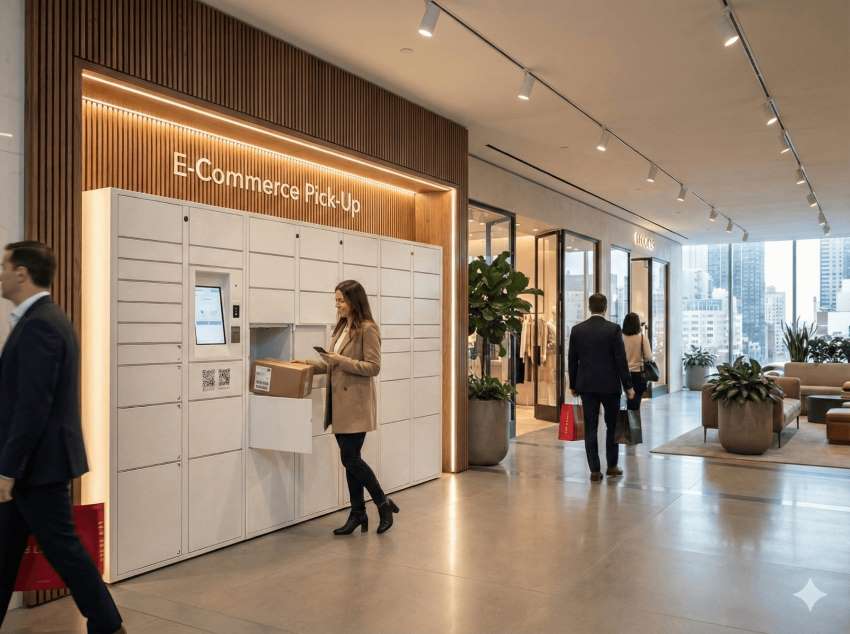
Tesla will shift its sales online and close most of its stores as a result. A small number of Tesla stores will remain open as galleries, showcases and Tesla information centers, where customers can learn about the company’s products and buy Tesla merchandise. Tesla had been opening up shop in malls across the US to operate more than 100 stores and showrooms.
Textile laundry fair Texcare Asia, China Laundry Expo in September
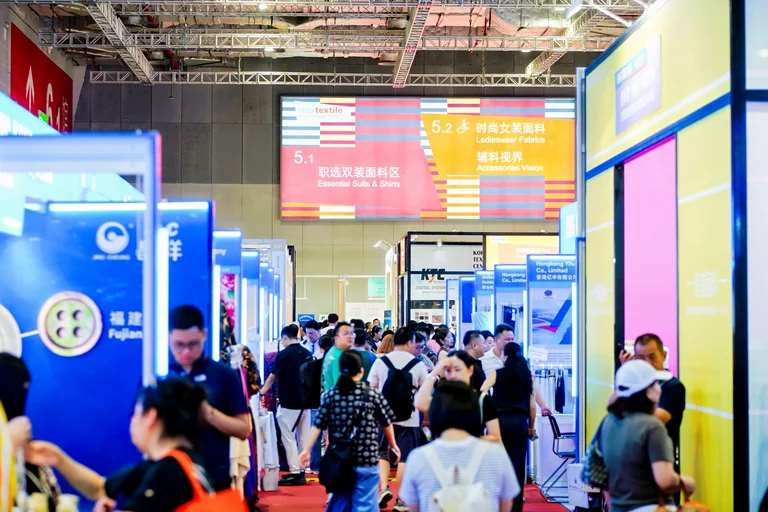
Texcare Asia and China Laundry Expo will be held September 25 to 27, 2019 at the Shanghai New International Expo Centre. This is a trade fair for textile laundry, leather care, cleaning technology and equipment. It is expected to attract 300 exhibitors and an estimated 25,000 visitors across nearly 3,23,000 sq ft of exhibit space. The three-day event will serve as a platform for industry stakeholders from the entire textile care supply chain to explore new markets, expand their business footprint and capture opportunities both in China and across the world. It will shine a spotlight on cutting-edge products, strengthening technological exchanges and promoting efficient trade cooperation. The show aims to build a win-win trade platform for not only the whole of China’s washing industry, but for all over the world. Various fringe events will take place around the fairground, which will allow participants to catch up with the latest industry developments, learn about the current market outlook in China and have valuable networking opportunities with industry peers.
The Asian textile care industry in particular has transformed in recent years, alongside the region’s economic growth and increased trade interest from overseas. More and more innovations in automation, smart laundry and digitalization have been introduced, helping improve the productivity and proficiency of operations while also allowing the industry to evolve and stay on-trend.