FW
South Korea, Japan aim for stronger fashion ecosystems focusing on local talent
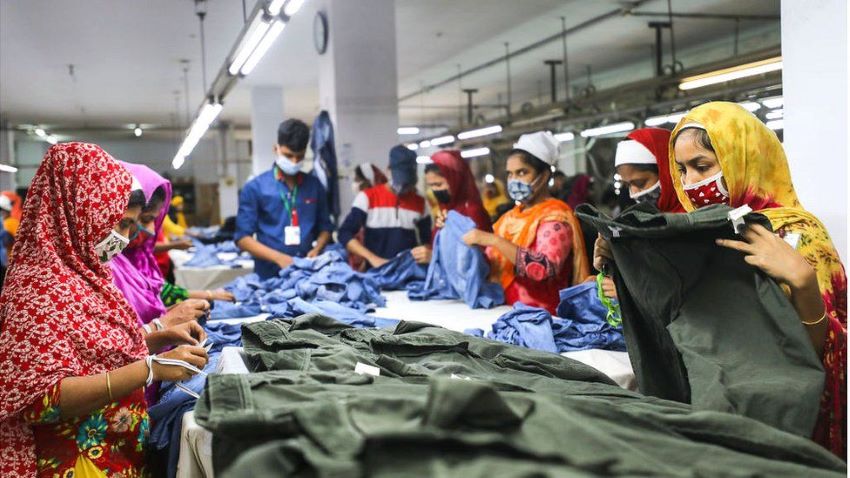
 The reopening of economies after COVID-19 induced lockdowns pushed fashion brands and event organizers across the globe to reinvent their working styles. Rumors of another wave of infections encouraged event organizers and attendees to remain attentive to changing market scenario. As a Business of Fashion report says Kaou Imajo, Director, Japan Fashion Week Organization (JFWO) prepared his organization for both a phygital and digital event. He also arranged for PPE and temperature checks at the exhibition venue.
Stepping up online operations
In Seoul, health restrictions forced Seoul Fashion Week Director Jeon Mi-kyung, to go virtual. With smaller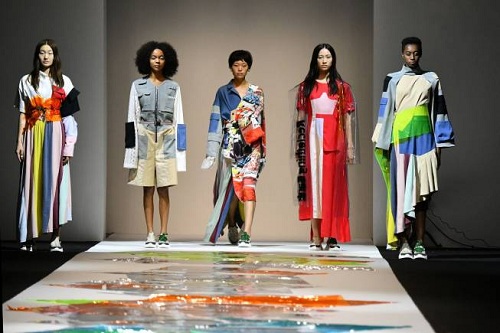 brands having trouble securing spaces for shows and presentations, designers were forced to go digital. The report further elaborates women’s wear label, EENK introduced the Virtual Reality experience for its customers. For this, EENK partnered with showroom agency Future Society and Dazed Korea for digital activations, while also hosting a physical presentation at multi-brand destination Boon the Shop.
Tokyo-based designer Masayuki Ino also explored the virtual reality concept for his label Doublet’s Halloween-themed show. The show provided attendees VR goggles to watch a 10-minute horror movie which featured zombie-like models in the brand’s signature streetwear collection. Both Tokyo and Seoul are stepping up efforts to increase online shows. Tokyo has explored the Virtual showroom Joor to bridge the gap between global buyers and designers, while Seoul opted for Le New Black. Jeon Mi-Kyung, Director, Seoul Fashion Week, plans to work with TV programs and Korean "super app" Naver to stream shows live. She plans to link up with WeChat to livestream shows and launch a sales program for buyers and consumers to target Chinese buyers and shoppers.
Lessons from China
This year, Shanghai Fashion Week was a complete homegrown affair with brands focusing on local retailers. Unable to travel abroad for appointments, local buyers used their budgets to support local talent. South Korean and Japanese brands have also placed a renewed focus on Chinese buyers, who have become the most in-demand in Asia.
According to Madame Lu, Secretary General, Shanghai Fashion Week, the feedback from brands and showrooms that participated in the Shanghai Fashion Week indicates the industry has largely recovered from the challenges faced earlier this year. The event’s WeChat index peaked at 1,162,290, outpacing Paris Fashion Week’s 240,914, points to its growing cache among local consumers. Hence, organizers plan to focus on retail innovation as well as supply chains and sustainability, which Lu hopes will become increasingly significant to shoppers in China.
Following China’s footsteps, Tokyo and Seoul will focus on local talent and becoming stronger fashion ecosystems in their own right. In June, Japan Fashion Week Organization planned to move its Rakuten Fashion Week from October to August in 2021. This will not only buy Tokyo’s designers time to meet buyers and produce wares but will also enable more buyers and press members to attend the show.
Exploring Japanese history and culture
Rakuten Fashion Week will focus on Tokyo’s strong suits. It will be one of the most original and attractive shows, says Yohei Oki, half of the design duo Shoop, which hosted its live runway show on October 17. Tokyo-based designer Mame Kurogouchi who frequently holds shows in Paris, believes, the event will be center of the junction and offer more than runway shows. She advises organizers to focus on quality and take advantage of Tokyo’s historic sites for showcases.
Imajo plans to tap into Japan’s soft power by introducing more cultural events around music and food. With brands like Sacai and those under the Comme des Garçons umbrella opting to show in Tokyo this season, a new homecoming trend could start in Japan.
US apparel imports decline by 15% in September: OTEXA
As per OTEXA data, US’ apparel imports declined by 15 percent to $6.65 billion in value terms in September compared to a year earlier, easing off a year-to-date decline of 27.71 percent to $47.03 billion.
Year-on-year volume declined by 4.6 percent for the month to 2.46 million sq m equivalents (SME). For the first nine months of the year, apparel import volume declined by 22.4 percent to 16.73 million SME compared to a year earlier. Apparel imports from China fell by 45.49 percent to $10.98 billion in the first nine months of the year. Year-over-year imports from China declined by 29 percent to $1.82 billion.
Imports from all top 10 suppliers except Cambodia declined in the nine-month period. Imports from No. 2 supplier Vietnam declined by 9.05 percent to $$9.42 billion and shipments from third-place Bangladesh fell by 13.23 percent to $3.96 billion.
Imports from Cambodia increased by 3.14 percent in the period to $2.09 billion in the nine months, but declined by 3.2 percent in the month to $289.21 million compared to September 2019. Shipments from Pakistan rose by 9.8 percent in September year over year to $140.25 million, but declined 13.1 percent in the nine months to $958 million.
Imports from Indonesia decreased by 21.28 percent year to date to $2.68 billion and shipments from India fell ny 29.89 percent to $2.28 billion.
Among the top Western Hemisphere nations, imports from Honduras declined by 39.53 percent to $1.25 billion, while shipments from Mexico fell by 33.61 percent to $1.6 billion and imports from El Salvador declined 38.69 percent to $858 million. Shipments from Guatemala increased by 13.8 percent year-on-year to $117.75 million.
Underdeveloped fabric production prevents Vietnam from leveraging FTA benefits
Vietnam’s textile and garment businesses have been unable to take advantage of free trade agreements including EVFTA due to underdeveloped fabric production. Vietnam textile and garment industry exports around $40 billion worth of products and requires around 10 billion meters of fabric each year. According to the Ministry of Industry and Trade it uses around 45 per cent of domestic materials.
The local fabric industry produces around 2.3 billion meters of fabric a year, meeting only 25 per cent of the country’s demand. Over 7 billion meters of fabric material for production and export is imported from China, Taiwan and the Republic of Korea. Tran Tuan Anh, Minister of Industry and Trade, said the country’s production of cotton, fibres and dyes does not satisfy the textile and garment industry’s demand. Not enough attention is being given to dyeing technology and environmental protection to develop the textile dyeing industry, so businesses are reluctant to invest in textile production or form start-ups in fashion design.
Vietnam’s textile and garment industry focuses mostly on manufacturing, low added value. While the industry has many opportunities from Vietnam’s free trade agreements with other economies, around 60 per cent exports comes from FDI companies. The EVFTA’s rules of origin make it harder for businesses to use their values.
An investment of around $30 billion is needed in order for the industry to be able to produce the remaining 8 billion meters of fabric.
Luong Hoang Thai, Director -Multilateral Trade Policy Department. Ministry of Industry and Trade, said the EVFTA’s rules of origin allow businesses to import fabric from Korea but Vietnam and the RoK would have to hammer out technical specifications and decide how to examine and confirm the origin of the fabric.
Guess partners with FriendsWithYou for a new Little Cloud collection
Los Angeles-based denim brand Guess has partnered fine art collaborative FriendsWithYou for a line of men’s and women’s jackets and sweatshirts featuring the group’s signature character, Little Cloud.
The five-piece collection includes a men’s reversible nylon jacket with rainbow stripes on one side and a vibrant yellow on the other. Another men’s jacket as well as a sweatshirt features the Little Cloud print. The women’s faux fur jacket is offered in a soft shade of pink with Little Cloud featured on the back.
Through this collection, Samuel Borkson and Arturo Sandoval III, Co-founders, FriendsWithYou aim to spread the positive message of magic, luck and friendship through immersive installations and interactive artworks. They have incorporated healing arts, rituals, animation and optimistic symbols through various mediums including sculptures, paintings and live performances. The retail price range for the Guess x FriendsWithYou collection is $89-$158.
Duty on cotton yarn exports may distort growth momentum: APTMA
Abdul Rahim Nasir, Chairman, All Pakistan Textile Mills Association (APTMA) believes, regulatory duty on cotton yarn exports would not only distort the momentum gained in exports after decades but also disturb continuity of government policies for export-led growth. He says, the duty would not only agitate the historic high trend of textile exports and roll back investment of more than $4 billion but also deprive the country of projected additional 500,000 jobs.
Nasir emphasized Pakistan had sufficient cotton yarn for export purposes that had enabled the textile sector achieve historic high exports of $15.4 billion. APTMA is the premier national trade association of the textile spinning, weaving, and composite mills representing the organized sector in Pakistan. It is the largest association of the country representing 396 textile mills out of which 315 are spinning, 44 weaving and 37 composite units. The total installed capacity of APTMA member mills accounts for 9,661,366 spindles, 61,608 rotors, 10,452 Shuttleless/Airjet Looms and 1897 conventional looms.
Over 500 professionals participate in ICA’s first online event
Over 500 cotton industry professionals participated in the International Cotton Association (ICA)’s first ever Virtual Trade Event - Vision 2020 that took place from October 28-29, 2020.
With a theme addressing the future of the cotton industry, the two-day event included sessions from a variety of industry leaders. The event opened with a panel session of industry experts examining how the industry will respond to the events of 2020. It was followed by another panel session delivered by industry 'Champions for Change' which showcased an array of videos from the cotton community expressing their support for Women in Cotton.
Day Two opened with Ron Lowson, Market Commentator, acknowledging ‘What you don’t see coming hurts the most when it hits you’. The event concluded with an ICA Update delivered by Bill Kingdon, Managing Director, ICA. The next edition of the event is scheduled to take place in Singapore from October 27-28, 2021.
MIS certifies NILIT fabric for anit-viral properties
Microbe Investigations AG (MIS), a microbiological testing services lab has certified a fabric made byNILIT with Sensil® BodyFresh reduced viral activities by 99.85 per cent reduction in viral activity when tested according to ISO 18184:2019 criteria against Betacoronavirus 1 (OC43), an enveloped, positive-sense, single-stranded RNA virus. The additive embedded in the Sensil® BodyFresh yarn provides long-lasting protection that does not deteriorate with laundering, indicating that the additive is not washed out of the fabric.
Sagee Aran, Head-Global Marketing, NILIT says, “With these proven antiviral test results, our business partners can expand their Sensil® BodyFresh product concepts beyond comfort and aesthetics to include enhanced protection and a positive sense of well-being.”
Sensil® BodyFresh is currently used by leading apparel brands across all segments such as intimates and underwear, base layer, activewear, and legwear. By inhibiting microbial growth, fabrics stay fresher longer and require fewer launderings. The benefits are built in to the yarn and do not wash out or wear off for the life of the fabric, providing sustainable protection that doesn’t pollute waterways. In addition to providing these proven antimicrobial benefits, Sensil® BodyFresh is responsibly made at NILIT’s water- and energy-optimized facilities and meets NILIT’s Total Product Sustainability guidelines for long-lasting, high quality products made with respect for the planet and people.
NILIT has the broadest portfolio of sustainable Sensil® premium Nylon products that address water preservation, energy use reduction, pollution elimination, biodegradability, and increased use of recycled inputs. NILIT is committed to providing the industry leadership and the products that help the apparel world use more sustainable fabrics in more responsible ways.
Australian Apparel Manufacturer QTCo Increases Investment in Kornit Digital, Answering E-Commerce Surge
QTCO, Australia’s highest-volume fulfiller of digital direct-to-garment (DTG) imprinted apparel, has installed an additional two Kornit Avalanche HD6 systems for on-demand production. The move follows QTCo’s increased order volumes in recent months, which management attributes to the company’s rapid delivery times and increased web-driven business resulting from COVID-related precautions and regulations.
Having grown since its inception 25 years ago, QTCo provides a diverse array of DTG, screen printing, and sublimation services for apparel, headwear, bags, drinkwear, and promotional products, with clients encompassing major apparel brands, independent e-tailers, and private consumers.
Investing in Kornit Digital technology has empowered the business to guarantee customized pieces are shipped within 48 hours, making small orders profitable “We could see market opportunity in short run, on-demand printing—run lengths were consistently coming, and customers wanted their jobs in less time,” said Darren Fraser, Managing Director, QTCo. “The Kornit systems had the industrial scale needed to make the switch to digital a success.Kornit’s single-step, eco-friendly platform for on-demand DTG fulfilment is well-suited to that new market landscape.”
Fraser noted QTCo has supplemented its Kornit DTG systems with popular web-based design and POS platforms, which further streamline the end-to-end process, eliminate errors, minimize time to market, and free up resources for continuous investment in operations.
India: Amazon, Reliance need to collaborate for a better future
 Indian e-commerce battle has heated up with Seattle-based Amazon and Reliance Industries fighting over a $3.3 billion deal signed by the Mukesh Ambani-owned firm with the Future Group. The deal, which gives Reliance access to Future’s grocery stores and retail shops in India, is being challenged by Amazon in the Singapore International Arbitration Center.
Deal failure to force Future into liquidation
One reason for the feud is the 4.8 per cent stake that Amazon already owns in Future Retail since September 2020. The Future-Reliance deal doesn’t mention what happens to the Amazon stake if the deal materializes. Amazon argues that the deal debars Future Group from doing business with 30 companies including Reliance. The deal has been temporarily halted by SIAC.
Responding to Amazon’s allegations, Future Group says, its failure to go through with this deal may force their retail unit into liquidation besides causing a loss of 29,000 jobs. On its part, Reliance Retail Ventures believes the Future Retail deal is ‘fully enforceable’ under Indian law. The company aims to complete the transaction in terms of the scheme and agreement with Future group without any delay. Though it already has 11,000 stores across India, its aims to consolidate industry position through this acquisition.
Future growth calls for more collaboration
To realize its e-commerce ambitions, Reliance has already being expanding presence through JioMart, The company has expanded JioMart services to over 100 cities across India and plans to branch into electronics, fashion, pharmaceutical and healthcare soon. The company also plans to tap into Reliance Retail's network of physical stores across the country to fulfill online orders, say analysts.
As both Amazon and Reliance need each other’s expertise, the industry expects both companies to forge some kind of a deal in future. While Amazon needs to expand retail space by setting up more stores and delivery hubs, Reliance needs to upgrade its e-commerce experience. However, any kind of deal between them would be possible only if they let go of their individual egos and collaborate for the industry’s future growth.
Capital-intensive model can curb labor exploitation in Sri Lanka’s garment industry
 With contracts violating labor laws and human, civil and constitutional rights, labor exploitation was a norm in Sri Lanka till 2018. Salaries of apparel workers were dismally low. They were graded according to skills and experience and did not cover even their basic needs. Also, these workers were poorly treated by their supervisors who often used foul language and physical force while dealing them. Nearly two-thirds workers were subjected to verbal abuse and 14 per cent complained of physical abuse. They also had to work overtime to complete their targets.
Failure to meet targets met with either public humiliation or the allocation of menial tasks such as cleaning toilets. Women workers lived in poor accommodation. They also faced gender based violence on public transport.
A move to ‘ethical’ marketing
All this changed in early 2000s, when the combined pressure from trade unions and international consumers pushed Sri Lanka to adopt an ‘ethical’ marketing strategy. In 2002, the Joint Apparel Association Forum launched ‘Garments Without Guilt’ campaign to promote Sri Lanka as an ‘ethical’ destination. Though Sri Lanka has high health indices, they fail to account for workers poor health or chronic conditions borne out of an exploitative environment. Many workers in the country suffer from work-related illnesses or injuries. Though recent campaigns such as the ‘Green Garment Factory’ take environmental impact into account, they do not focus on workers health.
As a recent study by researcher Kanachana Ruwanpura indicated, around 30 per cent workers reported their bodies were sore from long working hours while 14 per cent suffered minor injuries and 10 per cent had chronic respiratory conditions. Majority of factory workers in Sri Lanka are women who have completed only eight to 12 years of education.
Lack of clarity over factory ethics
Sri Lanka also does not have a clear terminology for marketing ethical products. Though companies such as MAS describe their factories as ‘ethical’, the details on their ethical standards are not clear. Though Fidelity Manufacturing lists its ‘ethical’ policies, these policies are not enforced as per law. Sri Lanka does not have a national audit to analyze the ‘ethical’ label which makes it impossible to quantify or check the quality of the label. According to Ruwanpura, Sri Lanka’s ‘ethical’ promise is a façade that lacks transparency, accuracy and reliability. Factories use ethical campaigns to be competitive without being accountable for their actions.
Need for greater automation
Experts point out, the Sri Lanka apparel industry has failed to transform with time. It is still a ’70s relic that is being cleverly rebranded to be marketable. As Vidura Munasinghe writes in his article for Groundviews, South Korea and Taiwan were able to move away from enclave manufacturing because they saw the labor exploitation in their factories. From 1960 to 1990s, both countries converted their Free Trade Zones into capital-intensive industries, taking a step further towards becoming high-tech industries.
Taiwan converted its zones into storage and logistic hubs in late 1990s, whereas Korea set up Free Economic Zones in 2000s. These zones boasted of public services such as airports, ports, and office facilities as well as first-rate schools, hospitals, financial services, malls, leisure services, and tourist facilities. Though both South Korea and Taiwan used the FTZ model, they also incorporated other industries that offered better returns. Their multipurpose hubs offered a range of services and evolved with the global economy.