Sri Lanka’s Sampath Bank joins JAAF’s ‘Ransalu Pranaama’
Sampath Bank has joined the Joint Apparel Association Forum (JAAF) initiative for launching Sri Lanka's first smart card for apparel sector employees. ‘Ransalu Pranaama’ is a program aimed at recognising and rewarding people in the apparel sector for their contribution and dedication towards the industry.
In association with the Ministry of Industry and Commerce and Sri Lanka Apparel, this program has been developed to give economic relief by way of privilege offers and price advantage to apparel employees through a network of leading consumer brands. Sampath Bank has stepped in as the sole banking partner offering a range of facilities and benefits to this segment of workers.
Tuli Cooray, Secretary-General of JAAF has appreciated and thanked Sampath Bank for coming forward to join hands with the initiative and extending these facilities to the deserving workforce in any industry of Sri Lanka.
Jaafsl.com
TIS will have a bi-annual calendar from next year
From next year, Taipei in Style (TIS) will be held twice a year, once in April and then in September. Justin Huang, Secretary General, TTF has said that the number of days too will increase from three days to four days from next year.
The following year TIS will have more to see and explore. “We are going to invite more retailers, buyers for fashionable dresses. There are plans to increase resources in R&D and innovation extending to the fashion market. We have given this information to leading players in Taiwan and they are in the process of preparing for it. Some new fabrics will also be explored in the market in Paris or Las Vegas probably and our suppliers will bring these kinds of functional fabrics. TIS will also have more international exhibitors because Taiwan is not only an international market but it is also getting involved with neighbouring countries.”
TIS next year will be a new start with Spring /Summer and Autumn/Winter. “The scale of activities will be enlarged and we hope more and more international designers and brands use this platform not only for Taiwanese markets but also for the Chinese and Japanese markets. We are confident that more companies will participate in large numbers,” sums up Huang.
Wrangler innovates and launches ‘Keep you warm’ denim
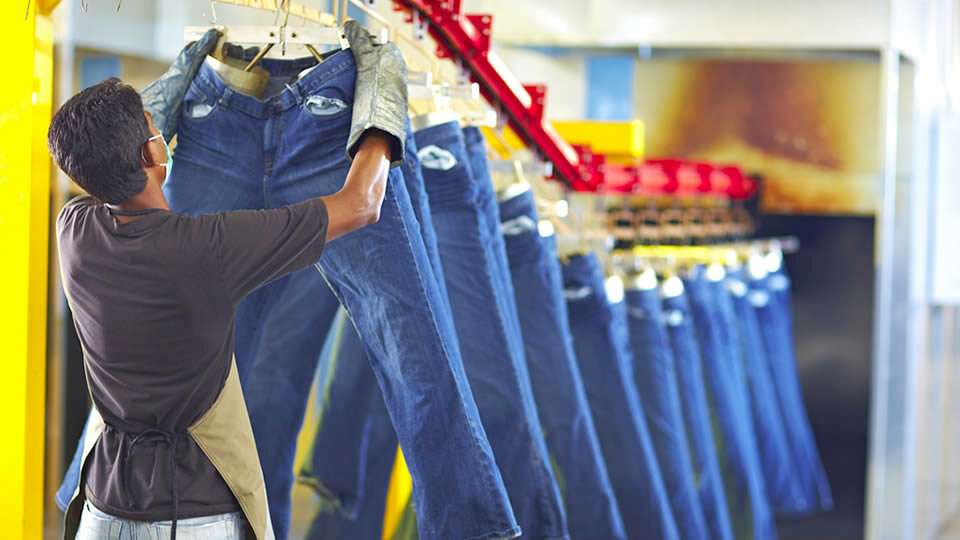
Wrangler has recently introduced denim that comes with a unique feature of keeping warmth. The range is available in iconic fits and is also water resistant.
The range consists of jeans that are woven in thermolite fibres which help in retaining the warmth without any extra weight. Thermolite, Invista’s premium fabric technology is basically a hollow core fibre, which simulates the fur of a polar bear and traps air to give added insulation.
Wrangler has used thermolite fabric in its insulated fabrics that are full of functional details. For this season, the brand has made use of warming wool, corduroy and premium real down in its collection. The trial of the ‘Keep you Warm’ collection was conducted at a specialized test institute in the US and each piece is labeled with the temperature at which it can be worn.
Wrangler is on a mission to offer unique pair of jeans with functional features for its denim consumers.
www.wrangler.com
Fiji looks for free trade policy with Australia, New Zealand
 Fiji’s clothing industry has a special agreement with Australia and New Zealand called Spartaca and has duty free access. But Spartaca hasn’t moved with the times. Koushik Kumar, President, TCF explains, “If changes to Spartaca had been made we would have been 50 per cent larger than we are now. Earlier we would produce volumes for Australian brands. But China, Indonesia, Bangladesh came up with cheaper options and we lost a lot of business. We now rely on multiple buyers. We specialize in niche markets and quick turnarounds because small run customers are ready to pay us a slight premium. That works well for both parties. We have 50 factories who are members of the TCF Council of Fiji. We make fashion, work wear, school uniforms, and high fashion women’s wear.”
Talking about the problems in Spartaca, “Kumar says, “We want free trade. We want 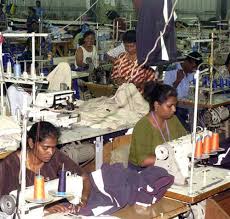 duty free access of Fijian products to Australia and New Zealand. At the moment, we have a 50 per cent local content rule. In Fiji, there’s no raw material. We are basically selling labor. So we are restricted in meeting the 50 per cent rule. Ideally, we want this rule to go or at least reduced.”
With a slowdown in demand from America the industry has significantly reduced in terms of export as well as employment. About 70 per cent of our exports go to Australia and 20 per cent goes to New Zealand and the rest goes to Pacific islands, America and Europe. Fiji is restricted in terms of skills. There is a dearth of skill development training facility. “We are working on starting training courses. That will help us upscale our labor. At the moment there are very little branded products made in Fiji.
The Fiji clothing industry employs around 5,000 people. “In 2,000 some 18,000 people were employed. Those days most of our exports were to the US due to the absence of quotas. Once the quota situation changed, a lot of Asian manufacturers closed down and took their production to where they could get better access to America. Out of Fiji’s total exports, clothing occupies 9 per cent,” says Kumar.
China is the biggest raw material suppliers apart from India and Indonesia. Kumar elaborates, “We buy fabrics from India but the lead times are longer. Additionally India is more expensive compared to China. Delivery times are shorter and shipping links are better but we have some reliable suppliers in India and the quality is good. Communication is easier in India. With India, we can work directly with the mill. In China we have to go through an agent. Now shipping links between India and Fiji are getting better and lead times are reducing.”
Fiji is receiving a lot of support from India and China. But India and China are export economies. They are interested in selling not importing. “I don’t think Fiji has anything to offer India and China. Australia and New Zealand will continue to be our biggest markets. We are targeting a 10 per cent growth a year,” said Kumar.
www.makeitinfiji.com
TFT promotes certification system
Taiwan Textile Federation is committed to planning and promoting the ‘Taiwan Functional Textiles’ (TFT) certification system. At present, TFT has established several certification standards, including the standards for 18 products, based on the criteria set up by ‘Committee for Conformity Assessment on Accreditation and Certification of Functional and Technical Textiles’ and offered product certification service to functional textile manufacturers and merchandisers. The TFT certificate label is now registered in Taiwan, US, European Union, Korea and Japan.
After several efforts in R&D in functional textiles, the Taiwan textile industry has reached a general consensus on what they ought to do in the future. Renowned firms have been devoting efforts in research and production of functional textile goods. As products can vary in quality, buyers and consumers must test and use the textiles to verify the acclaimed functions. Therefore, the importance of product quality assurance approved by a reliable organization was given high precedence. A certification system would be important to local and overseas buyers and consumer who can look for the certificate label to identify the quality of the products they are buying.
Intertextile Shanghai Home Textiles-Spring 2014 stands cancelled
Intertextile Shanghai Home Textiles – Spring Edition, due to take place in March 2014 stands postponed until 2015. Wendy Wen, Senior General Manager of Messe Frankfurt (HK) explained that all the stakeholders were consulted prior to taking the decision. Local exhibitors feedback is that only one home textile fair in Shanghai during 2014 was desirable was the reason for the postponement,” Wen said.
Wendy said they will be concentrating on the 2014 autumn fair as it would be more beneficial for exhibitors and local buyers. The Spring edition scheduled for 2015 will go ahead as overseas orders in the Asian region and China will pick up. It will be held concurrently with Intertextile Shanghai Apparel Fabrics – Spring Edition, with the synergies of this co-location providing new opportunities for exhibitors and visitors of both fairs.
Messe Frankfurt’s two other home textile fairs in China will be held as per schedule in 2014, providing overseas exhibitors and buyers access to the numerous opportunities in the Asian home textile market. From March 18-22, 2014, Intertextile Guangzhou Hometextile China will be held concurrently with the China International Outdoor & Leisure Fair, Homedecor & Housewares China and the China International Furniture Fair (Guangzhou) whereas Intertextile Shanghai Home Textiles-Autumn Edition will take place from August 27 to 29, 2014 at the Shanghai New International Expo Centre.
CLASS and GCC team up for sustainable solutions
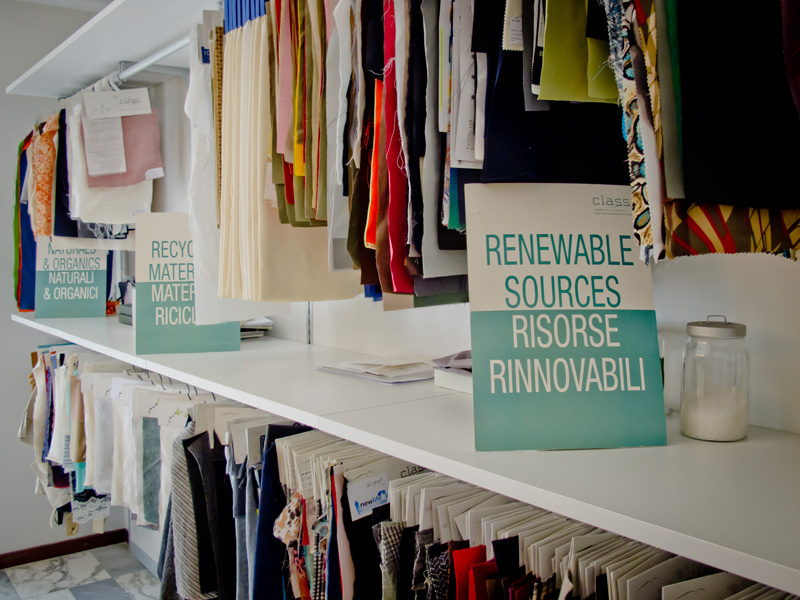 Set up in 2007, CLASS (Creativity Lifestyle and Sustainable Synergy) is a global unique multi-platform network that showcases exclusive fashion, textiles and materials created using smarter sustainable technology. The initiative provides a comprehensive global communication, marketing and product development consulting service through innovative and sustainable design solutions.
The product categories available at CLASS showrooms include natural and organic textiles made from wool, silk cashmere, cotton, linen, hemp, vegetable tanned and dyed leather. Fabrics made from recycled polyester (eg. Newlife), recycled polyamide, cashmere, cotton, denim and wool (e.g. Cardato Regenerated) created to reduce carbon footprint. Innovative renewables made from new biopolymers (e.g. Ingeo), paper, milk protein, soy, seaweed, regenerated cellulosic’s (e.g. Tencel),wood pulp fibre (e.g. Lenpur), bamboo, Modal/Micromodal and crab’s carapace fibre (e.g. Crabyon). These textiles are designed to reduce dependency on oil and promote more sustainable renewable resources.
It is an international eco-platform that supports and promotes environmentally sensible products for fashion, home and design through a wide range of eco-textiles, yarns, processes and services. Its global network of showrooms feature a comprehensive materials library, available for businesses, designers and buyers as well as highlights from ranges of finished high-quality and stylish fashion garments and accessories, products for the home, and eco-relevant lifestyle products. From marketing and product development consulting service centered around a new approach to textiles that includes design, innovation and responsibility, CLASS serves as a complete communication tool.
Green Carpet Challenge
In 2012, CLASS joined forces with ‘The Green Carpet Challenge’ (GCC) by Livia Firth to create the first “Green Carpet Challenge Fabric Library”. The Green Carpet Challenge is a dynamic project founded by Livia Firth and British journalist Lucy Siegle which pairs glamour and ethics to raise the profile of sustainable style at the world’s most high profile red carpet events.
(GCC) is a fast moving, dynamic project working on a number of levels to unlock the potential of Sustainable Style. Working with A-list designers and pioneering sustainability in brands, the GCC has catapulted sustainable style into the spotlight at the world’s most high profile events. From the Golden Globes and Academy Awards to the Met Ball and Cannes Film Festival, the GCC has collaborated with all the iconic design houses in the world winning widespread critical acclaim and international media attention.
The Green Carpet Challenge (GCC) team are experts in sustainable supply chain innovation and fabric technology. It works directly with brands to develop their supply chain, traceability and sustainable credentials, across the board or with specific product focus. In addition the GCC collaborates with the world’s top designers and fashion houses on high profile, event based projects. The GCC team also drives and champions an impressive sustainability agenda throughout the fashion and accessories sectors.
Europlasma, Pinnacle Tech JV to focus in Taiwan industry
Europlasma NV has recently signed a commercial agreement with Pinnacle Tech of Taipei under which they will focus on the technical textiles industry in Taiwan.
Europlasma’s low pressure plasma technology can be used to clean, etch or activate technical textiles. There is a growing demand for Europlasma’s patented and patent pending Nanofics nanocoating technology to make textiles super hydrophilic, or super hydro- and oleophobic in a durable fashion. Nanofics technology is a dry and clean alternative to traditional wet chemical processing. These nanocoated textiles are used in filtration, in the medical field, in personal protective equipment, and outdoor applications. Pinnacle Tech will develop sales and after sales service for the Taiwanese market and will sell Europlasma’s low pressure plasma technology to the technical textiles industry in Taiwan.
Bangladesh garment units go slow on hiring
Readymade garment factories in Bangladesh have almost stopped recruiting workers. One reason is that the revised wages has come into force from December. Another is that export orders have fallen. Long term and bulky export orders are getting infrequent. In these circumstances, apparel makers are now unwilling to recruit workers. Some factories are even thinking of laying off of workers.
In addition there is a problem of labor unrest. Owners fear hooligans will gain entry into the premises in the guise of hired labor and create problems. Owners are not appointing workers, but are rather trying to cut jobs to adjust to the new wage structure. They claim they are facing a situation where wages are on the rise while production levels are dropping. However, labor representatives claim that some of the factories are selectively dismissing workers, particularly those who are involved in trade unions.
As a way out, apparel makers want incentives from the government. Around 44 lakh workers are employed in the country’s readymade garment sector – 80 per cent are women especially from rural areas. Some factory owners have opted for avoiding recruitment of male workers after violent labor unrest.
CSI, China’s Donghua University tie up to train about colors
Color Solutions International, a division of DyStar Group, will open a CSI color center in Donghua University, Shanghai. The center will serve as a training, resource and inspiration centre for professors and designers. The aim is to raise the current technology and application standard for colors within the textile industry of China, as well as improve its sustainability and competitiveness. The strategic partnership also caters to color communication and textile dyeing, training, for both professors and rising designers.
Since Donghua attracts and develops international designers, the CSI color center is expected to be an ideal platform to enhance the nurturing process. The university has established cooperation with over 100 foreign universities, research institutions and enterprises. Donghua also holds international conferences and forums in fields such as textile, fashion, and material.
Color Solutions was founded in 1999. The company’s aim was to provide retailers and brands a more sophisticated and accurate method for communicating seasonal palette colors to textile mills. DyStar acquired the company in 2003. CSI provides vendors and textile mills with spectral data of the color standards, which allows for rapid color development at the textile mills. The certification process ensures color accuracy and consistency from season to season.
More...
Vietnam to sign TPP agreement, boost textile & apparel industry
Vietnam is all set to sign the Trans-Pacific Partnership agreement. And it’s the garment and textile industry that will benefit the most with this agreement. With TPP membership, Vietnam’s annual textile and garments export to the US could increase by 13 per cent to 20 per cent by 2017. TPP membership would give it unfettered access for apparels, footwear, seafood and pharmaceuticals. The agreement would help stimulate investment in making raw materials, helping to increase the rate of localised products. By 2015, the localisation rate for export products is expected to be between 60 per cent and 70 per cent, helping open up many opportunities for the sector. It would allow Vietnam to become one of the largest textile and garments centers in the world.
TPP membership would stimulate the economy and inflation would drop as the number of foreign-invested projects increased. Vietnam has around 4,000 garment factories employing about 2.5 million workers. The Trans-Pacific Partnership Agreement is a free trade agreement currently being negotiated by nine countries. These include the United States, Australia, Malaysia, New Zealand, Peru, Singapore, and Vietnam.
To qualify for TPP membership, however, Vietnam will have to abandon the Chinese model of maintaining a state-dominated economy behind a screen of capitalism.
Shanghai Texcare Asia displays innovations in dyeing, cleaning
Texcare Asia was held from November 19 to 21, 2013, Shanghai. Nearly 150 exhibitors from countries like Belgium, China, Germany, Hong Kong, Italy, Turkey, the UK and the US presented their latest innovations in laundry, dry-cleaning, ironing and dyeing machinery in addition to systems for textile management. The number of visitors increased by 20 per in this edition representing hotels, laundromats, dry-cleaners, government and military departments and hospitals.
For exhibitors, the three-day event was an opportunity to meet decision-makers, learn about new solutions from competitors as well as close deals on-site. The products displayed ranged from automatic folding machinery and washers to machines capable of pressing and dry cleaning garments in just a few seconds. The Chinese market is currently going through a phase that Japan experienced in the ’90s, where more and more dry cleaning businesses are being franchised with central processing plants. A number of buyers came from neighboring countries India, Japan and Singapore.
Texcare Asia represents the best platform currently in China for promoting and marketing the textile care industry. Texcare Asia’s next edition is scheduled to for fall 2015.
Lectra holds sixth congress in Milan
Lectra hosted its sixth annual education congress Milan, Italy recently. The congress brought together over 55 professors, department heads and directors from 34 fashion schools and universities from all over the world. The congress also touched on the theme of 3D, which is becoming a major tool in a company's product development arsenal. Women’s wear brands rely on Lectra 3D solutions to enhance creative designs. The congress also featured the Mittelmoda fashion show, an international design competition.
The aim of the congress is to allow participants and Lectra specialists to share their experience and expertise and to build a think tank geared toward the specific needs of fashion schools and universities. This think tank focuses on different ways of providing students with a solid background, preparing them for their professional futures. It addresses key concerns of fashion schools and universities in terms of teaching methods and of students’ involvement in concrete projects.
Lectra is a world leader in integrated technology solutions dedicated to industries using soft materials, fabrics, leather, technical textiles and composite materials. Lectra develops the most advanced specialized software and cutting systems and provides associated services to a broad array of markets including fashion (apparel, accessories, footwear), automotive (car seats and interiors, airbags), furniture, as well as a wide variety of other market sectors, such as aeronautical and marine industries, wind power, and personal protective equipment.
SAC out with updated version of Higg Index
The updated version of the Higg Index was recently unveiled by the Sustainable Apparel Coalition (SAC) which is a trade association comprising of brands, retailers, manufacturers, government and non-governmental organizations and academic experts. The Sustainable Apparel Coalition is committed towards improving the Higg Index and the updated version reflects its effort in development. The updated Index has expanded its covering with the addition of modules enabled to assess labor and social impacts for brands and manufacturers. A footwear module has been added for the very first time that permits footwear facility assessment. The Index has also improved on sustainability content considering chemical impacts by improving facility and brand assessments.
The Higg Index was launched in 2012 with an aim to measure the comprehensive environmental and social impacts of apparel and footwear products, and since then has allowed more than 100 companies to identify opportunities to reduce impacts and improve long-term sustainability. The Sustainable Apparel Coalition, represents more than one-third of the global apparel and footwear industries and was formed by sustainability leaders and leading environmental and social organizations to address current social and environmental challenges.