Santoni and Lenzing produce knitted denim
Santoni and Lenzing have collaborated on a knitted denim project. Santoni is a seamless knitting machine manufacturer and Lenzing is a fiber manufacturer. Innovative knitted denim is a contrast to the traditional woven denim fabric.
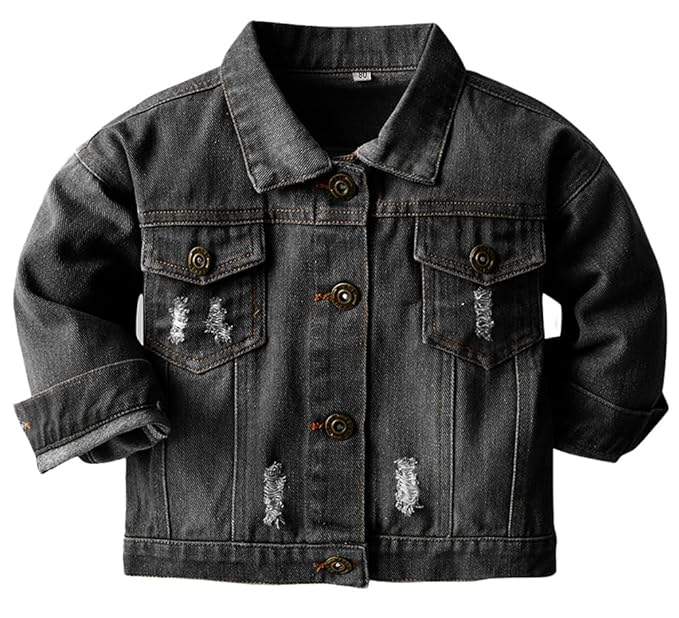
The new project involves the knitting of an innovative denim double-face quilted fabric produced by Santoni’s double jersey circular knitting machine, the Mec-Mor CMP, and Lenzing’s Tencel fiber.
The Mec-Mor CMP is a circular knitted garment length machine complete with rib border separation. It offers both high quality finished items, and high-level productivity with its large number of feeds. One single machine can produce all sizes without waste by means of the variable width of the fabric panels that allows the exact number of working needles to be selected for the required size of product.
Tencel is the sustainable lyocell fiber derived from wood pulp with only wood from certified or controlled sources used. This closed loop production system means the fiber production process is extremely eco-friendly.
Textiles made of Tencel are not only sustainable but soft and comfortable. The yarns can be smoothly knitted on Santoni seamless knitting machines while the garments can undergo the same traditional indigo dyeing process used for denim fabrics.
The new totally-reversible seamless denim quilted jacket produced on this machine provides greater comfort due to its dedicated areas of increased fit and well-being.
Monforts to debut ‘texcoat’ coating range at Techtextil’17
Monforts will demonstrate its full range of new coating units for the first time at Techtextil’17. On display will be Knife over roller/air system; magnetic roller system; and printing head systems. The Monforts coating range ‘Textcoat is now available worldwide and follows recent acquisition of renowned manufacturer Timatec; who was previously active mainly in Central European markets.
Single sourced solutions ranging from single sided applications of finishing agents such as, outdoor clothing, home textiles sector, to sophisticated lightweight construction using innovative textile-based coated materials in the automotive and aerospace industries are now available.
The coating systems are available in four versions – basic, multi-functional, universal and multi-functional. All Monforts coating systems feature simple and user friendly PLC techniques with on-screen visualisation for all operating modes. Recipe management for different coating processes are integrated in to the proven Qualitex control system of the Montex stenter.
Designed for constantly changing technical textile coating process applications, the systems coating modules can be quickly and easily changed by a specially designed undercarriage from the side of the unit; allowing it to be adapted for different applications. Monforts can also provide ex-proof ranges for solvent-based coatings and for high temperature processes up to 320°C such as, for example, PTFE sintering.
Groz-Beckert providing high quality sewing solutions to global industry
The GTE held from January 19 to 22, January in New Delhi saw around 300 participants from over 800 companies. The GTE is India’s largest event committed to apparel technology. Groz-Beckert was present with its sewing division in Hall A, Booth A11. Partnering the textile industry, Groz-Beckert also satisfies the needs and requirements of sewing and apparel industry.
At this year’s GTE, the company demonstrated how high-quality sewing needles are decisive element for success. It also provides a comprehensive service that supports customers before, during and after the sewing process. This is the key approach of the service concept Sewing5, based on the five Ss: Supply, Solutions, Service, Superiority and Sustainability. Together, these key factors represent the consistent customer orientation and service competence for the brand.
Another competitive edge of Groz-Beckert’s sewing is the online customer portal where comprehensive information on sewing technology and a digital product catalogues are available. It gives exclusive access to animations on different types of stitch formation and completes versatile presentation.
The latest service highlight offered by the brand is the INH Quality Management (Ideal Needle Handling). It allows a trouble-free and time-saving handling of broken and damaged sewing machine needles. It also helps meet the different specifications and compliances of brand owners and buying houses in a uniform procedure.
Currently the brand also offers a digital solution for documentation of needle breakage which is called Smart INH. It has two software components: A mobile app called INH@site and an administration software or INH@office. They enable digital storage of needle breakages (in form of picture-data sets) as well as the administration of machines, production orders and inventory.
Groz-Beckert is the world’s leading provider of industrial machine needles, precision parts and fine tools as well as systems and services for the production and joining of textile fabrics. The products and services support the fields of knitting, weaving, felting, tufting, carding and sewing. The family-owned company, founded in 1852. Groz-Beckert operates with agencies, production and distribution subsidiaries in more than 150 countries around the world.
Gap aims to increase organic cotton usage
Gap plans to source 100 per cent of its cotton from sustainable sources by 2021. The company is aiming for a dramatic increase in sustainable fibers and textile innovation for its fashion brands including Gap, Banana Republic, Old Navy and Athleta. Critical for that procurement goal is the sourcing of better cotton.
The company generated almost $16 billion during its last fiscal year. While an increase in BCI-certified cotton is critical to the company’s mission, Gap will also increase its purchase of organic, American-grown and recycled cotton. Gap claims to have already sourced 11.5 million pounds of better cotton since 2016, which it says is enough to manufacture 7.4 million pairs of jeans.
For Gap, more responsible cotton is not just about meeting its sustainability goals but about water conservation, women’s empowerment, and a reduction in energy consumption and waste. These goals will require additional innovation and further developments in current technologies.
Other garment companies are also trying to minimize their supply chains’ social and environmental impacts. Timberland has pledged to source all of its cotton from either BCI growers, organic cotton farms or American cotton farms by 2020. H&M has established similar goals. Marks & Spencer has a 70 per cent goal for 2020.
Bangladesh gains six per cent global share
Garment exports accounted for nearly 85 per cent of Bangladesh's total products sold overseas in 2016. The country's share in the global apparel market is about six per cent. Kurt Salmon, a leading global strategy consulting firm focused on the retail industry, conducted a survey on six garment producing nations: Bangladesh, China, India, Morocco, Myanmar and Turkey.
Myanmar has begun its comeback to the textile and apparel business and has the most potential to emerge as a formidable player among garment producing nations. Myanmar has deep experience in the textile industry, but it does not cover all parts of the value chain.
Bangladesh is the most attractive destination to European retailers among the six nations due to its competence in the supply of quality products at competitive prices. China is in the second position. India is the third most attractive destination, Morocco fourth, Myanmar fifth and Turkey sixth.
Cambodia is ahead of Bangladesh in terms of using more technology in production.
Bangladesh has the potential to further strengthen its relative position if production capabilities can evolve and quality can be improved while ensuring social and environmental compliance standards.
Denim apparel shows a clear move away from China, which lost seven per cent in 2014, while most other markets have been able to strengthen their position.
Ably presents eco-friendly clothing line Filium
"The apparel industry accounts for over 10 per cent of global carbon emissions and remains the second largest industrial polluter, second to the petroleum industry. About four million people are employed in the US fashion industry. The average household in America spent almost $2,000 last year on apparel and footwear, releasing high amount of carbon footprint."

The apparel industry accounts for over 10 per cent of global carbon emissions and remains the second largest industrial polluter, second to the petroleum industry. About four million people are employed in the US fashion industry. The average household in America spent almost $2,000 last year on apparel and footwear, releasing high amount of carbon footprint.
Presently, the US is the largest importer of garments in the world and nearly 40 per cent of apparel products sold in the US are imported from China. According to the Environmental Protection Agency, 13.1 million tons of textiles are trashed each year in the US, but only 15 per cent are donated or recycled. Washing and drying a load of laundry every two days produces roughly 970 pounds of CO2 per year.
The new idea – Filium

In this background, the scope of sustainability is growing faster than anyone could have ever imagined. The new contender in this line is Seattle-based apparel company, Ably. The basis for Ably’s eco-friendly clothing line is a patent-pending technology called Filium that activates its 100 per cent all-natural cotton. Filium is a process that makes natural fabrics like cotton, wool and silk repel liquids without affecting how soft and breathable they are. This makes Ably apparel incredibly stain and odour resistant, which means clothes stay cleaner and smell fresh for weeks on end.
Raj Shah, Co-founder, Ably and Co-creator, Filium, said that Ably and Filium were created to combat pollution problem. It’s going to take a lot of change in the industry to slow or reverse the effects of climate change. Having said that the company believes if they can give consumers the ability to choose to wear high-quality clothing that is long-lasted and sustainably made, then it is moving in the right direction.
The average cotton garment has an average life of about 40 washes. The new material will increase its lifespan at least 10 times. Washing in cold water extends the life even more. Ably clothes also hang dry really fast, so you don’t have to use the drier either, saving more electricity and extending the cloth’s life even further. Less loads of laundry means less carbon dioxide released into the atmosphere, less water and electricity usage, and less effluents that are released into our lakes, rivers, oceans and streams. Filium is completely safe and doesn’t use nanoparticles or harmful chemicals that can break down and leach into your skin or the environment, making it a breakthrough that could have a huge impact on the planet by reducing waste and wash cycles.
Dyeing, printing and bleaching textiles involve huge amounts of energy and chemicals along the entire manufacturing line. In fact, a quarter of all chemicals produced in the world are used in textiles. China produces 53 per cent of the world’s textiles, and discharges about 40 per cent of all dyeing chemicals worldwide. Other liquid-repelling fabrics are made with petroleum-based synthetic materials, like nylon and polyester, which just uses more petroleum and energy, so having cotton with the same characteristic is an even better way to reduce carbon footprint.
The amount of energy required to produce fibres for clothing varies widely among different fibres. Linen uses the least and is the most eco-friendly, and cotton is pretty low as well. Feedstock energy use reflects the energy associated with fossil fuel extraction.
Frankfurt ready to host Techtextil and Texprocess in May
Frankfurt is ready to host Techtextil 2017. Techtextil 2017, will be held concurrently with Texprocess, a show for the textile processing industry, from May 9-12.
Leading Japanese manufacturer of computerized flat knitting machinery, Shima Seiki will present its latest innovations along with its Italian subsidiary Shima Seiki Italia .On display will be Shima Seiki’s line-up of advanced computer design systems and computerized flat knitting machines, The knitting technology sector this year is well represented by German companies. Albstadt-based circular knitting machine manufacturer Mayer & Cie will be present again, however, it will not be exhibiting any machines. Another Albstadt-based manufacturer, Groz-Beckert, a leading provider of industrial machine needles, precision parts and fine tools, will be there with its high-quality needles and system parts for circular, warp and flat knitting segments.
German company, Stoll, an established manufacturer of flat knitting machines, will be presenting designs and applications of its flat knitting technology at Techtextil Karl Mayer, an Obertshausen-based manufacturer of warp knitting machinery, will be participating in Techtextil with a focus on textile-reinforced concrete and functional clothing for the sports and athleisure sectors.
Jakob Müller, a Swiss specialist in technology for manufacturing of woven and knitted tapes and webbings, as well as technical textiles, printed narrow fabrics and winding machinery, will exhibit its latest technological solutions at the fair
Jeanologia develops new processes
Jeanologia, a leader in the development of sustainable technologies for finishing garments has developed a process called One Glass, One Garment, this will finish garments with 95 per cent savings in water, 90 per cent in chemicals and 40 per cent in energy.
Jeanologia, a Spanish specialist for sustainable technologies for garment finishing, has been researching for over 20 years on how to transform the jeans industry. Jeans is the second best-selling garment in the world after the T-shirt but its production is enormously polluting and manual. Jeanologia’s objective as a technological partner is to transform this industry, to make jeans sustainable. Its solutions based on laser, ozone and nano-bubbles are able to increase productivity, reduce the time to market and reduce production costs. Jeanologia has customers across five continents and exports of machinery and services account for 90 per cent of its turnover.
Jeanologia products and solutions are currently being used in more than 45 countries, including México, Colombia, Brazil, USA, Germany, Italy, Portugal, India, China, Russia, Japan, Morocco, and Bangladesh. Among its customers are major brands such as Levi's, Polo Jeans, Abercrombie & Fitch, Edwin Japan, Pepe Jeans, Diesel, Hilfiger Denim, Salsa jeans and other large retailers.
Pakistan: KCA concerned about duties on raw cotton imports
The Karachi Cotton Association (KCA) has expressed its serious concern on reports that the government is considering levying duties and taxes on import of raw cotton. Due to devastating cotton crop failure in cotton season 2015-16 and shortfall in cotton crop 2016-17 season, the local textile mills are compelled to import raw cotton from aboard to meet their requirements of basic raw material.
KCA says if duty/tax is levied on import of cotton, the cost of doing business of the local textile mills will be considerably increased which will make them uncompetitive in the international market. The KCA, therefore, strongly recommends the government not to impose any duty and tax on import of cotton so that the local industry could meet its requirement of shortage in raw material from abroad and ensure exports of optimum quantity of value added products of raw cotton in the international market to earn valuable foreign exchange for the country.
The KCA strongly endorses to continue a free trading policy of cotton which is free exports and import of cotton without any quantitative or qualitative restrictions in the coming years to safeguard the interest of all sections of the cotton trade.
Home textile makers to roll out fresh smart technologies at Heimtextil
Home textile companies are leaving for Heimtextil, the international trade fair for home and contract textiles, takes place January 9 to 12 in Frankfurt, Germany. Portuguese home textiles manufacturer Mundotêxtil is joining Italian yarn spinner Marchi & Fildi’s smart cotton yarn Ecotec to launch what it calls the Smart Cotton Towel at Heimtextil that saves up to 77.9 per cent water in production, as well as reductions in energy and carbon dioxide emissions.
This innovative range of Mundotêxtil towels is made from 65 per cent Ecotec Polaris yarn in 100 per cent cotton blended with organic cotton or Ecotec Chagall yarn containing cashmere. Mundotêxtil was launched in 1975, and is now one of the leading towel manufacturers in Europe and the world. Located in Vizela in Northern Portugal, Mundotêxtil employs 600 skilled staff and exports to over 40 countries. The company supplies top department stores, hotels, spas, supermarkets, boutiques, catalogues and e-commerce companies. It has invested in technology that permits for improvements in the levels of water use, lowering energy consumption, treating effluent and controlling waste disposal.
The new strategic choice to develop a more responsible towel with Ecotec Smart Cotton by Marchi & Fildi is part of its commitment to enhancing the eco footprint and sustainability quotient for products and processes throughout its supply chain. Ecotoc by Marchi & Fildi is the “smart” range of cotton yarns produced with an exclusive, made in Italy, transparent, traceable and certified process that transforms pre-consumer, pre-dyed cotton clippings into a high quality material with strong efficiency in water, energy and CO2 savings.
Ecotec Smart Cotton is also a partner of Creativity Lifestyle and Sustainable Synergy (C.L.A.S.S.), a multi-platform hub based in Milan specialising in integrating a new generation of eco values into fashion and home products and companies. Also at Heimtextil, Trident Global, the US division of the Trident Group, will unveil eight new bed sheet and towel technologies.
Jeffrey Kambak, CEO of US operations for the Trident Group, says they will now be able to bring a sense of luxury to consumers’ lives by improving their daily bath and sleep experiences. With this new range of products that focuses on premium blends and innovation in yarn construction, the brand is offering everyday indulgence.
Trident’s expanded line of bedding offerings includes Hyde Park, a luxury collection of Egyptian cotton with a 500 thread count, giving strength and a lustrous sateen weave, and Tetra Fine, a performance sheet that provides an all-in-one offering of four key attributes, combining moisture management, quick dry comfort, anti-pilling and wrinkle resistance for a premium sleep experience.
More...
Bangladesh: Foreign buyers paying less for green factory apparel
According to Tofail Ahmed, Bangladesh’s commerce minister foreign buyers are not paying enough for apparel and garments manufactured in eco-friendly factories. Investments have been made to make factories eco-friendly, however, buyers have not increased prices. On the contrary, they have been cutting prices.
Factories turned green after the Rana Plaza collapse in 2013 that claimed the lives of 1,130 people, with a view to improve workplace safety and environment. After this incident, multiple steps were taken to ensure workers' safety.
The national initiative, Accord, and Alliance inspected over 3,780 factories and ended up renovating 47 factories and closing 39 of them. The initiative also resulted in seven factories in the country receiving leadership in energy and environmental design certificates from the Green Building Council of the US.
Less than 2 per cent factories in Bangladesh are non-compliant, which is an internationally recognized standard, says Tofail. Germany being the second largest market for Bangladesh, labour laws of the country were amended and workers welfare association were allowed to be formed in export processing zones.
Bangladesh: EU investors want single law inside, outside EPZs
The European Union have for long been recommending Bangladesh to bring in one single law for workers inside and outside the Export Processing Zones. The EU recently sent a letter to the government threatening temporary suspension of the trade privileges for Bangladesh, if necessary amendments to the EPZ law are not completed by the middle of this year.
The European Union’s move comes after the Rana Plaza tragedy that took place in 2013 killing hundreds of people. The European Union and Bangladesh have signed along with the International Labor Organization the sustainability compact. The European Union has understood the working class workers have no safety or insurance in most Bangladeshi factories.
This move comes just before the Geneva International Labor Organization meet to be held in July. Foreign investors made it clear that they favor a solution where the same law would regulate labor relations inside and outside the EPZs. This is what they already observe in other countries where they operate. European investors would not be inclined to invest in EPZs anywhere until and unless they have the assurance that the corresponding legislation is fully aligned with UN core labor conventions. For that reason, the current draft EPZ law has become quite a touchy topic. It would have to be found related to key issues such as energy supply, infrastructure enhancement and training of labor.
Greece: Corfu to host 17th World Textile Conference of Autex in May
The 17th World Textile Conference of Autex will be organized by the Piraeus University of applied sciences shaping the future will be held on the island of Corfu also known as Kerkyra one of the most cosmopolitan islands of Greece from May 29 to 31 2017.
Continuing the tradition established by previous successful editions of the World Textile AUTEX Conferences, the forthcoming conference will encompass wider area of the textile and fibre science and engineering. The 17th AUTEX Conference aims in becoming a forum for the presentation of research novelties, exchanging of ideas, and bringing together the textile academic, industrial and business communities. Specialists from all over the world will share their knowledge, experiences and they will envisage the future of textiles.
The conference will take place in Corfu, one of the most beautiful Greek islands, in Ionian Sea. Corfu Holiday Palace hotel will host the conference and it is located in the best and picturesque position on the island. Corfu Island has numerous wonderful sights. Many conquerors arrived on the island through centuries, including British and Italians, leaving an evident mark on the local culture.
Brazil's textile and apparel exports are revitalizing
According to recent figures from the Arab Brazilian Chamber of Commerce (ABCC), Brazilian textile and apparel export to the Middle East surged during the first two months of 2017, increasing by 87.5per cent compared to the same period a year ago, touching $3 million up from $1.6 million in January and February 2016. This growth has been led by increasing demand for synthetic fabrics and sisal rope used in ships and rigs in the Arab markets.
Brazil’s textile exports performance during the first two months of the year signify its steady growth in market share in Arab continues which is looking for quality raw materials and finished goods. The Arab countries are some of Brazil’s largest markets for textile and apparel exports, particularly for segments such as party wear, children’s wear, and beach wear. Based on ABIT’s data, the United Arab Emirates had the highest imports, followed by Algeria, Egypt, Morocco, and Lebanon.
To boost Brazilian textile and apparel exports, the Brazilian Textile and Apparel Industry Association and the Brazilian Trade and Investment Agency (Apex-Brazil) have launched the Texbrasil program, which benefit affiliated exporters. Official figures showe Brazilian textile and apparel companies that participated in the program expanded their export markets to Arab countries by 40 per cent in 2016, with a total value touching $4.1 million in 2016 from $2.9 million in 2015.