Garmon launches ‘Stretch Care’ an avant-garde range of solutions
Italy-based Garmon Chemicals has launched a Stretch Care collection. In January, the company was acquired by Kemin, a global ingredient manufacturer committed to improving the quality, safety and efficacy of feed, food and health-related products.
Garmon, has set benchmarks in the textiles auxiliaries business. It has been creating special relationships with top denim and sportswear brands, affirming itself as a key player able to offer a fashion-forward approach toward textile chemistry. Now the aim is to become a truly glocal company, make the business more efficient and more eco-friendly by reducing its carbon footprint and saving energy.
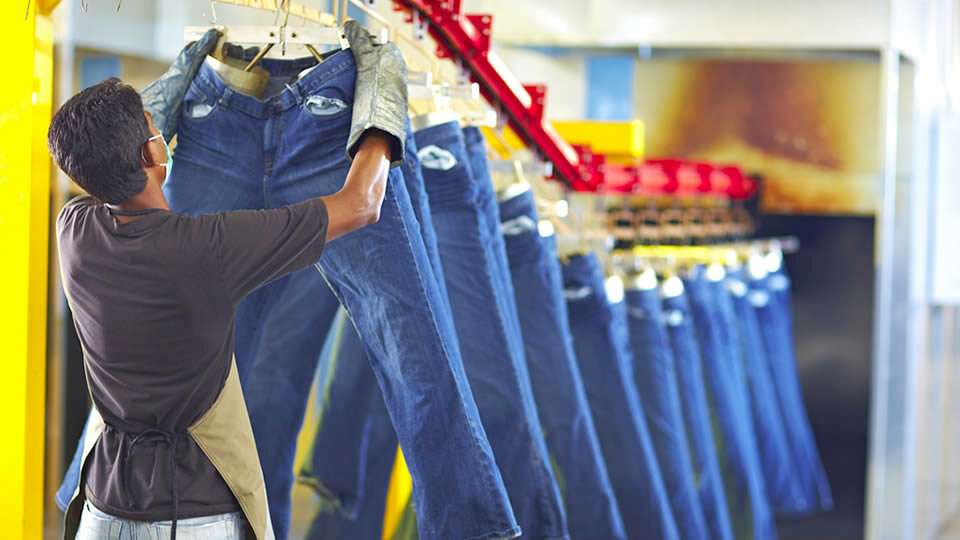
Consisting of all eco-sustainable and Green Screen certified products, Stretch Care is a real green package, offering avant-garde solutions. It is a set of truly responsible tools to give the garment a unique personality. In this way the line offers many alternatives and an incredibly flexible product range. Thanks to a special formulation, the Stretch Care collection develops a full range of product treatments with extraordinary characteristics. It minimizes the loss of elasticity, for superior shape retention and recovery performance. It protects fabrics and accessories from damages, greatly improving garment quality and provides the garment with a special personality and extraordinary contrasts. Finally it makes the garment feel incredibly softer to the touch.
Australian clothing brands against committing to Accord in Bangladesh
The tragedy of Rana Plaza collapse has improved the world’s emphasis on the appalling conditions endured by garment workers in Bangladesh and elsewhere, and put public pressure on western brands to do more to ensure safety and labour rights in their supply chains.
It led to the inception of Accord on Fire and building safety in Bangladesh, an independent, legally binding agreement between brands and trade unions to protect workers. The Accord has 222 signatory companies and is estimated to cover two million workers it has covered 1,600 factories, 767 of which have mostly completed safety remediation.
The agreement also gives greater legal power to workers to ensure brands are protecting them. Earlier this year, the Accord was used by garment worker unions to reach a landmark $2.3m settlement with a multinational apparel brand accused of delays in remedying life-threatening hazards at its factories. As per a Oxfam report an alliance of 13 well-known Australian brands are dragging their feet.
Just Group, Just Jeans, Peter Alexander, Fast Future, incorporating Valley Girl and Temta are among the businesses that did not sign the last Accord and are yet to sign the 2018 Accord. Oxfam Australia chief executive, Helen Szoke, advised the companies to live up to their responsibilities to workers. She stated signing the Accord is about safeguarding the absolute basics in the rights of more than two million garment workers and 70 per cent of whom are women in Bangladesh. She is expecting all suppliers to follow to the ethical sourcing policy to make sure ethical, safe and lawful manufacture and supply of merchandise.
Tamil Nadu sees RMG manufacturing units come up in rural centres
Rural panchayats have opened up ready-made garment manufacturing centers in Tamil Nadu. These centers are jointly promoted by the Tamil Nadu State Rural Livelihood Mission and the Social Welfare Department in Selleppampatti and Thattiengarpatti village panchayats. The manufacturing units were inaugurated by electricity minister P Thangamani and social welfare minister V Saroja on April 22, 2018.
RMG centers will benefit 30 members of women self-help groups in each village of the two panchayats. Thangamani said, a Rasipuram-based firm has signed a contract and will place orders for procurement of ready-made garments. The total outlay of the project is slated to be Rs 3.30 crore.
Philippines looking for a revival in its garments sector
After the country lost its position as the world’s top supplier, foreign buyers of Philippine garments are looking for a revival of the garments sector. Robert Young, President, Foreign Buyers Association of the Philippines (FOBAP) stated the group will push for the immediate conclusion of a free trade agreement (FTA). Currently, Philippine garments going to the US are taxed 15 to 20 per cent.
Young says members of FOBAP, lost 70 per cent their market from $1 billion 15 years ago due to a number of reasons, primarily the removal of quota system that led buyers to source from other countries offering same products at half the price. Inclusion of garments in the US Generalized System of Preferences (GSP) as being lobbied by the Philippines, would also be a big help but the tax privilege is subject to graduation that they could lose in two years.
FOBAP plans a campaign for FTA in the US following a proposed bill that would have given Philippine garments preferential treatment not being passed by the US Congress. This would be the third attempt to revive the industry through the US. Young however says, it is not all bad news for the industry as big brands, still source from the Philippines as they are high priced items and cannot be competed with the basic garments like T-shirts which cost twice as much to produce.
Young also says incentives offered in Philippines are not enough, as these are limited to tax holidays and bonded warehousing. Even finding an economic zone under Philippine Economic Zone Authority which offers 5 per cent tax rate and tax and duty-free importation of raw materials, is not enough.
Young admits Philippines has also lost its efficiency and factories have become outdated especially with the advent of robotics, digital cutting and sewing. FOBAP members that include big retail chains Neiman Marcus, Walmart and JC Penney, have been conducting roadshows to teach factories about social compliance on like wages, working conditions to make sure there is no child labor or sweatshops. The FOBAP’s membership too has dwindled, from 75 to 40. It targets $850 million in exports this year for all items bought by members.
Pakistan textile exports up seven per cent
Pakistan’s textile exports rose 7.2 per cent during the first eight months of the current fiscal year. Textile exports make up around 60 per cent of the country’s total exports. Knitwear exports went up 13.43 per cent year-on-year, but came down 9.11 per cent month-on-month, whereas bed linen shrank 3.27 per cent year-on-year and 5.24 per cent month-on-month.
Readymade garments stepped up 7.8 per cent year-on-year, but dropped 8.7 per cent month-on-month. Cotton cloth exports increased 13 per cent during February compared to the same month a year before, but fell 3.4 per cent compared to January. However, the country saw its total textile exports decline by 10 per cent between 2011 and 2018.
Other economies like China, India, Bangladesh, Sri Lanka and Vietnam saw their exports grow at a compound rate of 20 per cent or above during the same period.
Vietnam a relative newcomer in the sector posted a compound export growth of 107 per cent followed by Bangladesh with 61 per cent. In value added textiles, particularly garments and knitwear, Pakistan lacks the variety both in products and the types of fabrics used. The country does not produce the blended yarn and blended fabric that the global market demands.
Luxury fashion brands under fire for hidden supply chains
A recent study released five years after the Rana Plaza disaster revealed, when it comes to labour conditions in supply chains, top luxury brands including Christian Dior, Dolce and Gabbana and Chanel are among the least transparent businesses. According to this year’s Fashion Transparency Index D&G, Chanel, Marc Jacobs, Versace and Giorgio Armani scored less than 10 per cent of the total available points and Dior reveals virtually nothing about where its clothes are made.
The report was published by Fashion Revolution, a campaign group set up after the collapse of Rana Plaza, a complex of garment factories in Bangladesh, which killed more than 1,100 workers. It ranked companies based on how open they were about where their clothes were made, who was responsible for conditions in their supply chain and how they dealt with trade unions.
Sportswear makers like Adidas, Reebok and Puma are the most transparent brands, while the top UK companies on the list were Marks & Spencer and Asos. Many large mass-produced brands had upped their game after attracting negative attention says Peter McAllister, executive director of the Ethical Trading Initiative campaign.
Exporters want ban on LoUs to go
Indian exporters want the ban on letter of undertakings (LoUs) to be revoked as they say the ban will impact exports. LoUs are used by the gems and jewelry sector and by the textiles and leather industry. Gems and jewelry exports have contracted by a massive 36 per cent following the regulatory actions. And alternatives for LoUs like bank guarantees increase the cost by one or three per cent.
LoUs were banned following the discovery of the Nirav Modi scam, the biggest fraud in the domestic banking history early February. Letter of undertaking is a form of bank guarantee under which a bank can allow its customer to raise money from another Indian bank's foreign branch in the form of a short term credit.
For raising the LOU, the customer, the importer, is supposed to pay margin money to the bank that issues the LOU and accordingly they are granted a credit limit. Once the letter of credit is acknowledged and accepted, the lender (foreign branch of Indian bank) transfers money to the nostro account of the bank that has issued the LoU. Even in the labor intensive sectors, India is losing out on competitiveness to Bangladesh, Vietnam and Myanmar, which are taking the lead in apparel exports.
Apparel exporters demand slashing lending rates
Worried about India’s falling readymade garments (RMG) exports, garment exporters are now demanding lowering lending rates and new incentive schemes. As per recent data released by Directorate General of Commercial Intelligence and Statistics (DGCI&S), there has been a decline of 7.60 per cent in India’s RMG export in the financial year 2017-18 as compared to 2016-17. Total RMG exports from India was Rs 1,16,554 crores in 2016-17 which has fallen to Rs 1,07,698.80 crore in 2017-18.
Alarmed over the fall, prominent garment exporters of Ludhiana held a meeting organised by Apparel Exporters Promotion Council (AEPC) and discussed their next course of action. Harish Dua, president, Knitwear and Apparel Exporters Organisation, and executive member of AEPC, said in nine months, India’s RMG exports has decreased because of the non-seriousness of the Union government to solve issues regarding garment exporters. No new initiatives have been taken by the government to revive exports.
He further added that the ministry of commerce will start new schemes to encourage the exporters and also introduce incentives to support the sector. Narinder Chugh, a permanent invitee to AEPC, stated from the past one year, growth of garment exports has decreased but it can be overcome if the government takes some initiatives such as reduction of interest rates on bank loans for exporters to 2 per cent; solving the issue of delay in GST refunds and bringing new schemes for TUFS can change the whole situation.
Bangladesh going strong as a low cost sourcing destination
Bangladesh continues to be a lucrative destination for global garment buyers. It is a favored destination not only for the competitive price and quality but also for technical upgrades and improved safety after the inspection and remediation.
After a journey of nearly four decades, the country’s production base is gradually shifting to high-end apparel items from basic products. Of the total garment exports from Bangladesh in a year, 40 per cent are high-end value-added garment items. Thanks to the rebound of the economic situation in Europe and the US, retailers and brands are placing work orders in bulk with Bangladesh.
At the same time, Bangladesh’s reputation has also improved due to inspection and remediation of garment factories by Accord and Alliance. However, buyers do not want to pay higher prices, although the cost of production will go up further with wage hike, port congestion and higher transportation cost. Politics is expected to have a more immediate impact than technology. Most businesses anticipate to be affected by tariffs, quotas, protectionism and embargos rather than automation and 3D printing.
Though China is a top sourcing destination, India and Bangladesh are increasingly given preferences for textile sourcing due to their being lower-cost destinations.
Bangladesh and India top T-shirt production
In 2016, the volume of global T-shirt exports grew four per cent compoared to previous year. Bangladesh and India have seen the highest growth rates in T-shirt production among the main producing countries from 2007 to 2015. Increased exports from these countries was due to the export-oriented means of production, with cheap labor costs. While the share of Bangladesh, India and Vietnam increased, China indicated negative dynamics. Despite the fact that China remains a key global centre for the production of T-shirts, production is gradually shifting to other countries in Asia.
T-shirt consumption is set to maintain an upward growth trend in the immediate term, due to the recovery being seen in the global economy, the process of ongoing urbanization, the rising population, and increasing income levels. The globally T-shirt market is expected to continue, with a growth of 1.7 per cent annually in the medium term.
While mature markets of the US, Canada, and Western Europe are close to their saturation point in T-shirt consumption, emerging economies, such as China, India, Russia, and Brazil, are far from saturated. They share a few similar characteristics, including a rising population, an improved economic situation, rising disposable incomes, and urbanization.
More...
Adidas, Reebok top social and environmental transparency index
Adidas and Reebok have again topped the ranking of global brands’ social and environmental transparency and practices. Fashion Revolution’s Fashion Transparency Index of 150 major global brands and retailers found improvement across the industry but said most companies were still operating in broadly the same way that enabled the Rana Plaza disaster to happen five years ago.
Only 55 per cent brands and retailers published measurable, timed goals on improving their environmental impact and just 37 per cent published goals on improving human rights.
The index, launched to mark the start of Fashion Revolution Week, which marks the anniversary of the 2013 Rana Plaza factory collapse in Bangladesh in which more than 1,000 workers died, aims to help consumers make informed decisions about the companies they support through greater transparency.
Puma, H&M, Esprit, Banana Republic, Gap, Old Navy, C&A and Marks & Spencer followed Adidas and Reebok in the ranking, all scoring within between 51 per cent and 60 per cent out of a possible 250 points. The original brands which were reviewed in 2017 and again in 2018 show a 5 per cent overall improvement in transparency levels. The campaign said the proportion of brands and retailers who published a list of where their clothes are cut, sewn and completed had increased from 12.5 per cent two years ago to 37 per cent this year.
Fashion Revolution global operations director and founder Carry Somers says that over the last five years, millions of consumers have demanded a fairer, safer, cleaner industry.
Recycling clothes catches up in the apparel retail industry

Earth Day once more highlights the importance of buying clothes responsibly. As per the US Bureau of Labor Statistics Stats in 1977, clothing accounted for 6.2 per cent of US household spending; now, each households spends half as much (3.1 per cent). Earlier, retailers used to take time to introduce clothes to their floors and put them on sale at the end of the season. These days, as a McKinsey report suggests, stores like Zara offer 24 new collections per year; H&M offers 12-to-16 and refreshes them weekly. And it’s not just fast fashion retailers who are churning out new collections quickly. Fear of missing out has led mainstream retailers to take up fast fashion model of offering more styles, quickly at lower prices.
Overall, textile waste accounts for almost 5 per cent of landfill space in the US. The textile recycling industry salvages about 3.8 billion pounds of post-consumer textile waste (PCTW) each year, according to the US Environmental Protection Agency. However, as the Council for Textile Recycling (CTR) reports, the EPA has found this accounts for just 15 per cent of all PCTW, leaving 85 per cent in landfills. In the US, 72 per cent consumers are concerned about the environment and feel motivated to take sustainable action, reveals a Cotton Incorporated 2017 Global Environment Survey. Additionally, 75 per cent consumers feel environmental change is real and requires adjustments in our behavior. The majority of Americans (65 per cent) say they recycle clothing or textiles, according to the Environment Survey.
Ed Stubin, Co-owner and Chairman, the Trans- Americas Trading Co, avers his firm processes more than 100 million pounds of used textiles annually. The Clifton, NJ-based company collects tons of used apparel from charities, municipalities, and fundraising groups. The garments are separated; some are sold to producers who use the fibre for rags, padding, and insulation. Garments made of cashmere or wool is separated, so they can be rewoven and re-knitted into new garments. And the rest of the apparel is resold as used clothing, usually overseas. Three years ago, Trans-Americas started the 2ReWear program to increase recycling and keep more textiles from the landfills. Stubin says, shoppers want to buy new clothes, but their closets are full. By bringing their used clothes to a bin at the store, they don’t have to go out of their way to donate their old clothes. And they are making room for new clothes by bringing their used items to their favorite store. Retailers could use the programme as a promotional activity to bring shoppers in.
Designer Daniel Silverstein’s label, Zero Waste Daniel, uses discarded factory scraps and turns them into new garments. These range from T-shirts and hoodies to tanks, sweatpants and shorts. He also makes one-of-a-kind items using panels of fabric to create mosaic-style sweatshirts or pieced sweaters. The Brooklyn-based company’s mission is to make unique yet affordable fashion pieces by applying the art of sewing to the scraps that abound due to the fashion industry’s wasteful practices. Since its inception in 2017, the company estimates that it’s already saved tons of scrap material from Greater New York-area landfills. Some companies like Patagonia are collecting materials like plastic soda bottles to melt them down, extrude the polyester and spin them into new fabric.
In the US, recycling and sustainability has captured the interest of nearly 6 in 10 consumers (59 per cent) simply because it’s the right thing to do, according to the Environment Survey. That’s followed by a wish to protect the world for my children/grandchildren/future generations (50 per cent) and to live a more balanced/healthier lifestyle (41 per cent).
Kingpins Amsterdam is a thumping success
Denim show Kingpins Amsterdam was held on April 18 and 19. The event saw record crowds on both days and a record number of exhibitors made the show a must-see for denim industry insiders. Besides a vast offer of denim, accessory and fiber manufacturers, as well as garment producers from all over the world, the show also hosted several new chemical companies, laundries and activists.
The main focus for almost each manufacturer participating was sustainability and eco-friendliness. This was done by launching new fabrics made by blending post-consumer recycled garments or employing less polluting technology that can help cut water, energy and chemical use and reduce CO2 emissions.
Elleti, an Italian laundry and garment manufacturer, presented a series of faithful reproductions of historical Levi’s vintage denim pieces dating between 1900 and 1930. Chemical specialist Rudolph presented Memoflex, a finish that improves the quality of stretch fabrics by preventing loss of shape.
Label manufacturer Panama Trimmings launched Viridis and G-Label. Viridis labels are made with new animal-free leathers obtained from vegetal polyoils. G-Label labels are made by 3D printing of a special ink made by employing recycled graphite.
Artistic Milliners presented Frenchie, a new series of urban chic though casual cool fabrics. These fabrics are characterized by a mix and match of shiny and matte, perfect for slim jeans for women, versatile blazers, shorts and trench coats, men’s smart low-crotch denims.
Textile recycling gaining traction in New York
"In line with various eco-efforts being taking place globally, non-profit organisation Fabscrap has invited clothing brands, designers, tailors and others in New York City to sign up for textile pickup and recycling. The organisation provides reusable bags in two colours – black for proprietary materials and brown for everything else that any business creating textile waste can order as and when needed. Pickup can then be scheduled with Fabscrap, and fabrics are sorted by volunteers (an estimated 150 per month)."
In line with various eco-efforts being taking place globally, non-profit organisation Fabscrap has invited clothing brands, designers, tailors and others in New York City to sign up for textile pickup and recycling. The organisation provides reusable bags in two colours – black for proprietary materials and brown for everything else that any business creating textile waste can order as and when needed. Pickup can then be scheduled with Fabscrap, and fabrics are sorted by volunteers (an estimated 150 per month).
Fabscrap processes fabric scraps, cuttings, headers, mock-ups, samples, overstock bolts, production remnants, and any other unwanted excess fabric for recycling or reuse. So far, Fabscrap has recycled discarded textiles from New York designers such as J Crew, Eileen Fisher, Marc Jacobs, Nautica, Oscar de la Renta and more. Proprietary material and small scraps are shredded to create insulation, carpet padding, furniture lining, moving blankets, etc. Whenever possible, Fabscrap utilises fibre-to-fibre technologies; currently this technique is being used for 100 per cent cotton, 100 per cent polyester, and 100 per cent wool materials. Collected material that is not propriety is open to students, artists, crafters, quilters, sewers, teachers, and of course, other designers for ‘shopping’ by appointment at Fabscrap’s warehouse, or online through Queen of Raw. Founded in 2015 by Jessica Schreiber, Fabscrap has recently shifted to a 4,100 sqft space at Brooklyn Army Terminal (BAT) in Sunset Park, which is the second largest garment manufacturing hub in NYC outside of the Garment Center.

Meanwhile, fashion-tech innovation agency BRIA and fashion brand Sabinna have collaborated to transform a fashion capsule collection of wardrobe ‘staples’ into 100 per cent biodegradable materials for use in garment packaging and shop interiors. With the aim to maximise the circular aspects of production and recycling, the teams co-designed and made the garments solely from cotton and viscose. Non-toxic chemical processes were selected to dissolve the garments and reclaim the fibres for use in other 100 per cent cellulose-based materials, which are biodegradable. Compared to mechanical recycling, chemical processes use less water, generate less waste, and require no bleaching. The resulting materials are similar to paper, card, plastics and even wood, and can be used for a variety of applications. The collection will be used as a proof-of-concept, demonstrating to other brands that these new processes can be used to divert cotton and viscose apparel from landfills by transforming it into packaging, tags, shop interiors, and more at the end of their use.
Producing new materials from garments already in landfills is also an option; it would not require consumer engagement but would still provide an environmentally beneficial way for brands to produce packaging or store material. However, it may be easier for brands to face the challenges of customer engagement depending on the measures and infrastructure they already have in place.
Repreve recycled performance fibre
Lead contamination remains an issue despite that the water testing results were in the news back in October 2015, so residents still rely on bottled water for cooking, washing and drinking. Millions of plastic bottles now add to the community’s burdens. When award-winning artist Mel Chin learned about the issue, he knew he wanted to help. The result: a fashion project called Flint Fit, which brought partners in Flint, New York City, and Greensboro, NC, together in time, function and fashion.
At Chin’s instigation, more than 90,000 used water bottles were collected by the people of Flint over the course of six weeks. Once sorted, the bottles were sent to Greensboro-based textile manufacturer Unifi, Inc., where they were cleaned, shredded and transformed into Repreve recycled performance fiber. The Repreve fiber was then sent to Mount Vernon Mills and Texollini where it was woven and knit into fabric.
Jay Hertwig, group VP – global brand sales, Unifi, stated that they are able to transform plastic bottles into Repreve for products that people enjoy every day. Using this fabric, renowned New York fashion designer and Michigan native Tracy Reese designed a capsule collection for Flint Fit inspired by the power and necessity of water, manufacturing history of Flint, and resiliency of the Flint community. Reese’s designs were brought to life by at-risk women in the commercial sewing program at St Luke NEW Life Center in Flint, who sewed the recycled fabric into rainwear and swim garments. The Flint Fit designs debuted on April 8 at the opening of Chin’s All Over the Place exhibit at the Queens Museum’s Watershed Gallery, where they will remain on display until August 12, 2018.