Candiani develops Re-Gen Denim
Fabric company Candiani Denim has developed a limited edition capsule collection called Re-Gen Denim.
This is a super-selvedge fabric with Tencel Refibra Lyocell that leverages sustainable technologies for a minimized environmental impact. Re-Gen Denim contains 50 per cent recycled fibers and 50 per cent Tencel Refibra Lyocell, made from post-industrial cotton scraps left over from wood and cutting operations.
Refibra Lyocell fibers minimize the need to extract additional raw materials from nature, fostering a more circular economy for textiles and apparel. Yarns woven into Re-Gen Denim are created with regenerated materials instead of virgin cotton.
All yarns are made of regenerated material and do not use fresh cotton. Its peculiarity lies in the use of the Kitotex technology, an international patent that uses chitosan, a substance of natural origin, non-toxic, biocompatible and biodegradable, obtained from the skeleton of crustaceans. The innovative process allows reduction of energy by 30 per cent, water 50 per cent and chemical agents 70 per cent in addition to the non-introduction of Co2 and the total elimination of polyvinyl alcohol.
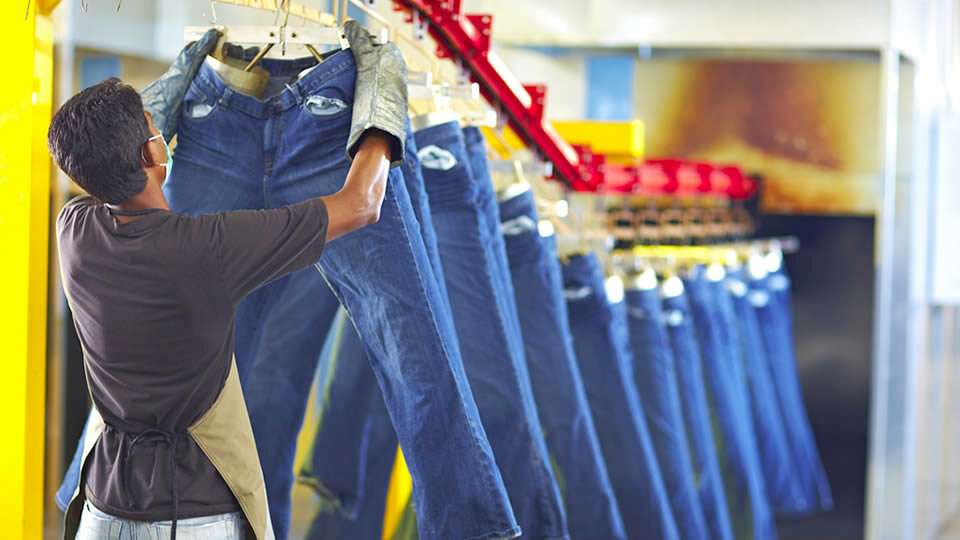
Re-Gen Denim also uses an additional technology born within the company in a sustainable key: Indigo Juice, a dyeing technique that significantly reduces the consumption of water, chemicals and energy in the process of production and washing of jeans.
USDA estimates US cotton production to decline
According to the final 2017 estimate of USDA, the country’s cotton production is forecast at 19.5 million bales in 2018, nearly 7 per cent below the final 2017 estimate as per initial projection for the 2018 crop.
However, based on the ‘Prospective Plantings’ report, the total area on which cotton was grown in 2018 is estimated at 13.47 million acres, nearly 900,000 acres above 2017.
The larger 2018 planted acreage expectation is mainly due to relative prices that favor cotton and the successful yields experienced in 2017 that reached a national record, the Economic Research Service of USDA said in its latest ‘Cotton and Wool Outlook’ report.
Planted area for both upland and extra-long staple (ELS) cotton is expected to increase in 2018.
For the upcoming season, upland acreage is projected higher in two of the Cotton Belt regions and nearly identical in the other two regions.
Tommy Hilfiger launches Social Innovation Challenge
Tommy Hilfiger, owned by PVH Corp, has launched TOMMY HILFIGER Social Innovation Challenge, a global initiative that aims to support entrepreneurial start-up and scale-up stage businesses that are developing solutions that have a positive social impact on the fashion value chain.
Winners of the initiative will receive a year-long mentorship with Tommy Hilfiger’s internal experts globally, in addition to winning a grant of up to €100,000 as well as a place on the INSEAD Social Entrepreneurship Program (ISEP).
Interested businesses are invited to submit project proposals that have a social impact, whether involving enhancing the lives of the people or communities within the fashion value chain, the second life of a garment, marketing or advertising in the industry, or other aspects of fashion.
Out of these, seven finalists will be invited to develop their project plans with the support of a team of dedicated Tommy Hilfiger subject-matter experts during a one week “Sprint” at the Tommy Innovation Center in Amsterdam, the Netherlands.
They will pitch their finalised concept at the global TOMMY HILFIGER Social Innovation Challenge event in early 2019, where a panel will select three winners.
Sri Lankan apparel firms boosting export capacity
Sri Lanka's MAS group and several apparel firms are boosting their export production capacity, amid an overall increase in industrial investment according to new approvals granted.
MAS Active, a sportswear group will invest US$21 million to boost its capacity. Other companies that are expanding include D 2 Clothing (Pvt) Ltd, Original Apparel (Pvt) Ltd and. HIrdramani International Exports. The country has approved investments totaling 28 million US dollars for apparels up to April.
Sri Lanka's exports got a boost after the European Union restored GSP+ benefits to the country.
The country’s exports grew 10.2 percent to 11.3 billion US dollars in 2017, with industrial exports up 7.6 percent to 8.64 billion US dollars.
Council of Fashion Designers to honor Ralph Lauren
The Council of Fashion Designers of America (CFDA) will honor American fashion designer Ralph Lauren at this year's CFDA Fashion Awards, to be held on June 4 in Brooklyn.
Lauren, who founded the brand of the same name, will receive the first ever CFDA Members Salute in recognition of his role in the American and global fashion industry.
The award will also mark the 50th anniversary of the Ralph Lauren brand.
A host of special prizes will be given during this prestigious ceremony including the Fashion Icon Award, which will be given to Naomi Campbell. Diane von Furstenberg will get the Swarovski Award for Positive Change, and the International Award will go to Donatella Versace.
The awards ceremony will also award the 2018 "Womenswear Designer of the Year." This year's nominees are Virgil Abloh, Raf Simons, Marc Jacobs, Gabriela Hearst and Mary-Kate & Ashley Olsen.
Designers James Jebbia, Thom Browne, Tom Ford, Virgil Abloh and Raf Simons are nominated for the "Menswear Designer of the Year" award.
Paris show in July
Interfilière Paris will take place July 7 to 9.
It will highlight the latest eco-responsible innovations in the lingerie, swimwear, and active wear markets. Consumers are asking questions about the origin of fabrics and the chemical substances used as well as the entire manufacturing process.
The range of sustainable exhibits will include Billon’s jersey fabrics in environmentally friendly botanical polyamide; Brugnoli’s collection of functional knits made from 100 per cent bio-sourced polyamide; Aquafil’s Econyl, the polyamide made from fishing nets; Sofileta’s knits made using fibers recycled from postconsumer waste; Maglificio Ripa’s knits that include Evo bio-sourced nylon fibers, a polymer made from castor oil.
A collection of knits that include recycled 6.6 polyamide Q-Nova fibers by Fulgar will also be on display.
Industrial stakeholders in the textile sector are placing all their ingenuity at the service of protecting the planet and mankind by creating raw materials that meet the needs of the environmental and social challenges faced by this industry.
Hyosung’s creora eco-soft is a heat-dispersing elastane, which allows fabric makers to minimise heat consumption by reducing the temperature for heat bonding. Lenzing’s attempts to reduce the dependence on non-renewable resources will be demonstrated with artificial cellulosic fibers such as EvoVero, a traceable, eco-friendly viscose.
Ban on Afghan cotton exports lifted
Pakistan has lifted the ban on the import of Afghan cotton to Pakistan.
The country, in the past, had banned the import of cotton from Afghanistan, inflicting heavy financial losses to Afghan farmers.
Deputy Governor Abdul Hanan Munib and local industrialists held a meeting with Pakistan consul general in Kandahar and discussed the issues faced by Afghan businessmen. The matter of ban on Afghan cotton export was resolved due to the efforts of provincial officials.
Pakistan had also decreased the duty on Afghan fresh and dry fruits.
Primark to overtake M&S as top market spot
A study by analyst Global Data suggests Primark could overtake M&S in terms of market share of the clothing sector after the latter announced plans to close 100 stores by 2022 as part of its turnaround program.
The high street retailer has already shut 21 stores since the announcement of its store estate program in November 2016. Further 14 stores have been proposed for closure or set to close, as M&S accelerates its store closure program.
These closures will radically reshape the company’s clothing and home space.
Figures from Globaldata show that M&S’s market share fell from 9.7 per cent in 2008 to 7.6 per cent in 2018, while Primark surged from 4.4 per cent to 7 per cent.
Japan wants South America in TPP
Japan is encouraging more countries from Central and South America to join the reworked Trans-Pacific Partnership trade pact.
The region has a combined population of about 600 million and a gross domestic product of around 5.1 trillion dollars.
Mexico, Chile and Peru are part of the TPP, but Brazil and Argentina -- the two giants of the region -- are not. Colombia has already expressed an interest in joining. It is the only member of a four-nation Latin American trade bloc called the Pacific Alliance that is not also a part of the TPP.
Current TPP members are working to ratify the deal. Japan wants to open the door to any interested countries, including the UK, Thailand and South Korea.
The pact would lower tariff rates among member nations, which in turn would make American products less competitive within the bloc.
Japan is also hoping to use the TPP as a way to counter Chinese influence in Central and South America. Japan, as leader, is seeking a path forward for free trade in Asia. This country is now the largest member of TPP. A revived TPP with Japan at the head could dent China’s hegemony in the region.
The pact would boost Japan’s real gross domestic product by 1.11 per cent.
Technical textiles not growing enough in India despite incentives
For the past four years, the Indian technical textile market has been growing at a CAGR of 12 per cent. For the next four years, it is estimated to grow at a CAGR of 20 per cent.
Per capita consumption of technical textiles in India is three to four kg as compared to 30 kg or 40 kg per capita in other countries. With a growing economy and rising disposable income, the demand for technical textile products is bound to increase, creating lucrative opportunities for investment.
Incentives are being provided to the tune of 15 per cent on capital investments in the sector. Despite this, the growth of technical textiles in India is not as encouraging as expected.
India still has to import technical textiles and so it is necessary to increase capacity within the country. India can be positioned as a manufacturing hub for technical textiles.
Technical textiles have immense potential and are considered to be the sunrise industry in India. The industry could grow with sufficient investments in technology.
India is expected to play a key role in shaping the technical textiles market with consumers spending more on home textiles, sportswear products, and medical products. India can contribute toward shaping the future of the technical textile sector by diversifying towards nonwovens.
More...
Guess launches retro streetwear
Guess Jeans has teamed up with Round Two's Sean Wotherspoon to release a brightly colored capsule called Farmer's Market, paying tribute to ’80s and ’90s retro streetwear.
Farmer’s Market includes overalls, denim jackets, tees, woven shirts, pullover crew necks and hoodies. Hats, backpacks and hip packs, baggy pants and zip pullovers round out the assortment.
The collection features overdyed and acid-washed fabrics in bright hues like pineapple yellow, avocado green, and grape purple, paying tribute to California's bountiful agricultural economy and Guess' vintage denim and streetwear heritage. Fruit and vegetable colored separates and accessories sport vintage Guess graphics and logos.
In the last quarter, Guess opened 15 directly operated stores in Italy, France, Spain, Portugal, Switzerland, Belgium, the Netherlands, Russia and Poland. Another 60 openings are planned this year.
For the 2017-18 financial year, Guess revenues increased eight per cent. In the fourth quarter revenue leapt 18 per cent. Fourth quarter growth was driven by an 18 per cent increase in comparable sales in Europe. The size of its European e-business is expanding fast and it is now close to that of the American region.
The new logistics hub, which will be fully operational by the end of the summer, is expected to improve the group's margins.
Grasim Q4 net profit falls 20 per cent
For the fourth quarter Grasim’s consolidated net profit dropped 20 per cent. It had posted a net profit of Rs 1,064 crores during the same period of the previous fiscal.
The viscose staple fiber business reported its highest ever sales volume, led by growth in the domestic market with intense market development efforts. The share of domestic sales in overall sales rose to 75 per cent in fiscal ’18 from 69 per cent in fiscal ’17.
The number of Liva tagged garments witnessed a tenfold increase in the last three years. More than 3000 stores across the country are making Liva tagged garments available to customers.
Grasim Industries belongs to the Aditya Birla Group. Grasim has a strong presence in polyester viscose and polyester wool fabric. The domestic over the counter division operates in the formal menswear fabric market by offering ready-to-stitch suiting and shirting.
The VSF business will continue to focus on expanding the market in India by partnering with the textile value chain, achieving better customer connect through the brand Liva and enriching the product mix through a larger share of specialty fiber.
However, the new capacities likely to come on stream in China may impact global VSF prices in the near term.
Garment products dominate textile businesses at FESPA
Garment products dominate across all textile businesses, with sports apparel, textiles for garments and fast fashion topping the growth applications leader board.
This data was collected throughout 2017 at FESPA events and from association members in Europe, Eurasia, Mexico, Brazil, Thailand and South Africa. Respondents include screen print businesses with a focus on textile applications, dedicated textile producers and direct-to-garment businesses.
Digital adoption for textile is slower than in other segments and production is still dominated by analogue processes across all textile-related segments.
Among printers focused on textiles, 56 per cent have made digital investments, and 19 per cent plan to do so in the next two years, aiming to reap the benefits of reduced time to market, customised creative collections, prototyping, and a positive impact on the environment by reducing water and energy consumption.
Production speed is an investment priority for 69 per cent of textile respondents, and 55 per cent want the ability to print directly onto untreated materials. These investments are motivated by brand owner demand for time-sensitive production that delivers supply chain improvements such as waste reduction, optimises response to seasonal peaks and enables local delivery.
Screen and textile printers expect digital’s contribution to textile printing revenues to grow by 12 per cent in the next two years.
EU forges ties with Australia, New Zealand
The EU is Australia’s third largest trading partner.
EU’s exports to Australia are predominantly manufactured goods while Australia's exports to the EU are dominated by mineral commodities and agricultural products.
The EU is New Zealand’s second largest trading partner after Australia. New Zealand's exports to the EU are largely dominated by agricultural products while EU’s exports to New Zealand are focused on manufactured and industrial goods.
The EU cooperates closely with Australia and New Zealand on economic and trade policy issues in the framework of partnership agreements which were concluded respectively in 2008 and 2017.
The EU also has bilateral agreements with both countries on mutual recognition of some technical certificates which, by reducing the costs of testing and certifying of exports and imports, facilitate trade in industrial products. Although generally limited, trade barriers for some sectors, such as agriculture or textile products, remain quite substantial.
The EU has now opened talks with Australia and New Zealand, with any agreement designed to reduce existing barriers to trade, removing custom duties on goods, and giving better access for services and public procurement in Australia and New Zealand. The sectors likely to benefit the most from the FTAs are motor equipment, machinery, chemicals, processed foods and services.