The European Union’s retaliatory tariffs against U.S. set to begin soon
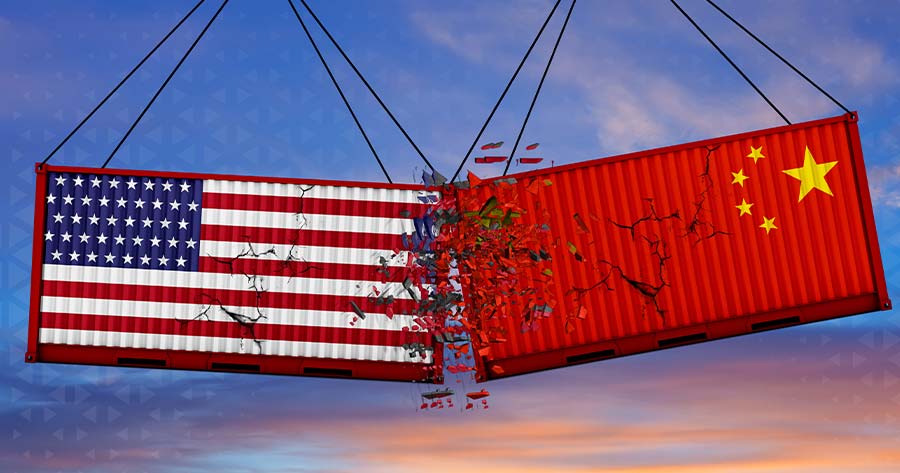
The European Union will begin charging a 25 per cent tariff on $3.2 billion of US products from Friday in response to President Trump's decision not to exempt Europe from sweeping tariffs on aluminum and steel. However, the EU's retaliatory tariffs, announced earlier this month, target politically-sensitive products here in the US, like bourbon from Senate Majority Leader Mitch McConnell's home state of Kentucky and dairy products from House Speaker Paul Ryan's Wisconsin.
Around 200 categories of US products will be covered in the EU counter measures which include various types of corn, rice, orange juice, cigarettes, cigars, t-shirts, cosmetics, boats and steel. The EU is reserving the right to target more US products with further duties no later than March 23, 2021. Second-stage retaliation would involve levies ranging from 10 percent to 50 per cent on an extra €3.6 billion of American goods imported into the European Union.
Tariff wars could affect Asia adversly
Taiwan, Malaysia and Singapore will be among the markets most affected by the US tariffs on Chinese goods. Many economies and companies outside the US and China could be exposed because of their interconnected supply and revenue chains, potentially putting global economic growth at risk.
Tariffs on Chinese exports are much more consequential for emerging market economies than those on US exports, and the pain is likely to be concentrated in Asian economies. The US and China have been trading fierce rhetoric over the past two months, threatening to slap billions of dollars' worth of tariffs on each other's goods and services. While the current dispute between the two economies hasn’t officially been classified as a trade war the threat is real.
Trade tensions can take a real toll when they intensify. There could be some economies less exposed to the first-round effects of tariffs. The immediate damage is focused chiefly on Asia, while relatively closed economies such as Brazil and India should be more insulated than other economies in the event of a more global trade war.
China’s tariffs on US goods will mainly offer opportunities to developed market economies who could look to replace the US as a major supplier of higher value-added commodities, while other emerging economies will hope to substitute for China as a provider of raw materials and components.
Three designers shortlisted for 2018 PETA Prize
Three designers have been shortlisted for the 2018 PETA Prize for Animal-Free Wool. The awards ceremony will be held at the MoMA (Museum of Modern Art) in New York. The prize forms part of the Biodesign Challenge and is sponsored by PETA, Stella McCartney and Stray Dog Capital. The selected design students will be subsequently partnered with biotech professionals to help advance the proposed innovative fibre biotechnology. The successful innovator will also benefit from a learning experience at Stella McCartney‘s London headquarters.
The three finalists include Woocoa, a vegan wool produced using hemp and coconut fibres treated with enzymes extracted from oyster mushrooms; Werewool, a fibre which replicates the properties of wool by isolating and expressing a protein from its own DNA and combining it with a bonding enzyme from the Fashion Institute of Technology (FIT) and Kerasynth, a microfluidic vegan skin with an array of follicles producing wool. The award will help aspiring designers develop a sustainable material that will keep sheep from being shorn bloody for wool sweaters and scarves.
Next edition of Dornbirn GFC to open on September 12 in Austria
Dornbirn Global Fiber Congress (Dornbirn GFC) will be held in Austria from, September 12 to 14, 2018. This is an innovation platform for the fiber, textile, nonwoven, equipment, and mechanical engineering industry. It is a major player as an idea and network generator.
Dornbirn GFC will feature lectures on fiber innovations, transportation and mobility, recycling, circular economy, energy generation and energy storage, surface modification and additive technologies. More than 700 participants from over 30 nations will take advantage of Dornbirn-GFC in order to learn about the latest innovations of the fiber industry and its downstream stages.
Due to the vast interest from the industry and trade, and the strong support of the EU Commission, circular economy is a focal point this year again. Canada-based brand Lululemon Athletica will generate forward-looking future trends for the industry and will also expand the innovation trend in interview sessions. Renowned brands and retailers will meet at the congress and will take advantage of the network. Lenzing, the world`s largest and most innovative cellulose fiber producer, is the lead sponsor of the congress.
The market place fair will be reinforced in order to support companies to facilitate the marketing and roll out of innovations. Expert media will focus on the textile market in Turkey this year.
Recycling turning a popular business model among big brands
Companies are, with an ever-increasing frequency, moving into the recommerce marketplace. Adding this element of circularity to business models is seen as an opportunity to both enhance the organisation’s sustainability credentials while also providing a new revenue stream.
UK -based retailer John Lewis has launched a pilot buy-back program in partnership with recycling specialist Stuffsr. The scheme will be made available to a small number of customers as a precursor to rolling out a full-scale version later in the year. Similarly, fashion retailer Guess has announced a partnership with I:CO in an initiative which facilitates the collection, certified sorting, reuse and recycling of used apparel and footwear.
The John Lewis initiative will see garments purchased from the company within the last five years instantly valued via an app, before allowing this apparel to be sold back to the company – meaning, customers can claim a John Lewis voucher once the value of returned apparel reaches a threshold. These items can then be collected by courier service in as little as three hours.
The Guess and I:CO collaboration will enable customers to take a minimum of five garments into stores in exchange for a 15 per cent discount off any purchase in-store or online before an agreed deadline.
PVH chairman chosen top CEO of 2018 by Glassdoor
Emanuel Chirico, chairman and CEO of PVH, has been named one of Glassdoor’s top CEOs of 2018. Glassdoor is one of the largest job and recruiting sites in the world. The ranking is based on approval ratings in voluntary reviews from current and former employees posted on Glassdoor throughout the past year.
PVH is one of the world’s largest apparel companies and owner of iconic brands including Calvin Klein, Tommy Hilfiger, Van Heusen, Speedo, Warner’s and Izod. Chirico is the only chief executive from a fashion-apparel brand on the list of 100 CEOs, all of whom have been identified by their own employees throughout North America and parts of Europe as strong leaders.
There is a specific question within Glassdoor reviews about CEO performance, asking associates whether they approve, disapprove or are neutral about their CEO. Chirico is No. 79 on the Glassdoor list.
Glassdoor was launched in 2008. It is valued at more than a billion dollars. It has job listings, but it is also a place where people share salary information and post anonymous reviews evaluating their office environments. Among the site’s features are company ratings, based on how many stars the employees award the organization, on a scale of one to five; and CEO approval ratings, given as a percentage of how many people approve of the company’s leadership.
Hermes Eco Laboratories to open lab in Delhi
Germany-based Hermes Eco Laboratories is currently in the process of expanding its reach, by opening a lab in Delhi. The company will invest Rs 50 lakh in the upcoming Delhi based lab while at a later stage it will invest Rs 2 crore for eco parameter testing. The brand has a good tie-up for logistics to avoid any delay in pickup regarding testing, as immediate support. Some of the prestigious clients in the North include Jyoti Apparels, Rahul Fashions, and Super House, etc.
Though Otto (Bonprix, Heine) is the main client of the company, it is also associated with and approved by other European buyers, like Breuninger, Marcopolo, G-Star and many others. Hermes Eco Laboratories’ focus is on complete quality assurance for clothing as well as home textiles. More than a testing lab, it functions like an expert or a consultant, supporting the exporters on various parameters, like Pesticides, APEO, AZO etc.
Intertextile Pavilion Shenzhen 2018 to see 38 per cent more buyers
Nearly 1,000 exhibitors are expected to attend the Intertextile Pavilion Shenzhen 2018, which will be held from July 5 to 7, 2018 in Shenzhen. The fair will witness a 38 per cent increase in suppliers this year. With a strong focus on ladieswear, the fair will feature a wide range of premium ladieswear fabrics, lingerie and swimwear fabrics, printed fabrics, accessories and more.
The trade show will feature the Spring/Summer 2019 collection in the Trend Forum in Hall 9. It will also host a range of seminars on topics including New Technology & Solutions, New Materials & Sustainability Development. Three domestic pavilions at the fair will showcase a range of man-made, silk, linen, ramie and knitted fabrics, as well as lace and embroidery products. These include Shengze Pavilion, China Bast and Leaf Fibres Textile Association Pavilion and the Shaoxing Pavilion. The venue for this year’s fair will also expand by one hall to accommodate the around 280 extra exhibitors that are expected to participate.
Indie-Brand Fair to showcase Korean Indie fashion
Funded by the Ministry of Trade, Industry and Energy the Korea Fashion Association and magazine Fashion Insight held the opening ceremony for 2018 Indie-Brand Fair at Setec in Seoul. It provided a chance for young indie fashion brands to expand their trade networks. The Indie-Brand Fair is the largest get-together for Korean indie fashion brands, where they get a chance to show their designs with buyers, put their works on the runway and listen to experts share their thoughts on the fashion industry at seminars held on site. The fair defines indie brands as those that have been active for less than seven years and lack the ability to promote themselves despite their potential.
The fair features a total of 200 indie brands 87 women’s clothing brands, 31 menswear brands and 82 accessories, shoes and bags brands. In order to include the largest number of brands designers from 36 brands will stage a runway show.
Clariant and Tiangang to set up facility in China
Clariant and Tiangang Auxiliary are constructing a world-class production facility in Chian for stabilizers for plastics and textiles. The facility combines the technology and production knowledge of both companies to provide even better process and light stabilizers for various growing industries in China, including automotive and textiles.
Clariant is a world leader in specialty chemicals. Tiangang is a manufacturer of light stabilizers and UV absorbers, with two plants in China that are backward integrated with production of key intermediates. China is a key market for Clariant high-end process and light stabilizers, which include the state-of-the-art Nylostab S-EED chemistry – invented by the company – a unique multifunctional hindered amine light stabilizer.
The facility is expected to come on-stream in the first half of 2019 and start serving the growing demand for high-end additives solutions in Asia even faster. The zone where it is located is an ideal production base for additives, with very good access to necessary raw materials and other support.
Apart from this Clariant has opened plants for Ceridust micronized waxes and AddWorks synergistic additive solutions in China. Clariant is committed to sustainable growth in China and therefore continues to invest across the country to increase its local production capability and competitiveness.
More...
Mahlo GmbH + Co KG to showcase at CINE Techtextil
Mahlo GmbH + Co KG will participate in the upcoming CINTE Techtextil show, to be held from September 4 to 6, 2018 in Shanghai. The show is considered to be one of the most important trade fairs for technical textiles and nonwovens in Asia. The company will display its latest developments in measuring and controlling of quality critical parameters within the running web.
The centrepoint of their showcase will be web gauging system Qualiscan QMS-12. The tool gauges parameters such as basis weight, thickness or moisture across the entire width. To achieve this, up to five sensors are traversing simultaneously on sturdy scanners, constantly collecting data and transmit them to the interface. In use are radioactive sources as well as infrared, laser, microwaves and air permeability sensors.
The company anticipates a strong interest in its infrared sensor Infrascope NIR. The sensor measures the absorption of infrared energy while identifying basis weight and moisture at the same time. Those important parameters can be measured and controlled precisely in a spun lace unit. Due to a very high spectral resolution, the sensor can distinguish between components with very similar IR absorption. This capability allows the highly selective individual measurement of a specific component or layer in the web without interference from other components all without the use of radioactive isotopes.
Chinese tariffs hurt Indian exports
India’s cotton yarn exports to China have been affected by tariff. China imposes a duty tariff on cotton yarn imports from India of 3.5 per cent to five per cent. This means Vietnam has emerged as a major competitor for India in terms of the export of cotton yarn to China. Vietnam gets the advantage of duty free access to that country.
A major chunk of mills from China shifted to Vietnam in the last five years, making it a conversion centre. Yarn produced in Vietnam thereby enters China without duty tariff. Though India remains the largest exporter of cotton yarn in the world, the country’s share declined to 25 per cent in 2017 from 30 per cent in 2015. In the same period, cotton yarn exports from Vietnam, the second largest exporter with a 19.94 per cent share in the global market, grew by 252 per cent.
India is making efforts to bring down the duty tariff so as to regain the advantage. But various issues of refunding related to embedded taxes, as in the form of duty for electricity and petroleum products used in the cotton textile value chain, need to be addressed if exports have to pick up.
Chinese manufacturers tap Myanmar to set up facilities
There is growing interest amongst Chinese manufacturers to set up facilities in Myanmar. This is mainly owing to the 25 per cent tariff imposed by the US on upto $50 billion Chinese products. In a retaliatory move, Beijing too imposed a 25 per cent tariff on $34 billion tariff worth of US goods to China.
Recently, the US also threatened to levy an additional 10 per cent tariff on $200 billion worth of Chinese products. If imposed, the move would place around half of China’s $505 billion worth of exports to the US under tariffs. Therefore, a rising number of Chinese manufacturers want to produce out of Myanmar, enabling them to bypass US tariffs. Mainly, businesses from China wish to set up their facilities in the Thilawa Special Economic Zone, which has been equipped with necessary power and transport infrastructure for ease of doing business. Out of the 94 companies in Thilawa SEZ, just one, garment manufacturer Lu Thai Co, is from China.
Brandix, GBCSL organise environment awareness campaign
Green Building Council of Sri Lanka (GBCSL) with support from Brandix, organised a week-long environment awareness campaign that culminated with an island-wide sapling planting initiative and a ‘Green Walk’ in Colombo. Themed ‘Go Green – Change tomorrow, today,’ the campaign was conceptualised to celebrate World Environment Day 2018.
The ‘Green Walk’ attracted over 3,000 participants, including the Mayor of Colombo. The campaign was targeted at the general public, green business-related organisations and sustainability adopted products and service suppliers. It was organised to create enhanced awareness on the importance of environment protection and to enlighten participants on practical solutions such as savings through green building practices, conservation of the environment, and driving sustainable development to control the harmful effects of climate change and other environmental degradations.
The Green Building Council of Sri Lanka is a consensus-based not-for-profit organisation committed to developing a sustainable property industry for Sri Lanka by encouraging the adoption of green building practices. It is diverse and possesses an integrated representation from all sectors of the property industry and academia.