AAFA to conduct safety conference in association with AmCham Vietnam
The American Apparel and Footwear Association (AAFA), in association with AmCham Vietnam, will conduct the AAFA Product Safety and Compliance Conference in Vietnam next month. The conference will be held at the Reverie Saigon in HCM City on October 18.
Through this conference, AAFA will bring together industry leaders to educate factories and suppliers in Vietnam on the critical components of manufacturing and delivering products that meet global regulations and industry compliance. The day-long event will include seminars on topics like product safety, compliance, understanding of regulations, corporate social responsibility, forced labour, workers’ safety, consumer demands on sustainability, trade relations, among others.
This initiative holds relevance, considering that Vietnam is one of the biggest garment hubs in Southeast Asia and, therefore, a good understanding of safety and compliance standards is a pre-requisite for every garment company in the country. For over two decades, AAFA, the political voice of the apparel and footwear industry, has been providing expertise in supply chain management, trade policy and brand protection. AmCham Vietnam too has been consistently promoting trade and investment between the United States and Vietnam.
Lenzing has put on hold its lyocell expansion plans
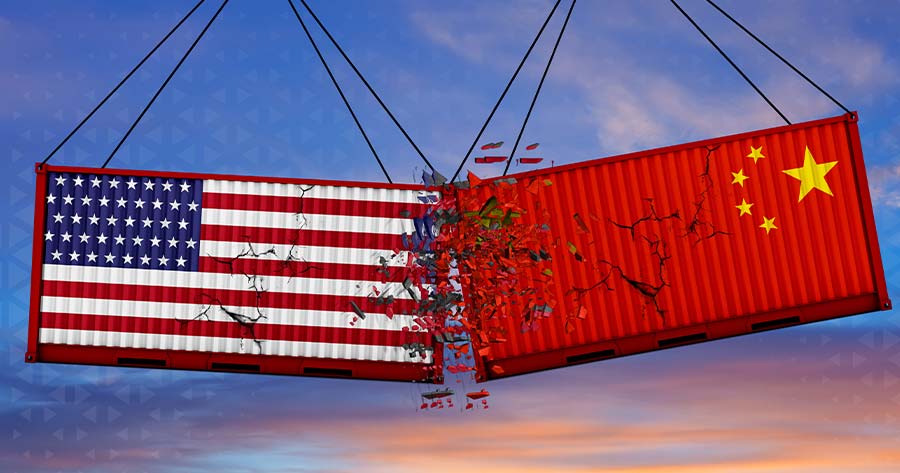
No substantial additional lyocell volumes, over and above the successful 25,000 tons expansion in Austria, will be added to the market in 2019 and 2020 by Lenzing. Among the reasons are: rising likelihood of increased trade tariffs, paired with the potential surge in construction costs due to the buoyant US labor market.
Consequently Lenzing will put all its efforts into readjusting the execution of its growth plan to meet the strong market demand for its lyocell fibers. This includes an increased focus on the lyocell expansion project in Thailand. Lenzing remains on track for specialty expansions such as Tencel Luxe filaments and Lenzing Ecovero viscose fibers.
With Tencel Luxe, a lyocell filament, Lenzing entered the filament market for the first time. It will further support Lenzing’s shift to become a true specialty player in the botanic materials market derived from sustainable wood sources. Tencel Luxe will open new markets for Lenzing and allow the company to participate in the premium segment of the fabrics market.
The eco-botanic lyocell filaments are made from wood pulp, which is sourced from sustainable wood in line with Lenzing’s strict wood and pulp policy.
Kering listed on the Stoxx 50 European Index
Kering has been listed on the Euro Stoxx 50® index, one of the major indexes of listed shares of the Euro area. The Euro Stoxx 50® comprises the 50 largest listed stocks in the Euro zone, in terms of free-float market capitalisation.
A global Luxury group, Kering manages the development of a series of renowned maisons in Fashion, leather goods, jewelry and watches: Gucci, Saint Laurent, Bottega Veneta, Balenciaga, Alexander McQueen, Brioni, Boucheron, Pomellato, Dodo, Qeelin, Ulysse Nardin, Girard-Perregaux, as well as Kering Eyewear. The group founded in 1963 is now one of the fifty largest market capitalisations in the eurozone. The group’s shares have been listed on the Euronext Paris since 1988 and have been part of the CAC 40 index since 1995.
Andrea Pesaresi the new president of Michael Kors’ menswear
Andrea Pesaresi has been appointed as the President of Michael Kors Men’s. He will report to John Idol, the company’s Chairman and Chief Executive Officer. Pesaresi was most recently employed with at Philippe Model, where he served as the CEO. Prior to that, he was employed with Ermenegildo Zegna for 25 years, where his role was that of the brand director of Z Zegna and Licensing which encompassed product development, brand strategy, international expansion, and marketing.
Michael Kors is a global fashion luxury group from UK, consisting of iconic brands that are industry leaders in design, style, and craftsmanship. The appointment of Andrea as its president will provide the necessary leadership to enable it to achieve its goal of developing the menswear business to $1 billion in revenue.
Coats opens new development centre in Vietnam
Coats, the world’s leading industrial thread manufacturer, has expanded its global operations with the opening of a new development centre in Vietnam. This additional capacity makes the Hung Yen site one of Coats’ largest manufacturing units. It will increase the dyeing and finishing operations of the company by over 40 per cent and also provide additional warehouse space. The site, which is already a leader in many of the internal manufacturing performance metrics of Coats, demonstrates the company’s recognition of the growing customer base in the north of Vietnam.
The opening of the new building comes shortly after the announcement of Coats being named one of the best companies to work for in Vietnam by HR Asia, the leading regional HR publication. Coats first opened a site in Hanoi in 1992 and relocated to the current Hung Yen location in 2006. It also has a manufacturing facility in Ho Chi Minh City.
President Trump to appoint Don Bockoven to ACTPN
President Donald Trump has appointed Don Bockoven, Vice Chairman, National Council of Textile Organisations (NCTO) to the Advisory Committee for Trade Policy and Negotiations (ACTPN) for a four-year term. Bockoven is the President & CEO of Leigh Fibers and ICE Recycling, companies based in Wellford and Lake City, S.C., respectively.
The ACTPN is appointed by the President of the United States and provides overall policy advice on trade matters to the Office of the US Trade Representative (USTR). Established by Congress under the Trade Act of 1974, the committee provides information and advice with respect to US negotiating objectives and bargaining positions before entering into trade agreements, on the operation of any trade agreement once entered into, and on other matters arising in connection with US trade policy. The ACTPN considers trade policy issues in the context of the overall national interest.
Reliance, Vardhman Textiles partner for manufacturing 'R|Elan'
Reliance Industries (RIL) recently entered into a partnership with Ludhiana-based textile major Vardhman Textiles for manufacturing -'R|Elan, a new age fabric'. As a part of this partnership, RIL's R|Elan technical team will work closely with Vardhman to develop a variety of new manufacturing processes to manufacture specially engineered R|Elan fabrics.
This innovative high-quality fabric collection will straddle across the performance and sustainable themes in formals, casuals and other women wear segments. R|Elan technical team will provide the technical know-how, specifications and parameters to ensure that best quality fabric is produced.
Companies adopting recycling solutions that go a long way
Companies around the world are implementing recycling solutions that are sustainable and business friendly. American start-up AlgiKnit makes fibers from kelp that can be spun into yarn. AlgiKnit offers a solution that can transform the highly polluting textile industry into a circular economy by using biomaterials. After having been used, this seaweed textile can serve as compost or animal feed. It also reduces the carbon footprint of the clothing industry, because no harmful fiber particles are lost during washing, such as is the case with polyester. The company is working on a prototype of a T-shirt and sneakers will be next.
The Great Bubble Barrier from The Netherlands has developed an air bubble screen for use on riverbeds that catches plastic before it arrives at sea. Approximately 80 per cent of the plastic floating in the oceans enters the sea via rivers. The Great Bubble Barrier sends high-pressure air through a perforated tube on the riverbed, in order to tackle plastic soup. This creates an air bubble curtain that blocks both the stream of plastic waste on the surface and the floating micro particles underwater. The plastic then floats to the waterfront along the air bubble curtain, where it is collected for recycling.
India to sign CEPA with Bangladesh
Bangladesh and India will sign the Comprehensive Economic Partnership Agreement (CEPA), a greater economic cooperation deal, to boost bilateral trade. Analysts say, Bangladesh will benefit from the deal if it is negotiated carefully. The country currently, as an LDC, enjoys zero-duty benefits on exports to India for all goods except for 25 alcoholic beverage items.
The CEPA is a greater partnership deal between two countries or with any trade bloc, under which special treatment is given in areas of trade, investment, energy cooperation, logistic support and so on. Under the partnership, both countries will work towards improving logistic and trade-related capacities of Bangladesh.
The deal could lead to more Indian investment in Bangladesh, more energy cooperation and aid for trade between. India has signed CEPA with some countries like South Korea and Japan and is in negotiations with the ASEAN (Association of South East Asian Nations) to hammer a similar deal.
Global yarn and fabric production decreases 9 per cent in Q1
Global yarn production declined 9 per cent between Q4 of 2017 and the first quarter of 2018. Yarn output in Africa declined 13 per cent, in Asia 11 per cent, and in Europe 1.5 per cent. This negated growth in Brazil by 12 per cent and US by 3 per cent. Global yarn stocks also decreased in all regions in Q1 except Brazil, by +1.5 per cent. The biggest reduction occurred in Asia of 6 per cent followed by Europe of 3 per cent and Egypt by 1.5 per cent. Global yarn orders decreased in all countries by 5 per cent on average, except in Japan where it increased by 2 per cent.
The global production of fabrics decreased from Q4’ 17 to Q1 ’18 by 10 per cent at world level. It declined by 12 per cent in Asia, 5 per cent in Africa and 2 per cent in Europe. It increased by 1 per cent in Brazil. South Africa, Pakistan, and Turkey expect an increase in fabric production in Q2/18. All other countries foresee stability or decrease.
More...
Sri Lanka reduces VAT on imported fabric to 5 per cent
Sri Lanka has cut reduced the value added tax (VAT) on imported fabric from 15 per cent to 5 per cent considering the requests made by stakeholders in the fabric industry. The ministry noted that 5 per cent rate had been set for the industry on Aug. 16. But smaller companies not covered by VAT appealed, saying the tax would have a negative impact on them.
The ministry then decided to reduce the VAT on imported fabric to 5 per cent in order to lend helping hand to proposed small-scale industrialists under the Enterprise Sri Lanka Program. This is a subsidised loan plan introduced by the ministry to help medium and small-scale manufacturers obtain fabric at a lower cost.
As per the Sri Lanka Apparel Export Association, the country’s apparel exports grew by 4 per cent to $2.8 billion for the first half of the year compared to the same period a year ago. U.S. apparel imports from Sri Lanka declined by 12.15 per cent to 28.93 sq. mt. equivalents in July compared to a year earlier. For the year through July, apparel imports from Sri Lanka reduced by 4.65 per cent to $1.84 billion worth of goods, giving the country a 4.65 per cent market share.
Norway’s fashion industry joins hands for recycling campaign -- Tekstilaksjonen
Fashion and textile companies in Norway have come together for the fourth year on a collaborative textiles campaign. They include recycling giants and rental and repair companies. Led by the Varner Group, Lindex, H&M, Pierre Robert Group, Bergans, KappAhl and Kid Interior, joined forces with conversation organisations, recycling-giants Fretex and UFF and rental and repair companies for the 2018 campaign – Tekstilaksjonen. While previous events have focused on recycling, this year’s key themes are textile reduction and prolonged use.
Rental, co-ownership, sharing and swapping are the recurring themes and seen as business models for the future – also for the major retail brands who are painfully aware that business as usual is no longer an option. Several companies who otherwise are fierce competitors are now cooperating on sustainability initiatives. To make the commitment more binding, this year’s textile campaign culminated with all participants signing a five-point manifesto, where environmental footprint reduction was at the top of the agenda.
Companies are looking at cutting down the number of styles for each season so that retailers do not end up with excess stock. They have also increased prices, in order to make it economically viable to use better and more expensive raw materials. Apparently customers are willing to pay for better quality. Norwegians have increased recycling from 59 to 79 per cent. A campaign asks them to hand in their used underwear and socks.
Itema to present latest weaving solutions at ITMA Asia next month
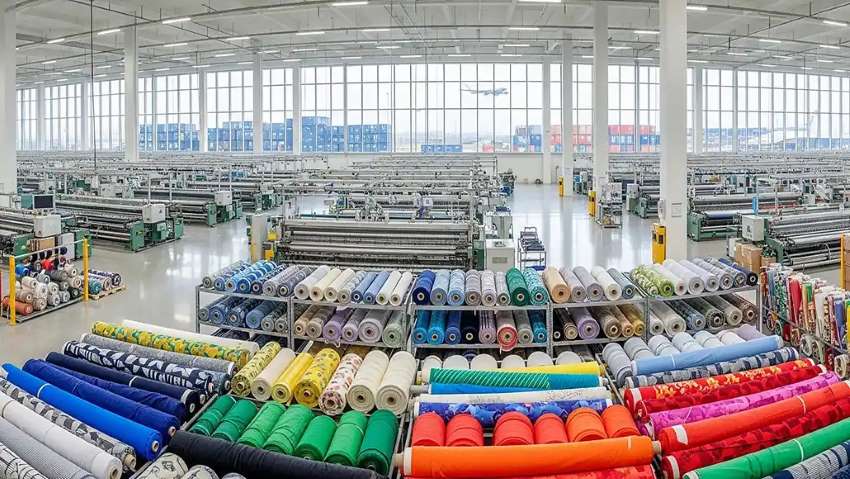
Italy-based Itema believes that weavers worldwide always deserve the latest and the most advanced technology available in the market. The company will present its latest weaving solutions at upcoming ITMA Asia 2018 in Shanghai next month.The second generation Itema denim-dedicated rapier weaving machine, the R9500²denim, provides denim weavers extraordinary advantages. Unparalleled cost savings, superior fabric quality and outstanding user-experience are the key words of the R9500²denim, which features breakthrough devices. It saves energy consumption and is equipped with the iSAVERTM, a revolutionary device, which eliminates waste selvedge on the left-hand side of the fabric.
The R9000² also leads to significant energy savings. The machine’s ergonomy guarantees an outstanding user-friendliness by facilitating machine accessibility for the weaver when carrying out daily textile operations.
The R9500 terry is the champion of the worldwide high-end terry weaving market. The continuous roll-out of customized special versions tailored for technical fabrics, as well as dedicated devices for each application, make the R9500 the perfect machine for the manufacture of the full range of technical textiles, including ones with the finest monofilament yarn, multifilament yarn with high tenacity, and multiple pick insertion fabrics. A sustainable approach to fabric production is possible thanks to a significant reduction in resource use and waste.
Itema, is the world’s largest privately held provider of advanced weaving solutions, including best-in-class weaving machines, spare parts and integrated services.
Italian fashion industry refutes claims of underpayment
The Italian fashion industry has responded to a scathing New York Times report published last week highlighting the plight of Italy’s underpaid and undeclared home garment workers. NYT, in its report titled ‘Inside Italy’s Shadow Economy,’ had described the fashion industry in Italy as a distressed labor market” where thousands of low-paid home workers create luxury garments without contracts or insurance with some earning less than 2 euros per hour and working up to 18-hour days sewing luxury garments that retail 1,000-times that amount.
The Italian fashion industry however disagrees with the publication’s characterisation, saying the issue of underpaid and undeclared home garment workers is limited and already being addressed. Camera Nazionale della Moda Italiana (CNMI), the Italian chamber of fashion in its official statement, reiterated CNMI’s commitment towards making the Italian supply chain resilient, fair and humane on every front. The chamber continues to implement solutions using its evidence-base and by working collaboratively.