Synthetics hold promise for India
Synthetic fabrics and performance garments are going to be the two most promising segments in the Indian textile industry. The industry accounts for five per cent of India’s GDP and 13 per cent of the country’s export earnings and employs about 50 million people. It proved to be highly productive and globally competitive across the value chain – from farm to fiber. Its future however depends on sustainable manufacturing practices, transparency, and its readiness to transform itself into a circular economy.
The Indian textile industry is highly fragmented and facing unprecedented challenges. One is the global recession. Another threat is the import of yarns, fabrics, and garments from Bangladesh. The industry needs help in the areas of export promotion, access to working capital, and loan restructuring. Indian textile units have asked for liquidity support and a one or two year moratorium. Other issues are pending claims under the various rebate schemes; release of TUFS subsidy; reducing the margin money for working capital from 25 per cent to ten per cent and the debt-equity ratio norm from 1:1.33 for the entire textile and clothing industry; extending the five per cent interest subvention for all textile and clothing export products; slotting recycled PSF under the five per cent GST rate; and enhanced EPF benefits.
China’s exports to the US up seven per cent
Last year, China’s exports of textiles and clothing to the US increased 7.9 per cent. Clothing accounts for 73 per cent of those exports, and textiles make up the other 27 per cent. China is still at the top of sourcing for American brands. This is because in comparison to China other manufacturing countries are not able to provide quicker service.
For some products with complex procedures, the delivery time in Southeast Asia is at least one month slower than in China. If the quantity of zippers and all the buttons is miscalculated before production, it can be solved in China in only two hours, while in Southeast Asia, the production line would need to be shut down for two days to wait for the right accessory to be replaced. So brands with fast-fashion items that need to be replenished quickly prefer to stay with China. Compared with emerging textile and garment manufacturing countries such as Southeast Asia and Africa, China’s supply chain is still in a favorable position for fast orders. China still holds a 31.5 per cent market share of textiles and apparel in the US.
Chinese and American companies have not stopped trying to seek opportunities for cooperation.
US-China trade war, sustainability top of the mind for dominate global makers
"Two topics currently dominate denim manufacturers list of priorities as of now: the US-China trade war and sustainability. Denim manufacturers are not only adapting their operations in reaction to the US-China tariff war but also maintaining a razor-sharp focus on sustainability. They are developing new strategies to incorporate eco-friendly materials and process besides reconfiguring their production processes to avoid excess tariffs from China. Several mills among the Kingpins New York exhibitors recently echoed these developments as driving their businesses."
 Two topics currently dominate denim manufacturers list of priorities as of now: the US-China trade war and sustainability. Denim manufacturers are not only adapting their operations in reaction to the US-China tariff war but also maintaining a razor-sharp focus on sustainability. They are developing new strategies to incorporate eco-friendly materials and process besides reconfiguring their production processes to avoid excess tariffs from China. Several mills among the Kingpins New York exhibitors recently echoed these developments as driving their businesses.
Increased use of eco-friendly fabrics and finishes
Many denim brands now concentrate on sustainability aspect of a fabric rather than its technical aspect. This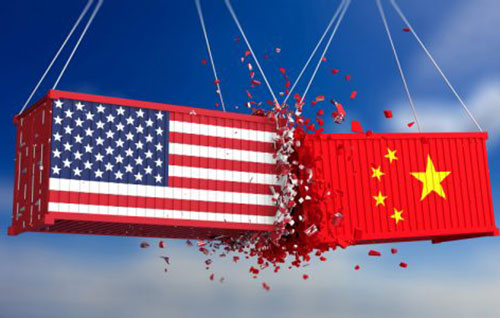 compels manufacturers to use more eco-friendly fabrics and finishes. Premier denim brand Twin Dragon Denim Mills incorporates eco-finishes in all its fabrics. The brand plans to incorporate Indigo Zero a waterless dye into its processes by the end of this year. Another of its plan includes switching to biodegradable fabrics by the year-end. The company’s wash house in Los Angeles also plans to switch to laser finishing as it more eco-friendly.
Sustainability has changed the way denim mills manufacture their products. Brands are now opting for eco-friendly raw materials. They are also overhauling their production processes to ensure a more sustainable production.
In terms of styles, denim brands are focusing on vintage looks that also incorporate modern techniques and materials. These include: recycled fibers such as Repreve and laser finishes that reduce chemical and water usage. And as per Monica Betancur, South American commercial director at Kaltex America also reveals companies are being cautious, especially about China as business is tough right now.
The statistics on denim imports to the US reflects, jeans imports from China dropped 17.02 per cent to $564 million in the first nine months of the year. For the 12 months through September, the country’s imports from China declined 11.67 percent to 21.22 percent. On the other hand, its denim apparel imports from Mexico rose by 5.56 percent to $625.84 million; it’s also market share increased by 6.73 per cent to 21.98 per cent. The company believes in maintaining a collaborative relationship with its brand and provides product support and customer services.
Emergence of new growth centers
As companies are seeking a tariff-free sourcing alternative with a low learning curve, Pakistani mill Artistic Milliners is seeing a strong pickup in business. The company’s exports to the US increased by 8.97 percent to $194.95 million in the year through September. Besides the US, it is also seeing a growth in business from Canadian and European firms. It customises fabrics and jeans with a range of finishes and styling, besides re-engineering its washing and dyeing processes to improve its ecological footprint.
Mexican companies like Global Denim are also registering business from new companies that source in China to avoid tariff costs. These companies are relying on the duty-free benefits offered by North American Free Trade Agreement under USMCA. They hope the bill to be passed in the Congress before this year’s end. Overall, though times are tough for the denim industry, these are not expected to last forever. This slowdown is cyclical in nature. In the first nine months of this year, US denim imports increased by just 0.43 per cent. However, their demand soon picked up to grow by 2.81 per cent to $3.87 billion for the 12 months through September.
The opening of the Vidalia Mills in Lousiana has also provided a fillip to the Made in America denim production. The mill plans to use Lenzing’ Tencel fiber to make its denims as it is derived from wood pulp and produced in a closed loop manufacturing structure. Denim manufacturers are also aligning their operations to the ongoing U.S.-China tariff war as well as brands and consumers’ focus on sustainability.
Freudenberg to acquire Filc
Freudenberg, the global technology group has signed a final agreement to acquire 100 percent of the shares of Filc. Filc is a producer of needle punch nonwoven textiles and laminated materials with a focus on the automotive and construction industry. Privately-owned Filc is headquartered in ŠkofjaLoka, Slovenia, and operates two more production sites in Mengeš and Lendava, Slovenia, as well as a sales office in Dayton, OH, USA. Filc has roughly 360 employees. The transaction is subject to approval by the antitrust authorities.
“With the acquisition, we would like to further strengthen our performance materials business, and expand our portfolio and technological footprint in Europe,” says Dr. Mohsen Sohi, Freudenberg Group CEO.
The further expansion of its Needle Punch Business “Filc has great needle punch know-how which we will benefit from, especially in terms of composites. Filc´s exceptionally good adhesive coating abilities will allow us to offer customer solutions in adjacent segments in the construction business,” explains Dr. Frank Heislitz, Freudenberg Performance Materials CEO. “Besides, we will expand our technical expertise in acoustics, both in construction and automotive, and provide customers a broad technology portfolio with lamination, printing, and coating” says Heislitz.
“Being part of a globally active company offers an opportunity for regional and global expansion of our business. Besides, sharing our expertise in technology will be crucial to scaling up our growth,” adds AnžeManfreda, CEO of Filc. The company was founded in 1937 and has been in the nonwovens business since 1963.
Freudenberg has a long history in global presence and the broadest technology platform in the nonwovens industry and is thus an assertive partner for Filc. Values and Customer Focus in common as a privately-owned company, Filc has very similar values and guiding principles to Freudenberg. Both companies have a strong focus on customers and innovation, as well as on people for finding the right solutions.
India’s apparel, textiles exports to Vietnam on the rise
Indian apparel and textile exports to Vietnam have grown 48 per cent from 2016-2017 to 2018-2019. However, India’s share in Vietnam’s manmade fiber textile imports is just 3.34 per cent. And India’s share in Vietnam’s total textile imports is just 2.29 per cent. But the textile trade between both countries has been on the rise in the last two years. In the first ten months of 2018, bilateral trade was up 47 per cent over the same period in 2017, bringing the countries closer to the target of 15 billion dollars in two-way trade in 2020.
The free trade agreement with Vietnam can enable India to make use of the market access. Indian firms have been invited to invest in Vietnam’s yarn, fabric and dyeing industries. For Vietnam, most types of yarns, woven and knit fabrics can be imported duty-free from India. Vietnamese companies have been invited to participate in a buyer seller meet to be organised in Coimbatore, March 17 to 29, 2020. Visitors from 40 countries are expected to participate in the event for sourcing varieties of yarns, fabrics, made-ups, home textiles and technical textiles from India. Buyers from Vietnam will be eligible for full hospitality, including complementary return airfare, accommodation and transport.
Coats acquires yarn maker Pharr HP
Coats has bought over Pharr HP. Coats is an industrial thread company that offers more than 20 products in ten sizes of thread. But in terms of color it supplies the market more than a hundred thousand colors. It has launched many ranges of new innovative threads. One of these is the waterproof AS thread, which is used in footwear and down jackets.
Pharr HP, based in the US manufactures high-performance engineered yarns and specialises in providing technical yarn solutions to the industrial thermal protection, defense and fire service industries. The acquisition of Pharr’s manufacturing capabilities and customer base will provide further expertise and scale to Coats’ business. Pharr wanted to find the right buyer and found it in Coats, a global leader with a long, proven track record, which understands Pharr along with its commitment to its associates and communities.
Coats in turn can enhance Pharr’s performance by leveraging its extensive textile experience, strong industry connections, existing operational footprint in North America, and strong brand to deliver high performance solutions for its customers. With Pharr, Coats hopes to acquire a deep expertise in technical yarn solutions and create ever lighter, stronger and more comfortable yarns for the most extreme environments. Coats and Pharr hope to collaborate by building on synergies to develop innovative products.
Oerlikon’s Wings Fdy available for polyamide 6
Oerlikon’s Wings Fdy is now available for the polyamide 6 process. With this development, the tried and-tested Wings technology – so far known for Fdy yarns from polyester manufacturing – is now available for the challenging polyamide 6 process. This new 24-end winding concept makes the efficient production of Fdy PA6 yarns a reality. Wings Fdy pays yarn producers dividends, particularly in terms of investment expenditure and operating expenditure: significant savings with regards to energy footprint due to its more ergonomic design. The enclosed draw unit ensures low spin finish emissions, offering a safe working environment.
Oerlikon develops modern materials, systems and surface technologies and provides specialised services aimed at securing high-performance products and systems with long life spans for customers. Oerlikon is the world market leader for manmade fiber filament spinning systems, texturing machines, BCF systems, staple fiber systems, solutions for the production of nonwovens and as a service provider offers engineering solutions for the entire textile value added chain.
The Eafk Evo generation of machines promises superior speeds, greater productivity and consistently high product quality, along with lower energy consumption and simpler operation vis-à-vis comparable market solutions. The BCF S8 production plant promises carpet yarn manufacturers greater punching power.
Global fiber production doubles in last two decades
Global fiber production has doubled in the last 20 years, reveals Textile Exchange. In the plant-based natural fibers category, cotton is the most used fiber. Preferred cotton has a market share of 22 per cent of total global cotton production and is grown in 30 countries.
Due to concerns about the treatment of animals for textile and apparel use, animal welfare standards and initiatives are in place to define responsible practices and provide assurance that specific criteria are being delivered on in the animal-based fibers and materials category. Preferred down is produced on thousands of farms in 13 countries. Preferred down is recognized through the adherence to standards. Wool is the most used animal-based fiber, with more than one million metric tons produced globally. Preferred wool is estimated to be below three per cent of the global market share. Preferred wool is identified by key standards and initiatives.
The Responsible Mohair Standard was developed in 2018. This will provide assurance that mohair comes from farms with high animal welfare and progressive land management practices. The manmade cellulosic fibers category is increasing steadily with a market share of approximately 6.2 per cent of total fiber production volume, which is double what it was in 1990, and is expected to continue growing.
Global Fiber Congress in Austria next September
Global Fiber Congress will take place in Austria, September 16 to 18, 2020. The meet will focus on fiber innovations, circular economy and sustainability, surface modifications and additives, non-woven fabrics, technical textiles, mobility, apparel.
Every year the event discusses recent developments in synthetic fibers. This year the Congress held from September 11 to 13, 2019 saw over a 100 international speakers from science and industry presented the latest innovations and trends in the global fiber and textile industry. This year, the event focused on topics such as sustainability and circular economy, digitalisation and smart textiles, as well as the latest fiber innovations, surface modifications and special textile applications. One hot topic in the industry is micro particles produced by textile products, found especially in wastewater. Several research centers presented initial results.
Topics such as sustainability and the environmentally friendly production of fibers are not yet an issue outside Europe. Even so, globally leading fiber producers such as Indorama Ventures and Reliance Industries have been championing more sustainable raw materials and production environments for years. Europe is looking to integrate more recycled materials into fiber production of the future. The problem is, however, that polyester has become a globally sought-after resource in recent years. The fiber industry is therefore struggling to source the highly coveted flakes.
Global e-commerce sales up 22 per cent in 2018
Global e-commerce sales in 2018 were up 22.5 per cent from 2017. The top 10 retailers accounted for 14.6 per cent of all global e-commerce sales. Three of the top 10 global online retailers ranked by 2018 e-commerce sales were web-only merchants. Their online revenue also significantly contributed to bumping up 2018’s e-commerce penetration. As web sales rise without an accompanying uptick in offline sales, online’s share of total retail sales grows.
Collectively, revenues of Amazon, JD and Vipshop Holdings in 2018 were up 22.2 per cent from 2017. As online revenue continues to grow each year, larger gains are necessary to achieve the same level of growth, so some deceleration makes sense. E-commerce penetration has steadily been on the rise—with online’s share of retail spend registering 10.5 per cent in 2016, rising to 12.3 per cent in 2017 and closing out 2018 at 14.4 per cent. The momentum is expected to continue in 2019, with penetration north of 16 per cent. Global retail sales through all channels are likely to increase 3.4 per cent by the end of the year. This would increase online’s share of total retail sales to 16.4 per cent and e-commerce would account for more than three-quarters of overall retail gains.
More...
Apparel industry contributes six per cent to greenhouse
The apparel industry alone accounts for 6.7 per cent of global greenhouse gas emissions. The industry’s impact increased 35 per cent from 2005 to 2016 and is projected to increase further 49 per cent by 2030.
The forces behind the industry’s impact on the environment are multifaceted. They include evolving consumer habits, shifting tastes and preferences in materials, and production operations in far-flung locations. For example, a polyester shirt, while cheap to buy, releases micro-plastics each time it is washed, and that is bad for the environment. Fast fashion is very tempting. The attractive prices make consumers more than what they need. Fast fashion is an institution few young people pay attention to, even though it’s where much of their disposable income goes. In 2018, Americans purchased an average of 68 garments. On an average, a British woman wears a garment only seven times.
Clothing recycling will play a significant part in nudging the industry from being linear to more circular. There has been a fundamental, generational shift in consumers’ willingness to tailor purchases to their impact on the environment. In a 2018 Nielson survey, 75 per cent of millennials said that they definitely or probably will change their purchase/consumption habits to reduce their impact on the environment.
Intertextile Shanghai Home to showcase best-finished textile products
The Spring Edition of Intertextile Shanghai Home Textiles will return to the National Exhibition and Convention Centre in Shanghai from March 11-13, 2020. Working on consistent growth in recent years, the fair is a prominent annual destination for the best-finished home textile products. The fair gathers leading high-quality suppliers from China, as well from overseas, featuring a wide range of home textile collections.
Despite ongoing trade disputes and global economic uncertainty, data from the National Bureau of Statistics shows that China’s home textile industry maintained steady growth in the first eight months of 2019. The domestic sales of home textile products amounted to USD 13.4 billion in the period from January to August 2019, with a year-on-year growth rate of 4.81 per cent.
The Chinese home textile industry is continuing to perform well against all odds. This steady growth injects confidence in the market. Held amid the peak sourcing season of the Chinese home textile industry, Intertextile Shanghai Home Textiles Spring Edition is the ideal place for companies to tap into the growing Chinese market, and for buyers to source the best of the finished home textile products.
In March 2020, the Spring Edition will showcase a range of home textile products including bedding & toweling, rugs, table & kitchen linen, home textile technologies, textile design and many more. For those who want to unlock China’s abounding trade opportunities, Intertextile Shanghai Home Textiles – Spring Edition is the the place to be.
Intertextile Shanghai Home Textiles – Spring Edition 2020 will be held concurrently with four other textile events: Intertextile Shanghai Apparel Fabrics – Spring Edition, Yarn Expo Spring, CHIC and PH Value. Intertextile Shanghai Home Textiles – Spring Edition is organised by Messe Frankfurt (HK); the Sub-Council of Textile Industry, CCPIT; andthe China Home Textile Association (CHTA).
Rental fashion to be the next ‘cool’ factor in clothing
"With fashion trends changing at the drop of a hat, consumers throw away nearly 83 percent of their clothes and shoes into garbage bins every year. Some brands also burn their unsold stock to protect their exclusivity. A glaring instance of this is Burberry which destroyed $36 million worth of unsold clothes/accessories in 2017."
 With fashion trends changing at the drop of a hat, consumers throw away nearly 83 percent of their clothes and shoes into garbage bins every year. Some brands also burn their unsold stock to protect their exclusivity. A glaring instance of this is Burberry which destroyed $36 million worth of unsold clothes/accessories in 2017.
However, a new reuse and re-wear revolution is emerging on new platforms that are upcycling discarded garments into new clothes. Eileen Fisher launched a new recycling program Renew which recycles old garments to be sold at either stores or pop-up shops. Similarly, another brand Reformation transforms old materials and vintage clothing into new feminine creations while Cambodian brand tonlé uses surplus fabric from mass clothing makers and turns it into zero-waste collections, or Queen of Raw, which connects designers and textile firms with dead stock fabrics from factories/brands.
Alongwith these, several subscription-based brands are emerging which allow people return worn clothes for new ones: For Days buys back worn T-shirts from customers to recycle them into new tees. In 2018, wellness hotel brand Westin launched a new initiative to recycle the sheets/towels from its global hotels into pajamas for children in homeless shelters.
Reward for customers returning old clothes
Many brands are also reward their customers to return their unwanted clothes for recycling. Guess recently launched a new scheme with I-Collect that offers customers a 15 per cent discount on new clothes to customers who return five clothing items. Similarly, J. Crew partnered Blue Jeans Go Green to recycle old denim to build housing for communities in need. Sweden-based Nudie Jeans offers a discount to customers who return their old jeans. The brand also provides these customers free repairs for life.
Rental fashion gains momentum
Increasing number of online resale shops allows the new generation of customers to avail luxury fashion at affordable rates. Many websites like eBay, of course, and RealReal, Poshmark, Vestiaire Collective, Vinted and thredUP also sell high-end clothes at cheaper rates. Some of these platforms have also launched innovative concepts to sell clothes. For instance, thredUP has launched a new collection concept, Remade, where the brand researches on what exactly resells to create an affordable collection designed to be resold. Each item on this website is sold with a buyback promise, ensuring it will be resold on thredUP, with sellers earning 40 percent of the original value.
Another fast emerging trend is that of rental clothing. Several platforms allow their customers to rent their wardrobes. The goliath in this space is Rent the Runway, which rents its designer dresses and accessories for special events through a monthly unlimited membership service. Members can rent four items at a time and rotate them in and out as fast as they want. The platform has also partnered with WeWork for installing drop-off boxes at the co-working spaces that allow its members to rent their wardrobe via tablet.
The rent-not-own fashion model liberates its customers from the time and energy eaten up by shopping while freeing up space in its closets. In future, people will stop buying new clothes and shoes and re-wearing and renting will get cooler.
Australian fashion brands fail to pay living wages in foreign companies
Non-for-profit organisation Oxfam has published a report accusing Australia-based brands of failing to pay living wages to its workers in foreign countries.
The report, ‘Naughty or Nice’, is a part of a two-year campaign started in 2017. According to the report, paying for essentials like food, housing, healthcare and education should be covered by a basic living wage. However, the report reveals that some of the Australia-based brands do not offer this to their employees in foreign countries.
The report has released a list of fashion brands that have failed to ensure payment of living wages to women making their clothes in countries like Vietnam or Bangladesh. The research conducted by Deloitte Access Economics says women aged 18 to 25 make up 80 per cent of the factory workers in the global garment industry. It affirms that the local minimum wage in Bangladesh equates to just 39 Australian cents an hour, 64 cents in Vietnam and 93 cents in China.