Liquidity crisis hits Pakistan textile sector
Pakistan’s textile sector has been hit by a liquidity crisis. Refunds have been delayed. The zero-rated status to the export industry has been withdrawn and replaced by a 17 per cent sales tax on the textile sector. Exporters were promised refunds within 72 hours. But refund applications of exporters are still in process and meanwhile the liquidity crisis has got worse. The energy package is yet to be implemented.
Pakistan’s textile exports increased by 26 per cent in the last fiscal year and last month exports increased by eight per cent in quantitative terms and by 4.10 per cent in value terms. Pakistan’s textile exports during the first four months of the current financial year increased by 4.10 per cent. Knitwear exports were up 9.49 per cent. Bed wear exports were up 5.72 per cent. However, exports of raw cotton from the country came down. The country’s merchandise trade deficit plunged by 33.52 per cent. Exports during the period increased 3.81 per cent. Imports into the country declined 19.21 per cent. However, in the last four months of the current financial year, cotton yarn exports decreased by 2.14 per cent, cotton cloth exports by 4.83 per cent, and exports of tents, canvas and tarpaulin by 1.58 per cent.
Novozymes introduces Livelong based on plant based fibers
Novozymes has launched Livelong, a solution for producing better quality and longer lasting clothes from plant-based fibers. Livelong is a biological solution where enzymes are used to extend the lifetime of fabrics. Until now, the enzyme technology process has only worked on cotton. The solution makes it possible for the first time to extend the life of plant-based fabrics by 20 per cent, making the garments look new, wash after wash. It saves substantial water, chemicals and energy by reducing textile waste.
Novozymes is a Danish company. Being a country of energy efficiency and environmentally friendly solutions, Denmark is always striving towards technological advancements through research and development.
Global clothing production has more than doubled in the last 15 years, but consumers keep clothes for just half the amount of time, making the textile industry one of the most wasteful industries in the world. Consumers are demanding more sustainable solutions and they are willing to pay for it. However, they need help in making the right choice. Consumers are demanding traceability and transparency and they want to be informed. The market is changing, consumers are changing, and consumption patterns are changing. The next generation is far more conscious about what they are purchasing.
Luxury labels focus on burgeoning Korean market
Renowned luxury labels are opening pop-up stores and staging world-exclusive fashion shows in South Korea. Louis Vuitton recently opened a new flagship boutique in Seoul late last month designed by renowned architects Frank Gehry and Peter Marino and located in the high-end Cheongdam neighborhood in Gangnam. The French luxury house also showcased a series of pop-up stores at department stores in Seoul and the surrounding Gyeonggi Province, offering South Korean consumers the exclusive advance opportunity to buy select items from next year’s collection.
British-based luxury-handbag maker Mulberry took full ownership of its South Korean business by buying Mulberry Korea from local partner SHK. As part of a wider Asian development strategy, Mulberry made an additional investment of 1.3 million pounds.
Luxury fashion and perfume house Givenchy terminated its distribution contract with Shinsegae International, part of the country’s largest retail conglomerate, Shinsegae to operate its own branch there. Givenchy Korea, under the leadership of Ramon Ros Parellada, hired nearly 100 employees to kick off its own business. The company recently opened its first outlet in South Korea in Seoul, entirely dedicated to its kids collection.
Delvaux, a Belgian luxury goods maker, also launched a branch in the country, its sixth overseas store. The brand, known for its delicate yet very expensive handbags, has recently pushed a local expansion by opening boutique stores.
Australian Fashion Council signs UN Fashion Charter
The Australian Fashion Council has become the second fashion body to sign the UN Fashion Charter. The charter, launched in December 2018, aims to assist the fashion industry in achieving a target of 30 per cent greenhouse gas emission reductions by 2030 and net-zero emissions by 2050.
The charter boasts 88 signatories including Adidas, Burberry, Kering, Inditex, H&M, PVH, Stella McCartney and Target as well as 27 supporting organisations such as the Sustainable Apparel Coalition and the China National Textile and Apparel Council.
The council has also appointed Leila Naja Hibri as new chief executive officer.
In February 2020, Giles-Kaye, the current chief executive officer of the AFC since 2017, will pass the baton to Hibri, the general manager of Australian fashion accessories label Helen Kaminski. An AFC board member since December 2018, Hibri has a background in economics and accounting, with over 15 years experience in luxury and premium brand management for companies including Prada and Luxottica Group.
McKinsey to help Clarks transform its business
British footwear retailer Clarks has appointed the management consultancy firm McKinsey to help with a transformation of the business. The appointment is part of a wider plan to grow the business’ underlying profitability and focuses on “renewing the relevance of the brand to consumers and partners. The brand aims to reconnect with its customers by designing iconic new products and launching an exciting new brand and marketing strategy that is already engaging consumers across the world. Its new strategy will allow the business to achieve sustainable levels of growth and profitability by 2023.
Clarks finance director Paul Kenyon has left the business and will be replaced by Philip de Klerk, former chief executive of materials maker Low & Bonar. In January, the retailer announced its United Kingdom factory in Street, Somerset could close after failing to meet manufacturing and cost targets.
PVH Q3 revenue up two per cent
For the third quarter PVH Corp’s revenue rose 2.5 per cent. PVH raised its full-year adjusted profit forecast after its third quarter results beat expectations, powered by higher demand for its Calvin Klein and Tommy Hilfiger apparel in Europe. The company has been trying to attract millennial shoppers by sponsoring social media influencers including Bella Hadid, singer Billie Eilish and British F1 racer Lewis Hamilton to promote its brands. Sales at Tommy Hilfiger, its biggest revenue generator, jumped about ten per cent. Calvin Klein, which is recovering from the fashion missteps it made last year, saw sales rise marginally.
PVH’s business is strongly anchored in the US, where in 2018 it generated 46 per cent of its sales. The group is reorganising itself in the US market. Tommy Hilfiger has been working to boost its appeal in China, engineering double-digit growth in the country in 2018. Asia accounts for 12 per cent of the group’s sales. The group has cut the share of its production that comes from China to the US market. Three or four years ago, about 35 per cent of its production for the US was coming out of China. For next year, it is looking at something that’s closer to ten per cent.
Blossom Première in December
Blossom Première Vision will be held in France, December 11 to 12, 2019. Première Vision is the leading international trade fair for materials and services for the fashion industry. To respond to developments in the market, the group launched Blossom Premiere in July 2016: Blossom Première. This exclusive operation is devoted to collection launches. It is aimed at international upmarket, luxury design brands. The biannual event, dedicated to the spring/summer 2021 pre-collections, will showcase the fabrics, leathers and accessories of 120 companies. There will be eleven new companies: eight weavers, two tanners and one accessory manufacturer. In total, the event will host 82 weavers, 28 tanners and eight accessory and component manufacturers. These companies will come mainly from Italy, with 72 exhibitors, and France, with 28 companies, Japan, with nine groups, United Kingdom, Spain and Portugal, with three each, and Switzerland and Germany, with one each. The show allows experts to share information and inventive thoughts and upgrade their business.
Exhibits include natural and synthetic fabrics of woven and knits, fiber and yarns, furnishing fabrics, technical textiles, laces, tapes, embroidered fabrics, embroidery threads, sewing threads, sewing needles, interlinings, buttons, zippers, hangers, labels, bar codes, attachments and spares, software consultancy, mannequins, dyes and chemicals, testing equipments.
Global wool market eases
The wool market has shrugged off the lethargy and eased enough to bring a few bargain hunters out of the woodwork. Knitwear types are always the first ones to shrug off the sleep patterns of the hibernation brought about by the off-season, and the carding sector while showing a lot more restraint than a couple of years ago is trending upwards and showing some signs of life. The price comparison of cardings to fleece has reached more sustainable levels again, although a lot of the change has been driven by the drop in fleece wool prices rather than a surge in the price of locks.
The worsted sector, or fleece wools being woven into fabric in the traditional sense for uniforms, men’s and women’s suiting, is plodding along. Orders are dribbling back along the pipeline, but not much more than that.
The leaders of the industry, at the pinnacle of fashion and couture, have laid down the foundation and are going about their business. However, the second tier is just remaining a little more reticent given the number of units they must sell. The further down the pyramid one goes, the larger the number of units and the smaller the margin per unit generally available.
Pum’s yearly sales up 13 per cent
Puma’s yearly sales have risen by 13 per cent. The German company has increased its sales by 84.4 per cent in the last ten years. In the same period, the company’s profit has exploded 72.2 per cent, although the margin has dropped, standing at 48.4 per cent last year. After a fall in profit by 14 per cent in 2013 and 0.2 per cent in 2014, the net result of the group rose in 2015 with an increase of 10.1 per cent. The margin, meanwhile, has remained up since, going from 45.5 per cent in 2015 to 48.4 per cent the last year.
Puma has collaborated with singers and celebrities to face its conquest of urban fashion. Puma constantly works with the most relevant cultural and fashion icons to connect with audiences that set trends. This has made Puma one of the most desired sports and fashion brands for the younger generation. The brand has been embracing collaborations with celebrities to position itself as a fashion brand. The turning point came in 2015, with the incorporation of Rihanna as the new creative director. The arrival of the singer returned brightness to the results of Puma: after two years in decline, the sales of the brand skyrocketed that year by 12.3 per cent and have remained upward since.
Pakistan textiles exports in October up seven per cent
During October 2019 Pakistan’s textile exports grew by 7.4 per cent compared to the same month last year. Textile exports during the four months of the current fiscal year grew by four per cent compared to the same period last year.
But the industry is struggling with high costs of doing business, a severe liquidity crunch, delayed refunds, and high interest rates. The zero-rated facility for five export-oriented sectors was withdrawn and a 17 per cent sales tax on raw materials import was restored. Exporters were promised sales tax refunds within 72 hours. However this didn’t happen, and sales tax refunds piled up and as many as 40 units closed operations. So millers are eager to have the zero-rated tax facility on the textile sector brought back. Many export-oriented industrial units are on the verge of closure. A number of textile manufacturers are moving their operations abroad or at least considering overseas expansion. Some, like Reshma Tex, a leading textile firm, are thinking of setting up a textile factory in Vietnam.
Pakistan’s textile industry has become viable after a gap of ten years, especially through the provision of regionally competitive energy tariffs. The industry witnessed a record 26 per cent growth in quantitative terms.
More...
Fall in China cotton imports
China’s cotton imports are falling. Reasons include high levels of cotton in consignment, burgeoning industrial and commercial stocks, and stagnant consumption growth. Over a fifth of China’s 2018-19 cotton imports are estimated to have remained in consignment.
Although 2019-20 imports are lower than the previous year, the total quantity forecast to clear customs and enter the free market is expected to grow. Cotton in consignment for 2019-20 is forecast to halve from the previous year with reduced incentives for storage. Cotton stored in bonded warehouses was estimated to have more than doubled at the end of 2018-19 from the previous year. Private enterprises’ incentive to incur costs of storing cotton in consignment is mostly driven by China’s import policies and allocation of import quota when issued. Due to restrictive import policies pertaining to quota licenses for commercial and industrial enterprises, importers prefer to store cotton close to the port of entry. This pertains to uncertainty surrounding the timing and availability of quota for merchants.
China is still expected to be the world’s largest importer in 2019-20, exceeding the second largest, Vietnam, by nearly 4,40,000 tons. This is expected to stabilize domestic supplies, even as total stocks are expected to be the lowest since the country’s formal price support program was initiated more than eight years ago.
Intertextile Shanghai Home Textiles show in March
Intertextile Shanghai Home Textiles will be held from March 11 to 13, 2020. The spring show will showcase a range of home textile products including bedding and towelling, rugs, table and kitchen linen, home textile technologies, textile design and many more.
Demonstrating consistent growth in recent years, the fair is a preeminent annual destination for the best of finished home textile products. The fair gathers leading high-quality suppliers from China, as well as from overseas, featuring a wide range of home textile collections. This is the ideal place for companies to tap into the growing Chinese market and for buyers to source the best of finished home textile products. Last year’s spring show attracted 22,296 trade buyers from 60 countries and regions as well as 291 exhibitors from ten countries and regions.
Despite ongoing trade disputes and the global economic uncertainty, sales of home textile products in China from January to August 2019 grew 4.81 per cent. Thanks to the population size and the purchasing power of the Chinese market, even a slower growth rate equates to good business potential. The Chinese home textile industry is continuing to perform well against all odds. This steady growth injects confidence to the market.
Benetton expands in Myanmar
United Colors of Benetton plans to expand in Myanmar. The Italian fashion brand has two stores in Myanmar now. Worldwide Benetton has a network of 5000 stores.
United Colors of Benetton’s new collection showcases experimental textiles and ecological materials. The brand is creating a balance between its every-man and every-woman image while elevating its styling and innovation and combining ideas, fashion and styling while experimenting in new directions. One is a trench coat made out of paper and recycled fibers and impermeable to rain. A papery cropped top paired with a white skirt that bears a devilish silhouette in the same material is another. Other pieces include a handkerchief skirt featuring a stylized postcard print on the front that can be worn with a flowing silhouette, or tied in the front or back for a straight look in two different prints. A check denim kilt with multi-color pleated inserts can be paired with a rainbow-striped knit top and striped color-sheer hosiery for her and multi-colored pockets on white garments for him. The offerings mostly hew to a watery theme. There are neoprene rompers, tops and mini-dresses with oversized plastic zippers. Bold nautical looks have anchor motifs. There are also preppy outfits in clashing patterns of pink and green.
Arvind in India, redefines cotton cultivation with new initiatives
"It’s popularly said, that ‘leaders don’t do different things, they do things differently. A recent embodiment of this is Arvind, the leading textile manufacturer and the largest manufacturer of denims in India. The brand rewrote the history of cotton cultivation in India when it partnered Better Cotton Initiative (BCI), a not-for-profit global organisation in 2010. The BCI concept enables the company to grow cotton with controlled application of water and use of approved fertilisers and pesticides."
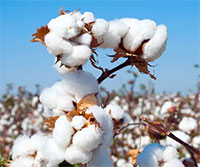 It’s popularly said, that ‘leaders don’t do different things, they do things differently. A recent embodiment of this is Arvind, the leading textile manufacturer and the largest manufacturer of denims in India. The brand rewrote the history of cotton cultivation in India when it partnered Better Cotton Initiative (BCI), a not-for-profit global organisation in 2010. The BCI concept enables the company to grow cotton with controlled application of water and use of approved fertilisers and pesticides. Through this concept, the company has been able to expand its cultivable land from 10,000 acre to 100,000 acre in FY 19 with 26,000 farmers under its ambit. It now plans to scale this further upto 150,000 acre by FY 20.
Initiatives help reduce input cost, increase income
Incepted in 2007, Arvind initially helped farmers to grow cotton as per the global standards besides fulfilling its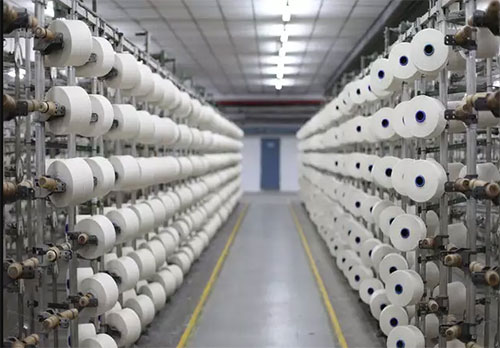 own requirements of organic cotton. Led by Abhishek Bansal, Head of Sustainability, the company embarked upon its first BCI project in India in 2011. Since then, the brand has witnessed manifold growth in both organic and BCI initiatives with Arvind's sustainable cotton operations now spread across four different states of India.
The company’s sustainable initiatives help it to reduce input cost and increase income by increasing the amount of crops it grows. The brand tracks the balance sheet of each of its farmers to note how much profit they make. Bansal says, the company has seen a consistent 15-20 per cent increase in the income by organic or BCI farmers as against conventional farmers. Besides these economic benefits, the initiative boasts of a slew of social and environmental advantages as well.
Consumer awareness leads spikes demand
Consumer awareness and the multiple health benefits offered by this initiative have also led to a spike in demand for BCI cotton from brands in last 2-3 years. Demand for BCI cotton from Arvind has also grown by two to threefold in the past four years. Moreover, the huge amount of data available on the initiative and research by scientists and government agencies on water usage, chemical and pesticide usage in the soil in the cotton fields is fuelling demand for cotton.
Arvind now plans to expand its area under cotton cultivation to 400,000 acre of BCI in the next 4-5 years. The company also plans to undertake more projects besides exploring new cotton sourcing regions in the times to come. The company engages local established NGOs to work with farmers on BCI principles and practices and help them with technical knowhow and purchase of the cotton.