Azgard-9 launches new oxygen producing garment
Pakistan-based Azgard-9 has launched a new garment that produces oxygen besides offering sustainable and antibacterial properties.
The denim company collaborated with the London-based Post Carbon Lab, a design research studio focused on sustainability to develop a poncho that imitates a plant’s ability to photosynthesize and release oxygen into the environment.
The prototype can show fashion houses and retailers that concepts we once associated with sci-fi are available to us right here right now and can help us rethink the future, in a demonstration of possibilities that Azgrd-9’s technology might add to these brands. C.O2.A.T is also imbued with characteristics that give us a glimpse of how truly great the future of fashion might look like: photosynthesis, anti-bacterial, anti-odor, anti-viric, breathable, water-resistant, repellent.
The move is part of the brand's 'Future Before Fashion' initiative to encourage future-focused solutions that have considerably low impact on the environment and are totally sustainable.
New report urges industry, government to protect workers against forced labor
 COVID-19 exacerbated the issue of forced labor afflicting the garment industry for ages. The pandemic deteriorated living and working conditions of garment workers, putting them at higher risk of forced labor, says a new report by University of Sheffield. The report 'The Unequal Impacts of COVID-19 on Global Garment Supply Chains' states, garment workers in Ethiopia, Honduras, India, and Myanmar were the most affected as they either lost their jobs or were forced to work at reduced pay.
Failed commitments
Most garment companies did not to live up to their commitments of good practice during the pandemic, the report states. They also did not source sustainable goods from manufacturers with fair working conditions, pay and no use of exploitation. Their actions highlight not just their faulty business models but also inefficient government regulations to protect workers.
Though some companies honored their commitments during the pandemic, these mostly included responsibilities towards factory owners or business partners. Most brands failed to recognize their social responsibilities towards workers, says Professor Genevieve LeBaron, Department of Politics and International Relations, University of Sheffield. They cancelled millions of pounds of orders at the beginning of the pandemic, forcing manufacturers in Ethiopia to lay off staff, adds LeBaron. Workers who retained their jobs experienced worsening working conditions and pay, he adds further.
Regulate supply chains and retailers
To protest against this unethical conduct by brands, manufacturers plan to initiate legal action against companies that cancelled orders worth millions of pounds during the pandemic. The Sheffield report urges governments to step their regulation of these supply chains and retailers. It also requests governments to address the social challenges created by the pandemic.
The report further says, governments should ban the sale of below-cost price and forced labor made goods. This will prevent companies from forcing suppliers to use unfair labor practices, and compel retailers to be transparent about their operations. It will also help consumers make more sustainable and ethical shopping choices. Jakub Sobik, Communications Director, Modern Slavery and Human Rights Policy and Evidence Centre (the Modern Slavery PEC), affirms, the industry and the government need to protect garment workers by ensuring fair treatment. They also need to applaud companies that confirm to fair business practices, the report sums up.
Asics Q1 FY21 sales rise by 24.8%
Sales of Japanese sports apparel and footwear maker Asics in Q1 FY21 increased by 24.8 per cent sales to ¥106.5 billion (Japanese yen) compared to ¥85.3 billion in the corresponding quarter of previous fiscal. The company’s profit for the quarter increased to ¥10.5 billion. Its gross profit during the quarter increased to ¥53.2 billion while selling, general and administrative expenses declined to ¥38.6 billion (¥41.0 billion).
Sales in the performance running category grew by 43.5 per cent to ¥54.4 billion while sales of core performance sports grew by 18.3 per cent to ¥13.5 billion. Moreover, sports style cateogory's sales during Q1 FY21 increased by 20.2 per cent to ¥8.8 billion and apparel and equipment sales increased by 2.4 per cent to ¥8.7 billion (¥8.5 billion).
Sales across all regions improved except South East and South Asia. Its sales in Japan increased to ¥30.5 billion, North America sales increased to ¥18.8 billion while sales in Europe rose to ¥31.1 billion.
Global luxury market to revive by next year: Report
As per a new report by the Boston Consulting Group and Altagamma Foundation, the global luxury market is gradually recovering and should return to pre-pandemic levels by next year
Titled, The True-Luxury Global Consumer Insight, the report says, the future looks bright for the sector even though only the upper end of the luxury consumer pyramid saw an increase in consumption during the pandemic.
BCG surveyed 12,000 luxury consumers and found that much of the spending growth is being driven by younger consumers in the Millennial and Gen Z age groups with these consumers set to account for 60 per cent of the luxury segment’s total by 2025.
BCG said consumers are increasingly embracing the possibility of renting luxury items, with as many as 18 per cent of consumers on average testing this possibility over the last year. More and more consumers are selling their pre-owned luxury items too, especially among the young, and 44 per cent of Gen Z and 37 per cent of Millennials have done this in the past year
As per the report, apart from Chinese consumers spending more of their money in their own country, their tastes seem to be diverging from those of Western consumers There’s an increasing trend towards luxury virtualization. BCG said gaming is one key area and among the 39 per cent of consumers who are aware of virtual online games that involve a luxury brand, 55 per cent of them said they’ve bought in-game items. Importantly too, 86 per cent of those people said they’ve then purchased the corresponding physical version.
Abercrombie & Fitch moves away from image-based marketing
In its recent years, Abercrombie & Fitch has moved away from image-conscious marketing to making operational changes.
As per Scott Lipesky, CFO, the company has focused on running the business with less square footage and less inventory. The company has been able to absorb some of the inflationary pressures large due in part to its store optimization initatives, which cut $115 million—or 20 percent—in occupancy costs last year. A&F’s has been moving away from traditional flagship locations, and instead focusing on smaller format locations.
A&F plans on reinvesting those occupancy savings in fulfillment as it reconsiders its store fleet going forward. In total, the retailer has approximately 250 leases expiring at the end of 2021, representing nearly one-third of its store fleet.
Though the company had a bit of a pause on store remodeling plans during COVID-19, it’s now waiting to see how mall traffic plays out as shoppers return to normalcy.
Although the number of stores the retailer will operate beyond 2021 is uncertain, expansion into Europe is a top priority. The retailer is closely eyeing opportunities across the continent, establishing a London team 18 months ago to get closer to the customer.
A&F also plans to make new investment in the remainder of the year, including building out its data and analytics practice and furthering the Gilly Hicks intimates apparel brand. It recently launched Social Tourist, which was co-created with TikTok stars Charli and Dixie D’Amelio.
Saitex unveils exterior design of upcoming denim mill
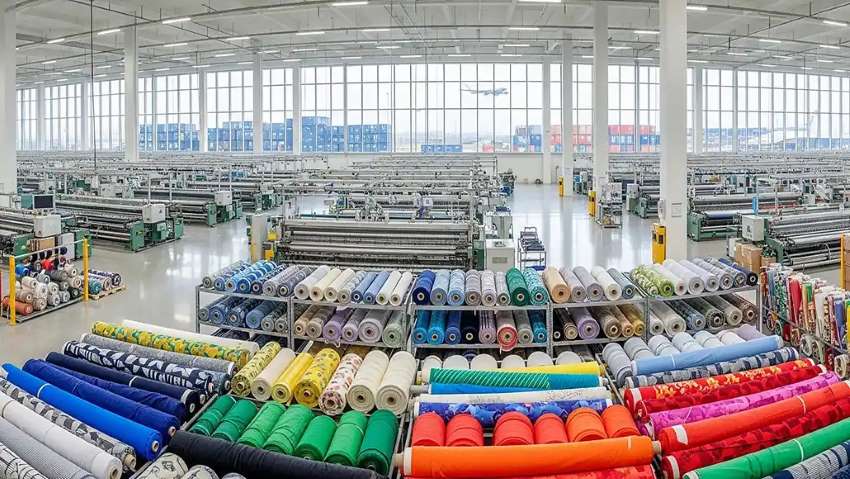
Vietnam-based denim manufacturer Saitex has unveiled the final exterior design of its upcoming mill, scheduled to open in August 2021. The mill has been designed by Saitex in cooperation with the ACSC. It is spread over 100,000 sq. mt. a the Nhon Trach Industrial Zone in Vietnam.
The mill has been built with sustainable materials to achieve LEED gold certification. It provides natural ventilation for production, office, and communal spaces. Additionally, custom water filtration and recycling system has been set-up to enable the mill to operate without the use of freshwater achieving a closed-loop and a system to collect the rainwater for flushing factory toilets, irrigation, and firefighting.
The Vietnam mill also has 15,000 solar panels with 3-4 MW capacity and 40 per cent of the steam is generated with industrial sludge. It is the world’s first-and-only denim factory that is bluesign approved, Fair Trade, and LEED-certified.
Secondhand market to double in the next five years: ThredUp report
In its 2021 Resale Report, ThredUp projects the $36 billion secondhand market will double in the next five years, reaching $77 billion. The study, which surveyed 3,500 American adults between March and April 2021, found 36.2 million customers sold pre-owned apparel online for the first time in 2020. More 118.8 million customers plan to sell pre-owned clothes over the course of the year.
As per a Fashion Law report, online thrifting became a new pandemic habit in 2020 as consumers not only sold off apparel online but also 33 million of them bought secondhand apparels online for the first time in 2020. Resale company, ThredUp expects consumption of secondhand apparel will increase as more first-time buyers plan to increase their spending on secondhand in the next five years.
ThredUp points out, as of 2020 secondhand apparel was already growing faster in terms of amassing market share than its fast fashion counterparts. The segment is slated to grow to 18 per cent by 2030, double of fast fashion market. Meanwhile, off-price retailers such as Marshalls and TJ Maxx are expected to take 19 per cent of the apparel market by 2030 while subscription apparel services, direct-to-consumer brands, and Amazon’s fashion division are also expected to advance over that same period of time.
As per the ThredUp report, Gen-Z consumers are 165 per cent more likely than their Baby Boomer counterparts to consider resale value of clothing before buying it They are also 83 per cent more likely to view apparel ownership as temporary, thus, subject to multiple ownership turnovers in furtherance of the larger sharing economy.
The report states that over the next 5 years, consumers are slated to prioritize secondhand apparel over new clothing. Around 42 percent of consumers plan to spend more on secondhand clothing versus the 26 percent that plan to spend more on new ‘sustainable’ wares, as well as those marketed as ‘inclusive’ and ‘transparent,’ which is 40 percent fewer than 2019. The company proposes removing sales tax for consumers or providing tax credit on secondhand purchases, giving tax deductions for brands with certified resale programs, requiring clothing to be discarded responsibly by consumers, and requiring retailers to reuse returns.
AEPC hails move to launch third party study in yarn cartelization
Appreciating the Textile Ministry’s decision to launch a third party study to investigate cartelization in the yarn sector, A Sakthivel, Chairman, AEPC said, the move will set an example for a data driven management of the supply chain imbalances.
Sakthivel, assured the ministry that AEPC will fully cooperate with the third-party study on spike in cotton yarn prices. He said, the study will help curb steep increase and unpredictability in availability of cotton and yarn which is hampering the apparel industry’s order book planning and overall competitiveness of the entire value chain. It will also help in saving the livelihood of a lot of workers in the power loom sector and apparel industry, he added.
Earlier, Smriti Irani, Textiles Minister, announced that the Ministry along with the textile Commissioner's office aims to undertake a third-party study into sudden spikes in cotton yarn prices that are affecting the prospects across the value chain of Indian textiles.
PVH Group signs deal to sell Izod and Van Heusen brands
PVH Group Inc has signed a $220 million deal to sell brands including Izod and Van Heusen to Authentic Brands. As per a Market Watch report, the transaction is expected to close in the third quarter of this financial year. PVH categorizes the brands included in the deal as the company’s ‘Heritage Brands.’ which gave the company an opportunity to build into one of the largest fashion companies in the world, says Stefan Larsson, CEO. The company now aims to focus on Calvin Klein and Tommy Hilfiger brands in the international markets. It aims to strengthen product portfolio and pricing strategies to boost profit margins and drive e-commerce growth.
As a result of this transaction, PVH lowered its full-year 2021 revenue guidance to an increase of 22 per cent to 24 per cent from an increase of 24 per cent to 26 per cent previously. The company maintained its second-quarter revenue guidance for a 34 per cent-to-36 per cent increase. Its full-year earnings guidance has been raised to $6.60 from $5.50 previously.
Half of world’s cotton growing regions to face extreme weather conditions by 2049: Report
A new analysis by Cotton 2040 warns, 50 per cent of the world’s cotton growing regions will face high temperatures, water scarcity and extreme weather events by 2049. The report was commissioned by the Cotton 2040, an initiative facilitated by Forum for the Future and supported by Laudes Foundation. The Cotton 2040 initiative urges cotton-dependent companies to improve climate adaptation and mitigation across the value chain. They also need to prioritize de-carbonization to limit the impact of changing climates, it says.
The report finds 40 per cent cotton-growing regions will experience a dip in cotton cultivation due to an increase in temperature. These include the six highest cotton-producing countries: India, the US, China, Brazil, Pakistan and Turkey. The report says, 20 per cent of global cotton-growing regions will be exposed to increased flooding risk by 2040 while 30 per cent will be exposed to increased landslide risks. Additionally, 60 per cent will be exposed to increased risk of damaging wind speeds and 10 per cent will be exposed to storms. All regions will be exposed to increased cases of wildfires.
More...
Myanmar to shut 200 garment factories
Myanmar is likely to shut around 200 garment factories due to the economic instability caused by military coup in February. The move could plunge the country’s 700,000 garment workers into further economic distress after a year of pandemic-induced shutdowns, says Moe Sandar Myint, Leader, Federation of General Workers in Myanmar.
As per a Sourcing Journal report, a number of brands, including Bestseller, C&A, H&M, Primark and United Colors of Benetton, have already suspended production in Myanmar following the military coup. Though Bestseller, H&M and Primark have since resumed sourcing, factories are struggling to stay open while some have already preemptively closed. Heng Mao (Myanmar) Garment Co, a Chinese-owned apparel factory in Yangon’s Hlaingthaya Township recently announced its closure blaming operational challenges such as economic sanctions, raw-material shortages and the COVID-19.
The coup has created safety, logistical and banking challenges for all businesses, the European Chamber of Commerce in Myanmar said. One-quarter of workers across all industries have lost their jobs and the situation is likely to significantly worsen by the end of June, the organization added.
Himatsingka Seide’s Q4 income grows 58.7 per cent
Textile manufacturer and distributor Himatsingka Seide’s income during the fourth quarter ended March 31, 2021, grew 58.7 per cent to Rs 748.04 crore compared to Rs 471.40 crore in the corresponding period of prior fiscal. The company’s EBITDA during the quarter rose to Rs 129.66. Profit after tax improved to Rs 37.57 crore, whereas total expenses increased to Rs 695.36 crore
The company is currently ramping up capacity at its new terry towel facility which is expected to complete in FY22. It also reported a strong demand for bedding and bathing products during the quarter. In FY22 it will focus on deleveraging and improving its capital efficiencies. The Himatsingka Group is a vertically integrated home textile major with a global footprint. The group focuses on manufacturing, retailing and distribution of home textile products spread across Asia, Europe and North America.
Founded in 1985, the Himatsingka Group focuses on design and product development, best-in-class manufacturing processes and efficient supply chain capabilities to ensure the highest level of customer service in the industry.
US ban on Xinjiang cotton encourages China to step up imports
A US ban on Xinjiang cotton has encouraged China to import more than usual cotton this year. As per Business of Fashion, the country will soon issue another batch of import quotas to meet rising global demand for textiles after awarding 700,000 ton last month, said Xu Yaguang, Anaylst, Huatai Futures. Last year, China issued 400,000 ton in quotas.
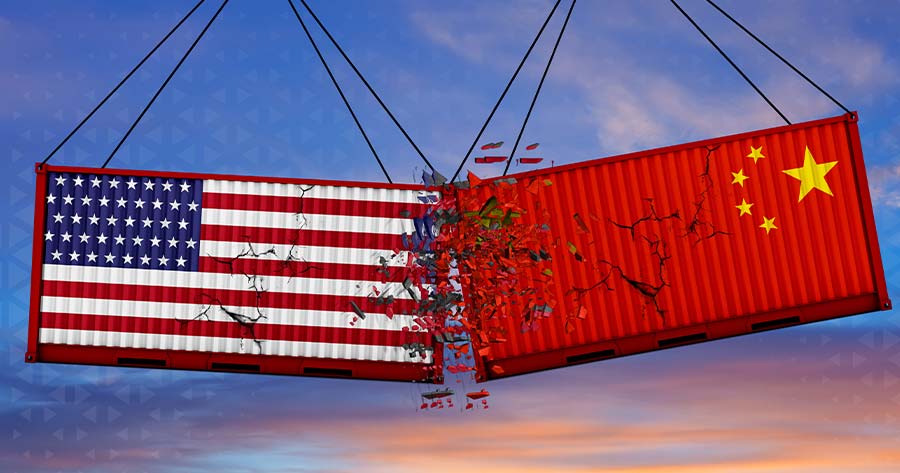
Early this year, the US banned all products using cotton from Xinjiang over China’s alleged ill-treatment of its ethnic Uyghur Muslim minority. Fashion brand H&M also refused to use cotton from this region. The US also plans to ban some solar products made in the region.
China has already increased its cotton imports following the US ban, customs data show. Its inward shipments have averaged around 275,000 ton a month in 2021, compared to 179,000 ton last year. Its next batch of import quotas is likely to be less than 700,000 ton last month. China also issues 890,000 ton of low-tariff cotton-buying quotas on an annual basis, so the extra amounts come on top of that. The country awarded 800,000 ton additional quotas in 2019 before COVID-19 savaged the global economy.
Besides additional quotas, Beijing also plans to hold its annual sale of cotton from state reserves, said Wang Qianjin, Senior Analyst, Shanghai International Cotton Exchange.
Australia to lose most favored status as demand for domestic cotton soars in China
Australian cotton may lose its once favored market status in China as demands for domestically produced cotton, particularly produced in Northwest China's Xinjiang Uygur Autonomous Region, is soaring, says a report by the Global Times. A report on Chinese cotton news portal cncotton.com reveals, the quantity of Australian cotton that passed customs clearance at major Chinese ports in 2019 and 2020 was low. Most Chinese traders and middlemen were cautious about purchasing Australian cotton, says the report.
Data calculated by the China Cotton Association also shows a fall in cotton import from Australia since 2019. The decline further intensified in 2020 when China imports of Australian cotton declined 68 per cent to 40,170 ton. In the first four months of this year, China’s import of Australian cotton further declined 68 per cent to 12,706 ton.
China was the major destination of Australian cotton from September 2020 to March 2021, accounting for 36.5 per cent of its total cotton exports. The drop in China's imports of Australian cotton came amid growing friction in bilateral relations. In 2020, China's imports from Australia decreased 4.6 per cent on a yearly basis to 796 billion yuan ($123 billion).
As per Jiao Shanwei, Editor-in-Chief, cngrain.com, a website specializing in grain news, slumping exports are a result of cooling diplomatic relations between the two countries.