Otrium named British Fashion Council patron
End-of-season fashion platform, Otrium has been named the British Fashion Council’s newest patron and has joined the Science-Based Targets project (SBTi).
As per a Textile Value Chain report, as a patron, Otrium will assist the British Fashion Council (BFC) in delivering significant and impactful programs that will benefit the industry as a whole. The platform will specifically assist the BFC in developing plans for more sustainable business practices, as well as how fashion businesses report their environmental, social, and corporate governance (ESG) progress and credentials.
Milan Daniels, co-CEO and co-founder of Otrium, will also join the BFC’s Industry Advisory Board as part of the patronage to oversee, assist, and advise on major industry concerns.
Otrium joins the British Fashion Council’s existing 36 patrons, which include Depop, Farfetch, Yoox Net-A-Porter, Burberry, and Chanel.
Otrium was created to address the fashion industry’s unsold inventory problem by providing fashion labels with an online outlet channel as well as the digital technologies needed to intelligently link their end-of-season collections with fashion fans.
Fashion for Good urges India manufacturers to volunteer for sustainability project
Fashion for Good is calling for industry stakeholders within the Indian textile suppliers and garment manufacturers to volunteer crucial information for an ambitious project to map the Indian textile waste landscape. The survey will collect data and resources vital to obtaining real-world estimates beneficial to mapping the landscape and successfully testing innovative technologies that are best placed to address the challenge of textile waste.
Fashion for Good launched the Sorting For Circularity India consortium project to understand the pre-consumer textile waste streams in India, and to trial sorting and mapping solutions. Together with industry players adidas, Levi Strauss & Co., PVH Corp., Arvind Limited, Birla Cellulose, Welspun India, and key technology partner Reverse Resources the project aims to build an infrastructure towards greater circularity in the years to come.
Messe Frankfurt, Inexmoda team up for a new trade show
Messe Frankfurt and Inexmoda have jointly launched Heimtextil Colombia, a new trade show for the Americas in Medellin, Colombia, South America. Messe Frankfurt, owner of Heimtextil has licensed the event to Inexmoda, the Latin American Fashion institute creator of the most successful textile and fashion trade shows for this market.
Heimtextil Colombia will cover the Americas which represent a high potential in the world market. Messe Frankfurt and Inexmoda are targeting Colombia as a business platform for the home, furnishings, hospitality business, and further textile related products that will gather both top of the line exhibitors, and professional buyers from the region. The development of tourism and mobility in the Americas has driven a surprising increase in the demand of hospitality services and boosted construction rates, which creates new opportunities for companies and professional buyers in these categories, who will be able to meet at Heimtextil Colombia.
Japan’s textile and apparel imports decline by 4.7%
In 2021, Japan's textile and apparel imports declined by 4.7 per cent to 3646.3 billion yenfrom the same period in the previous. However its apparel imports increased by 2.2 per cent to 2602.9 billion yen.
As per a CCF Group report, the total import value of Japan' s textile and apparel from China declined by 4.8 per cent to 2120.4 billion yen in 2021 The imports from China increased by 7.2 per cent year-on-year to 1519.1 billion yen.
In the last 20 years, Japan’s wholesale and retail sales of clothing have declined to a large extent. Depressed consumption of textile and apparel has affected its imports over the years.
DITF bags fiber innovation award
German Institutes of Textile and Fiber Research Denkendorf (DITF) has bagged the ‘Cellulose Fibre Innovation of the Year’ award. The DITF were nominated during the “International Conference on Cellulose Fibres 2022”, which took place in Cologne from 2 to 3 January.
For the second time, the nova Institute for Ecology and Innovation honored outstanding scientific research that provides sustainable solutions for the cellulose fibre value chain at the “International Conference on Cellulose Fibres 2022”. With the topic “Carbon Fibres from Wood”, the DITF Denkendorf presented itself in the middle of a current research field that provides resource-saving alternatives to fossil-based fibres.
The conference is an international forum for the development of new cellulose fibres and materials and their manufacturing processes. Exhibitors include leading fibre manufacturers; participants come from thirteen countries. The six competitors nominated for the award presented themselves with products that combine sustainable production processes with new technologies and applications to form cellulose-based materials.
AGT takes steps for a sustainable industry in final evaluation
In its final evaluation ended December 31, 2021, The Dutch Agreement on Sustainable Garments and Textile (AGT) took significant steps towards a sustainable garment and textile sector. Under the agreement, companies received advice, tools and training to help them set up and implement their policy. The aim was to analyse risks, improve working conditions, prevent pollution and promote animal welfare in production countries. Achieving substantial improvements in the garment and textile supply chain will require time and effort beyond the agreement period, however.
The independent final evaluation was carried out by KIT Royal Tropical Institute. KIT concludes that the AGT has set up an important multi-stakeholder structure that facilitates a collective approach to complex issues in the supply chain. The AGT steering committee has formulated a response to KIT’s conclusions.
KIT states that it was limited in its ability to assess the impact of the AGT on the supply chain or production countries, because the focus of its analysis was in the Netherlands and on the agreement itself and the participating companies. The data for the final evaluation came from in-depth interviews with stakeholders, a survey among the participating companies and an analysis of the due diligence reports that the companies were obliged to submit annually under the terms of the agreement. No field studies were carried out in production countries.
Pure wool market to reach $32.2 billion by 2026-end
The market for pure wool is expected to grow at a 5.5 per cent CAGR to $32.2 billion by 2026-end. Growth will be driven by factors like increasing urbanization, constant changes in lifestyle, changing styles and trends. Moreover increase in demand for warm clothing and blankets from cold regions is also expected to boost demand in the pure wool market.
The sheep wool segment held largest share of more than 30 per cent in 20202 pure wool market. Woven wool segment grew at 4.15 per cent CAGR from 2021-26. Woven wools are light weighted and soft wool fabric in plain weave. They can come in various designs and forms and can be used for a wide range of purposes such as casual clothing, covers for furniture and work clothing.
Asia-Pacific region held the largest share of 40 per cent in pure wool market in. The major exporters of wool fabric are from Asia Pacific region, namely China, South Korea and Japan. According to International Wool Textile Organization, China accounted for 21.1 per cent of world exports of wool fabric in the year 2019, Japan accounted for 4.1 per cent and South Korea accounted for 2.5 per cent.
According to the Australian Wool Exchange, prices increased 21.95 per cent since the beginning of 2021. As per Australian Wool Innovation, wool prices increased 0.57 per cent on July 16, 2021, decreased by 1.03 per cent on July 9, 2021, and increased by 2.5 per cent on June 18, 2021. This volatility and fluctuation in prices is majorly impacting growth of pure wool market.
India’s cotton yarn exports rise 79.64 per cent in 2021
Despite rising prices, India recorded a 79.64 per cent rise in revenues from cotton yarn exports to $4.69 billion in 2021, shows latest official data. As per a Apparel Resources report, India’s cotton yarn exports to Bangladesh increased 162.25 per cent to $1.72 billion in 2021. This was followed by exports to China which totaled $949.90 million during the year.
Fluctuating China-India relationship failed to affect the export of India’s cotton yarns to China. India’s cotton yarn exports to Portugal also increased by 62 per cent to $210.79 million in 2021. Other countries India increased its cotton yarn exports to include Vietnam, Egypt, Peru, South Korea, Turkey, Colombia, Sri Lanka, Guatemala, Germany, Italy, Jordan and USA, etc.
BGMEA launches initiative to certify garment factories with RSC
Bangladesh’s apex garment makers’ association, BGMEA has launched an initiative to help member factories, interested in working with European buyers, to get their factories inspected by the Readymade Garment Sustainability Council or RSC. BGMEA recently sent out letters to member factories directing them to share profiles of respective units to be audited under the RSC program.
The consortium of EU buyers, Accord on Fire and Building Safety in Bangladesh conducted fire, electrical and structural safety in the factories and handed over the responsibilities to RSC after its termination. As per BGMEA, more than 1,200 apparel factories were listed under the RSC following which the council took over the charge of the Accord’s work in Bangladesh in June 2020.
Indo Count targets Rs 3,000 crore in FY22
Indo Count Industries expects to achieve revenue guidance of approx Rs 3,000 crore on an overall basis in FY22. In Q3 ended December 31, 2021, the company’s sales volumes reached 21.1 million meters. Total income declined 1 per cent to Rs 787 crore while EBITDA increased to Rs 146 crore from Rs 143 crore.
As per a Textile Value Chain report, the company has been witnessing lower demand since late November-December 2021, due to the recurrence of third wave across key geographies like US, UK and Europe. It is strongly moving towards B2C and D2C segment through high quality product offerings across varied price points, building visibility through digital campaigns and leveraging omni-channel & e-commerce distribution
Indo Count has signed the United Nations Global Compact and is committed to integrate UNGC’s principles into its organizational culture and ensure building a greener sustainable future The company has been disclosing its environmental footprint through the CDP alongwith its measures to reduce ecological footprints for the last 3 years. Indo Count has achieved score B this year which is above the global textile average.
More...
Swiss Textile Machinery Association to focus on physical events in 2022
Corelia Buchwalder, Secretary-General, Swiss Textile Machinery Association, says in 2022, the association aims to focus on physical events. Buchwalder added, the pandemic has given textile industry more visibility again. Turkey has been one of the most important markets for Swiss textile machinery manufacturers in 2021.The segments that will stand out in 2022 may vary depending on factors such as whether governments set up special support programs for the textile industry, where full production can be resumed and where there are still restrictions. Buchwalder also noted sustainability has become even more important due to the new EU strategy for sustainable textiles. The association is developing an individual program for its member companies.
Buchwalder further stated in 2022, the organization plans to participate in physical exhibitions including ITMA 2023 that will be held under the motto ‘Transforming the World of Textiles’.
Milano Unica: Exhibitors project positive outlook for 2022
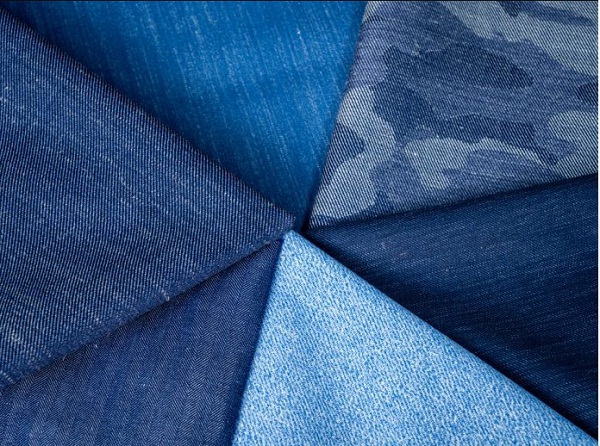
Optimism prevailed at the recently concluded textile trade show Milano Unica despite several geopolitical instability and supply chain issues faced by exhibitors. As per a Woman’s Wear Daily report the two-day show, which saw a 16 per cent rise in the number of attendees, was attended by over 342 exhibitors at the Milano Rho fairgrounds. The show opened with Barberis Canonico, President, Milano Unica paying a tribute to late designer Nino Cerruti. Textile executives attending the show projected a positive outlook for 2022. Giorgio Todesco, CEO, Marzotto Wool Manufacturing, confirmed a 35 per cent rise in seasonal orders compared to corresponding period in 2018-19.
Experts demand adjustments to rising prices
The industry is experiencing a better-than-expected recovery, noted Ercole Botto Poala, CEO, Reda. The Biella-based mill expects its turnover to increase to €90 million this year. However, Todesco said, consumers will have to adapt to increased retail prices even though narrowing price difference between super-fine wools and regular options may level off. Poala also forecasted an uptick in raw material prices in the long term. Meanwhile, Vasiliy Piacenza, Brand Manager Director, Piacenza 1733 pointed out, rising prices may not impact the premium luxury segment much with wealthy consumers.
To deal with rising raw material prices, the textile industry will also have to adjust its prices, said Filippo Vadda, CEO, Lanificio Fratelli Cerruti. Manufacturers like Marzotto Wool Manufacturing said, they aim to introduce cogeneration plants to offset rising energy prices. On the other hand, Eurojersey plans to refurbish its weaving and dyeing departments with an investment of €9 million this year while Lanificio Fratelli Cerruti will revamp its weaving room with new Itema looms. Companies currently involved in refurbishing operations also plan to expand their operations.
Rising interest in cotton alternatives
A growing interest in cotton alternatives was noted at the trade show as exhibitors included woolen shirts in their collection. Marzotto Wool Manufacturing introduced a soft and lightweight off-white version of the white shirt, while Reda blended wool and linen as a part of its Reda Active performance-inclined collection.
At Vitale Barberis Canonico, lightweight versions of denim-looking fabrics and mottled ocher suits were showcased while Piacenza 1733introuduced a textile derived from the Himalayan urtica dioica that blended with silk and wool and delivered tactile and shimmering effects to very light blazers. Como-based silk specialist Canepa introduced fabrics embellished with luxrex damasks, moiré effects as well as cloth-dyed paisleys. Its womenswear offerings included shimmering tie-dye fabrics that blended silk and poly, and fil coupè geometric-patterned textiles with Lurex lozenges.
Focusing on performance fabrics, Vitale Barberis Canonico’s Off Limits collection, introduced Technonatural range that blended recycled man-made fibers with viscose, hemp, linen and cotton boasting stretch qualities and textured effects. Similarly, Maglificio Maggia blended linen and Lycra, cotton and Coolmax or nylon to create knitted suits. The firm introduced technical knits into sportswear range besides offering clothes made from Lenzing’s lsdyocell Tencel.
To achieve denim and corduroy effects, Eurojersey continued to develop its Sensitive Fabrics. The company acquired new partners including Skims and the Brady Brand in the US.
Recycled Wool: An eco-friendly alternative to virgin wool
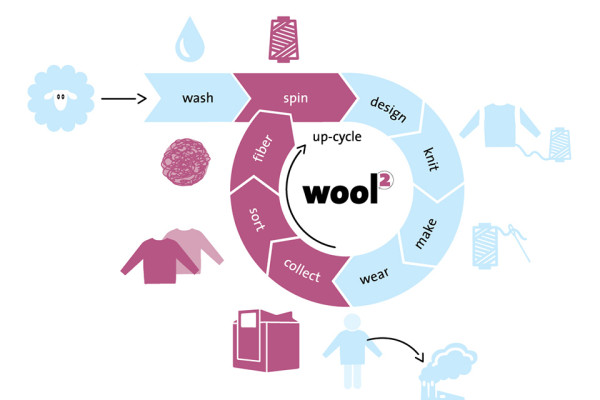 Traditionally, wool is not considered a vegan material as it is mainly sourced from sheep that are treated like a commodity and subjected to cruelty. On the other hand, recycled wool is obtained from scraps. It can also be easily broken down and turned into new products. There are three main ways to recycle wool, says the International Wool Textile Organization. Known as the closed loop system, the first method involves breaking down the garments into raw fiber state to turn them into new garments. The second method is known as the open loop system and involves turning old wool into materials like insulation or mattress padding. The third and last method involves turning old wool garments into innovative products.
More environment-friendly than virgin wool
Significantly better than virgin wool, recycled wool is free from harsh chemicals. The wool has a minimal impact on the environment and requires little water. Another advantage of recycled wool is its low carbon emissions. Recycled wool’s carbon emissions are 83 per cent lower than virgin wool. Also, dyeing process is easier as the wool scraps and garments are sorted by color before being recycled, Buying recycled wool is thus similar to buying a second-hand wool garment as it is infinitely better for the environment.
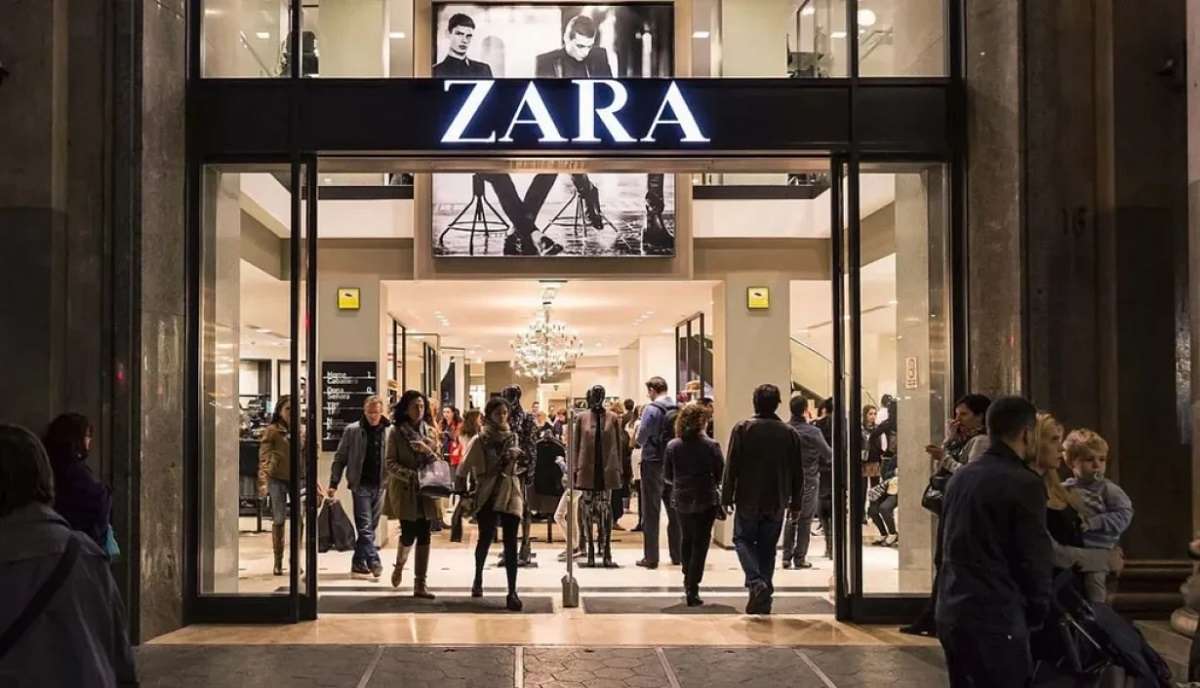
On the other hand, Virgin wool has a much higher carbon footprint and requires sheep to be bred and shaved, which leads to many ethical issues. Yet, many fast fashion brands like Zara and Mango continue to use virgin wool in their garments. They do not seem to make any real, long-term changes to their business models.
Buy from responsible brands
Completely natural, recycled wool is quite an eco-friendly material as it does not require any sheep hair to produce. Consumers who wish to purchase recycled wool need to ensure that the brand that sells it follow fair labor practices and is responsible in consumption of natural resources.
Karl Mayer launches Symm-Net articles with MJ 92/1 B
Karl Mayer has launched Symm-Net articles made using the new MJ 92/1 B
Symm-Net lace is characterized by an extremely delicate design, offering absolute symmetry. This is thanks to the particular configuration of the MJ 92/1 B – the new multi-bar jacquard raschel machine features a split-design jacquard bar with separate threading, and can thus work using both equal and counter lapping. In addition, the newcomer has two ground guide bars at the back for counterlappedelastane. For Symm-Net’s ground structure, GB1 works a pillar notation whilst the jacquard bar works a counter-lapped inlay. The result is a net structure with absolutely symmetrical, clearly defined symmetry.
To perfect the geometry, the two elastane bars with split threading – i.e. 1 in, 1 out – and counter-lapping patterning mirror the movement of the jacquard bar. The lapping patterns thus look as follows:
• JB 91: 0 – 0 / 2 – 2 // and JB 92: 2 – 2 / 0 – 0 //
• GB 93: 0 – 0 / 1 – 1 // and GB 94: 1 – 1 / 0 – 0 //
The ground structure is not only more uniform, but also more stable than its counterparts manufactured with equal lapping. The advantages of Symm-Net are particularly visible when working finer mesh constructions.