A new report argues that synthetic clothing should be designed in such a way that it it sheds fewer fibres. The report also suggests that invisible plastic particles washed off synthetic clothes are the main source for marine plastic pollution – a claim which has been supported by several other pieces of research in recent years. The report by the International Union for Conservation of Nature (IUCN) - Microplastics in the Oceans: a Global Evaluation of Sources – suggests that by far the largest proportion of plastic particles in the ocean stem from the laundering of synthetic textiles and the abrasion of tyres while driving. Invisible plastic particles washed off synthetic clothes are the main source for marine plastic pollution. By far the largest proportion of plastic particles in the ocean stems from the laundering of synthetic textiles and the abrasion of tires while driving. Daily activities, such as washing clothes and driving, significantly contribute to the pollution choking oceans, with potentially disastrous effects on the rich diversity of life within them, and on human health.
So the strategy to tackle ocean plastic pollution must go beyond the focus on reducing plastic waste. Solutions must include product and infrastructure design as well as consumer behavior. Consumers can act by choosing natural fabrics over synthetic ones. Synthetic clothing should be designed in such a way that it sheds fewer fibers.
Synthetic textiles are the main source of primary micro plastics in Asia, Africa and the Middle East. The annual consumption of fiber for apparel amounts to 69.7 million tons globally. Synthetic fibers represent almost two-thirds of this consumption. The majority of synthetic fibers are consumed in developing economies. In these economies, consumers buy a larger proportion of synthetic textiles than in developed economies.

- 1
- 2
- 3
- 4
- 5
- 6
- 7
- 8
- 9
- 10
Circular Samvaad 2.0 aims to transform Indian textiles from linear waste to glob…
On the occasion of World Environment Day, industry leaders, policymakers, and international experts gathered in the capital yesterday for Circular... Read more
From Sentiment to Sustainability: How Mumbai’s ‘Mega Post Textile Waste Initiat…
Walk into almost any Indian household, and you will find wardrobes harboring clothes that haven’t been worn in years. They... Read more
CMAI launches new initiative to combat waste and formalize textile recovery acro…
In a landmark move to address the mounting crisis of post-consumer textile waste, the Clothing Manufacturers Association of India (CMAI)... Read more
Trends-Fabrics (Denim-Kidswear) trends for Spring/Summer 2026-27 by Drapers
For the Spring/Summer 2026-27 season, the kidswear denim market is defined by a shift toward lightweight comfort, playful aesthetics, and... Read more
Cost spiral across fibers, chemicals and logistics squeezes India’s apparel expo…
India’s textile manufacturing sector has entered one of its most financially strained periods in recent years as increasing fiber, yarn,... Read more
How India’s textile recycling network is becoming a global ESG blueprint
India’s textile industry is mounting an aggressive defence against growing international criticism that developing economies are becoming dumping grounds for... Read more
Cotton trade under pressure as war risks and tariff chaos raise apparel costs
The global textile and apparel industry is entering a high-stakes period of volatility as the ongoing Iran war creates a... Read more
Copenhagen GFA summit 2026 signals reset in global apparel finance
" " The global apparel, textile, and fiber manufacturing industries are entering a decisive phase of financial and operational realignment, as... Read more
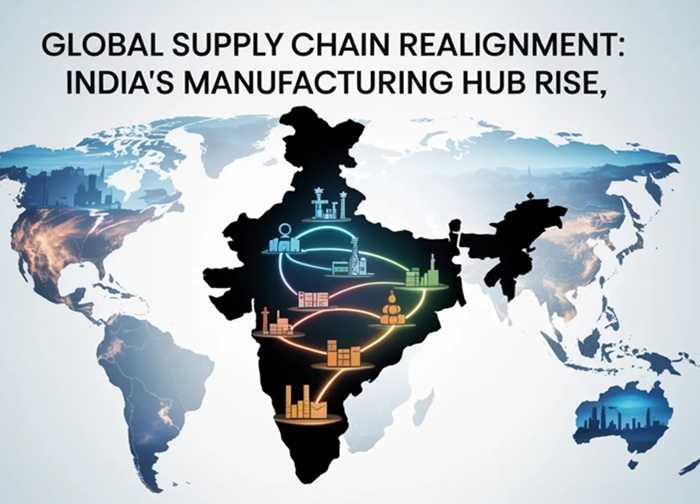
Global apparel supply chains realign as India navigates trade volatility
The global apparel and textile sector is experiencing a significant structural shift, as major manufacturers and retailers move away from... Read more
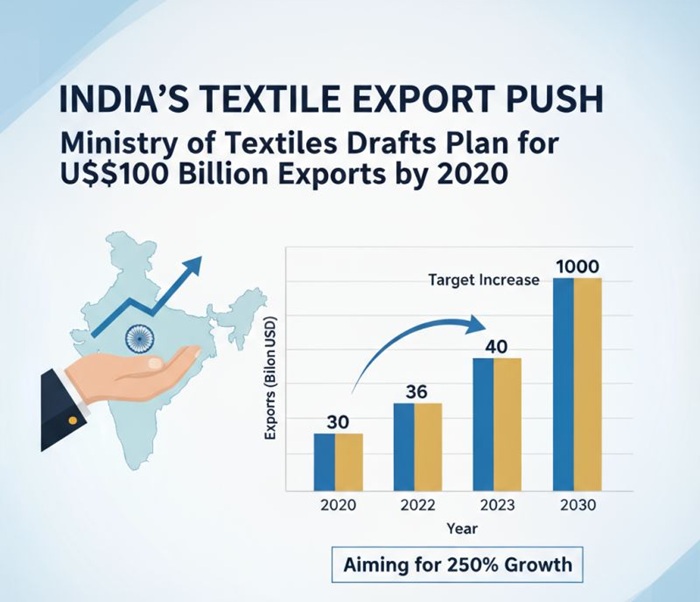
India’s textile sector targets global supply chain shift with $100 bn export pus…
As global brands push up efforts to diversify sourcing beyond traditional manufacturing hubs, India is repositioning its textile industry through... Read more