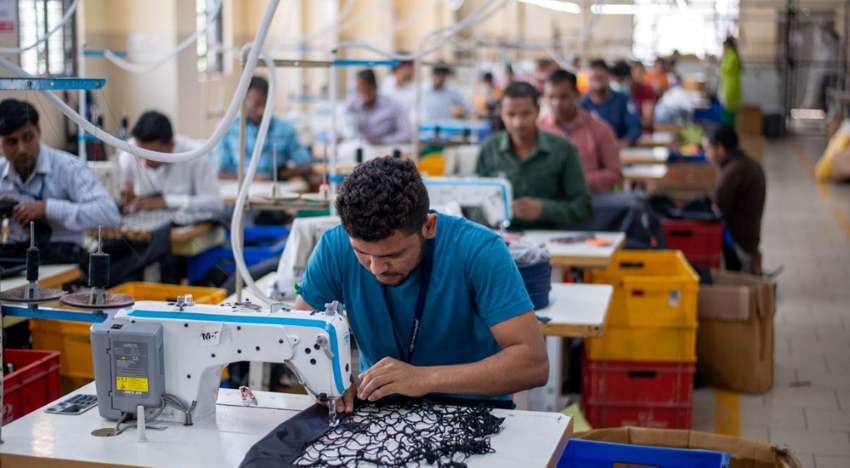
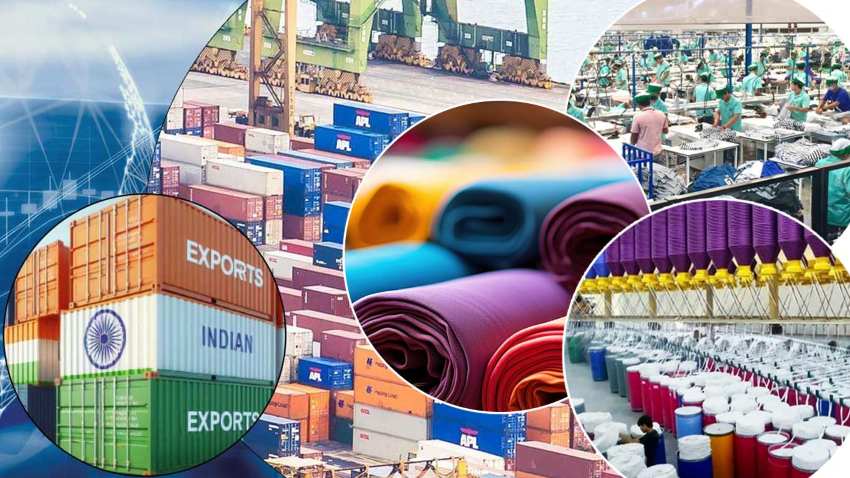
Sutlej Textiles and Industries (STIL) have achieved a turnover of Rs 2,302 crores, an increase of 20 per cent year on year for the year ended March 31, 2016. Net profit for the year was Rs. 143 crores, an increase of 24 per cent over the previous year.
According to C S Nopany, Chairman, Sutlej Textiles and Industries, the financial year 2016 has been a challenging one due to the global economic slowdown. Despite these challenging times, Sutlej, with its strategy of focusing on operational efficiency, organic and inorganic growth through capacity expansion both in spinning and home textiles, has reported increased revenues and profits during the year.
Meanwhile, discussions on acquisition of Birla Textile Mills (BTM) successfully concluded on September 30 last on receiving statutory approvals. BTM, located at Baddi in Himachal Pradesh, has a capacity of 83,376 spindles and manufactures cotton, synthetic & blended yarn in grey & dyed form. STIL’s total spinning capacity has gone up to 377,688 spindles as on March 31, 2016. The company had spent around Rs. 20 crore on de-bottlenecking and value-additions at the BTM unit during the year.
Nopany informed that the work on the project for adding 35,280 spindles at the Bhawani Mandi facility in Rajasthan has commenced. Civil work is progressing, and orders for key plant and machinery have been placed.
The company, with a strong global clientele, exports to nearly 60 countries. It has presence across major developed and emerging economies like Australia, Argentina, Bangladesh, Bahrain, Belgium, Brazil, Canada and China.

- 1
- 2
- 3
- 4
- 5
- 6
- 7
- 8
- 9
- 10
€10 parcel fee puts EU customs policy on collision course with WTO rules
The European Union’s attempt to tighten controls on low-value e-commerce imports is opening a wider legal and economic debate over... Read more
India’s garment makers get a direct route to global digital retail
India’s decision to permit 100 per cent foreign direct investment (FDI) in inventory-based e-commerce exclusively for exports could mark a... Read more
India’s menswear market finds its sweet spot in the Rs 3,500-7,000 mid-premium b…
India’s menswear market is becoming polarized. While the value end continues to compete on price and the luxury segment remains... Read more
Armenian Apparel spearheads a nearshoring realignment at Ready to Show Milano 20…
As the global fashion industry grapples with fragmented supply chains, compressed lead times, and escalating demand for low-minimum-order production, Armenia... Read more
Testex brings Audi Cabin to Intertextile Shanghai, redefining vehicle interiors …
In an unexpected crossover between high-end automotive engineering and ecological textile testing, visitors entering the sustainability showcase at Intertextile Shanghai... Read more
Tailoring makes a comeback as men recast the suit around individual style
After nearly a decade of oversized hoodies, rubber-soled sneakers and workplace casualisation, tailoring is making a commercial comeback in global... Read more
Global activewear, lingerie brands shift more production to India
As activewear and lingerie brands reassess their dependence on concentrated manufacturing bases in China and Vietnam sourcing patterns are changing... Read more
Beyond the Catwalk: Ready to Show 2026 charts new global sourcing frontiers in M…
While the world’s fashion capitals prepare for the Spring/Summer 2027 runways, the operational engine room of European retail is convening... Read more
India’s FTA push reshapes textile export strategy, but import risks persist
India’s new free trade agreements (FTA) are expected to redraw competition for the textile and apparel industry, opening wider preferential... Read more
EU traceability rules force fashion brands to rethink fragmented supply chains
European sustainability regulation is beginning to alter the commercial pattern of the global textile and apparel industry, pushing brands closer... Read more