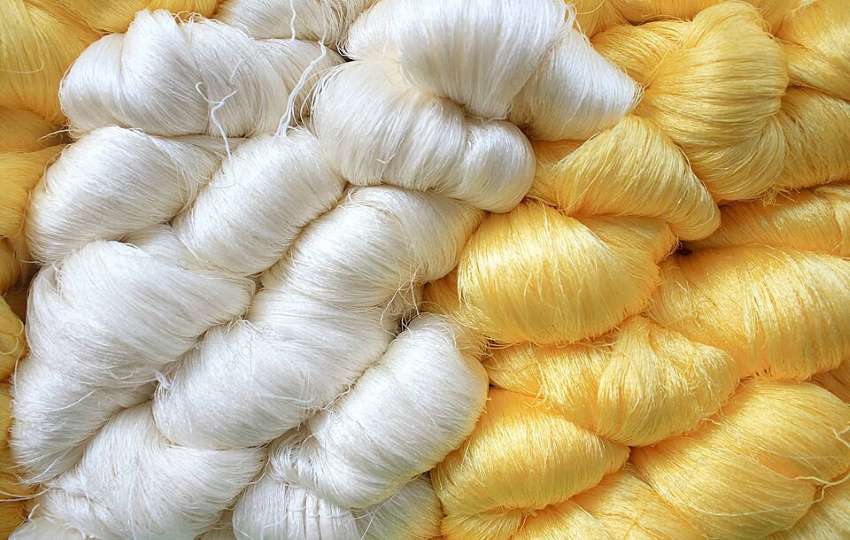
A rise of about 40 per cent in cotton prices over the past two months has hit both small and big spinning mills as yarn prices are up only 10 to 15 per cent. Many fabric mills have opted for blends of synthetic yarn, which is much cheaper than cotton yarn. This has aggravated the problem for cotton spinners.
For big entities, blended yarn is not a sustainable option. Only a small segment of garment makers has substituted blended for cotton yarn. And over-production of blended yarn might mean a glut in the market. At the end of the season, there do arise supply shortages but this year it has crossed all barriers, due to aggressive buying by hoarders. Multinational bulk buyers with access to cheap funds hoard cotton during high arrival days. As the yarn market is not aggressive, mills cannot pass on the entire cost increase on to the buyers.
Mills in Tirupur have resorted to import of cotton from Australia and Africa. However, it takes 35 to 60 days for order delivery and only a few spinners who’d anticipated a huge jump this year could order for imported cotton in time to reap the benefits. This option is not available to spinners in the north, as the distance from ports adds freight charges, making imported cotton unviable. Small mills which economise on maintaining inventory are hurt the most.

- 1
- 2
- 3
- 4
- 5
- 6
- 7
- 8
- 9
- 10
Circular Samvaad 2.0 aims to transform Indian textiles from linear waste to glob…
On the occasion of World Environment Day, industry leaders, policymakers, and international experts gathered in the capital yesterday for Circular... Read more
From Sentiment to Sustainability: How Mumbai’s ‘Mega Post Textile Waste Initiat…
Walk into almost any Indian household, and you will find wardrobes harboring clothes that haven’t been worn in years. They... Read more
CMAI launches new initiative to combat waste and formalize textile recovery acro…
In a landmark move to address the mounting crisis of post-consumer textile waste, the Clothing Manufacturers Association of India (CMAI)... Read more
Trends-Fabrics (Denim-Kidswear) trends for Spring/Summer 2026-27 by Drapers
For the Spring/Summer 2026-27 season, the kidswear denim market is defined by a shift toward lightweight comfort, playful aesthetics, and... Read more
Cost spiral across fibers, chemicals and logistics squeezes India’s apparel expo…
India’s textile manufacturing sector has entered one of its most financially strained periods in recent years as increasing fiber, yarn,... Read more
How India’s textile recycling network is becoming a global ESG blueprint
India’s textile industry is mounting an aggressive defence against growing international criticism that developing economies are becoming dumping grounds for... Read more
Cotton trade under pressure as war risks and tariff chaos raise apparel costs
The global textile and apparel industry is entering a high-stakes period of volatility as the ongoing Iran war creates a... Read more
Copenhagen GFA summit 2026 signals reset in global apparel finance
" " The global apparel, textile, and fiber manufacturing industries are entering a decisive phase of financial and operational realignment, as... Read more
Global apparel supply chains realign as India navigates trade volatility
The global apparel and textile sector is experiencing a significant structural shift, as major manufacturers and retailers move away from... Read more
India’s textile sector targets global supply chain shift with $100 bn export pus…
As global brands push up efforts to diversify sourcing beyond traditional manufacturing hubs, India is repositioning its textile industry through... Read more