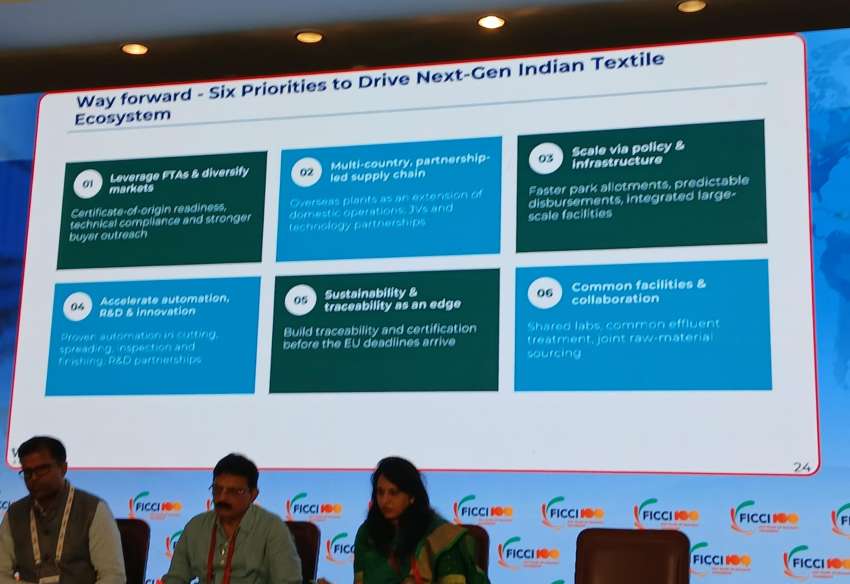

European and South American apparel manufacturers and fabric suppliers are accelerating cross-border integration following the formal establishment of the EU–Mercosur Textile and Apparel Dialogue. Conceived to capitalize on provisional trade frameworks enacted on 1 May 2026, the initiative addresses historical customs frictions and complex rules of origin that previously hindered mid-tier garment producers. Bilateral trade crossed €700 million in 2025, with European exports reaching €495 million against South American imports of €199 million. Industry leaders argue that structured cooperation will streamline raw material sourcing and bolster supply chain resilience amid tightening global commodity deficits.
Traceability mandates drive mill efficiency
Garment makers across the Atlantic corridor are deploying digital compliance frameworks to satisfy stringent environmental and origin verification requirements. A prominent Brazilian export mill recently integrated end-to-end trace documentation across its spinning operations, successfully cutting shipment rejection rates by 12 per cent. Transparent contract mechanisms and verified fiber origins are essential to sustain cross-border textile commerce amid evolving regulatory landscapes, notes Mario Jorge Machado, President, Euratex. Twice-yearly ministerial sessions will monitor implementation benchmarks, ensuring fair competition and circularity standards take immediate commercial effect.
Institutional framework and strategic outlook
Euratex represents Europe’s textile sector, while ABIT and FITA govern Brazilian and Argentine manufacturing ecosystems respectively. Driven by rising demand for sustainable apparel categories, the coalition targets accelerated investment across fiber-to-garment supply chains, projecting steady financial expansion and enhanced market access through 2027.