Japan’s cotton yarn imports decline
Japan’s import of cotton yarn has declined by 2.8 per cent year-on-year to 140,784 bales during the first half of 2013. This was revealed from data by Japan Spinners’ Association. However, the data reveals Japan’s imports of combed yarn grew by a sharp 18.4 per cent to 69,562 bales from January to June.
Its cotton yarn imports from India shot up by 19.8 per cent year-on-year to 22,141 bales during the period under review, which included 18,973 bales of combed yarn, showing a rise of 17.6 per cent year-on-year.
Japan’s cotton yarn imports from Indonesia also surged to 55,093 bales during the six-month period, registering a growth of 19.2 per cent year-on-year. However, Japan’s cotton yarn imports from Pakistan dropped by a significant 41.3 per cent to 30,478 bales during the same period, according to the data.
China: Jeanologia, Properity Textile start sustainable technology centre
Spanish company Jeanologia, a world leader in the development of sustainable technologies for finishing garments, and its partner in China, Prosperity Textile, have launched a sustainable technology Demo Centre in Guangzhou (China). The aim is to transform the Chinese textile industry into a sustainable and environmentally friendly one. It is being conceived as a referral centre in Asia for demonstration and training, specialized in sustainable technologies, such as laser and ozone that allows automation of the production process by reducing production costs while saving water, energy and chemicals and avoiding unhealthy processes of operators.
Jeanologia’s President, Enrique Silla, has expressed his commitment to ethical and responsible industry with the use of technologies that respect the environment and health of workers and has underlined that these technologies “are the future of the textile industry”.
On Demo Centre, Jeanologia’s President says that it will be an example of a factory of the future and will keep on training Chinese companies that want to apply these new technologies. “In this line highlighted that Jeanologia and Prosperity are aware that the industry is changing and we not only need to invest in machinery and technology, but it is necessary to train people in the new methods.”
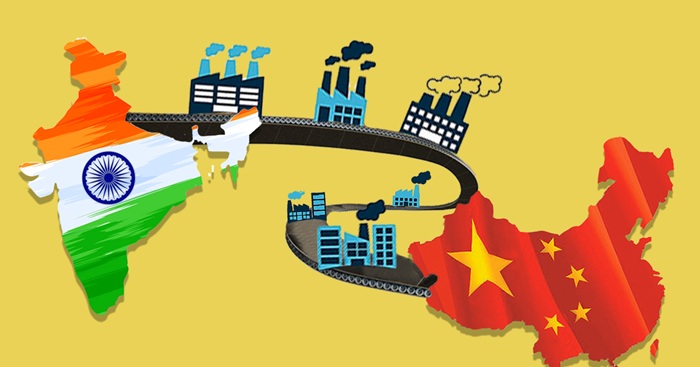
He has forecasts that the production of jeans will not move from China to Bangladesh or Cambodia, but it will just change. "In just five years, China will remain the world's leading producer of jeans but this time thanks to the efficiency of sustainable technologies like laser treatments or the use of ozone instead of water" he said.
In his opinion "The times of shifting production from one country to another seeking lower labor costs are over. We are entering an era of technological efficiency. In a few years, no pants will be manufactured without the use of green technologies, China has the opportunity to transform their industry”.
Mexico sore about Chinese subsidies
Mexico wants China to do something about the subsidies China grants its textiles and garment manufacturing sector. In October 2012, Mexico had filed a complaint with the World Trade Organization, blaming the Chinese government for subsidizing its textile and garment manufacturing sector, resulting in unfair competition for the Mexican textile and clothing industry.
Meanwhile Mexico and China have agreed to increase trade and investment flows between the two countries and to support business missions to explore new areas of economic and commercial cooperation. Mexico feels that while it has dropped tariffs on a host of Chinese goods in recent years, the Chinese market remains for most purposes closed to Mexican goods. So Mexico wants to take a more aggressive stance with China. It hopes to gain greater access to Chinese markets, especially selling foodstuffs, manufactured goods, minerals and energy.
Mexico alleges Chinese manufacturers get export credits, have strong government support and enjoy the benefits of other unfair trade practices. The country wants a level playing field. China has a massive trade surplus with Mexico. Last year, it exported $57 billion worth of goods to Mexico, while Mexico only exported $6 billion to China.
Turkey textile exports up 6.6 per cent
Turkey’s textiles exports, excluding apparels, has seen an increase if 6.6 per cent in the first six months of 2013 compared to the corresponding period of last year.Turkish firms exported $4.164 billion worth of textiles to other countries during January to June 2013, accounting for 5.6 per cent of total Turkish exports.
Segment-wise, woven fabric exports earned $1.436 billion, followed by knitted fabric which fetched $845.6 million. Yarn exports from Turkey were worth $838.5 million, while fiber exports amounted to $307.8 million from January to June 2013. Exports to the EU accounted for 45 per cent of all Turkish textile exports during the six-month period.
Turkish textile exports rose to $7.75 billion in 2012 from $7.7 billion in 2011. Turkey exported textiles worth $542.2 million to Russia, $418.2 million to Italy, and $213.8 million to Germany during the first quarter of 2013.
‘India faces strong competition from China, Bangladesh’, Dalfsen
 With manufacturing costs rising in China, and the recent mishaps in Bangladesh India seems to have a better future as a world sourcing hub. However, Harry van Dalfsen, President IAF feels India still has a long way to go. As Bangladesh’s extremely low labour costs play a role and China’s one stop shop ease of doing business still scores. However, the root causes are diverse and complex.
Further talking about how Europe and the US are looking at current dynamic apparel sourcing scenario apparel from Asia Dalfsen says “We have coined the term '2nd phase post MFA sourcing’. That is, after the disappearance of quota, China has rapidly attained its current dominance in apparel production, but now, in view of rising costs and sluggish markets, especially in the west, again a period of relatively big chance in sourcing patterns is taking place. There are some real movements out of China, especially into Bangladesh and some smaller moves into location closer by the markets (such as Turkey for Europe) and also brands and retailers are actively looking in places they weren’t before (Birma, Africa).”
Ever evolving China
Talking about how China’s role has changed Dalfsen, says, “Remember that only 30 years ago, its role on the world scene was negligible. Then it became the production powerhouse and now as the retail market for fashion is fast becoming more mature.” According to Dalfsen, entering the Chinese market as a European brand for instance is easier said than done. But also vice versa, building a brand in China and selling in the US, EU, India, ASEANor other markets is a huge challenge.
Dalfsen feels Europe especially many medium sized brands (about € 50 million turnover on average) that are strong in their home markets still have to start exporting to another continent such as to China. However, now it has been observed that department stores and multi-brand stores from China are actively travelling to Europe and the US to find good medium sized brands.
IAF's role as a manufacturers' federation
Bangladesh has emerged as the second largest country for sourcing but recent events there forced European and US brands to rethink. Explaining this further Dalfsen opines, “The European Accord and the US Alliance on worker safety in Bangladesh have quickly allowed for firms to stay in Bangladesh while at the same time communicating that they are actively participating in the prevention of these tragedies. So I think we will not see a big drop in exports of apparel from Bangladesh.”
While IAF cannot and legally may not get involved in pricing, Dalfsen feels that the focus in global responsibility is shifting from compliance to real improvements. These improvements must be common investments occurring in the entire supply chain. ”On the other hand, few other industries are so fragmented and competitive and this is of course reflected in fights for margin within the supply chain,” he sums up.
APTMA to upgrade Pakistan’s image
The All-Pakistan Textile Mills Association (APTMA) would launch a new initiative from January 1, 2014, to improve the image of Pakistan’s textiles around the world. The aim is to double the industry’s exports to $26 billion over the next three to four years in the wake of free market access from the European Union. APTMA has decided to adopt the triple bottom line concept –a corporate social responsibility strategy that focuses on people, planet and profits – as a part of its social corporate responsibility program to launch a soft image of Pakistan globally.
APTMA is engaging all its members to ensure the welfare of its workers including health, safety and education of their children. It has already established a sustainability cell that ensures efficient use of energy and conservation of water. Mills are being asked to ensure that they treat and conserve water to protect the environment.
In time APTMA will encourage the entire textile chain to adopt the triple bottom line concept. There would be textile shows in the United States and the European Union to promote Pakistani textile products and a soft image of the country.
For the first time in three years, textile mill owners have seen their concerns about supply of power and energy adequately addressed and 90 per cent of the textile mills are operating at full capacity.
Pakistan textile, clothing exports see double digit growth
Pakistan’s export of textile and clothing products witnessed a double digit growth in the first month of the current fiscal year compared to a year ago. Exports witnessed a double digit growth because of an increase in exports to European markets owing to preferential market access on selected products. The European Union preferential package on import of 75 items has been in operation since December 2012.
Export of textile and clothing surged to $1.136 billion in July 2013 from $1.090 billion in the corresponding month last year. Textile and clothing products, which witnessed a negative growth, are cotton carded and yarn other than cotton yarn in July 2013 over the same month last year.
However, growth in exports in July was mainly driven by knitwear, bed wear, towels and readymade garments, which are valued-added products. Growth in yarn and fabric exports was mainly because of improved energy supply. The full capacity utilisation of production caused growth in the export of home textiles — towels and bed wear as well.
Raw cotton exports from Pakistan have slumped in quantity terms and value terms. But this fall in raw cotton exports is seen as a boon. Reduced exports would also help in stabilizing cotton prices at home which are higher than international prices. The Pakistani textile industry each year falls short of around three million bales of cotton against its total demand for around 16 million bales.
Bangladesh factory audits in September
At least 2,000 garment factories in Bangladesh will be inspected in the month of September. The government-led National Tripartite Action Plan on Building and Fire Safety, which is working with employers and worker groups and the International Labour Organization (ILO), say teams led by the Bangladesh University of Engineering and Technology (BUET) will undertake the assessments. There are also plans to set out a national standard for fire safety and structural assessments as a benchmark for all audits to meet. The Bangladesh Garment Manufacturers and Exporters Association (BGMEA) has pledged to share documents related to factory design and layout with the Committee, which will also share the national standards with all relevant stakeholders at a workshop on September, 7.
The National Tripartite Committee was set up in response to the fire at Tazreen Fashion last November and the collapse of the Rana Plaza building in April which led to the loss of more than 1,200 lives. There are also concerns that Bangladesh's Ministry of Labor is struggling to recruit the 200 factory inspectors it requires. The ILO reveals just four inspectors have been recruited so far, with another 72 due to be on board by October. The recruitment process for another 128 inspectors will begin in November.
Separate schemes are also underway by the North American Alliance for Bangladesh Worker Safety with its Bangladesh Worker Safety Initiative, and the European Accord on Fire and Building Safety in Bangladesh - which between them intend to examine at least 1,500 factories.
They will also offer funds and assistance with remedial action including the relocation and rebuilding of unsafe factories and have set a timeframe to see all their supplier factories inspected within the next nine months to one-year.
Pakistan’s Punjab province to offer incentives to garment investors
Punjab’s chief minister Muhammad Shahbaz Sharif has announced special incentives for local and foreign investors in the garments industrial zone. Issuing instructions for setting up a committee for identifying the site for the establishment of Punjab China Industrial Zone, the CM has directed that the committee should present its report within seven days after consulting all stakeholders so that the project could be initiated without any delay. The committee will comprise senior member board of revenue, secretary industries and representatives of Punjab Industrial Estate Development and Management Company.
Prominent industrialists associated with the garments sector applauded Sharif’s steps taken for the development of garments industry and said that due to the personal interest taken by the chief minister not only garments industry would make rapid progress but huge foreign exchange would also be earned.
The chief minister said that setting up of Punjab China Garments Industrial Zone on a large piece of land near motorway should be considered while other locations for this purpose should also be identified and a report be submitted within seven days. The minister also issued instructions for constituting a working group to remove hurdles in the establishment of the industrial zone and directed that the working group should immediately formulate its recommendations so that the concerned institutions could be contacted for removing impediments. He said that working group should meet on weekly basis and propose steps expeditiously in this regard.
Taiwan textile makers expect huge orders from US trade show
Taiwanese companies that attended a fashion trade exhibition in Las Vegas are expected to obtain about $5 million worth of orders, the Taiwan Textile Federation (TTF) said. As per TTF, 16 textile exporters from Taiwan displayed readymade clothing, hats, socks and other accessories to potential foreign buyers at the Las Vegas Magic Show 2013 from August 18-21, a private sector group. High performance fabric supplier AGT International, ladies woven apparel maker Caribbean Industrial, and sports socks exporter Danken Enterprise were among the exhibitors at the Taiwan pavilion, the group said.
Under the theme ‘Think Taiwan for Textiles,’ the pavilion attracted many international brands such as Adidas, bebe, Marubeni America Corp, JLux Concepts, and Beachbody. These international brands held discussions with the Taiwanese companies and are likely to place at least S$5 million worth of orders for Taiwan-made products, the TTF said.
Yang Hsiao-chin, a section chief at the TTF said the federation is determined to offer local manufacturers the necessary assistance to set up a distribution network in US cities, particularly in Los Angeles as it is a gateway to the huge New York market and Latin America. The TTF is planning to hold similar trade shows and meetings in Indonesia and Vietnam in early November in a bid to help local exporters penetrate the global market, said Chin.
More...
Chinese demand aids Indian cotton exports
A resurgence demand from China for cotton yarn has boosted India’s export, which has gone up by 55 per cent in the first four months of the current financial year. If the trend continues, cotton yarn exports will likely hit a new record this year.
“If the trend continues, cotton yarn exports would beat all previous expectations to set an all time record this year,” says D K Nair, Secretary General, Confederation of Indian Textile Industry. Reports reveal the Cotton Yarn Advisory Board has projected a marginal 14.2 per cent increase to 1,150 million kg in cotton yarn exports from India this financial year. But actual exports could be even higher. Total cotton yarn production this year is estimated at 4,000 million kg. “The substantial increase in exports, however, has not affected domestic supply to mills at all. Domestic mills are operating smoothly with adequate capacity,” said Nair.
Further the exponential growth in cotton yarn shipment has lowered the prospects of cotton exports as Chinese importers find purchase of fibre cost effective. Another factor which helped exports is the record depreciation in the rupee against the dollar. Exporters have rushed to sign a pact with importers at the current exchange rate and lock in till exports are executed. Also, cotton prices have jumped 11.79 per cent to trade at Rs 13,329 a quintal mid August against Rs 11,923 a quintal a month ago.
Intertek opens new facility in Vietnam
Intertek, a leading provider of quality and safety services to a wide range of industries around the world, has opened a new apparel and textiles testing laboratory in Hanoi to support the growing textile and garment industry in the northern Vietnam. The new facility occupies more than 6,000 sq. ft. and is fully equipped with state-of-the-art equipment combined with highly qualified engineers and chemists to provide reliable quality and safety solutions. The new lab performs textile testing for dimensional stability, colour fastness and seam strength, among others. The lab also supports full testing capabilities to US Consumer Product Safety Improvement Act (CPSIA) requirements and restricted substances regulations.
Thanh Nam Nguyen, General Manager for Softlines, Hardlines and Toys business lines, said, “The addition of the Hanoi facility aligns with Intertek’s continuous effort to provide a local presence for our customers, wherever their business operations are located. This provides a distinct competitive advantage in an industry where getting safe and high-quality products to market is imperative for success.”
The Hanoi apparel testing laboratory is the most recent addition to Intertek’s global network of 45 textile and footwear laboratories that serve fabric, apparel, fashion accessory, home textile and footwear retailers, brands and manufacturers. In addition to testing, Intertek offers the following services for textile, footwear and apparel customers: chemical management, inspections, certification, auditing, safety and compliance training, outsourcing and advisory, quality assurance and risk management.
Sri Lanka’s Kuruwita Textile’s exports to B’desh increases amid loss
Kuruwita Textile Mills, a unit of Sri Lanka's Brandix Apparel group reported exports to Bangladesh rose in June 2013 quarter. However, the company’s looses increased amid increasing costs. The firm lost Rs 211 million in the quarter up 355 per cent from a year ago period. It reported losses of Rs 8.46 per share in accounts filed with the Colombo Stock Exchange.
Kuruwita Textiles said revenues rose 11 per cent to Rs 1.82 billion in the June quarter, but expenses rose at a faster rate at 23 per cent to Rs 1.98 billion, a gross loss of Rs 157 million against a profit of Rs 44.7 million a year earlier. Exports to Bangladesh had grown to 41 per cent of sales in the June quarter up from 31 per cent last year. "However, it has to be noted that the Bangladeshi orders carry comparatively lower margins due to the lower average selling prices partly due to the effects of the off season for the company’s product range," Chairman Aslam Omar told shareholders.
He said raw material costs were 15 per cent higher than last year but they could not be passed on fully with higher selling prices. Electricity costs were also higher. "The management has been actively looking at mitigating these adverse impacts and is currently reviewing alternatives," Omar said without elaborating.
Japanese textile firms enter apparel segment
Major textile manufacturers in Japan have been entering the field of clothing design and manufacturing, aiming to increase profitability through business expansion by supplying products to general merchandisers and boutiques, where they are sold under private labels. In mid-June, Osaka-based Teijin Frontier held a spring/summer fashion preview for retailers, where a wide range of products, including women’s casual wear and men’s suits, were on display. In addition to showing off fabrics with deodorant, cooling, stretch and other features, the company highlighted the cutting-edge technologies used to make their products, such as a special fibre that gives garments a unique texture.
Toray Industries embarked on full-fledged manufacturing of finished apparel around 2006 and became a textile industry pioneer for its entry into a downstream business. The expansion trend among major textile makers has been partly inspired by Uniqlo’s business model. Uniqlo has grown into a self-styled manufacturing retailer, handling all aspects of production from planning to manufacturing and selling. Meanwhile the company has avoided price competition by launching products with innovative features such as heat-tech, a line of heat-generating underwear.
With Unitika considering producing kids’ clothes and Daiwabo Holdings eyeing the casual wear market, textile makers are expected to continue making waves in the apparel business.