Ethiopia likely to set cotton price
Under pressure from cotton producers and textile factories, the Ethiopian Ministry of Industry is going to set the price for cotton. With a view to stabilize cotton prices in the market, the federal government imported cotton but the move is yet to encourage farmers to produce more and supply to the textile factories at a fair price. While local textile units lament inconsistent prices, which has forced farmers to change their production cost several times, producers too blame the cost of labour, high price of agriculture machineries, uncertainty in market and weather conditions.
Tadesse Haile, State Minister of Industry says it was right for the government to stabilize the cotton market. The government is aware of brokers who set the price of cotton randomly and that discourage textile factories which causes them to incur additional costs. For the purpose of drafting a regulation, discussion is being held with stakeholders and the Ministry.
The regulation is going to prohibit brokers from involving in the delivery line of agricultural products for their interference is impacting the industry. The supply chain of cotton is a long one which results in lower earning by farmers while brokers lap up good profits.
Abreham Tadesse, Vice President of the Ethiopian Cotton Producers, Ginner and Exporters Association (ECPGEA), criticized the federal government for not giving proper attention to the industry. Nearly 250,000 hectares of land is available for cotton plantation while only 10 to 15 per cent of this is cultivated, he argues.
Zimbabwe: Delays in new policy jeopardises clothing segment
Delay by the Zimbabwean government in announcing a new policy on import duty for apparel and textile material for manufacturers can put the feasibility of already sick clothing sector in jeopardy. Secretary General of the National Union of the Clothing Industry, Joseph Tanyanyiwa, believes the Ministry of Finance and Economic Development should not delay the issue of clothing manufacturers rebate. The buzz is that most players in the clothing industry are contemplating sending their workers on forced leave. Many others have reportedly failed to resume operations as their materials were being held at bonded warehouses.
Tanyanyiwa further said that most companies have failed to clear their clothing and textiles imports since December 2014. Currently the clothing sector is operating at below 30 per cent from a peak of between 40 and 45 per cent in 2010-11. In his 2015 budget statement, Finance minister Patrick Chinamasa had proposed to extend the clothing manufacturers rebate facility by another 12 months as the rebate had attracted investment and generated additional employment in the clothing industry. Last year, government in partnership with the private sector launched the cotton-to-clothing strategy as a part of efforts to revive the sector. Materials eligible for rebate include: cotton sewing thread containing 85 per cent or more by weight of cotton; cotton sewing thread, denim, plain weave weighing more than 100g per sq. mt.; sewing thread of man-made staple fibres; woven fabrics of polyester staple fibres, chenille fabrics, tulles and other net fabrics.
Due to a number of problems afflicting the industry the employment figure in textile and clothing industry has plunged to about 8.000 now from 35,000 when at its peak.
Blockade badly affects cotton supply to Bangladesh textile units
The country-wide blockade and has badly affected production at most textile units in Bangladesh following supply disruption of raw cotton. In absence of adequate transport facilities a significant quantity of the raw material is stuck up at Chittagong Port from where imported cotton is transported to textile production units. The overall production in textile sector declined by around 20 to 25 per cent over the last one month due to the short supply of raw cotton, sources say.
Textile manufacturers have imported around 4.30 million bales of cotton in 2014 from countries including US, India, Pakistan, Australia, Uzbekistan etc, informed the Bangladesh Textile Mills Association (BTMA). The volume of imported cotton was 4.0 million and 3.5 million in 2013 and 2012 respectively. Textile millers have been importing on an average 0.35 million bales of cotton every month to meet local demand, the BTMA data reveals.
BTMA statistics showed more than 1,409 textile units across the country have been facing 25 per cent shortage of raw cotton. Local spinners can supply 95 per cent of yarn for the knitwear sub-sector and nearly 40 per cent of fabric for the woven sub-sector. Raw cotton imported by them is now waiting at the port due to transportation problem, informed a source.
Illies to represent Itema in Indonesia
Illies Engineering has been appointed Itema's sole agent in Indonesia. All activities related to the sale of Itema weaving machines, spare parts and after sales services in Indonesia will be carried out by Illies Engineering.
The new set up in Indonesia is in line with the company's strategy to build up a stronger presence in important weaving markets throughout Asia Pacific with the creation of a new dedicated regional hub based out of Hong Kong. Indonesia is for Itema a key market in Asia Pacific and the company is committed to providing, besides the best weaving machines in the world, the most accurate and dedicated service. Itema is the world’s largest privately held provider of advanced weaving solutions. It works relentlessly to provide the best tailored solutions. It already relocated Cristiano Capitanio, regional head of sales, to the Hong Kong hub and allocated resources focused on after-sales service and marketing related activities. This is a move to enhance local presence and increase efficiency.
Illies has long-standing know-how about the Asian textile market and works with top industry players of the sector to develop and take care of their business in the region. It is known for professionalism, reliability and expertise in the textile industry.
www.itemagroup.com/
Buoyant Indian textile industry must fast overcome hurdles
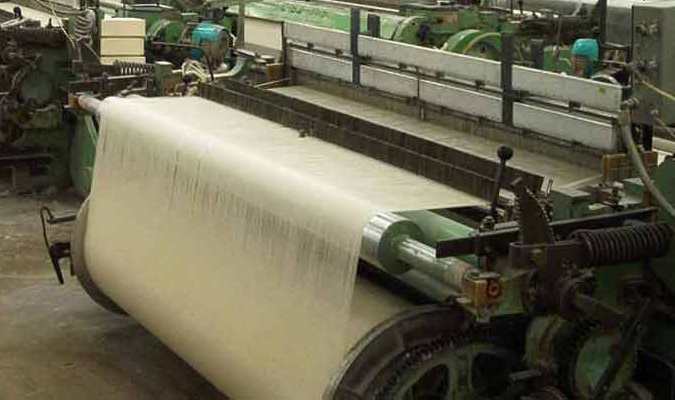
The year 2014 has been positive for the India’s textile industry. Second largest employment generator, the textile industry is said to be contributing around 14 percent to industrial production, 4 percent to the country’s GDP and 12 percent of the country’s exports as well as around 8 percent of the total excise revenue collection. At this interesting growth juncture, the country needs to come up with quick measures to tackle issues blocking its prospects in the global textile trade.
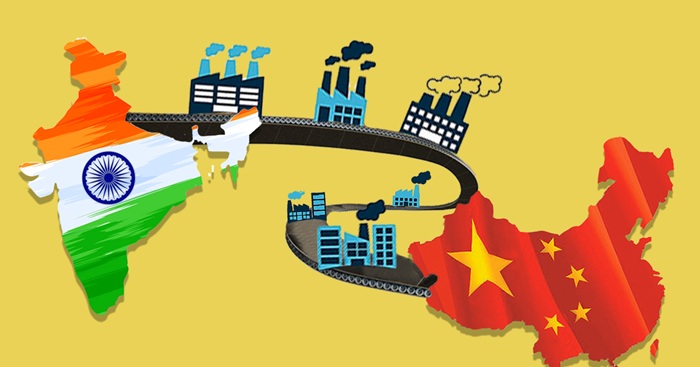
While the country can race ahead with its expertise and rich resources in terms of quality raw material, skilled labour and production capacity, its time, the nation prepares itself to take advantage of China’s diminishing competitiveness in global textiles. The number of manufacturer-exporter is grappling with various issues like increasing labour cost, appreciating Yuan against dollar, rising power cost and its deliberate move towards value-added industries. Experts say that Indian textile industry can grow rapidly if the players focus their energies on value addition, improving efficiency, modernization of units and integrated operations.
Measures to boost growth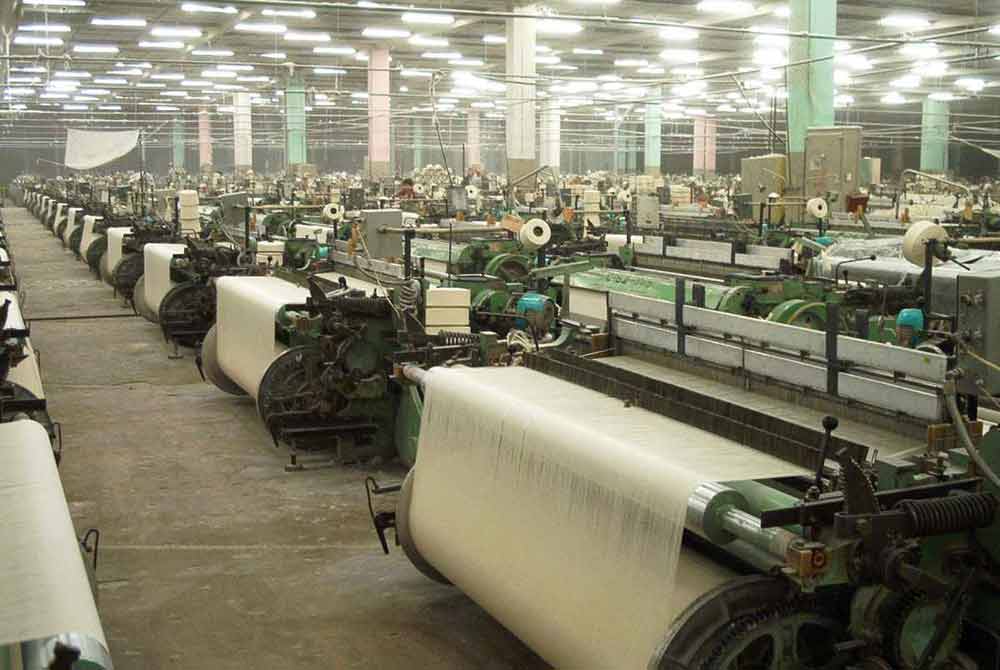
India is expected to consolidate its position in the coming years The Indian textile and
apparel industry was estimated at $108 billion in 2013 with a compound annual growth rate (CAGR) of 13 per cent from 2008-2013. It is projected to continue to grow at a CAGR of 12 per cent and reach $440 billion by 2025.
After the Narendra Modi-led stable government took charge at the Center, there were a lot of expectations. While the government was able to garner attention through its budget announcements with a proposal of setting up a few mega textile clusters with a fund allocation of Rs 200 crores as well as recent approval to the Constitutional Amendment Bill on Goods & Services Tax (GST), which is expected to lead a decision on rollout of an ambitious indirect tax reform expected to raise revenues and boost growth.
Government’s efforts to bring artisans from rural clusters like Varanasi and Chanderi on online platforms like Flipkart with the help of designers may also help in promoting brand India on the global platform. After completion of the 100 days at the centre, the government launched an ambitious new initiative to promote domestically manufactured products and attract investments. ‘Make in India’ campaign covering 25 sectors, including the textile and garment industry, was unveiled by the Prime Minister in the presence of industrialists and biggies from the corporate world of India and abroad at a ceremony in New Delhi.
Hurdles to growth
The vocational training offered in India mismatches with the needs of casual workers who constitute over 90 percent of the labour force, resulting in a shortage of skilled workers at the national level. In contrast, the Chinese vocational education and training (VET) system, which is similar to India’s, targets a larger population as the average education level of its working age population is higher. Also there is no uniform policy and structure for such initiatives across states.
Also while global textile sourcing is shifting towards India and China, there is a rise in global machinery companies building their manufacturing units in the country posing direct and stiff competition for the homegrown players, who are far behind in bringing the level of technology used by their global counterparts. Lack of proper infrastructure, high power costs are some of the other hurdles to growth. Unlike in countries like China and Bangladesh, which have developed large production units, India lacks such set-ups that can cater to large orders and rising demand making it lag behind in the competition.
Industry veterans point out that to tap the growth opportunities that are clearly visible, the industry must invest in modernization and consolidation of weaving, processing and garmenting capacities to increase productivity and quality. And the Indian government must play its role in implementing industry friendly policies and adequate measures like labour laws reforms to attract investments and trigger growth.
Magic opens in Vegas
The world's largest fashion marketplace, Magic, is being held in Las Vegas, from February 17 to 19. Magic has 10 separate communities, each tailored to offer brands and knowledge that will appeal to buyers from the field.
Among the offerings this year is the new emporium Global Artisans at Sourcing at Magic, which will showcase handmade clothes, jewelry, scarves, handbags and shoes by artists from the Philippines, Cambodia and Nigeria. At the FN Platform, buyers can take their pick from over 1,600 men’s, women’s, juniors and children’s footwear brands from more than 20 countries.
The latest edition to Magic’s stable of trade shows is Playground, which promises to deliver a new outlook on children’s apparel. It is dedicated to contemporary children’s brand market and will have about 100 kids’ wear brands.
Magic is also continuing to underline its global credentials with Japan Fun Time, which will feature young contemporary accessories brands from Japan. Japan Fun Time can be found at WWD Magic and is a continuing partnership with the Japan Fashion Week-International Fashion Fair trade expo.
ENK Vegas is focusing on ethical brands with new group Conscious Collections, which consists of 46 brands that focus on social consciousness, fair trade, organic materials and philanthropy.
www.magiconline.com/
SourceTrends: Retailers and brands to meet in Hong Kong
Global retailers will focus on safety standards and compliance in Bangladesh's garment sector at the sourcing trend meet to be held in Hong Kong in mid-March. SourceTrends is an annual event for apparel and footwear brands, manufacturers, retailers, agents and suppliers. This year, Bangladesh is on the radar due to the Tazreen Fashions fire and the Rana Plaza building collapse.
Every year, retailers, brands and manufacturers from all over the world attend the meeting to discuss updates on safety standards, compliance and future plans in the apparel and footwear sectors. A full-day event is planned with five panel discussions that address product testing regulations, US customs and supply chain traceability.
Each panel will comprise speakers from retail or brand organisations, product testing or audit or inspection companies, along with leaders from international trade associations from the textile, apparel and footwear industry. There will be a discussion of Alliance, a North American garment factory inspection agency, and Accord, another platform of 190 retailers and brands for factory inspection.
The discussion will shed light on how brands and retailers can use the experiences of both Accord and Alliance on factory inspection globally. American Apparel and Footwear Association, American Chamber of Commerce, Footwear Distributors and Retailers of America, SGS, Oeko-Tex, Business Social Compliance Initiative, Sustainable Fashion Business Consortium and Worldwide Responsible Accredited Production are organising the meeting.
India to continue sops for textile exporters despite US pressure
Despite mounting pressure from the US to do away with incentives for textile exporters, India has decided to continue giving sops to textile exporters this fiscal. This comes as a major relief to exporters. Reminding India of its export competitiveness in the textile segment that was attained eight years ago, as per the rules of the World Trade Organisation (WTO), US India no longer qualifies to give such concessions. But India has stuck to its stand as the government does not feel compelled to withdraw textile export incentives while announcing the forthcoming Budget or the Foreign Trade Policy.
Meanwhile, Commerce and Textile Ministries have started working on alternative schemes that are amenable to WTO, so that export sops for the sector can be replaced. As per sources, the US has been claiming that India needs to stop export sops for the textiles sector from 2015 but the Ministry believes in sticking to its deadline of phase-out period that ends in 2018. The sops to be phased out include focus product and focus market schemes targeted at incentivized markets, the EPCG scheme and the interest subvention scheme.
India argues that the phase-out period ends in 2018 since the WTO undertook a calculation of India’s world trade share only in 2011, and determined that it had retained competitiveness on the basis of data of 2009-10. As per WTO statistics, India’s share in world trade for textile and clothing was 4.66 per cent in 2013 with exports at $37 billion.
UK textile sector set for huge growth
With the revival of textile sector in UK, nearly 15,000 jobs could be created in the UK textile and apparel sector by 2020. Last year 5,000 new jobs were created in textile manufacturing in the UK.
Post-recession growth is coming from micro companies rather than well known manufacturers in the UK textile industry. Significant capabilities still exist in traditional sectors such as yarn spinning, knitting and weaving alongside growth in technical textiles, materials and composites.
Increasing costs from competing countries are making UK sourcing more attractive and traditional areas of manufacturing are focused around high unemployment pockets. A number of retailers are supporting repatriation of textile manufacturing to the UK. From princesses' wedding dress to F1 cars, planes and space crafts, UK textile manufacturing is still leading the world in many segments.
Of particular note is the success of the National N Brown Textiles Growth Program, the first ever textile grant growth program in British history, led by N Brown Group, a UK apparel retailer. Launched in 2013, as an incentive scheme, the program has to date invested £1million in grants to 94 companies thereby leveraging an additional £30 million of private sector investment. The UK textile industry is worth £9 billion to the economy and is experiencing year-on-year export and domestic growth.
Bangladesh to provide funds to help units go green
Textile factories in Bangladesh will be provided funds to help adopt eco-friendly technologies and practices. The fund can be accessed by wet processing units, which are export-oriented or supply to the garment sector. Inefficient resource use and poor environmental practices are major challenges for the textile sector. Textile factories in Dhaka consume 1,500 billion liters of groundwater annually to produce five million tons of fabric, with every kg of fabric gobbling up 300 liters against the global standard of 100 liters per kg of fabric.
Textile dyeing and finishing units in Bangladesh are known to waste large amounts of water as they consume five times the best practice benchmark. Environmental sustainability is important for a country’s mid- and long-term development. It’s estimated Bangladesh can raise its garment exports to $50 billion by 2021 if factories are eco-friendly.
Toxic discharges of the industry pollute both surface and ground water. Long-term sustainability of the industry lies in its ability to produce green textile products mainly due to the growing consumer demand for eco-friendly products. However, factories need financial support from the government and price support from buyers to adopt eco-friendly practices.
More...
Govt to review export councils
Export promotion councils in India will undergo an overhaul. Currently, there are 23 export promotion councils of which 10 are administered by the Textiles Mministry. These include apparels, handicrafts, carpets and handlooms. Transparency will be introduced in the election procedure of these councils. The way these councils nominate officers on the board of directors and management will be reviewed. Apart from this, all executive heads of the textile export promotion councils may have to inform the ministry regarding their foreign visits.
Activities of the councils with regard to exports and conduct of exhibitions, buyer-seller meets within India and abroad will be reviewed on a quarterly basis. The government provides funds to these councils to boost exports and other related activities. But exports have been hovering around $300 billion for the last few fiscals.
Export promotion councils help Indian entrepreneurs market themselves globally and guide them through rules and regulations. They help entrepreneurs fulfill their business objectives through effective branding and marketing, technology transfer and upgradation by arranging joint ventures and international collaborations with foreign partners through the process of exhibitions, trade shows and B2B meetings.
Indo Rama sets sights on Bangladesh
Indo Rama Synthetics, India's second largest polyester manufacturer and supplier now aims to increase polyester supply to the fast growing garment sector of Bangladesh. The company also makes supplies polyester and chemicals not only in India, but in Indonesia, Thailand, US and some other countries in the world.
Indo Rama manufactures several types of polyester products including polyester staple fiber , draw texturised yarn, fully drawn yarn, polyester chips. In addition, the company is also supplying manufactured yarn. Founded in 1989, it has a strong footprint both in India and overseas. It produces 50,000 transformers from its single location plant.
Indo Rama also has several technical collaborations with various technology leaders in Japan, Germany and USA. It stands for high quality standards and innovative business practices. It has the country’s largest dedicated polyester manufacturing unit at a single location. The company has a polyester manufacturing capacity of six lakh tons per annum.
Polyester is the most important synthetic fiber accounting for 70 per cent of all man-made fiber consumption. Globally the industry is shifting to China and India, which are slated to be the two most important sourcing destinations for textiles.
www.indoramaindia.com/
Bangladeshi exports to Japan declining
Latest data from the Bangladesh embassy in Tokyo, reveals exports from Bangladesh to Japan are likely decrease owing to fall in net income of the Japanese people. Japan government has decided to impose a 10 per cent consumer tax on income of its citizens, which has led to decline in consumer spending. Also there has been a lot of fluctuation in the Japanese yen against the US dollar, which could also result in fall in exports.
However, experts feel that since Bangladeshi exporters have obtained duty-free access to the Japanese market, the negative impact of the above factors could be less. As per the trade councilor letter, Bangladeshi exports to Japan during July-October period this fiscal was less 0.81 percent or $2.40 million than the strategic target of $296.45 million. The net income of Japanese people fell by 16 percent in April in 2014 while Prime Minister Shinzo Abe’s decision on whether to proceed with the next proposed sales tax hike in October 2015, to 10 percent from 8 percent. It said the Japanese consumer spending is 60 percent of Gross Domestic Product of the country.
Export Promotion Bureau’s recent data showed at end of FY2013-14, Bangladesh’s exports to Japan amounted to $540 million. In 2012-13 year it was $519 million.
www.epb.gov.bd
Eco-System at Interfiliere Hong Kong to focus on consumer safety
In order to produce high performance fabric, manufacturers either embed chemicals in yarn or go through a process of applying finishes or coatings after production. While these chemicals improve performance, there is a growing consensus that they pose hazards to not only environment but also to the wearer’s health. In addition to health concerns for consumers, who wear these treated textiles, many of the health risks can be higher for workers as well as the communities surrounding the manufacturing plants. Thus, the Eco-system showcase will return at Interfiliere Hong Kong this year with a new focus on ‘human’ by zooming in on working conditions and consumer safety.
The show will have an interactive zone for visitors to fully engage themselves and gain a comprehensive understanding of this global issue. Six topics will be discussed and revealed during the event including chemicals and textile globalisation, role of NGOs, REACH regulation, ethical associations and safety labels, collaborative initiatives from companies, case study of the Rana Plaza’s disaster and improvement on laws. Sustainability conference will also take place throughout the two days in order to deliver in-depth review and insight for the intimate apparel industry experts.
The forthcoming Interfiliere, to be held at Hong Kong Convention and Exhibition Centre, on March 18 and 19, 2015, will unveil themes for the Autumn/Winter 2016-17, focusing on the two major areas of current global intimate activity. Three themes will be introduced under the ‘Day & Night’ concept: latest novelties for sport and everyday underwear; gorgeous sensual decorated fabrics; and prototypes for more dressy seductive nights.
www.interfiliere.com