US: Consumer spend on traditional apparel formats dwindles

The reason for this pressure, as per Cowen are three visible trends: Amazon will be the largest US apparel retailer by 2017 with its apparel business expected to grow to $52 billion in gross margin volume by 2020, a boon for strong brands but a bad news for traditional retail; major off-price retailers will open at least 2,500 stores in the US by 2020, while major retailers will expand by roughly 875; and spending on fitness-related wearable products will pull see a shift in spending from traditional retail as consumers are expected to spend $15.8 billion on the category by 2020.
Athleisure has taken the centre-stage as fitness conscious consumers are ready to spend on fitness wearables such as athletic apparel and footwear to match. “Price perception data for Nike and Under Armour from the Cowen Consumer Tracker Survey updated through July, further indicates the consumer’s willingness to pay for innovation, performance and newness,” the report says. Price satisfaction scores for Nike and Under Armour are up an average 3 percent over the last year.
Amazon’s apparel strength to impact brick-and-mortar
Though the macroeconomic trends are looking more positive, Cowen said each of the disruptive trends, plus the pervasiveness of high-turn, low cost fast fashion is “impacting apparel business models through a combination of deflationary pricing pressure and increased speed to market and end user which may impact future revenue growth and operating margin expansion.”
Amazon’s projected growth in apparels is expected to grab the market share from traditional brick-and-mortar retailers, and brands will have to closely monitor their relationship with the e-commerce giant. “Global brands that can effectively segment product between their own stores/website, the traditional wholesale partners and Amazon have an opportunity to expand distribution,” the report noted. Some brands, for instance, like Nike, Under Armour, VF Corporation and the North Face, may limit the products they sell through Amazon. “We think that the goods sold on Amazon will be more commoditized products, popular items that consumers can purchase from multiple companies stores and/or websites,” the report noted.
And as for exclusive products, like the current season’s clothing collection or a signature shoe release, will still be done on the brand’s own website so they can control the product display and requisite marketing.
Off-price retailers on the rise, fast fashion wins
The report suggests when it comes to the off-price disruptors, the discount category is experiencing “tremendous” growth in revenue and store expansion and that growth is only expected to continue. Macy’s and Kohl’s too recently entered the off-price race, joining other department stores like Nordstrom and Saks, and the sector’s rise will put added pressure on apparel pricing as the lower-cost formats fight the full-price stores for share of consumer apparel spending.
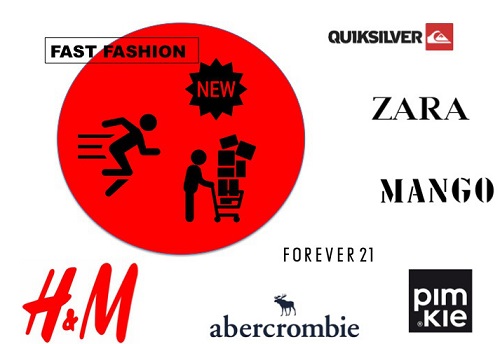
And fast fashion on the other hand has been the driving force behind the new way of retail and the quick-to-market strategy is helping brands such as Zara, H&M, Uniqlo, Primark and Forever 21 to steal the share held by apparel retailers. All these five fast fashion retailers brought in a combined $68 billion in global sales last year, or 6 per cent of the global apparel market, the report added.
Fast fashion, off-price and Amazon combined, with their promotional or discounted prices, according to Cowen, will “chip away at traditional methods of apparel distribution and exert deflationary pressure on average unit retail as all concepts compete for share of customers’ wallets.”
www.owenandco.com
Weak demand impacts textile production negatively
Exports of raw cotton and waste from India plummeted by 58 per cent during the April-July period from a year before and those of man-made yarn declined nearly 6 per cent during this period. However, some of the other textile segments, such as jute and carpets, performed well during the April-July period with exports of jute growing 13.2 per cent and those of carpets by12.3 per cent, helping the overall textile exports achieve an under 1 per cent rise up to July this fiscal year.
Not just exports, even the production of textiles dropped in July from a year before, while that of garments gained 21.7 per cent during the month, according to the industrial output data. This indicates that not only export demand remains weak, but even domestic consumption is not picking up in textiles, so spinning mills have begun reducing production for the first time in five years. The fact that the government is yet to clear subsidy claims of around Rs 4,500 crore for investments made under the flagship Technology Upgradation Fund Scheme has further added to the woes of textile units.
Meanwhile fall in yuan as well as demand in the China market is hurting the Indian exports since many players heavily depend upon the country for their export share. China is the biggest market for textiles, accounting for over 70 per cent of India’s cotton and 40 per cent of yarn supplies. Experts predict that the Chinese market will witness a further decline in 2015 as well as 2016 putting pressure on Indian companies.
Automotive textiles, a change driver
The textile industry is increasingly becoming a strong supplier for automobile manufacturers. Industrial textiles are widely used in transportation vehicles and systems including cars, trains, buses, airplanes and marine vehicles. The term automobile textile covers all type of textile components e.g. fibers, filaments, yarns and the fabric used in automobiles.
Automotive textiles are used widely, from light weight vehicles to heavy duty trucks. Nearly two-thirds of automobile textiles are for interior trims, i.e. seat covers, carpets and roof and door liners. The rest is utilised to reinforce tires, hoses, safety belts, air bags etc.
Lightweight components can strengthen a car’s safety features. A textile layer can be positioned between layers of a car’s bonnet, producing a damping effect in the event of a collision. Integration of micro-electronic components into the fibers will determine future developments in the textile sector. This could help improve comfort and acoustics features significantly as well as help regulate more efficiently the temperature inside of a car.
The use of textiles on a large scale has become more evident in the past years, as fiber-based materials are now also being adopted as lightweight solutions. A number of cars have a body made of this material.
CICR will market domestically developed cotton
The Central Institute of Cotton Research (CICR) has been allowed to market domestically developed straight line varieties of BT cotton. This could sharply bring down the seed cost of cotton farmers. Indian varieties of BT cotton will be available at just Rs 150 per kg compared to the Rs 2,000 per kg cost of BT cotton seeds manufactured under license from US-based biotechnology firm Monsanto.
The patent in the US ended in 2012. Since then other countries like Pakistan have developed 31 new varieties of BT cotton States like Maharashtra, Andhra Pradesh, Telangana and Karnataka have reported a high incidence of farmer suicides since the cultivation cost of BT cotton is high and the losses incurred on account of a crop failure are tough to absorb for small farmers.
Some of this could get addressed if the cost of cotton seeds comes down through domestically developed varieties. CICR along with 11 agricultural universities in India has developed 21 varieties of Indian BT cotton and is gearing up to take these varieties to farmers by 2017. Apart from the lower cost, Indian BT cotton varieties can also be reused. CICR conducts basic and strategic research on cotton to improve yield, fiber quality and by products.
www.cicr.org.in/
YiwuTex 2015 attracts global, Chinese machinery makers
 The 16th edition of Yiwu International Exhibition focusing on textile machinery, will be held from November 30 to December 3, 2015, at Yiwu International Expo Centre, Zhejiang. This is an annual event for knitting and apparel industry. The show offers three theme zones: Knitting & Hosiery Machinery Zone, Sewing & Automatic Garment Machinery Zone and Dyeing & Finishing Machinery Zone. Spread over an exhibiting area of more than 15,200 sq. mt. the event will see about 9,130 participants.
China’s hosiery industry
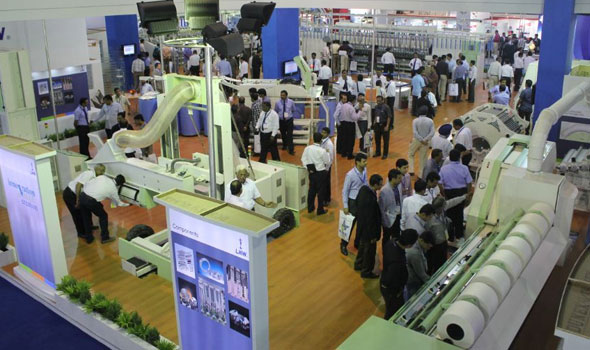
The event will explore various aspects of China’s hosiery industry. Since it is situated at a strategic location of China's development plan, Yiwu is certain to grow into an important trading point in the country. Events and forums will be held simultaneously on industry specific topics and to analyse latest trends in design. Besides, fashion designers from China, Taiwan, and Hong Kong will share the latest application of textile technology. All this will be showcased through product displays and shows.
Exhibitor Liu Weiming, General Manager of Yiwu Aurora Machinery Co explained that Chinese machinery has reached world-class levels in terms of function and performance. However, there is a certain gap when compared to international hosiery machineries in terms of accessories processing and post-processing. Besides, Chinese machinery is not as stable as global ones as accessories are weak in precision and hardness.
Weiming opines the country’s textile machinery industry is going through the stage of ‘survival of the fittest’. Thus, several textile machinery manufacturers are moving to Southeast Asia and India in search of cheap labour. He believes because of this, those enterprises with quality products, stable performance and advanced technology can survive.
Location, too is another positive factor to introduce them to the world. Aurora has global plans and sold machines to countries, including Russia, New Zealand, Pakistan, Vietnam, etc, which make up 30 per cent of their sales volume. They are hoping to expand exports in coming years.
Upgradation, transformation key to grow
The knitwear and garment industry is now moving towards structural optimisation and wider range of application with rising labour and energy costs. Therefore, knitwear companies desperately need to transform and upgrade their equipment and machineries to meet market challenges.
Nicola Burini, Sales and Service Manager of LGL China (Hangzhou), says they are recognised as a leading supplier of innovative solutions for feeding yarn all across the globe. LGL has come up with an innovative range of electronic yarn feeders for knitting machineries (from circular seamless to socks, and large diameter circular and flat knitting machineries), and waving machineries (rapier, projectile and air-jet). Also, LGL yarn control solutions maintain a programmable constant yarn tension, and can increase performance of machine, increase productivity, decrease the quality of final product and reduce energy consumption with an advance sustainable high performance product. A one-stop platform for the knitting and garment industry, the Yiwu event is set to be one of the biggest trade events in China.
H&M sales up 22 percent, plans overseas expansion
Hennes & Mauritz (H&M) group's sales excluding VAT increased by 22 percent to SEK 132,167 million for the nine months from December 1, 2014 to August 31, 2015. In local currencies the increase was 12 percent. Commenting on the group’s positive performance, Karl-Johan Persson, CEO of H&M said, “So far this year our sales including VAT have increased more than 20 percent – an acknowledgement that our collections are well appreciated worldwide. Our other brands are performing well and are continuing to reach out to more and more customers. For example, COS now has around 130 stores across 27 markets, Monki more than 90 stores in 13 markets, & Other Stories 25 stores in 10 markets and Weekday 20 stores in five markets.” Profit after financial items increased 11 percent. The group’s profit after tax increased to SEK 15,372 million, corresponding to SEK 9.29 per share, an increase of 12 percent.
For the third quarter from June 1, 2015 to August 31, 2015, the H&M group’s sales in SEK excluding VAT increased by 19 percent. In local currencies the increase was 11 percent. Gross profit increased 14 percent corresponding to a gross margin of 55.9 percent. Profit after financial items was at the same level as last year and amounted to SEK 6,936 million. The group’s profit after tax amounted to SEK 5,306 million, corresponding to SEK 3.21 per share.
Sales including VAT in the period from September 1 to September 22, 2015 increased by 12 percent in local currencies compared to the same period last year.
H&M’s first stores in Macau were well received on opening in the quarter. The group continued strong expansion with approximately 400 new stores planned to open in 2015. India and South Africa will be new H&M markets in October 2015. Eight new H&M online markets have opened so far in 2015, all of which have had a very good reception. Switzerland and Russia will become new online markets during autumn 2015.
In the 2015-16 financial year, H&M plans to offer e-commerce in a further nine existing H&M markets and also to open stores in three new markets: New Zealand, Cyprus and Puerto Rico.
www.hm.com
Bangladesh seeks suggestions
Two organisations have launched an online competition that seeks suggestions for building a fair and sustainable apparel industry in Bangladesh. A panel of judges will examine the entries. The winners will be announced in the spring of 2016.
The organisations are C&A Foundation and Ashoka Changemakers. They are looking to transform the way the apparel industry works. The initiative is called ‘Fabric of Change’ and it will bring together social innovators and experts who have the ability to catalyse a transformation within the apparel industry.
While there is a growing concern within the fashion industry for sustainability and the working conditions of garment laborers, large-scale change has been slow to take hold. The catastrophic collapse of the Rana Plaza factory in Bangladesh highlighted many of the systemic problems that continue to plague the industry.
C&A Foundation and Ashoka Changemakers launched the challenge as part of a broader partnership that seeks to support talented social entrepreneurs working to make the apparel industry more equitable and sustainable. The partnership will also map promising innovations and opportunities for transformation in the sector.
C&A Foundation is a private foundation affiliated with the global clothing retailer C&A. The foundation works to transform fashion by helping build an industry that respects the rights of workers, improves livelihoods and conserves the environment.
Russian industry wants imports halted
The textile industry in Russia wants a ban on imports from Europe and the US. The industry feels it doesn’t make sense to buy manufactured textile products from European Union countries and support their economies. Instead the industry wants European companies to start cooperating with Russian textile companies.
Local Russian textile companies have obviously decided to take advantage of the nationalist mood to get a leg up on foreign competition. This follows Russia’s much publicised destruction of contraband European cheese and other foods. Imported textiles play a big role in Russia’s economy. In the past 14 years, the share of the local textile industry in the GDP has dropped from 12 per cent to four per cent.
But there is also a view that banning foreign clothes or destroying whatever is at the stores right now won’t help anyone. The government should offer local textile companies training, low interest loans and other similar measures. In recent years, the situation in the Russian textile industry has significantly deteriorated. The industry has not yet fully recovered from the consequences of the global crisis. Weak demand has resulted in overstocking of warehouses and an increase in the production costs of industry players.
Sri Lanka emerges a hub for RMG
Sri Lanka's apparel industry is aiming to be a hub for South Asia. It can do this by buying semi-finished garments from other countries in the region and adding value with the aim of increasing export earnings. The country has the technical and design capabilities. It can be a hub for India, Bangladesh, Pakistan and Myanmar. Sri Lanka has ample cotton and labor pool which gives scalability and cost advantage. It can look at buying semi-finished garments from other countries in the region and do value addition. This can be a potential $20 billion industry.
Sri Lankan apparel has evolved from traditional exports and tailoring designs to providing sophisticated solutions. The apparel categories span sportswear, lingerie, lounge wear, bridal wear, work wear swim wear and children’s wear. The country has the highest apparel exports per capita of any exporting nation in the region.
The industry has had epic growth levels over the past four decades and is today Sri Lanka’s primary foreign exchange earner. South Asia is expected to be one of the main global apparel sourcing regions in the next 15 to 20 years. The region is one of the largest cotton producers and has a large textile manufacturing base.
Italy to host ITMA in November
ITMA, European edition of the world’s biggest textile machinery show will be held in Italy from November 12 to 19, 2015. The focus of the show is sourcing sustainable solutions. It is committed to the requirements of forward-looking production. ITMA 2015 will showcase the latest machine technology and services that take into account the aspects of environmental protection and social responsibility, and apply them to the entire textiles and clothing production chain. Roughly 1,500 exhibitors from more than 40 countries will be showing products. More than one lakh of visitors from 140 countries are expected.
Besides innovative technical solutions for the value-added textile chain, this year’s ITMA will also offer the opportunity to exchange knowledge and ideas in a series of special events. The second world textile summit will be held on November 13. The following day, leading colorants and chemicals producers will invite people to attend a forum, and the nonwoven sector is to meet on November 16 to exchange information and ideas.
The research and innovation pavilion will present an overview of research being carried out in the textile and clothing industries. Research and educational institutions will showcase their research facilities and innovation and technological capabilities.
www.itma.com/
More...
India's cotton production may be normal
Cotton production in India the next cotton season (October 2015 to September 2016) is expected to be approximately 385 lakh bales. Though deficient rainfall in states such as Gujarat and Maharashtra were expected to bring down production, rains in these states during the last 10 days have given hope that production will be almost the same as last year. Prices are also expected to be stable next season.
Textile mills, who are the main buyers of cotton in the country, are facing financial problems because of slow movement of yarn. They want the Center to come out with a scheme to extend financial support to mills to purchase the raw material, that is, cotton. Cotton exports this year are lower than last year and are 63 lakh bales so far. Imports have touched 13 lakh bales. Cotton stock is available in surplus globally. International cotton associations are also expecting a surplus carryover of cotton stock the world over.
India is the second largest producer of cotton in the world after China, accounting for about 18 per cent of world cotton production. It has the distinction of having the largest area under cotton cultivation in the world, ranging between 12.2 million hectares and constituting about 25 per cent of the world area under cotton cultivation.
Textile companies moving towards a sustainable future

Investing in green practises

The Benchmark Program allows companies to track their own progress and also relate it to others’ experience and results in four main areas: Sustainability Strategy, Supply Chain, Materials Usage and Sales and Marketing. According to the findings, 93 per cent of companies reported to have a vision or mission to be more sustainable.
The majority, almost 81 per cent are addressing raw materials use at the strategy level and 74 per cent are setting individual targets for specific materials. The report says that 70 per cent of companies use a voluntary sustainability standard to help them ensure the integrity of their organic products and 64 per cent are tracking other preferred materials. While 74 per cent are reporting the amount of organic cotton they consume, 81per cent claim to be communicating the sustainability attributes of their products to their customers.
The ‘Benchmark Program for Organic Cotton and Preferred Materials’, will be shared with the textile industry. The 57 participating companies submitted detailed data about their organic cotton and other preferred materials use to Textile Exchange for analysis and comparison across the industry. These companies range in size from small start-ups to global brands and share the common goal of improving sustainability efforts across their supply chains.
Lack of data on usage of preferred materials
Policies on raw materials and animal welfare are still lagging behind human rights and ethical trade, says the report. Also, companies setting long-term goals for a preferred material portfolio were less common than setting targets for specific materials. While 73 per cent of participants could provide data on organic cotton, the numbers dropped off dramatically for other preferred materials. Textile Exchange says that this is an area where companies need to improve so that their use of preferred materials such as recycled polyester and preferred cellulosic (such as lyocell) can be better analysed.
“Textile Exchange’s Benchmark Program provides a framework for the industry. Companies working to improve their impact on the environment, natural resources, people and animals can compare best practices and results. Our aim is to have these companies learn from each other and even feel a sense of urgency to make improvements similar to those of their colleagues in the industry. As we move beyond the pilot phase we’ll also be encouraging more companies to join in,” says Liesl Truscott, European and Materials Strategy Director.
The benchmarking results will be featured at TE’s global Textile Sustainability Conference in October and in a series of online workshops for companies that will be launched later in 2015. Textile Exchange, founded in 2002 works closely with all sectors of the textile supply chain to find the best ways to minimize and even reverse the negative impacts on water, soil, air, and the human population created by this $1.7 trillion industry. TE accomplishes this by providing the knowledge and tools this industry needs to make significant improvements in three core areas: materials, integrity and supply chain.
www.textileexchange.org
Textile Exchange, a global non-profit organization that works to accelerate sustainable practices in the textile industry has announced the findings of a comprehensive benchmarking report that measures the progress of 57 leading textile companies in their effort to become more sustainable. While there is an overall improvement in the companies’ initiatives to become more sustainable, Textile Exchange points out that the data on usage of preferred materials must be prudent to better assess their efforts. </br>
Investing in green practises
The Benchmark Program allows companies to track their own progress and also relate it to others’ experience and results in four main areas: Sustainability Strategy, Supply Chain, Materials Usage and Sales and Marketing. According to the findings, 93 per cent of companies reported to have a vision or mission to be more sustainable. </br>
<br>
The majority, almost 81 per cent are addressing raw materials use at the strategy level and 74 per cent are setting individual targets for specific materials. The report says that 70 per cent of companies use a voluntary sustainability standard to help them ensure the integrity of their organic products and 64 per cent are tracking other preferred materials. While 74 per cent are reporting the amount of organic cotton they consume, 81per cent claim to be communicating the sustainability attributes of their products to their customers. </br>
<br>
The ‘Benchmark Program for Organic Cotton and Preferred Materials’, will be shared with the textile industry. The 57 participating companies submitted detailed data about their organic cotton and other preferred materials use to Textile Exchange for analysis and comparison across the industry. These companies range in size from small start-ups to global brands and share the common goal of improving sustainability efforts across their supply chains. </br>
Lack of data on usage of preferred materials
<br>
Policies on raw materials and animal welfare are still lagging behind human rights and ethical trade, says the report. Also, companies setting long-term goals for a preferred material portfolio were less common than setting targets for specific materials. While 73 per cent of participants could provide data on organic cotton, the numbers dropped off dramatically for other preferred materials. Textile Exchange says that this is an area where companies need to improve so that their use of preferred materials such as recycled polyester and preferred cellulosic (such as lyocell) can be better analysed. </br>
<br>
“Textile Exchange’s Benchmark Program provides a framework for the industry. Companies working to improve their impact on the environment, natural resources, people and animals can compare best practices and results. Our aim is to have these companies learn from each other and even feel a sense of urgency to make improvements similar to those of their colleagues in the industry. As we move beyond the pilot phase we’ll also be encouraging more companies to join in,” says Liesl Truscott, European and Materials Strategy Director. </br>
<br>
The benchmarking results will be featured at TE’s global Textile Sustainability Conference in October and in a series of online workshops for companies that will be launched later in 2015. Textile Exchange, founded in 2002 works closely with all sectors of the textile supply chain to find the best ways to minimize and even reverse the negative impacts on water, soil, air, and the human population created by this $1.7 trillion industry. TE accomplishes this by providing the knowledge and tools this industry needs to make significant improvements in three core areas: materials, integrity and supply chain. </br>
www.textileexchange.org
Govt to push growth of geo and technical textiles
The government plans to encourage companies to produce geo and technical textiles through the textile technology mission scheme. The aim is to promote its ‘Make in India’ initiative by way of enhancing capital subsidies to procure textiles machineries which are largely imported.
It is likely to make use of geo and technical textiles mandatory in sectors such as construction of roads, ports, airports, canals, dams as also in defence and railways to propagate their applications and to restrict such imports to enhance domestic production, points out Textile Commissioner, Kiran Soni Gupta, while speaking at a seminar on 'Geo Textiles' under aegis of PHD Chamber of Commerce and Industry.
Soni informs capital subsidies for obtaining textiles machineries could also be increased along with the interest subsidy expansion since states like Rajasthan, Maharashtra and Tamil Nadu make a significant contribution on the geo and technical textile manufacturing front. PHD Chamber plans to open a ‘Startups Cell’ to support, fund and guide the young entrepreneurs in the field of their choice including technical and geo textiles segments.
www.phdcci.in
Welspun towels make their way into the 2015 Rugby World Cup
Indian bed and towel major Welspun has bagged the license to supply towels to the teams vying for the coveted 2015 Rugby World Cup that started on September 18, 2015 in the UK. This is not the first time that Welspun's towels made at its manufacturing capacities in Gujarat are making their presence at a global sporting event. In 2006, the company held license to manufacture towels for the Wimbledon tennis tournament.
The company has emerged strong in manufacturing textiles—towels and bed sheets. Around 95 per cent of Welspun’s revenue is driven by exports to global retailers in the US such as Walmart Stores and JCPenney.
Companies like Welspun are also investing in research and development (R&D) to innovate and grow their business. The company has applied for six patents in Europe, the US, Brazil, China, Korea and Australia for its creations such as natural finish fabric, ergonomics mattress pad and eco-dry towels that use little water during washing. It has already got patents for Hygrocotton that has a hollow core for fluffiness, temperature control and moisture wicking, from the UK and the US in the past two years.
www.welspunindia.com