China will continue to be main sourcing destination for US brands/retailers
US apparel executives in Los Angeles believe China will still be the first choice sourcing destination over the next two years, but they expect the country’s lead to narrow. Among the countries apparel and textile producers will source from in 2016 and 2017, China leads the field (37 per cent), followed by Vietnam (15 per cent) and India. Beyond 2017, executives see China’s lead shrinking but remaining dominant.
A study ‘Los Angeles Fashion Industry Profile’ by the CIT Group, which surveyed more than 50 LA apparel executives from a mix of manufacturers and licensors asked what they see as the most innovative technology for the future of the apparel industry, 54 per cent of the executives say social media, nearly one in four (24 per cent) say integrated systems between manufacturers and retailers, and 13 per cent say either 3D fitting or 3D printing. And more than half say the internet represents the biggest growth opportunity for Los Angeles apparel companies.
When asked which factors would negatively impact their businesses in 2016 and 2017, 47 per cent of executives say the cost of doing business and 43 per cent say retail consolidation. It’s savvy use of social media and state-of-the-art manufacturing platform have positioned the Los Angeles region as a leading global fashion epicenter. Los Angeles companies are capturing around 18 billion dollars in revenues through its fashion industry.
BD aiming to achieve world's 2nd largest economic growth in 2019
Bangladesh’s Members of the Parliament (MP) from both treasury and opposition benches have expressed their firm hope that the country would achieve the second largest economic growth within 2019 because of the tremendous development carried out continuously in all sectors. They said the living standard of Bangladesh has already risen up, giving a clear indication that the country is becoming a developed one.
Lawmakers of the 10th Jatiya Sansad (parliament) were proud to say that Bangladesh's average per capita income is $1,316 at present ($547 previously) and the poverty rate has come down to 7 per cent (24 per cent previously). The MPs made these observations while they were taking part in a discussion on President Md Abdul Hamid's speech given on January 20 on the first day of the 9th session of the 10th parliament. They said the President highlighted different positive aspects in social, political and economic sectors that set Bangladesh in motion on the wheels of a faster growth.
According to the lawmakers, the present government is relentlessly working towards advancing the national economy in a faster pace by speeding up development in all sectors. The country had already achieved success in the health, electricity, education, agriculture, food, communications, science and technology, industries, women and children sectors. The law makers said, Bangladesh has become a digital country within the shortest possible time due to the farsightedness of Sajeeb Wazed Joy, son of Prime Minister Sheik Hasina and the adviser of ICT affairs to the Prime Minister.
China Textile Round-Table Conference focuses on supply-side reform
The theme of the recently concluded China Textile Round-Table Conference 2016 was on ‘Textile supply-side reform and adjustment under '13th Five-Year Plan.’ This year too Oerlikon Manmade Fibers were the sponsor much like the last 11 years. China Textile Round-Table Forum is a major industry economic forum hosted by China National Textile and Apparel Council. Experts present at the round-table believed that supply-side reform is of vital importance for the sustainable development of China's economy, and also serves an unprecedented opportunity for the development of textile industry.
Chen Zhongwei, General Manager of Hengyuanxiang Group, expressed his views on the textile ‘Brand Improvement’ strategy and solution from the perspective of enterprise at the meeting. Reinhard Muehlenmeister, Vice President of Software Solutions of the Oerlikon Manmade Fibers segment, delivered the keynote speech on Industrie 4.0 Solution of Chemical Fiber Production, which received high attention from participants.
Held in Beijing the conference saw about 300 representatives from government agencies, China National Textile and Apparel Council (CNTAC) and other industry associations, experts and scholars, entrepreneurs from home and abroad, research institutes and media attended this annual conference. Georg Stausberg, CEO of Oerlikon Manmade Fibers segment, also attended the forum and made in-depth communication and exchange with industry leaders and experts over issues of industry situation and development.
Nitin Spinners’ Q3 income up 19 per cent YoY
Nitin Spinners recorded a mixed quarter where their total income was up 19 per cent at Rs 190.5 crores versus Rs 160 crores in the same quarter last fiscal. But other income was lower at Rs 0.02 crores compared to Rs 1.18 crores YoY. Finance costs too were up 55 per cent at Rs 8.7 crore versus Rs 5.6 crore YoY. The margins for the quarter were at 18.5 per cent.
The company’s managing director Dinesh Nolkha is confident of a 26-27 per cent topline for FY16 and maintaining EBITDA margins around 18.5 per cent. For FY17, the company has plans to increase capacities which would come on stream by year-end, according to Nolkha. The company’s exports too are doing well and are expected to do better going forward.
Nitin Spinners manufactures cotton yarn and also has fabric manufacturing for knits. Their 80 per cent of the revenues is generated from yarn and 20 per cent from knits. Its 65 per cent of revenues are from exports.
Bangladesh to set up apparel warehouse in West Bengal
Garment makers in Bangladesh want to set up a warehouse in West Bengal. If the proposal goes ahead exporters from Bangladesh are also interested in setting up a garment park alongside.
The warehouse will help garment manufacturers in Bangladesh supply apparels directly to retail shops across India. Although India provided duty-free and quota-free market access for all Bangladeshi goods, except 25 alcoholic and drug items in 2012, it levied a 12.5 per cent countervailing duty the following year, which hampered garment exports.
Bangladesh exported garment items worth $104.25 million to India in fiscal 2014-15, up 8.3 per cent year-on-year. The country's overall exports to India were worth $456.63 million in fiscal 2013-14, compared to $563.97 million a year earlier. Bangladesh’s imports from India were at $6.03 billion in fiscal 2013-14 and $4.78 billion a year earlier.
India is a very big market for Bangladeshi apparels, as its annual retail market size is set to cross the $40 billion dollar mark thanks to its growing middle class. Bangladesh seeks to boost its annual garment exports to the Indian market to a billion dollars in three years from the present $100 million.
Domestic cotton prices likely to remain sensitive next fiscal
As per a India Ratings and Research (Ind-Ra) report, domestic cotton prices to remain under pressure in 2016-17 due to continuation of Chinese direct subsidy-based policy and lower demand from spinning mills. Though Bangladesh, Pakistan and Vietnam have replaced China with India as a supplier, volumes are picking up at a slow pace, and are unlikely to match Chinese demand. During April-December 2015 India produced 28.5 million bales as against 29.5 million bales in FY15 and 31 million bales in FY14 against which exports have been 5.3 million bales (4.2 million bales in FY15 and 9.3 million bales in FY 14).
In CY17 (International Cotton Year, which commences from August and ends in July), the ratings agency expects cotton prices to stay firm. Domestic prices had declined in CY16 in line with Ind-Ra's expectations and are expected to remain under pressure in CY17 as well. According to the rating agency, the international cotton prices, however, will remain sensitive to the release of cotton by China from its cotton reserves, which Ind-Ra estimates to be around 59 per cent of global cotton stock at FY16.
Chinese cotton reserves will directly impact the quantum of imports in that country and consequently, global stock levels outside China, the report added. The cotton industry is likely to revive moderately in CY17 as exports to Vietnam, Pakistan, and Bangladesh grow. Vietnam is likely to increase its spindles capacity by 30 per cent in FY17.
The local cotton production in Pakistan and Bangladesh is unable to keep pace with the increasing demand for apparels from these locations, providing opportunities to Indian exporters.
Greenpeace detox campaign for cleaning supply chains
Textile companies are working toward eradicating harmful chemical substances from their clothing supply chain. They are creating an auditing protocol, tracking progresses, publishing case studies and showing transparency through the publication of testing results. Some have chosen the chemical management gold standard by which all other fashion brands and sectoral hazardous chemical initiatives will be measured. Now that their own suppliers are committing to eliminate hazardous chemicals, these brands have no excuse but to follow suit.
Hazardous chemical groups that need to be removed include perfluorinated compounds, brominated and chlorinated flame retardants, organotins compounds and amines associated with azo dyes that can have negative effects on human reproductive systems and cause cancer.
Other areas where hazardous chemicals need to be eliminated include yarn production, fabric production, textile raw material production, yarn dyed and fabric dyed. Some 35 international fashion and textile brands and retailers—representing more than 15 per cent of global textile production in terms of sales—have already committed to a toxic-free future. Among the participating companies are Miroglio and Inditex, as well as Valentino, Adidas, H&M and Burberry.
Greenpeace’s Detox campaign aims to lead the industry toward eradicating all harmful chemical substances from the clothing supply chain by 2020.
Lacrosse creates hi tech flat knits
Advanced flat knitting technology is now poised to revolutionize the sport of lacrosse. Lacrosse is a contact team sport played between two teams using a small rubber ball and a long-handled stick sometimes called a ‘crosse’. The head of the lacrosse stick is normally strung with loose mesh designed to catch and hold the lacrosse ball and it is this mesh which is being replaced with the engineered flat knit.
Sportswear and sports equipment giant New Balance has launched The Warp, a lacrosse stick incorporating an engineered flat net knitted on a Stoll CMS flat knitting machine, which is designed to catch and hold the lacrosse ball.
Each knitted pocket consists of 2,536 knitted rows, takes 1,604 machine carriage strokes with 513 stitch transfers, and is knitted in one piece with every single stitch engineered to specification. So there is no need to adjust strings before the game, between whistles, or on the sidelines. In fact, there are no more strings.
The pocket comes game ready. Unlike mesh that comes flat and hasn’t been created specifically for the head, the warp’s pocket shape is engineered with a three-dimensional knitting process, molded directly into the head. This means the pocket works in perfect unison with the entire head.
Duty drawbacks on exports streamlined
India has made changes in the duty drawback scheme to help boost exports. These industry rates of duty drawback will be effective immediately. New entries in the drawback schedule have been created for cotton yarns mixed with manmade fiber - both grey and dyed. It has also increased the drawback caps in the case of certain manmade fabrics. There is a separate entry for cotton yarn mixed with manmade fibers.
However, in product coverage some clarifications are needed with regard to the classification of some high-valued items like boiler suits and protective wear made of blends containing cotton and man-made fibers.
Duty drawback is a refund of duties on imported inputs for export items. Drawback caps are imposed on several export products with an aim to obviate the possibility of misuse by over invoicing of the export value. Steps have been taken for the smooth implementation of the three per cent interest equalisation scheme. Problems faced initially by some exporters in getting the benefit from their banks have been largely resolved.
Even though Indian cotton textiles products are competitive in world markets, preferential access being given to some of the competing nations like Bangladesh, Cambodia, by major importing countries like the EU, are affecting exports.
Cotton crop fails in Pakistan
Pakistan’s low cotton output may hurt millions of families in the farming communities, which would ultimately affect exports and the gross domestic product. The country would miss the target of cotton production by 4.6 million bales, necessitating imports worth four billion dollars to keep the textile industry running which would hit the balance of payment situation and forex reserves.
Cotton is the backbone of Pakistan’s economy. It holds a 8.5 per cent share in the GDP, fetched 12 billion dollars through exports and provides jobs to 40 per cent of the labor. The reasons behind the low cotton output include sudden and unpredictable rains, drought in some areas, low cotton prices and a hike in prices of inputs by 15 to 20 per cent and the use of substandard seed and fake pesticides, which discouraged farmers.
The sowing target of cotton was also missed, with potentially disastrous consequences. Genetically modified seeds were introduced in the hope they would be pest resistant. But the imported seeds failed to withstand pink bollworm and whitefly attacks while sprays and medicine to tackle the pests were not available in the market. So the pests played havoc with the crop.
More...
US cotton plantings to rise
Cotton producers in the United States could plant up to 9.1 acres of cotton this coming spring, up 6.2 per cent from 2015. In the mid-south, growers intend to plant 1.2 million acres, which is a 24.9 per cent increase from last year. Growers in the southwest are eyeing 5.3 million cotton acres, which indicates a 6.1 per cent leap.
Elsewhere in the US, far west cotton producers expect to plant 2,13,000 acres, totaling 24.4 per cent more than what was recorded in 2015. The southeast is the only region with an expected decrease of 5.1 per cent, reducing its total to 2.1 million acres.
Planted acreage is just one of the factors that will determine supplies of cotton and cotton seed. Ultimately, weather, insect pressures and agronomic conditions play a significant role in determining crop size. Upland cotton intentions are 8.9 million acres, which is a 5.7 per cent jump from 2015. Extra-long staple intentions of 2,08,000 acres make up a 31.2 per cent increase.
History has shown that US farmers respond to relative prices when making planting decisions. Cotton is grown in 17 states stretching across the southern half of the United States. Cotton is produced on about 18,600 farms in the US.
Milano Unica to shift venue
The latest edition of Milano Unica was held in Italy, February 9 to 11, 2016. It was dedicated to fabrics and accessories and showcased collections for the spring/summer 2017 season. It had 371 exhibitors, 72 from outside Italy, as opposed to 361, 64 from abroad. Added to these, 40 Japanese companies and 13 Korean fabric manufacturers were featured in the Japan and South Korean observatories. Altogether the show hosted 424 exhibitors compared to 399 in February 2015, an increase of six per cent.
In the next September edition, the show will relocate and enjoy a complete makeover of its facilities. The reason for relocation is that the event wants to occupy a bigger space. Italy’s benchmark textile show will adopt for the occasion a new floor plan, built around a central square, a reference to a typical Italian piazza. The idea is to become an event open to international excellence, in order to create synergies with Italian know-how.
The underlying project appears to be that of bringing together several events linked to the fashion world in one place at the same time. Stress has been laid on the importance of team-work and of pooling energies together around a single, coherent project.
www.milanounica.it/
Cheer for AP cotton farmers
Cotton farmers in Andhra Pradesh are getting remunerative prices. They are probably benefiting from the crop damage in Pakistan, Bangladesh and China. The remunerative price has crossed Rs 4,600 per quintal, which is almost Rs 500 higher than the minimum support price. The average price in the last three years was hovering between Rs 2,500 to Rs 3,000 per quintal. Prices have jumped nearly 100 per cent from the previous season. In anticipation of a further price rise, farmers have, so far, sold just around 8 to 9 lakh bales against the total production of around 22 lakh bales.
Spinning mills who are the main buyers say farmers are refusing to part with their stocks even at prices of Rs 4,500 per quintal. So these mills fear coming under pressure in the coming weeks as the global markets are also indicating low production. The crop damage in Pakistan, Bangladesh and China has triggered a demand in global markets. Pakistan has, so far, imported nearly 30 lakh bales from the total exports of 45 lakh bales from India. India's exports too are expected to go beyond the normal 80 to 90 lakh bales.
On the whole the scenario has come as a relief for Andhra Pradesh’s cotton farmers who had witnessed huge losses in the last three seasons.
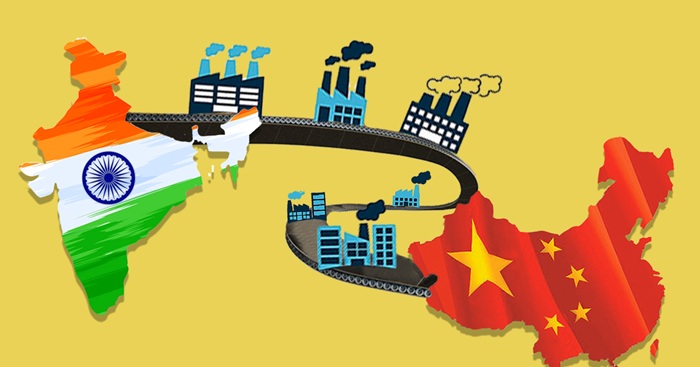
TPP Effect: India pins hopes on China-backed trade bloc
"According to officials, India was hopeful of striking a tariff-cutting deal this year, in the clearest indication yet that India wants to accelerate progress on a bloc first launched in 2012. Ganeshan Wignaraja of the Asian Development Bank (ADB) feels a breakthrough on RCEP would help mitigate the competitive disadvantage of India being absent from the TPP. Concluding an RCEP agreement would mark a key milestone for the Modi government"
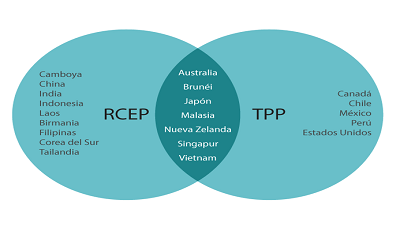
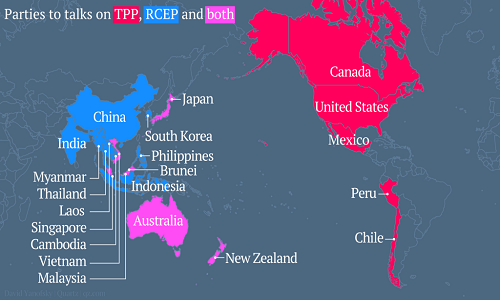
Concerned at being sidelined from the US-led Trans-Pacific Partnership (TPP), India is stepping up efforts to reach agreement with an alternative trade bloc centered around China, and hopes to reach a deal this year. India has long been seen by many countries as an intransigent player at the World Trade Organization (WTO), a multilateral forum that has struggled to find the consensus it needs to move forward. With 12 advanced economies accounting for 40 per cent of the global economy signed a TPP deal this month, India’s trade negotiators feel they need to get a move on, as Prime Minister Narendra Modi’s export-focused ‘Make in India’ drive as the path to prosperity for Asia’s third-largest economy, where per capita output is $1,688 a year, one fifth that in China.
Exploring access to Asian markets
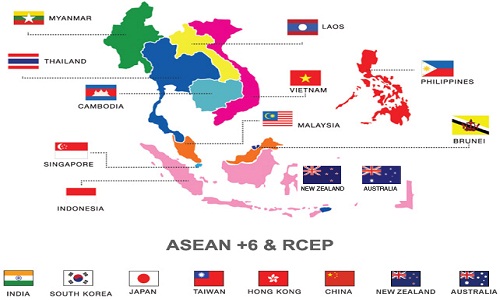
With TPP out of reach, India was not invited to join, India’s negotiators are focusing instead on a Chinese-led grouping called the Regional Comprehensive Economic Partnership (RCEP) that would improve its access to Asian markets. To iron out differences on tariffs, a trade representatives meet is scheduled in Brunei from February 15 to 19.
According to officials, India was hopeful of striking a tariff-cutting deal this year, in the clearest indication yet that India wants to accelerate progress on a bloc first launched in 2012. Ganeshan Wignaraja of the Asian Development Bank (ADB) feels a breakthrough on RCEP would help mitigate the competitive disadvantage of India being absent from the TPP. Concluding an RCEP agreement would mark a key milestone for the Modi government.
Experts caution that India has shown little appetite to open its market to imports, even as it seeks to ramp up exports, not least because of a gaping trade deficit with China. Some experts feel, India is worried about opening up to China and so there is cloud over whether RCEP deal would happen this year. With the TPP lacking votes in the US Congress and likely to be put on hold if a Republican is elected US president, any sign China is seizing the initiative in the trade arena could raise concerns over Washington’s declining clout in Asia. Meanwhile, with backing from close US allies like Britain, Beijing has already redrawn the financial map by launching the Asian Infrastructure Investment Bank (AIIB).
Fear of losing business
Even though TPP is years away from reality, New Delhi fears losing some textile and drugs exports to countries like Vietnam, which has embraced both the TPP and the RCEP. Officials point out, it could also raise barriers to entry on labour, environment and intellectual property when it comes to seeking access to other markets.

The TPP will certainly have an impact on India’s exports, believes commerce minister Nirmala Sitharaman said. It is most likely to affect sectors like leather goods, plastics, chemicals, textiles and clothing. Talks on creating the 16-member RCEP could be the last hope for some Indian companies to break into the global supply chain. The group comprises the 10 members of the Association of Southeast Asian Nations (ASEAN), China, Japan, South Korea, India, Australia and New Zealand. If signed, the regional free trade agreement would create an economic bloc with a population of 3.4 billion and trade volume of over $17 trillion.
Export industries, particularly garment and drug makers, are urging the Centre to speed up RCEP talks and wrap up trade deals with the European Union and Australia. But steel, tyre and chemical firms want the Centre to go slow, saying they have been undercut by free trade pacts already done with ASEAN, South Korea, Thailand and Japan.
Indian merchandise exports have fallen for 13 months in a row, depressed by weakening global demand and slumping commodity prices. To boost the country’s stagnant 1.7 per cent share of global exports, India needs to raise productivity and move up the value chain.